You are three ingredients into hummus, or halfway through whisking a salad dressing, and the tahini jar is empty — or you never had one, because a whole jar felt like a big commitment for two tablespoons.
The good news: tahini is doing a fairly simple job in most recipes. It is a ground seed paste that brings three things — nutty richness, a distinct sesame flavor, and the fat that lets a sauce emulsify into something creamy instead of watery. Plenty of things in your pantry can cover two out of three, and a couple can cover all three.
Which substitute to grab depends entirely on what you are making. A swap that is perfect in cookies can taste strange in hummus, and the sweetness of most nut butters is the thing that trips people up in savory recipes. Here is what works, with exact ratios.
The Quick List
- Sunflower seed butter — the closest all-purpose stand-in, and it is nut-free
- Toasted sesame seeds blended with oil — you are literally making tahini; the best flavor match
- Cashew butter — mildest nut butter, blends silkiest into dressings and hummus
- Chinese sesame paste — real sesame flavor, only stronger and darker
- Almond butter — easy to find, works everywhere, reads a little sweeter
- Plain Greek yogurt — creaminess without the sesame, and far fewer calories
- Peanut butter — only where its big flavor belongs (noodle sauces, brownies)
- Olive oil plus toasted sesame oil — the no-nut-butter-in-the-house hummus rescue
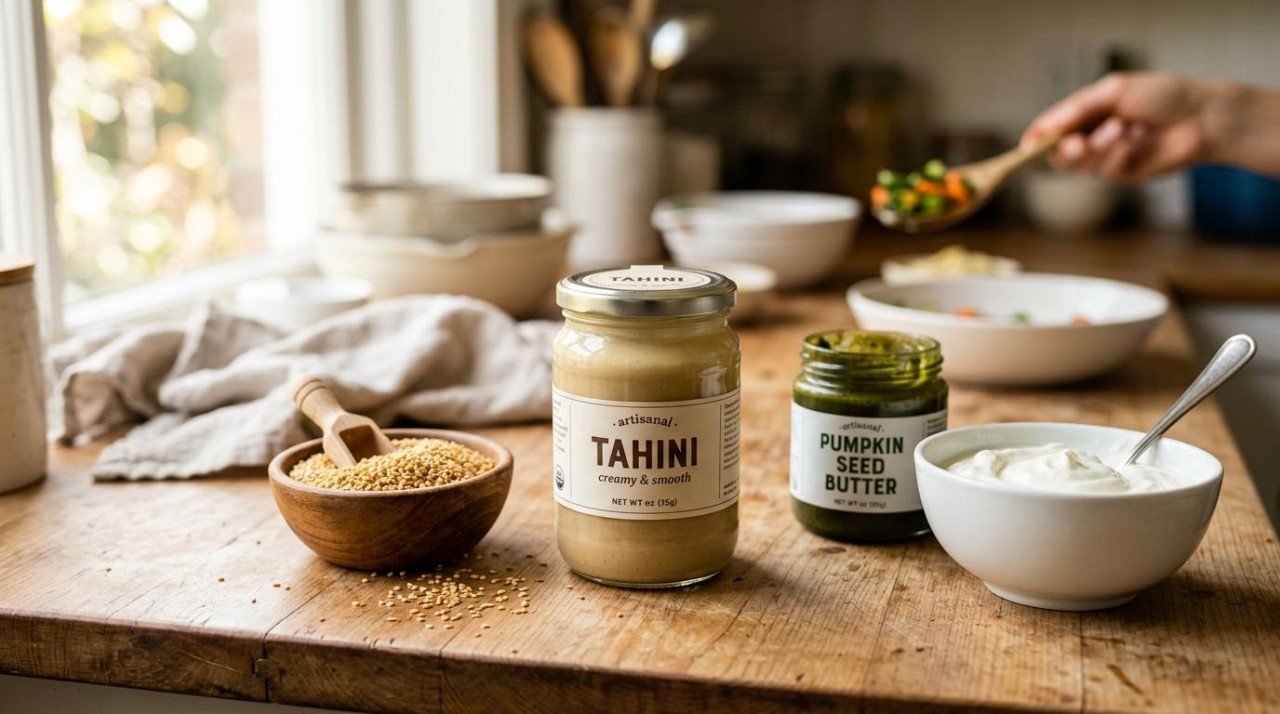
- Pumpkin seed butter — earthy and nut-free, for savory dishes only
Sunflower Seed Butter
- Swap: 1:1 (1/4 cup tahini becomes 1/4 cup sunflower seed butter)
- Best for: Hummus, dressings, sauces, cookies and brownies — nearly everything
- Skip it for: Nothing, really — but check the label, since many brands add sugar
- Health notes: Similar protein to tahini with about half the saturated fat
Sunflower seed butter is the best all-around answer. It is a seed paste like tahini, with the same pourable-to-thick texture and a savory, earthy flavor that sits much closer to sesame than any nut butter does. SunButter, the biggest brand, says its product works as a 1-to-1 swap in any recipe. Because sesame is one of the top nine allergens in the US, this is also the swap that keeps a recipe safe for sesame-allergic and nut-allergic eaters at the same time.
Two things to watch. Sweetened versions are common, and sugar in your hummus is noticeable — buy unsweetened if you can, and if you cannot, add an extra squeeze of lemon and a pinch of salt to pull the dish back savory. And in baking, sunflower seed butter turns cakes and cookies a startling green as they cool. It is a harmless reaction between the seeds' chlorogenic acid and your baking soda; the fix is to reduce the baking soda or powder by about a third, or add a splash of lemon juice to the batter.
Toasted Sesame Seeds Blended With Oil
- Swap: 1 cup hulled sesame seeds plus 2 to 4 tablespoons neutral oil makes about 1/2 cup tahini
- Best for: Anything, since it is the real thing — especially recipes where sesame is the point
- Skip it for: Moments when you do not have 15 minutes or a food processor
If you have a bag of sesame seeds in the pantry, you already have tahini — it just needs grinding. Toast 1 cup of hulled sesame seeds in a dry skillet over medium-low heat, stirring constantly, until they smell nutty and turn light golden, about 3 to 5 minutes. Let them cool, then run them in a food processor until crumbly, add 2 tablespoons of a light oil (sesame, avocado, grapeseed, or light olive), and keep processing for another 2 to 4 minutes, adding the remaining oil until it is smooth and pourable.
Be patient here. The seeds go through a sandy, discouraging stage before their oils release and the mixture turns into paste. Homemade tahini keeps in the fridge for about a month, and it usually tastes fresher and less bitter than a jar that has been sitting on a store shelf.
Cashew Butter
- Swap: 1:1, plus an extra 1/2 tablespoon of lemon juice per 1/4 cup in savory recipes
- Best for: Hummus, creamy dressings, sauces where you want richness without a loud flavor
- Skip it for: Dishes where the sesame flavor is the star, like baba ganoush or halva
Cashew butter is the mildest and creamiest of the nut butters, which makes it the best textural match for tahini in anything blended. It emulsifies beautifully with lemon juice and garlic, so a cashew-butter hummus comes out just as silky as the original — some people find it silkier.
The trade-off is flavor: cashews are naturally sweeter and rounder than sesame, and there is none of tahini's slight bitterness. That bitterness is doing real work in savory dishes, balancing the garlic and acid, so compensate with a little extra lemon juice and salt. Taste as you go rather than adding it all at once.
Chinese Sesame Paste
- Swap: 1:1, thinned with warm water to tahini consistency; start with 3/4 the amount in delicate dishes
- Best for: Noodle sauces, dressings, dipping sauces, anywhere you want more sesame, not less
- Skip it for: Pale dishes — it will turn hummus a muddy tan
Chinese sesame paste (zhi ma jiang) is tahini's more intense cousin. It is made from toasted seeds rather than raw ones, so it is darker, thicker, and much nuttier. If your recipe wants sesame flavor, this delivers it in surplus.
It is usually stiff enough that you should whisk in warm water a teaspoon at a time until it loosens to tahini's texture before using it. Japanese neri goma works the same way. Both are worth keeping around — the same jar covers cold sesame noodles and hot pot dipping sauce.
Almond Butter
- Swap: 1:1, with extra lemon and salt in savory recipes
- Best for: Baking (cookies, brownies, energy balls), dressings, hummus in a pinch
- Skip it for: Very smooth sauces if all you have is a coarse, gritty grind
- Health notes: One of the better nut butters for calcium, fiber, and vitamin E
Almond butter is the substitute most people actually have, and it does a fine job. It is sweeter and slightly grainier than tahini, with a flavor that sits in the background rather than pretending to be sesame.
It shines in baking, where sweetness is welcome anyway — a batch of tahini brownies made with almond butter is just good brownies. In hummus it works, but the result tastes noticeably milder and rounder. If you have toasted sesame oil, half a teaspoon stirred in will put the sesame note back.
Plain Greek Yogurt
- Swap: 2 tablespoons plain Greek yogurt for every 1 tablespoon tahini
- Best for: Salad dressings, drizzling sauces for falafel or roasted vegetables, lighter hummus
- Skip it for: Baking, vegan recipes, and anything that will simmer or boil (it can split)
- Health notes: Roughly 20 calories per 2 tablespoons versus 90 to 100 for a tablespoon of tahini, with a few grams of protein
Yogurt is not trying to imitate tahini — it solves the same problem from a different direction. Where tahini makes a sauce creamy with fat, Greek yogurt makes it creamy with thickness, and adds tang instead of nuttiness. In a lemon-garlic dressing for a grain bowl, honestly, most people cannot tell it was supposed to be tahini.
Since it brings acidity of its own, pull back slightly on the lemon juice when you swap. Keep it off the heat: yogurt curdles when it boils, so stir it into warm sauces off the burner. If you want it closer to the original, a few drops of toasted sesame oil restore the aroma that yogurt has no way of providing. And if you are out of yogurt too, the Greek yogurt substitutes guide covers what stands in for it.
Peanut Butter
- Swap: 1:1 for natural, unsweetened peanut butter; use 3/4 the amount if it is a sweetened brand
- Best for: Noodle and stir-fry sauces, brownies and blondies, dips where peanut flavor fits
- Skip it for: Traditional hummus, baba ganoush, or halva — peanut takes over completely
Peanut butter is the loudest option on this list, so use it deliberately rather than as a default. In a sesame noodle sauce or a dressing that already has soy sauce, ginger, and rice vinegar, it works so well that it barely reads as a substitution. In brownies and cookies, it is a straight swap.
Where it fails is delicate savory dishes. Peanut butter is more assertive and often sweeter than tahini, so peanut butter hummus tastes like a peanut dip that got confused. Choose a natural, unsweetened jar if you can, and see the peanut butter substitutes guide if you are working around a peanut allergy.
Olive Oil Plus Toasted Sesame Oil
- Swap: For hummus, replace 1/4 cup tahini with 3 tablespoons olive oil, 1/2 teaspoon toasted sesame oil, an extra tablespoon of lemon juice, and 2 to 3 tablespoons ice water
- Best for: Hummus and blended dips when there is no nut or seed butter in the house
- Skip it for: Baking, and any sauce that needs body rather than just fat
This is the improvised version, and it is better than it sounds. Tahini-free hummus is a real dish, not a compromise — it just needs enough fat and acid to make up for what is missing. Blend the chickpeas with the garlic and lemon first, stream in the oil, then add ice water a tablespoon at a time until it goes pale and fluffy. Cold water is what gives hummus that whipped texture.
What you will not get is body. Nut and seed butters work in hummus because their fat emulsifies with the chickpeas and lemon juice into something thick and stable; plain oil does less of that, so the result is lighter and looser. Go easy on the toasted sesame oil — it is potent, and much more than half a teaspoon turns bitter.
Pumpkin Seed Butter
- Swap: 1:1
- Best for: Savory dressings, dips, sauces — anywhere earthy flavor is welcome
- Skip it for: Baking or pale dishes, since it turns everything a deep green
- Health notes: A strong source of magnesium and zinc, and nut-free
Pepita butter is the least common option here but a genuinely good one, especially for nut-free kitchens that have run through their sunflower seed butter. It is savory rather than sweet, which puts it closer to tahini's role than almond or cashew butter.
The color is the catch: it makes green hummus and green dressing. That is fine in a herby green tahini sauce, where it looks intentional, and less fine when you were expecting classic beige hummus.
The Healthier Angle: What You Gain and Lose
Worth saying plainly: tahini is not an ingredient anyone needs to swap out for health reasons. It is a whole-food seed paste that brings unsaturated fat, protein, fiber, and one of the better plant sources of iron — roughly a milligram per tablespoon in USDA data, more than most nut butters. If you are replacing it, replace it because of what is in your kitchen, not out of guilt.
That said, a few of these swaps genuinely change the numbers. Greek yogurt is the big one: 2 tablespoons land around 20 calories against 90 to 100 for a tablespoon of tahini, and add protein instead of fat — a real difference in a dressing you eat several times a week. Sunflower seed butter keeps protein close to tahini's with about half the saturated fat, and adds vitamin E. Almond butter brings more calcium and fiber than most of the alternatives here. The thing actually worth watching is added sugar: commercial sunflower and peanut butters often carry around 10 grams per 100 grams, while tahini has almost none, so the label matters more than the ingredient does.
Sesame is also one of the top nine allergens in the US, which is why sunflower and pumpkin seed butters are worth knowing about even if you love tahini — they let you make the same dish for a table where someone cannot eat sesame.
Take the Guesswork Out of Eating Well
Eat Well Planner helps you organize your favorite recipes, plan balanced meals, and automatically generate shopping lists — all in one place. Whether you're tracking macros, managing dietary restrictions, or just trying to stop asking "what's for dinner?", we've got you covered.
Our AI-powered tools can adapt any recipe to your dietary needs, help you discover new meals you'll love, and even log your nutrition effortlessly. It's meal planning made simple.
Start Organizing Your Meals — FreeMatching the Swap to the Dish
If you only remember one thing, remember that the dish decides:
- Hummus and blended dips: sunflower seed butter, cashew butter, or almond butter, each 1:1, with extra lemon and salt. Olive oil plus a little toasted sesame oil if the cupboard is bare.
- Dressings and drizzling sauces: cashew butter or Greek yogurt for creaminess, Chinese sesame paste when you want more sesame, peanut butter when there is soy and ginger in the mix.
- Baking (cookies, brownies, halva-style treats): almond, cashew, or peanut butter 1:1. Sunflower seed butter works too — just cut the baking soda by a third to avoid the green.
- Baba ganoush and other sesame-forward classics: grind your own tahini from seeds, or use Chinese sesame paste. This is the one case where a nut butter really does make a different dish.
What Not to Use
- Toasted sesame oil on its own, 1:1. It has the flavor but none of the body, so a dressing turns greasy and overwhelmingly bitter. Use it by the half teaspoon as a flavor booster alongside another substitute.
- Whole or unground sesame seeds. Stirring seeds into a sauce gives you crunchy bits floating in thin liquid. They have to be ground into a paste to do tahini's job.
- Sweetened spreads. Honey-roasted peanut butter, chocolate hazelnut spread, and cookie butter make savory food taste like dessert. Save them for the baking column only.
- Low-fat or reduced-fat nut butters. The fat is the whole mechanism behind the creaminess. Stripping it out gives you a dip that sets up gluey rather than silky.
When You Are Not Sure Which One Fits
General guidance only goes so far, because the right swap depends on what else is in the bowl — how much lemon, whether there is garlic, whether it gets heated. That is the gap Eat Well Planner is built to close. Save the recipe you are cooking, and its AI recipe chat can answer the specific version of the question: I am making this, I have cashew butter and Greek yogurt, which one and how much? It reads your actual ingredient list rather than guessing.
If the swap is about a dietary need rather than an empty jar, the app can generate a full recipe variation with the substitutions already worked in — a nut-free or dairy-free version rewritten line by line. And when you want to know what a swap does nutritionally, the recipe playground lets you change an ingredient and watch the nutrition score update live, so you can see whether trading tahini for yogurt actually moves the needle before you commit.