The corned beef is warm, the rye is buttered, the sauerkraut is drained — and the cheese drawer has cheddar, a nub of Parmesan, and no Swiss. Or you are halfway into a quiche and realize the "Swiss" you bought last week went to someone's lunch.
Swiss cheese does two things in a recipe. It melts smooth and stretchy without turning greasy, and it brings a mild, sweet, nutty flavor that sits quietly under bold partners like corned beef, ham, and mustard instead of fighting them. That is why it is the default on Reubens, ham and Swiss, Cubans, chicken cordon bleu, and quiche.
So the best substitute is a cheese that melts well and stays mild. A whole family of Swiss-style cheeses fits that description, and so do a few supermarket staples. Here is what works, dish by dish, with exact swaps.
The Quick List
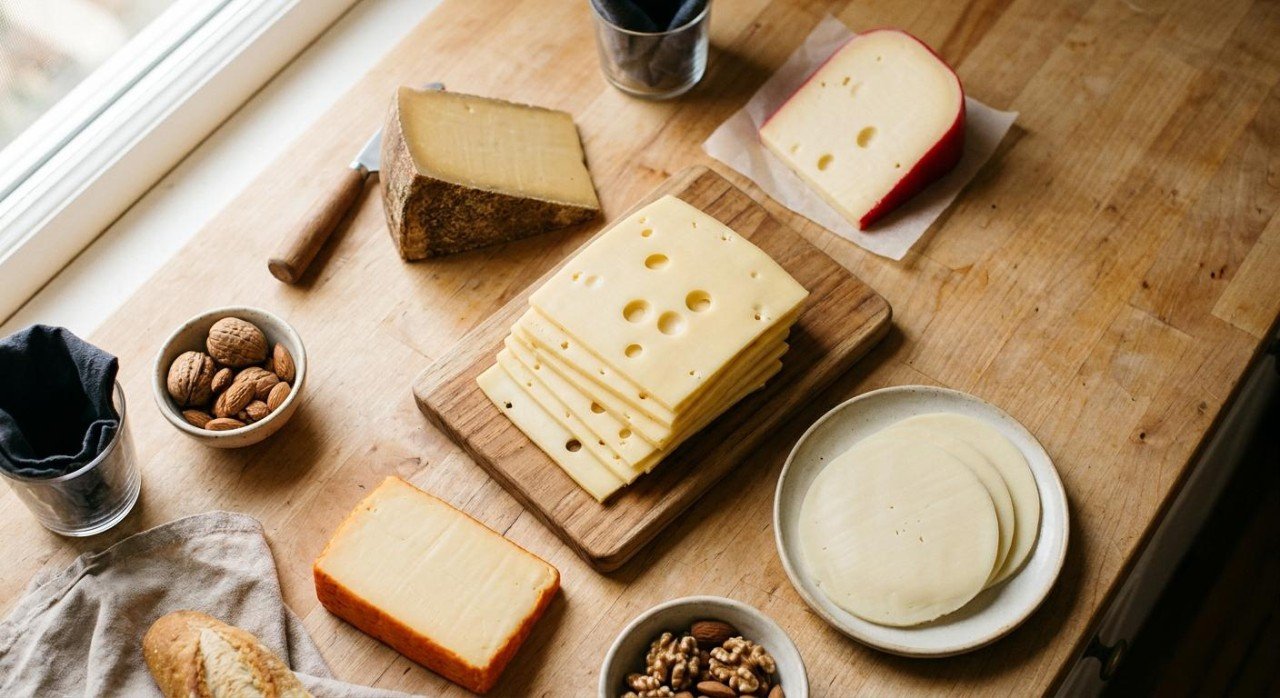
- Jarlsberg — the closest match; holey, mild, sweet, and nutty
- Emmental — the Swiss original that American "Swiss" is modeled on
- Baby Swiss or Lacy Swiss — milder Swiss styles; Lacy is the lower-fat one
- Gruyere — a step up in flavor; great in quiche, fondue, and French onion soup
- Comte — Gruyere's French cousin; rich, nutty, and a splurge
- Fontina — the smoothest melt; ideal for sauces, gratins, and panini
- Provolone — the easy deli-counter swap for Reubens and hot sandwiches
- Havarti — buttery and mild; good on cold sandwiches and grilled cheese
- Monterey Jack — the budget melter that is in every grocery store
- Muenster — very mild and very melty; great on hot sandwiches
- Dairy-free slices and nutritional yeast — for a plant-based version
Which Substitute for Which Dish
If you are mid-recipe, start here:
- Reuben, Rachel, and patty melts: Jarlsberg or Emmental first, then provolone, Gruyere, or Muenster. The cheese needs to melt into the kraut and stay out of the corned beef's way.
- Ham and Swiss, Cubans, and chicken cordon bleu: Jarlsberg, Emmental, Baby Swiss, Havarti, or Gruyere. Ham loves nutty, sweet cheese.
- Quiche and strata: Gruyere, Comte, Jarlsberg, or Fontina. Quiche is forgiving because the cheese is suspended in custard, so a stronger cheese works well here.
- Fondue and French onion soup: Gruyere and Emmental — ideally blended — or Comte, or Fontina.
- Au gratin potatoes, casseroles, and cheese sauces: Fontina, Gruyere, Monterey Jack, or a mix.
- Cold sandwiches and cheese boards: Jarlsberg, Havarti, Baby Swiss, or Lacy Swiss.
Every swap below is 1:1 by weight unless noted. If your recipe is in cups, 4 ounces of firm cheese makes about 1 cup shredded.
Jarlsberg
- Swap: 1:1 by weight, or slice for slice
- Best for: Reubens, ham and Swiss, cold sandwiches, quiche, cheese boards — anything Swiss does
- Skip it for: Nothing in particular; it is the closest all-around match
If you only read one section, make it this one. Jarlsberg is a Norwegian cheese developed in 1956 at the Agricultural University of Norway, and it is made with the same kind of hole-forming bacteria as Swiss — which is why it has the same big eyes. Its flavor is described as clean and rich, slightly sweet and nutty, with a supple, buttery body that melts easily over corned beef or into a croque monsieur.
Most people will not notice the swap. Jarlsberg is a touch sweeter and softer than American Swiss, so it melts a little faster on the griddle. It is sold in regular supermarkets, often pre-sliced right next to the Swiss.
Emmental
- Swap: 1:1 by weight
- Best for: Everything — sandwiches, fondue, French onion soup, gratins, quiche
- Skip it for: Budget cooking, if the only Emmental you can find is the imported AOP wheel
"Swiss cheese" in North America is a generic name for cheese modeled on Emmental, so the imported original is less a substitute than the source. Its holes and its nutty, sweet flavor come from the same bacteria, which turn lactic acid into carbon dioxide (the holes) and propionic and acetic acids (the flavor). Swiss Emmentaler AOP has to be made from raw cow's milk and aged at least four months, so it tastes a little fuller and more savory than a typical deli Swiss.
The fuller flavor is a plus in fondue and gratins. On a Reuben, it simply tastes like a better version of the same sandwich.
Baby Swiss or Lacy Swiss
- Swap: 1:1 by weight, or slice for slice
- Best for: Cold sandwiches, wraps, ham and Swiss, kids' lunches
- Skip it for: Fondue and French onion soup, where you want more flavor; Lacy Swiss for anything that needs a smooth melt
- Health notes: Lacy Swiss is made from lower-fat milk, so it has less fat and saturated fat than regular Swiss
These are both Swiss styles with smaller holes and milder flavor. Baby Swiss, developed in Charm, Ohio, in the 1960s, is made from whole milk and is creamy, mild, and a good melter — a fine swap for anyone who finds regular Swiss a little sharp. Lacy Swiss is made from low-fat milk. It slices thin and tastes clean, which makes it a good everyday sandwich cheese.
Lower-fat cheese melts less smoothly, so Lacy Swiss can turn a bit rubbery in a hot Reuben or a cheese sauce. Use it cold, or for hot sandwiches mix it with a better melter.
Gruyere
- Swap: 1:1 by weight for a richer, stronger result; about 3/4 the amount if you want it to taste closer to Swiss
- Best for: Quiche, fondue, French onion soup, croque monsieur, gratins, upgraded Reubens
- Skip it for: Kids' sandwiches and anyone who wants the mild, sweet flavor of Swiss
- Health notes: About 95 mg sodium per ounce — more than Swiss, but less than most other substitutes
Gruyere is Swiss cheese's older, more interesting relative. It is a firm alpine cheese that melts smooth and glossy, with a nutty, savory flavor that deepens with age. Swiss fondue is traditionally a blend of Gruyere and Emmental, and swapping it onto a Reuben gives the sandwich a much deeper flavor with the same gooey melt.
Because Gruyere tastes stronger, you can use a bit less of it — which is the easiest way to make a cheesy dish lighter without anyone noticing. It is also pricier. If you are out of both, our Gruyere substitutes guide has more options.
Comte
- Swap: 1:1 by weight, or about 3/4 for an aged Comte
- Best for: Quiche, fondue, gratins, French onion soup, cheese boards
- Skip it for: Budget dishes; it is usually priced like Gruyere
Comte is a French alpine cheese from the Jura Mountains, made from raw cow's milk and aged at least four months. It tastes like a sweeter, more complex Gruyere, and a young one (4 to 8 months) melts beautifully into fondue and sauces. If you have one on hand, it will make a quiche taste noticeably better than one made with Swiss.
It is overkill for a weeknight ham sandwich. Save it for dishes where the cheese is the star.
Fontina
- Swap: 1:1 by weight
- Best for: Au gratin potatoes, cheese sauces, fondue, panini, hot sandwiches
- Skip it for: Cold sandwiches and cheese boards, where it lacks Swiss's nutty bite
For pure meltability, Fontina beats Swiss. It is a semi-soft Italian cow's milk cheese that turns silky in a sauce and never goes stringy or grainy, which makes it excellent in gratins and baked dishes. The Italian original (Fontina Val d'Aosta) is earthy and nutty; the Danish and American versions in most supermarkets are milder and creamier.
Mild Fontina tastes buttery rather than nutty. In a casserole or a hot panini that hardly matters; on a cheese board, it does.
Provolone
- Swap: 1:1 by weight, or slice for slice; choose mild (dolce) provolone
- Best for: Reubens, hot deli sandwiches, patty melts, chicken cordon bleu
- Skip it for: Fondue, French onion soup, and anyone watching sodium
- Health notes: About 248 mg sodium per ounce — more than four times Swiss
Provolone is the swap you can get at any deli counter, sliced to order. It melts well, stretches nicely, and Reuben recipes routinely list it as a cheese swap. Mild provolone is the better choice; sharp (piccante) provolone can overpower the corned beef.
The trade-off is flavor and salt. Provolone tastes tangy and a little salty, not sweet and nutty, and with salty meats like corned beef or ham the sodium adds up quickly (more on that below).
Havarti
- Swap: 1:1 by weight, or slice for slice
- Best for: Cold sandwiches, grilled cheese, ham and cheese, cheese boards
- Skip it for: Fondue and French onion soup, where it can turn soft and oily
Havarti is a semi-soft Danish cow's milk cheese with small holes and a buttery aroma and sweet flavor. It is usually aged about three months, which makes it milder than Swiss; older Havarti picks up a hazelnut flavor that brings it closer.
Havarti softens quickly and melts fast, so it is great in a grilled sandwich but can slump in a hot oven. Skip the herbed and dill versions unless you want those flavors in the dish.
Monterey Jack
- Swap: 1:1 by weight
- Best for: Casseroles, cheese sauces, hot sandwiches, quesadilla-style melts
- Skip it for: Dishes where the nutty Swiss flavor matters, like fondue or a classic Reuben
- Health notes: About 152 mg sodium per ounce, roughly triple Swiss
Monterey Jack is a mild, buttery American cheese that melts smoothly and is sold everywhere, usually for less than Swiss. It has none of Swiss's nuttiness, so think of it as a texture swap: it melts the way Swiss does and stays out of the way of other flavors.
If the dish tastes flat, a little grated Parmesan or Gruyere mixed into the Jack brings back some of the savory depth.
Muenster
- Swap: 1:1 by weight, or slice for slice
- Best for: Reubens, patty melts, grilled cheese, hot ham and cheese
- Skip it for: Cold sandwiches and cheese boards, where it tastes bland
- Health notes: About 178 mg sodium per ounce
American Muenster (the one with the orange rind) is soft, very mild, and one of the best melters at the deli counter. On a hot sandwich it melts into a smooth, gooey layer that holds the fillings together. It has a slight tang but none of Swiss's nuttiness, so it works best where the cheese is there for melt, not flavor.
Dairy-Free Options
- Swap: Dairy-free Swiss- or provolone-style slices, 1:1; or about 1/4 cup nutritional yeast per 1 cup shredded Swiss, for flavor only
- Best for: Slices on Reubens and sandwiches; nutritional yeast in cheese sauces and gratins
- Skip it for: Fondue and quiche, where no plant-based cheese melts like the real thing
- Health notes: Nutritional yeast adds protein and, if fortified, vitamin B12; many dairy-free slices are low in protein and high in coconut oil
Dairy-free slices (usually cashew-, coconut-oil- or starch-based) have improved, and the ones labeled for melting will soften on a hot sandwich, especially if you cover the pan for a minute. For a cheese sauce, nutritional yeast is the better choice — whisked into a creamy base, it adds a nutty, savory flavor surprisingly close to Swiss. Our nutritional yeast guide has more ways to use it.
The Healthier Angle: Swiss Is Hard to Beat
Most substitution guides end with a "healthier option." With Swiss, the honest answer is that the cheese you are replacing is already one of the best cheeses you can buy. Two things set it apart.
It Is Very Low in Sodium
An ounce of Swiss has about 108 calories, 7.6 grams of protein, 224 mg of calcium, and just 54 mg of sodium, according to USDA data. That puts it among the lowest-sodium cheeses there are. Almost every substitute on this list has more:
- Swiss: about 54 mg sodium per ounce
- Gruyere: about 95 mg
- Monterey Jack: about 152 mg
- Muenster: about 178 mg
- Fontina: about 227 mg
- Provolone: about 248 mg
That matters most in the dishes Swiss is famous for, because they are built on salty partners: corned beef, ham, sauerkraut, and beef broth. Two ounces of provolone instead of Swiss on a Reuben add nearly 400 mg of sodium to a sandwich that is already high. If you are watching sodium, Jarlsberg, Emmental, and Gruyere are the swaps that keep it closest to the original. Our healthier Reuben and healthier French onion soup show where the rest of the salt in those dishes comes from.
Swiss also has more calcium than most of the melting cheeses that replace it — 224 mg per ounce, versus about 156 mg for Fontina.
It Is Naturally Very Low in Lactose
Swiss-style cheese is one of the best options for people who are lactose intolerant. During cheesemaking, most of the lactose drains off with the whey, and bacteria ferment what is left. The makers of Swiss Emmentaler AOP say their cheese contains no lactose at any stage of maturity, and aged hard cheeses like Gruyere and Comte are similarly close to lactose-free.
Younger, softer cheeses keep more lactose. If you are swapping Swiss for someone who is lactose intolerant, stick with Emmental, Gruyere, Comte, or Jarlsberg rather than Havarti, Monterey Jack, or Muenster, which are aged for a much shorter time. Tolerance varies from person to person, so this is a guide, not a guarantee.
Use Less of a Bolder Cheese
If you want a lighter dish, the trick is to use a cheese with more flavor, not less fat. An aged Gruyere or Comte tastes so much stronger than Swiss that you can often use a quarter less and still get a cheesier-tasting quiche. That is the approach we took in our healthier quiche Lorraine, and it works in a tuna melt too.
Take the Guesswork Out of Eating Well
Eat Well Planner helps you organize your favorite recipes, plan balanced meals, and automatically generate shopping lists — all in one place. Whether you're tracking macros, managing dietary restrictions, or just trying to stop asking "what's for dinner?", we've got you covered.
Our AI-powered tools can adapt any recipe to your dietary needs, help you discover new meals you'll love, and even log your nutrition effortlessly. It's meal planning made simple.
Start Organizing Your Meals — FreeWhat Not to Use
Pre-shredded bagged cheese for fondue or sauces. Bagged shreds are coated with anti-caking starch, which keeps them from melting smoothly. For fondue, au gratin potatoes, and cheese sauces, buy a block and shred it yourself.
Fresh mozzarella. It melts and stretches, but it is watery and very mild. On a Reuben it adds moisture to bread that is already fighting sauerkraut. If mozzarella is all you have, use the low-moisture kind — and see our mozzarella guide for where it works best.
Sharp cheddar on a Reuben or in fondue. Cheddar is a fine melter, but its tang takes over and the dish stops tasting like itself. In a quiche or a casserole, a mild white cheddar is a reasonable backup; our cheddar guide covers how it behaves.
Fat-free cheese. Swiss's smooth melt comes from its fat. Fat-free slices tend to stay rubbery or separate when heated, which is the opposite of what a hot sandwich or gratin needs.
Parmesan alone. It brings flavor but does not melt into a smooth layer. Use it as a booster mixed into a mild cheese like Monterey Jack, not as the whole substitute.
The Bottom Line
For the closest match, use Jarlsberg or Emmental. For more flavor in quiche, fondue, or French onion soup, use Gruyere or Comte. For the smoothest melt in sauces and gratins, use Fontina. From the deli counter, provolone or Muenster will get a Reuben made. And if you are watching sodium or cooking for someone who is lactose intolerant, stay in the Swiss family — Emmental, Jarlsberg, Gruyere, or Comte.
A guide can only speak in general terms; the best substitute depends on the exact recipe in front of you. That is where Eat Well Planner helps. Ask the AI recipe chat "I'm making this quiche and have no Swiss — what should I use?" and it answers for that recipe, with what is in your fridge. And if you want to see what swapping Swiss for provolone does to your Reuben's sodium and nutrition score, the Recipe Playground shows the change live before you commit.