The wings are out of the oven, the iceberg wedges are cut, or the burgers are on the grill, and the wedge of blue cheese you were counting on is either missing or has gone from "pleasantly funky" to "definitely not." Or maybe you have plenty of it and half the table just will not touch the stuff. Either way, you need something else.
Blue cheese does three jobs in a recipe. It brings a sharp, salty, peppery funk that cuts through rich food, a creamy-crumbly texture that works scattered on a salad or stirred into a dressing, and a soft, melting richness on a hot burger or steak. No substitute does all three perfectly, and the funk is the hardest part to copy, because it comes from the blue mold itself.
So the right swap depends on what you are making and who is eating it. Below are the substitutes that actually work, most versatile first, with exact swaps, what each one is good (and bad) at, and a section for blue cheese skeptics who want the tang without the funk.
The Quick List
- Gorgonzola — the closest swap; dolce for dressings and sauces, piccante for crumbling
- Roquefort, Stilton, or another blue — a 1:1 swap with its own personality
- Feta — the best tang-without-funk crumble for salads, wedges, and Cobbs
- Goat cheese — creamy and tangy; great on beet salads, burgers, and steak
- Greek yogurt dressing — the lighter, higher-protein swap for blue cheese dressing and dip
- Aged sharp cheddar — the crowd-pleaser for burgers, steak, and baked dishes
- Pecorino Romano or Parmesan — a salty, savory punch for steak salads and compound butter
- Cambozola or gorgonzola dolce — the "gateway blue" for people who think they hate blue cheese
- Ranch or buttermilk herb dressing — the classic alternative dip for wings
- Cashew "blue cheese" dressing — the dairy-free option, with miso for depth
Gorgonzola
- Swap: 1:1 by weight
- Best for: Everything blue cheese does — dressings, dips, salads, burgers, pasta sauces, steak
- Skip it for: Anyone avoiding blue cheese for taste or safety reasons — it is a blue cheese
If the recipe just says "blue cheese," gorgonzola is not really a substitute so much as a specific choice. It is an Italian blue made from unskimmed pasteurized cow's milk and comes in two styles: dolce, which is young, soft, and buttery, and piccante, which is aged longer, firmer, and much more pungent.
Pick the style by the job. Dolce melts into a silky cream sauce for gnocchi or steak and whisks smoothly into a dressing, but it is too soft to crumble neatly. Piccante crumbles like the blue cheese you buy pre-crumbled in a tub and holds its own on a wedge salad or a burger. If you can only find one, piccante is the more direct stand-in for generic blue cheese.
Roquefort, Stilton, or Another Blue
- Swap: 1:1 by weight; with a sharp, salty Roquefort, start with about 3/4 the amount and taste
- Best for: Salads, dressings, cheese boards, steak toppings, burgers
- Skip it for: Mild dishes where a strong blue would take over
Any blue cheese can stand in for another, but they are not identical. Roquefort is made from ewe's milk and aged at least 90 days in the caves under Mount Combalou in southern France. It is creamy, salty, and sharp, so it makes an especially good dressing. English Stilton is drier and more crumbly, with a mellow, almost nutty finish, which makes it great for crumbling over a pear and walnut salad. Danish blue is sharp and salty and budget-friendly, and American blues like Maytag sit somewhere in the middle.
The main thing to watch is salt. Roquefort in particular runs saltier than the mild domestic crumbles most American recipes were written with, so taste the dish before adding the salt the recipe calls for.
Feta
- Swap: 1:1 by weight
- Best for: Wedge salads, Cobb salads, grain bowls, roasted vegetables, a Greek-style "blue cheese" dip for wings
- Skip it for: Melting onto a burger or into a sauce — it softens but never melts smoothly
- Health notes: About 75 calories per ounce versus 100 for blue cheese, with similar sodium
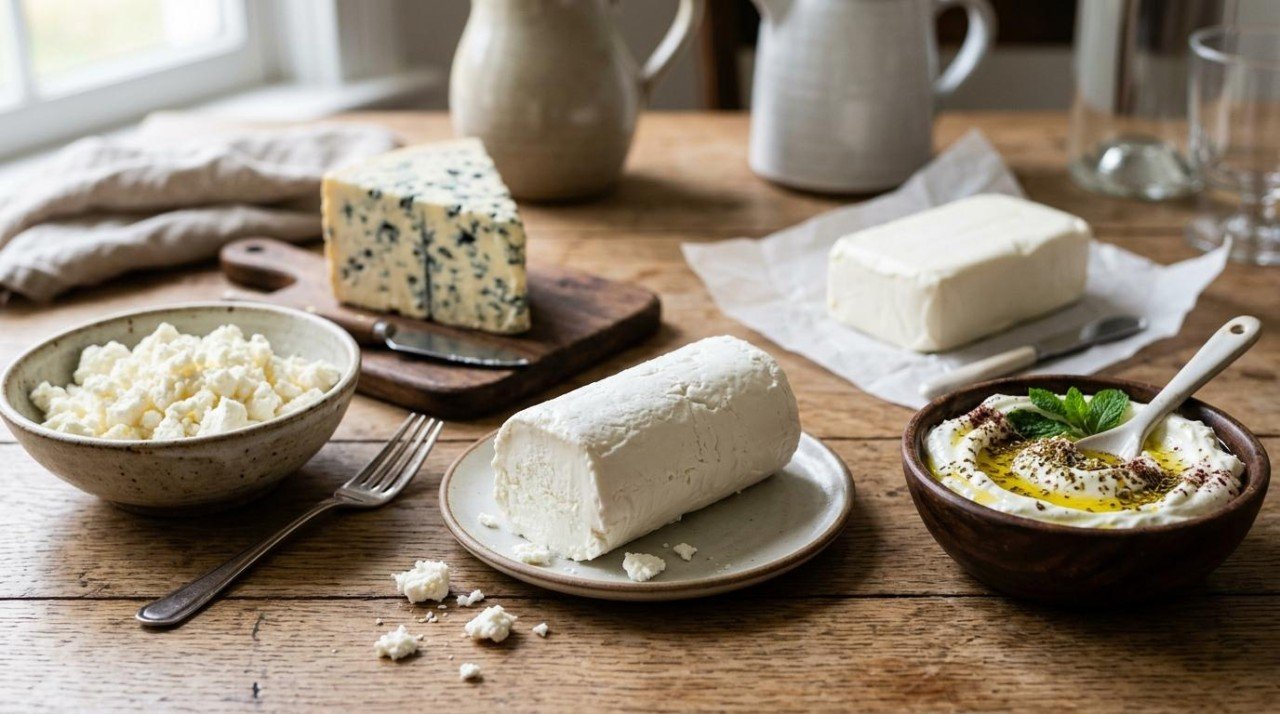
Feta is the single best swap when the goal is "tangy, salty, crumbly, but not funky." It crumbles the same way blue cheese does, it brings a briny tang that holds up to bacon and ranch-style dressings, and nobody at the table will wrinkle their nose at it. On a wedge salad with bacon, tomato, and red onion, it is close enough that many people will not miss the blue.
It is also a little lighter. An ounce of blue cheese has about 100 calories, 5.3 g of saturated fat, and 325 mg of sodium, while an ounce of feta has about 75 calories, 3.8 g of saturated fat, and 323 mg of sodium. The salt is a wash, so season the same way. Sheep's milk feta tends to be creamier and more complex than cow's milk versions. If you are out of feta too, our feta substitutes guide has you covered.
Goat Cheese
- Swap: 1:1 by weight; chill it first so it crumbles instead of smearing
- Best for: Beet salads, pear or apple salads, burgers, steak toppings, stuffed dates, flatbreads
- Skip it for: A pourable dressing for wings — it makes a thick, tangy dip instead
- Health notes: About 75 calories and 130 mg sodium per ounce, so far less salt than blue cheese
Goat cheese and blue cheese show up in the same dishes all the time: roasted beets, pears, walnuts, peppery greens. Fresh goat cheese brings a bright, lactic tang and a creamy texture, and on a hot burger or steak it softens into a creamy pocket instead of running off the meat. That makes it one of the best swaps for a blue cheese burger.
It is also much lower in sodium. An ounce of soft goat cheese has about 130 mg of sodium against blue cheese's 325 mg, so you may want an extra pinch of flaky salt on top. For a blue-adjacent flavor, mix 3 parts goat cheese with 1 part blue: you get the creamy body plus a hint of funk. Our goat cheese guide covers the reverse swap.
Greek Yogurt Dressing
- Swap: 1:1 for blue cheese dressing or dip. For about 3/4 cup: 1/2 cup plain Greek yogurt, 1 tablespoon mayonnaise, 1 tablespoon lemon juice, 1 to 2 tablespoons milk to thin, 1/2 teaspoon Worcestershire sauce, 1 small grated garlic clove, 1 oz crumbled feta (or 1 oz blue cheese), salt and black pepper to taste
- Best for: Wings, wedge salads, crudité platters, Cobb salads, burgers as a sauce
- Skip it for: Long, high-heat cooking — the yogurt can split
- Health notes: Roughly 40 to 50 calories per 2 tablespoons versus about 146 for bottled blue cheese dressing, plus a few grams of protein
Most blue cheese dressing is mostly mayonnaise and sour cream with a little cheese stirred in. Swap the bulk of that base for thick Greek yogurt and you keep the creamy tang while cutting most of the calories. Two tablespoons of bottled blue cheese dressing has about 146 calories, 15 g of fat, and 192 mg of sodium. Plain nonfat Greek yogurt has about 100 calories and 17 g of protein per 170 g container, so the homemade version above lands somewhere around a third of the calories of the bottled kind, depending on your cheese and yogurt.
Make it with feta if you want tang without funk, or with a real ounce of blue cheese if you just want a lighter version of the classic. The tablespoon of mayo is optional, but it rounds off the yogurt's sourness and makes the dressing taste less "healthy." Let it sit in the fridge for 30 minutes so the garlic mellows. Our Greek yogurt guide has options if you are out of that, too.
Aged Sharp Cheddar
- Swap: 1:1 by weight; crumble an aged block instead of shredding it
- Best for: Burgers, steak, baked mac and cheese, potato gratins, cheese boards
- Skip it for: Blue cheese dressing — it does not have the tang or the creamy body
- Health notes: Similar calories per ounce, with less sodium (about 185 mg)
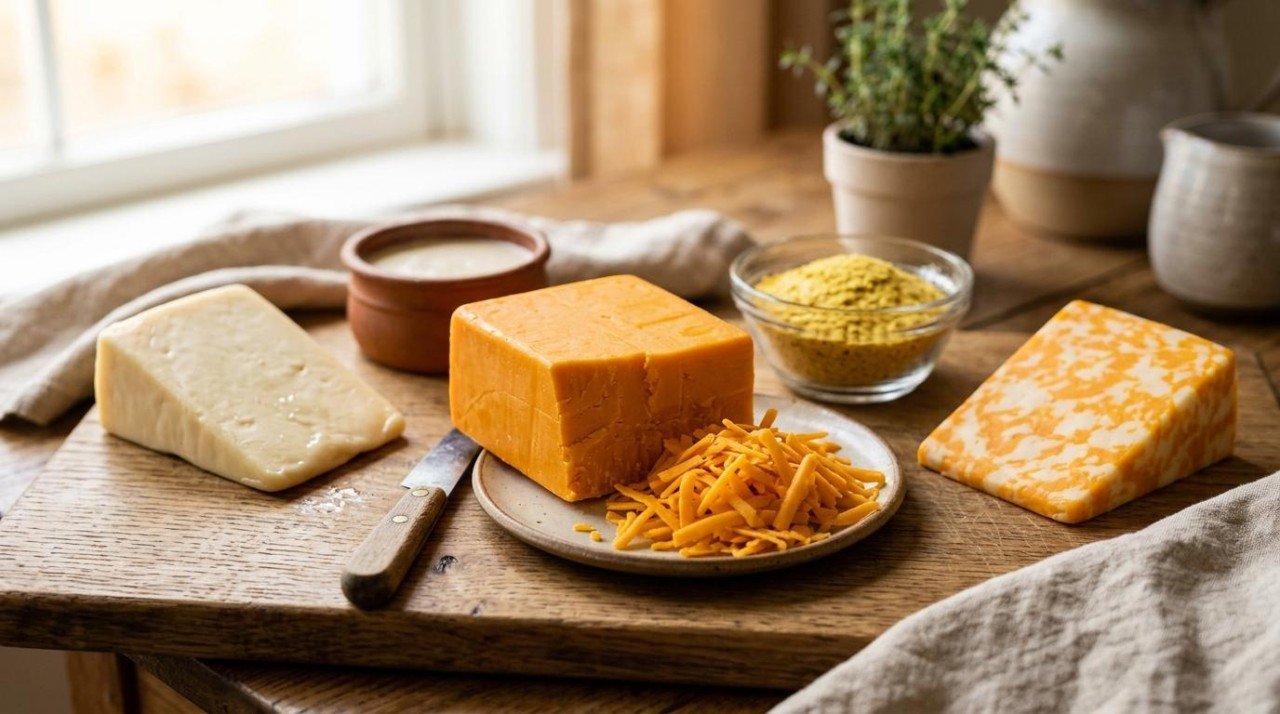
A cheddar aged a year or more gets crumbly, nutty, and sharp, sometimes with little crunchy crystals. It is not funky, but it delivers the "bold cheese on a burger" experience better than any mild cheese, and it melts beautifully. On a steak or burger where the blue cheese is mostly there to bring big flavor and richness, aged white cheddar is the easiest crowd-pleaser.
Nutritionally it is about a wash: an ounce of cheddar has about 114 calories and 185 mg of sodium, a little richer but less salty than blue. See our cheddar guide if you are out of that as well.
Pecorino Romano or Parmesan
- Swap: Use about half the amount, shaved or finely grated, since it is saltier and more intense
- Best for: Steak salads, arugula salads, compound butter for steak, pasta, roasted vegetables
- Skip it for: Creamy dressings and dips, or anywhere you want soft crumbles
Hard aged cheeses do not give you blue cheese's creaminess, but they do bring the salty, savory punch, especially sheep's milk pecorino, which has a sharp, slightly barnyard edge. Shaved over a steak salad or an arugula and pear salad, they fill the same "salty, bold" role.
For blue cheese butter on steak, use this instead: 4 tablespoons softened butter mashed with 1 oz finely grated Pecorino Romano or Parmesan, 1 teaspoon chopped parsley or chives, and plenty of black pepper. Roll it into a log, chill it, and slice a coin onto the hot steak. See our Pecorino Romano and Parmesan guides for more.
Cambozola or Gorgonzola Dolce (The "Gateway Blue")
- Swap: 1:1 by weight
- Best for: Burgers, cream sauces, crostini, cheese boards, converting skeptics
- Skip it for: Crumbling over a salad — both are too soft
Cambozola is a German soft-ripened cheese that combines a creamy, brie-like body with a little blue veining. Gorgonzola dolce is the young, buttery style of gorgonzola. Both have a gentle blue flavor buried in a lot of creaminess, which makes them the best choice when someone says they "do not like blue cheese" but you want a hint of it.
They are soft and spreadable, so use them where blue cheese melts: on a hot burger, stirred into a cream sauce, or spread on toast with honey and walnuts.
Ranch or Buttermilk Herb Dressing
- Swap: 1:1 for blue cheese dressing as a dip
- Best for: Buffalo wings, celery and carrot sticks, crudité platters, wraps
- Skip it for: Recipes where blue cheese is a crumbled ingredient rather than a sauce
For wings, the honest answer is that plenty of people already prefer ranch. It gives you the same cool, creamy contrast to hot sauce, just with herbs instead of funk. Bottled ranch is about as rich as bottled blue cheese dressing, so if you want something lighter, make the Greek yogurt dressing above, skip the cheese, and stir in a tablespoon each of chopped fresh dill and chives with a pinch of onion powder.
Cashew "Blue Cheese" Dressing (Dairy-Free)
- Swap: 1:1 for blue cheese dressing. Blend 1/2 cup raw cashews (soaked in hot water for 15 to 30 minutes, then drained) with 1/4 cup water, 1 tablespoon lemon juice, 1 teaspoon white miso, 1/2 teaspoon apple cider vinegar, 1/4 teaspoon garlic powder, and a pinch of salt until completely smooth
- Best for: Dairy-free wings, wedge salads, grain bowls, crudités
- Skip it for: A five-minute fix if you have no time to soak the cashews
- Health notes: No dairy, and cashews count as another plant toward your weekly variety
Soaked, blended cashews make a thick, creamy base, the lemon and vinegar bring the tang, and the white miso supplies a salty, fermented depth that does a surprisingly good impression of aged cheese. It will not taste exactly like blue cheese, but on a hot wing nobody will feel shortchanged. Thin it with a little more water for a pourable dressing, or leave it thick for a dip. A spoonful of nutritional yeast adds extra cheesy savoriness.
Which Swap for Which Dish
When you are not sure which one fits, match the substitute to the job:
- Blue cheese dressing and dip for wings: Greek yogurt dressing (lighter), Roquefort or gorgonzola dolce (closest), ranch (classic alternative), or cashew dressing (dairy-free)
- Wedge and Cobb salads: Gorgonzola piccante or another blue (closest), feta (tang without funk), or the Greek yogurt dressing
- Beet, pear, and apple salads: Goat cheese, feta, Stilton, or shaved pecorino
- Burgers: Gorgonzola, goat cheese, aged sharp cheddar, or Cambozola
- Steak: Pecorino or Parmesan compound butter, goat cheese, or gorgonzola dolce cream sauce
- Pasta and cream sauces: Gorgonzola dolce, Cambozola, or Parmesan
Still not sure which one suits the recipe in front of you? That is exactly what Eat Well Planner's AI recipe chat is for. It can see your actual recipe and tell you which substitute fits that dish, how much to use, and whether to adjust the salt. If you are feeding someone who avoids dairy, Recipe Variations can rewrite the whole recipe with the swaps already worked in.
Take the Guesswork Out of Eating Well
Eat Well Planner helps you organize your favorite recipes, plan balanced meals, and automatically generate shopping lists — all in one place. Whether you're tracking macros, managing dietary restrictions, or just trying to stop asking "what's for dinner?", we've got you covered.
Our AI-powered tools can adapt any recipe to your dietary needs, help you discover new meals you'll love, and even log your nutrition effortlessly. It's meal planning made simple.
Start Organizing Your Meals — FreeFor Blue Cheese Haters: Tang Without the Funk
Blue cheese tastes the way it does because of the mold. As the cheese ages, its fat breaks down into fatty acids, and the blue mold Penicillium roqueforti transforms those fatty acids into compounds called methyl ketones. One of them, 2-heptanone, smells a lot like blue cheese on its own. That is the sharp, peppery, slightly "medicinal" note that people either love or cannot stand, and it is the part no other cheese truly copies.
The good news is that most recipes do not need it. What blue cheese usually adds to a dish is salt, tang, and creaminess, and plenty of ingredients bring those without the funk:
- Feta for salt and tang in a crumble
- Goat cheese for tang and creaminess
- Greek yogurt with lemon for tang in a dressing
- Aged cheddar or pecorino for a bold, savory bite
- Cambozola or gorgonzola dolce if you want to try a whisper of blue
For a mixed crowd, the easiest move is to make the Greek yogurt dressing with feta, then put a small bowl of crumbled blue on the side for the people who want it.
Blue Cheese and Pregnancy
Many people search for blue cheese substitutes because they are pregnant. Soft cheeses can carry Listeria, and the UK's NHS advises that soft blue-veined cheeses such as Danish blue, gorgonzola, and Roquefort should be thoroughly cooked, whether pasteurized or not. The same page says any cheese cooked until steaming hot, including soft or blue cheese, is safe, and it lists pasteurized hard cheeses like cheddar and Parmesan as fine to eat.
In practice, that means a blue cheese sauce that is bubbling hot is generally considered fine, but a cold blue cheese dressing or crumbled blue on a salad is the one to swap out. Aged cheddar, pecorino, and Parmesan from this list are all hard cheeses, and the Greek yogurt dressing works as long as the yogurt is pasteurized. Guidance differs a bit between countries, so check with your doctor or midwife about anything you are unsure of.
What to Skip
A few common reaches do not hold up:
- Mild shredded cheeses (mozzarella, Monterey Jack, mild cheddar). They melt fine on a burger but bring none of the salt or tang, so the dish just tastes flat. If you want a melter, go with aged sharp cheddar.
- Plain sour cream as a "blue cheese dressing." It has the creamy body but none of the bite. Add lemon, garlic, Worcestershire, and a salty cheese like feta, or use the Greek yogurt recipe above.
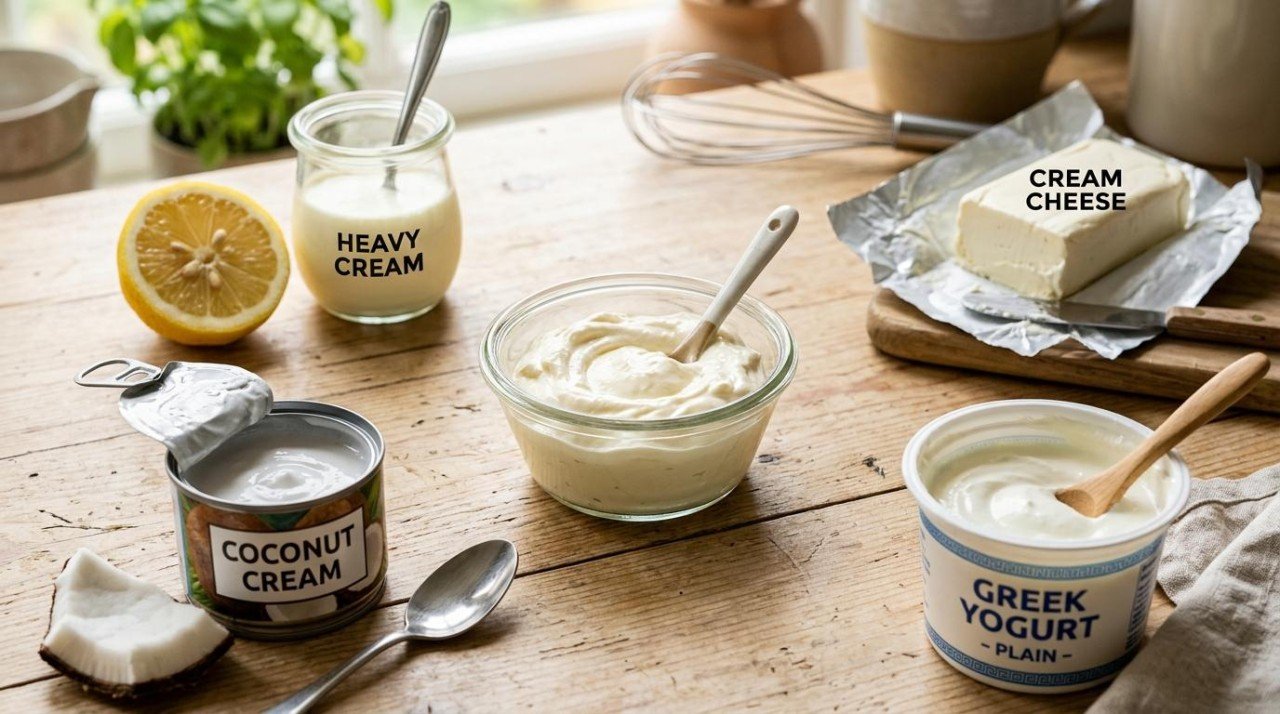
- Cream cheese crumbles. Cream cheese smears instead of crumbling and tastes mild and sweet next to blue cheese. It only works blended into a dip with plenty of seasoning.
- Old blue cheese that smells of ammonia. Blue cheese is supposed to be moldy, but a strong ammonia smell, slimy texture, or fuzzy mold of a different color means it is past its prime. When in doubt, throw it out and use one of the swaps above.
The Bottom Line
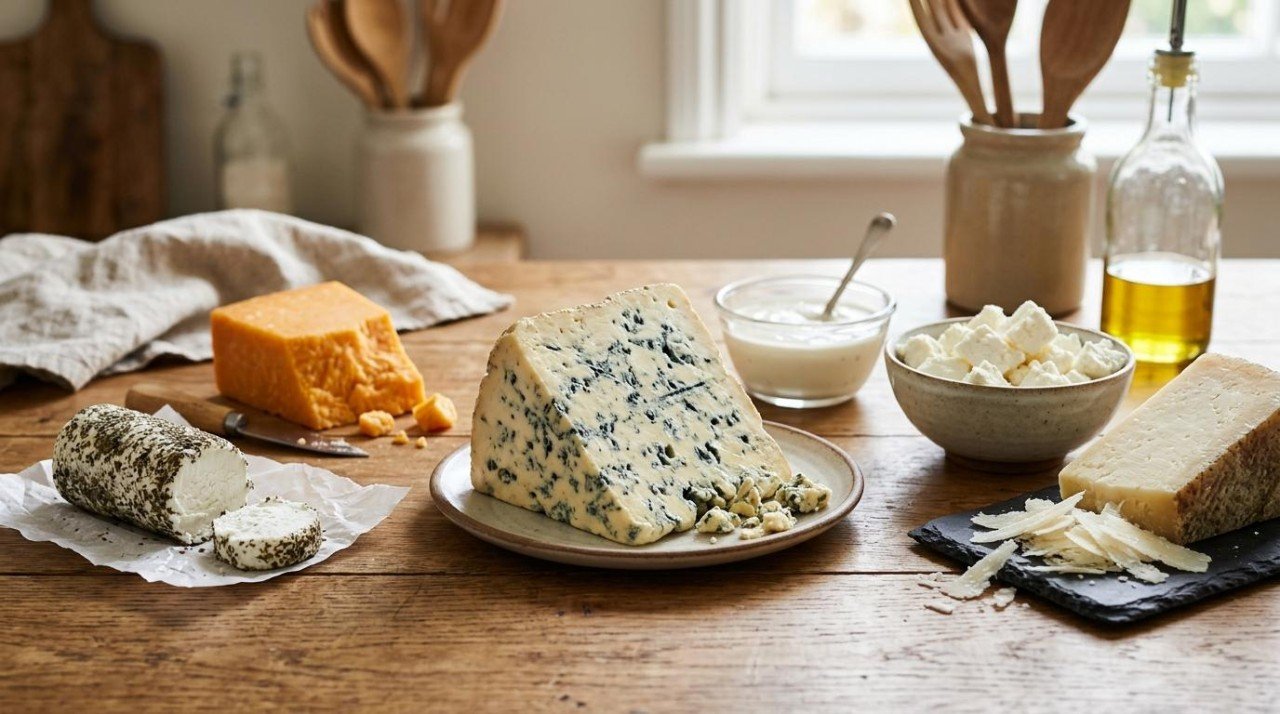
If you want blue cheese flavor, any other blue works: gorgonzola piccante for crumbling, gorgonzola dolce or Cambozola for melting, Roquefort for dressings. If you want the tang without the funk, use feta on salads, goat cheese on burgers and beet salads, aged cheddar on steak and burgers, and a Greek yogurt and feta dressing for wings. That last one is also the easy healthier upgrade, at roughly a third of the calories of the bottled kind.
If you cook this way often, it helps to keep your recipes somewhere that can adapt them for you. In Eat Well Planner you can import any recipe, ask the AI chat for a substitution with your exact dish in context, and use Make It Healthier to try lighter swaps like the Greek yogurt dressing, with the nutrition change verified before you commit. You can also test a swap in the Recipe Playground and watch the nutrition score move before you change the original.