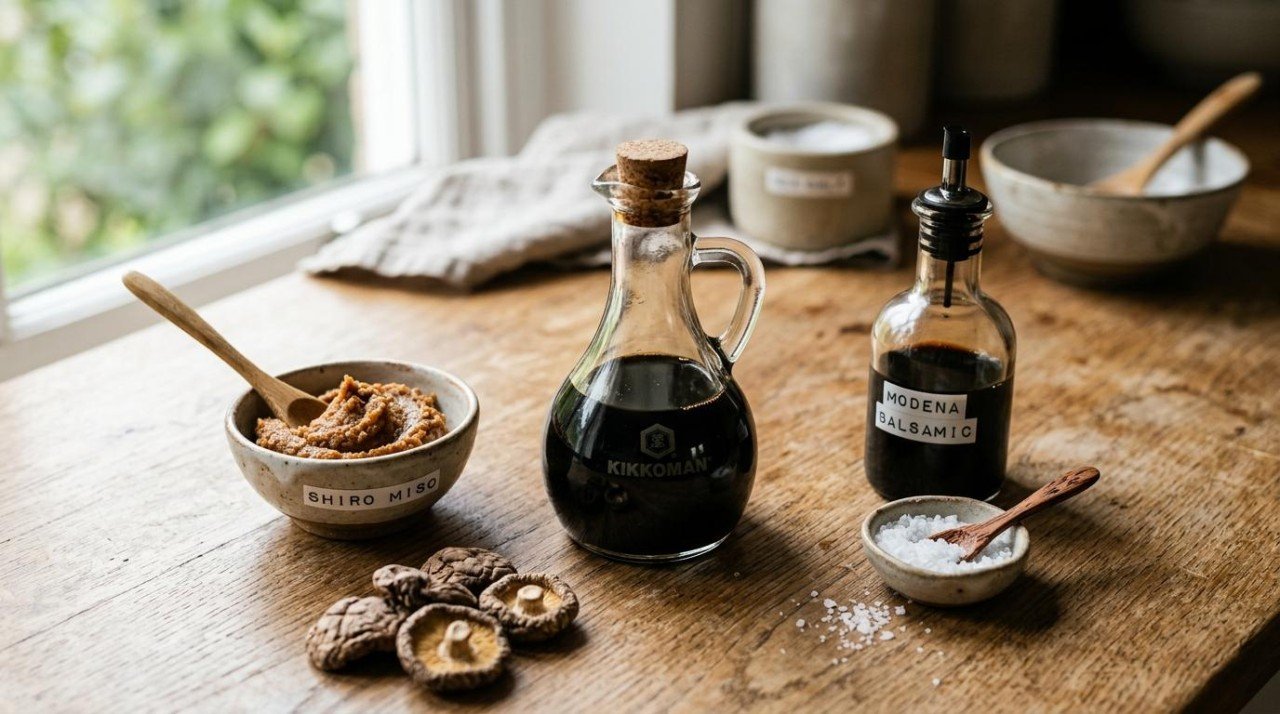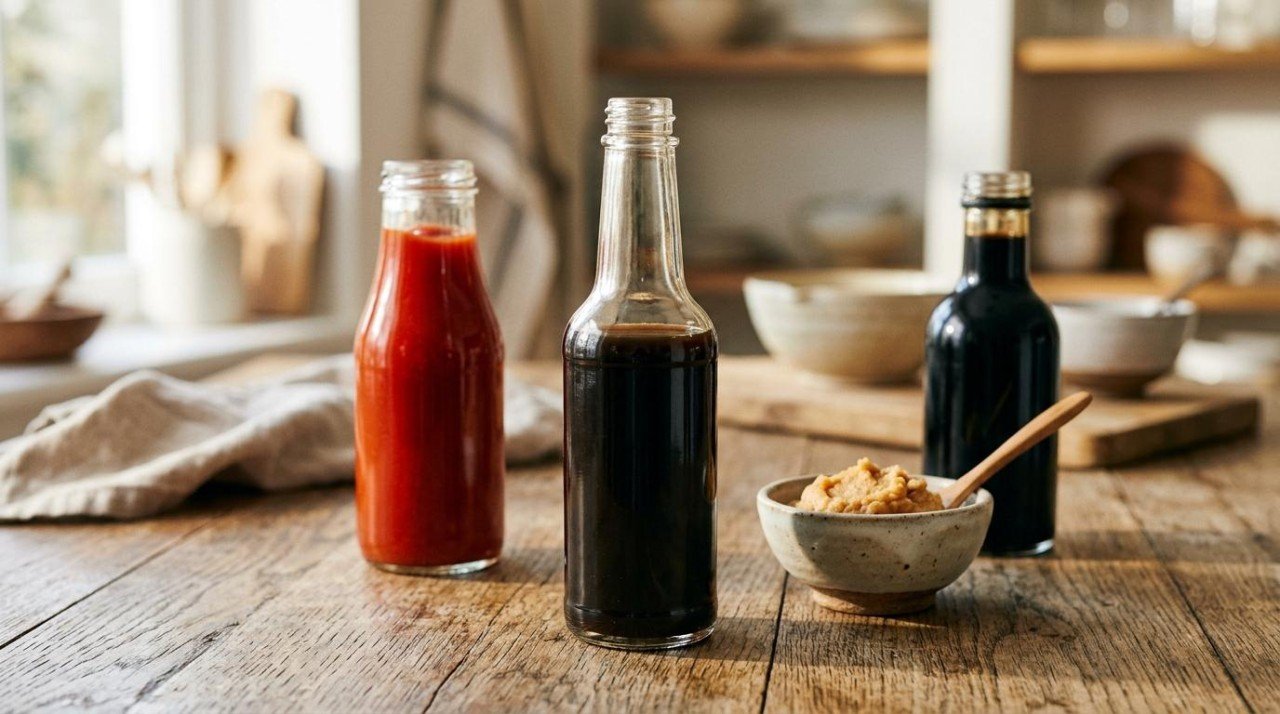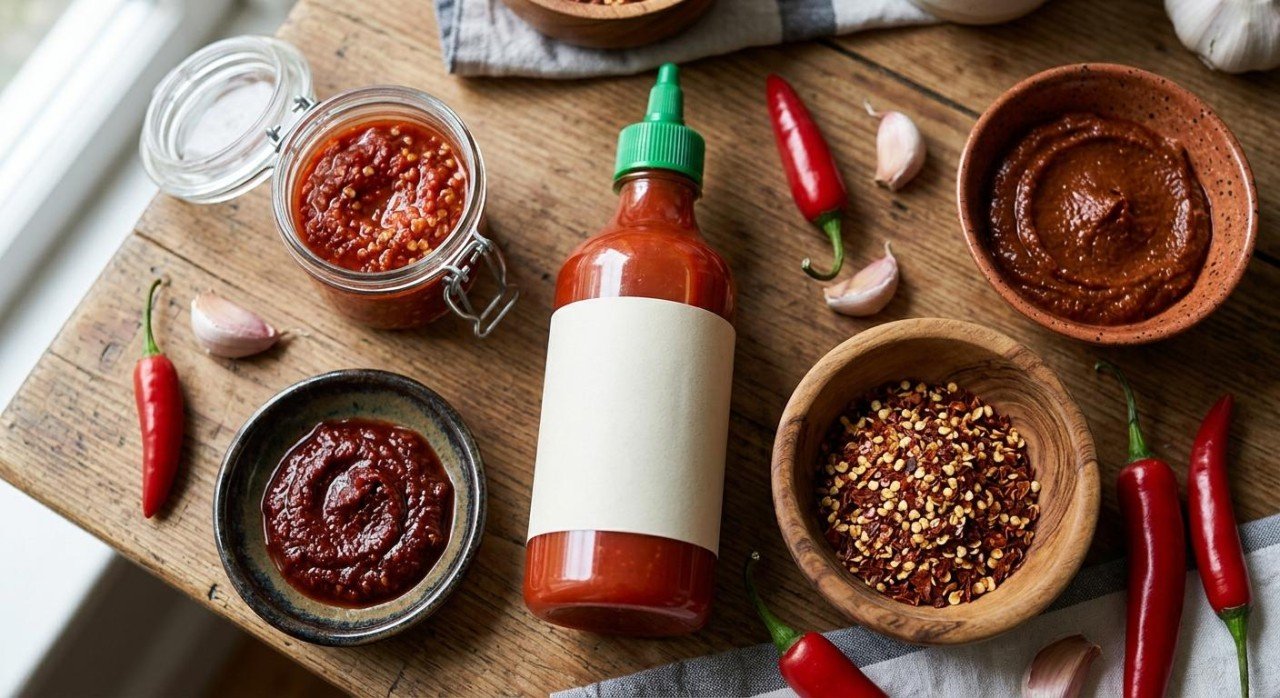
The noodles are draining, the wings are out of the oven, or the mayo is already whisked and waiting — and the rooster bottle is empty. Sriracha is one of those condiments people reach for on autopilot, which is exactly why running out mid-recipe is so annoying.
The good news: sriracha is not complicated. It is red jalapeno chilies, garlic, sugar, salt and vinegar, blended smooth and thickened slightly, and it lands around 2,200 Scoville heat units — medium by hot-sauce standards, milder than Tabasco. Once you know those five parts, almost anything in the pantry can be nudged into the same shape.
What matters is which part your recipe actually needs. A drizzle over eggs needs the smooth, pourable body. A stir-fry sauce mostly needs the heat and garlic. Sriracha mayo needs the sweetness and the tang or it tastes flat. Below are the substitutes that genuinely work, ordered from closest match to most specialized, each with an exact ratio and an honest note on what it changes.
The Quick List
- Sambal oelek + garlic + sugar — the closest rebuild; nails the chili flavor, you add the missing two parts
- Chili garlic sauce — nearly the same jar minus the sugar; the easiest 1:1 swap
- Any hot sauce + garlic powder + sugar — the pantry answer, with a heat adjustment per brand
- Gochujang, thinned — sweeter, saltier and deeply savory; best cooked into glazes and stir-fries
- Ketchup + cayenne + garlic powder — the emergency drizzle, and secretly the best base for sriracha mayo
- Red pepper flakes + vinegar + garlic — no bottle required, for anything that gets cooked
- Harissa — smoky and spiced; a delicious detour rather than a match
- Sweet chili sauce + cayenne — for dipping sauces and glazes, if you cut the sugar elsewhere
- Peri-peri sauce — bright, citrusy and garlicky; excellent on chicken and fries
- Chili crisp or chili oil — finishing only, and a completely different texture
- Blended fresh chilies — 20 minutes for a jar that beats the bottle
What You Are Actually Replacing
Sriracha does five jobs at once, and knowing which ones your dish needs is what separates a good swap from a bad one:
- Chili heat — moderate, around 2,200 SHU, warm rather than sharp
- Garlic — the flavor that makes sriracha taste like sriracha and not like generic hot sauce
- Sweetness — about 1 gram of sugar per teaspoon, enough to round off the burn
- Tang — distilled vinegar, plus a faint fermented note from the chili mash
- Body — thick enough to sit on a taco, thin enough to squeeze and stir in
Most failed substitutions are a thickness or sweetness problem, not a heat problem. Swap in something thin and vinegary and your stir-fry sauce goes watery; swap in something thick and sweet and your dipping sauce turns into a glaze. Each section below flags which way the swap pushes.
Sambal Oelek (Plus Garlic and a Pinch of Sugar)
- Swap: 1 tablespoon sriracha to 1 tablespoon sambal oelek + 1/8 teaspoon garlic powder + 1/4 teaspoon sugar
- Best for: Stir-fries, marinades, soups, noodle sauces, anything cooked
- Skip it for: A smooth squeeze-bottle drizzle — it is chunky and seedy
- Health notes: No added sugar at all; about 100 mg sodium per teaspoon, close to sriracha's 80 mg
Sambal oelek is the same ground fresh chili with the sugar and garlic left out — just chilies, salt and vinegar. That makes it the most honest rebuild: add back the two missing ingredients and you are within a hair of the real thing in flavor. It reads slightly hotter than sriracha because there is no sugar buffering the burn, so taste before you add more.
The one thing you cannot fix is texture. Sambal is chunky with visible seeds, so a spoonful stirred into pad thai disappears while a spoonful drizzled across a bowl of pho looks wrong. If you need it smooth, blitz it with a stick blender or push it through a fine sieve. Garlic powder is the right form here rather than fresh, because it disperses instead of sitting in raw bits — our fresh garlic conversion chart has the exact clove-to-powder math if you want to scale it up.
Chili Garlic Sauce
- Swap: 1:1, plus a pinch of sugar per tablespoon if the dish needs the sweetness
- Best for: Stir-fries, dumpling dipping sauce, fried rice, noodle bowls, marinades
- Skip it for: Smooth drizzles, and anything where a sharper, more acidic edge would clash
If your store has this and not sriracha, buy it and stop reading. Chili garlic sauce shares sriracha's core ingredients — chili, garlic, salt, vinegar — but skips the sugar and is ground coarser, which America's Test Kitchen describes as tasting more sharp, pungent and tart than sriracha. In a cooked dish that difference all but vanishes.
Because the garlic is already there, this is the lowest-effort swap on the list. The only adjustment worth making is a small pinch of sugar in anything acidic or tomato-based, where sriracha's sweetness was quietly doing balancing work you would otherwise miss.
Any Hot Sauce, Plus Garlic Powder and Sugar
- Swap: 1 tablespoon sriracha to 1 tablespoon Cholula or Tapatio + 1/8 teaspoon garlic powder + 1/4 teaspoon sugar. With Frank's RedHot, start at 1 1/2 tablespoons; with Tabasco, start at 1 teaspoon
- Best for: Eggs, tacos, soups, dressings, dips, anything already wet
- Skip it for: Stir-fry sauces and glazes that would go watery
Every vinegar-based hot sauce is in the same family; they just sit at different points on the heat scale. Frank's RedHot is about 450 SHU, well under sriracha, so you need noticeably more of it. Tabasco runs 2,500 to 5,000 SHU and is far more acidic, so you need less. Cholula, at roughly 3,600 SHU, sits closest to a straight swap once you dial the volume back a touch.
The real catch is thickness. These sauces are watery next to sriracha, so a tablespoon of hot sauce where a tablespoon of sriracha belonged will thin a pan sauce or slide straight off a wing. Reduce another liquid in the recipe by the same volume, or whisk in an extra 1/4 teaspoon of cornstarch slurry per tablespoon to bring the body back.
Gochujang, Thinned
- Swap: 1 tablespoon sriracha to 2 teaspoons gochujang + 1 teaspoon water or rice vinegar, and cut the recipe's salt or soy sauce slightly
- Best for: Marinades, glazes, braises, stir-fry sauces, Korean-leaning dishes
- Skip it for: Fresh drizzles, tacos, and anything Thai or Vietnamese where its soybean depth is out of place
- Health notes: Much saltier — a typical brand carries around 480 mg sodium and 3 g sugar per tablespoon, and corn syrup is often the first ingredient
Gochujang is a fermented paste of red pepper powder, glutinous rice and soybeans, so it brings a savory, slightly funky depth that sriracha does not have. It is also thicker, sweeter and considerably saltier, which is why a straight spoon-for-spoon swap so often makes a dish taste heavy and over-seasoned. Thin it first, use about two-thirds as much, and pull back on the other salt.
Where it genuinely improves on sriracha is anything glazed or roasted — chicken, salmon, eggplant, pork. Its sugars caramelize into a lacquer that sriracha never quite achieves. Check the label if sodium matters to you, since brands vary widely.
Ketchup, Cayenne and Garlic Powder
- Swap: 1 tablespoon sriracha to 1 tablespoon ketchup + 1/8 to 1/4 teaspoon cayenne + 1/8 teaspoon garlic powder + 1 teaspoon vinegar
- Best for: Sriracha mayo, fry sauce, burger sauce, dips, anything American-diner shaped
- Skip it for: Asian dishes, where the tomato is obvious and unwelcome
This sounds like a desperation move and is actually the sharpest swap on the list for one specific job. Ketchup already supplies the exact three things a bare chili powder cannot — smooth body, a touch of sweetness and vinegar tang — so all you are adding is heat and garlic. Whisked into mayonnaise at roughly 1 tablespoon of the mix per 1/4 cup, the result is very hard to distinguish from sriracha mayo.
Start at 1/8 teaspoon of cayenne. Cayenne runs in the tens of thousands of Scoville units, so it is easy to overshoot and impossible to walk back. In anything soy-based or coconut-based, though, the tomato reads clearly wrong — use a different swap there.
Red Pepper Flakes, Vinegar and Garlic
- Swap: 1 tablespoon sriracha to 1/2 teaspoon crushed red pepper flakes + 1 teaspoon rice or white vinegar + 1/8 teaspoon garlic powder + 1/4 teaspoon sugar + a pinch of salt
- Best for: Stir-fries, braises, chilis, soups, marinades — anything with cooking time
- Skip it for: Drizzling, dipping, or any raw application
- Health notes: The lowest-sodium option here by a wide margin
When there is no chili sauce of any kind in the house, this is the rebuild. Every component of sriracha is represented, and the ratio is close enough that a finished dish tastes right. About 1/2 teaspoon of flakes per tablespoon of sriracha is the standard starting point.
What you do not get is body or smoothness — this is seasoning, not sauce. Add it early enough that the flakes soften and their heat spreads through the liquid. Korean gochugaru works beautifully here too and is a little milder and fruitier, at roughly 1,500 to 5,000 SHU, so use a slightly heavier hand.
Harissa
- Swap: 1 tablespoon sriracha to 2 teaspoons harissa paste + 1 teaspoon water (skip the water for jarred harissa sauce, which is already loose)
- Best for: Eggs, roasted vegetables, grain bowls, lamb, chicken, mayo-based sauces, soups
- Skip it for: Southeast Asian dishes — the caraway and cumin will fight the fish sauce and lime
Harissa is a North African chili paste built on roasted red peppers and chilies with garlic, cumin, coriander and caraway, usually with olive oil. It is smokier and far more spiced than sriracha, so it does not disappear into a dish — it redirects it. On scrambled eggs, roasted carrots or a chicken thigh, that redirection is usually an upgrade.
Heat varies enormously between brands, from barely warm to genuinely fierce, so taste the jar before committing a spoonful. Paste-style harissa needs loosening; the jarred sauce versions already pour like sriracha.
Sweet Chili Sauce Plus Cayenne
- Swap: 1 tablespoon sriracha to 1 tablespoon sweet chili sauce + 1/8 to 1/4 teaspoon cayenne, and remove about 2 teaspoons of sugar or honey elsewhere in the recipe
- Best for: Dipping sauces, spring rolls, glazes, wing sauces
- Skip it for: Savory stir-fries and soups, where it turns the whole dish candy-sweet
- Health notes: Roughly 3 g sugar per teaspoon versus sriracha's 1 g — three times as sweet, spoon for spoon
Sweet chili sauce has the right ingredients in the wrong proportions: plenty of garlic and chili, but built around sugar and thickened into a syrup. A typical brand carries about 3 grams of sugar per teaspoon, compared with roughly 1 gram in sriracha.
That makes it a genuinely good swap in a dipping sauce or a glaze, where sweetness is already the point, and a poor one everywhere else. If you use it, treat it as a sweetener as well as a chili sauce and take the sugar out of the recipe somewhere else — our guide to honey substitutes covers how much sweetness you are actually trading.
Peri-Peri Sauce
- Swap: 1:1, with the same thinning caveat as other pourable hot sauces
- Best for: Chicken, shrimp, fries, roasted potatoes, sandwich spreads
- Skip it for: Dishes where citrus would clash, and thick stir-fry sauces
Peri-peri (or piri-piri) is a Portuguese-African sauce built on African bird's eye chili with garlic, lemon and often bell pepper. It is garlicky and acidic like sriracha but brighter and more citrus-forward, which makes it excellent anywhere lemon already belongs. It pours thinner, so the usual caveat applies: it drizzles and marinates well but will not thicken anything. On chicken it is arguably better than the sauce it is replacing.
Chili Crisp or Chili Oil
- Swap: Spoon for spoon as a finishing condiment, added at the very end
- Best for: Noodles, dumplings, fried eggs, rice bowls, roasted vegetables
- Skip it for: Marinades, dressings, or anything that needs to emulsify or stay lean
Chili crisp swaps sriracha's smooth tang for crunchy fried chili, garlic and shallot suspended in oil. It delivers heat and a big hit of savory depth, but no acidity at all, so a dish that was leaning on sriracha for brightness will taste flat — add a squeeze of lime or a splash of vinegar alongside.
Add it at the end. The crisp bits are already fried, and cooking them again turns them bitter. Worth knowing too: it is an oil-based condiment, so a tablespoon carries real fat and calories where a tablespoon of sriracha carries almost none.
Blended Fresh Chilies (Homemade Sriracha)
- Swap: 1/2 lb red jalapenos or red Fresno chilies, stemmed; 1 to 2 cloves garlic; 1 teaspoon sugar; 1/4 teaspoon salt; 1/4 cup rice vinegar; 1/4 cup water. Simmer 15 minutes, blend, strain. Makes roughly 1 cup
- Best for: Everything sriracha does, once you have 20 minutes
- Skip it for: Right now, mid-recipe
- Health notes: You control the salt and sugar, and it skips the preservatives entirely
This is a scaled-down version of a standard fresh (unfermented) homemade sriracha, which uses red jalapenos by preference — the same chili the commercial version uses — with Fresnos or Thai chilies as alternatives. Bring everything to a boil, simmer 15 minutes, cool, blend smooth and strain through a fine mesh sieve.
It tastes brighter and less salty than the bottle, and less deep, because the commercial version ferments its chili mash first — fermenting yours for a week before cooking closes most of that gap. Keep it refrigerated; the vinegar holds it for a couple of months.
Which Swap for Which Job
- Drizzling on tacos, eggs, or a rice bowl: ketchup rebuild, peri-peri, or a hot sauce with garlic powder stirred in — you need smooth and pourable
- Cooked into a stir-fry, soup, or braise: sambal oelek, chili garlic sauce, or red pepper flakes — texture stops mattering once it is in the pan
- Sriracha mayo, aioli, or a creamy dip: ketchup rebuild first, then harissa; both bring body and tang, so the sauce does not taste thin
- Glazing chicken, salmon, or ribs: gochujang or sweet chili sauce — the sugars caramelize the way sriracha's do
- Finishing noodles or dumplings: chili crisp, with a squeeze of lime for the missing acid
The Healthier Angle Is Sodium, Not Calories
Sriracha is already about as harmless as a condiment gets — 5 calories, 1 gram of sugar and 80 mg of sodium per teaspoon on the standard label. Nobody's diet is being wrecked by hot sauce. The one number worth watching is sodium, and only because people rarely stop at a teaspoon: a generous three-teaspoon squeeze puts you at roughly 240 mg, on food that is usually salted already.
If you are cutting back, the ranking is straightforward. Red pepper flakes and fresh chilies add essentially no sodium. Homemade sauce lets you set it yourself. Sambal oelek is about 100 mg per teaspoon with no sugar at all. Gochujang is the outlier in the other direction at roughly 480 mg per tablespoon, so if you swap it in, take salt out elsewhere.
There is also a modest upside to the chili itself. A meta-analysis of four prospective cohorts covering about 570,000 people found chili pepper eaters had lower all-cause mortality (risk ratio 0.75) and cardiovascular mortality (0.74) than people who rarely or never ate it. It deserves a real caveat: these are observational studies with very high statistical heterogeneity, and the authors themselves flag the lack of standardized data on how much chili anyone was actually eating. Enjoy the heat, but do not treat it as medicine.
The more useful reframe is that fresh chilies and garlic are plants. A swap that has you blending real chilies instead of squeezing a bottle quietly adds to your plant variety for the week — Eat Well Planner's Plant Points tracker counts exactly that toward the 30-different-plants-a-week target from gut microbiome research.
Take the Guesswork Out of Eating Well
Eat Well Planner helps you organize your favorite recipes, plan balanced meals, and automatically generate shopping lists — all in one place. Whether you're tracking macros, managing dietary restrictions, or just trying to stop asking "what's for dinner?", we've got you covered.
Our AI-powered tools can adapt any recipe to your dietary needs, help you discover new meals you'll love, and even log your nutrition effortlessly. It's meal planning made simple.
Start Organizing Your Meals — FreeWhat Not to Use
- Plain ketchup on its own. It has the body, sweetness and tang, but no heat whatsoever. It only works with cayenne or another ground chili added.
- Gochujang straight from the tub, spoon for spoon. Too thick, too sweet and far too salty. Thin it and cut it back or the dish will be over-seasoned.
- Thai red curry paste. Galangal, lemongrass, makrut lime and shrimp paste make it delicious and make it a completely different dish. It is not a chili sauce.
- Buffalo sauce as a 1:1 in Asian cooking. It is cayenne sauce plus butter, and the dairy separates in a hot wok and tastes out of place alongside soy or fish sauce.
- Chili powder measured like sriracha. Supermarket chili powder is a Tex-Mex blend with cumin, oregano and garlic in it, not a pure ground chili. A tablespoon in place of a tablespoon of sriracha will taste like taco seasoning.
- Cayenne measured by volume. A tablespoon of cayenne in place of a tablespoon of sriracha is many times the heat. Start at 1/8 teaspoon and climb.
When You Are Not Sure Which One Fits
A guide like this can tell you how each substitute behaves in general. It cannot tell you whether the harissa in your fridge belongs in the specific noodle sauce you are halfway through making — that call depends on the rest of the recipe more than on any chart.
Eat Well Planner is a free app for saving recipes, planning meals and tracking what you actually eat. Import any recipe from a website, an Instagram reel or a YouTube video, and its AI recipe chat can answer substitution questions with your full recipe in context — ask what to use instead of sriracha in that exact dish and it weighs the other ingredients before answering. For a bigger change, like making a recipe dairy-free or milder for kids, Recipe Variations rewrites the whole thing with the swaps already worked in. And the Recipe Playground lets you change one ingredient and watch the nutrition score move in real time, so you can see the honest difference between the sriracha version, the gochujang version and the fresh-chili version before committing.