The garlic is in the butter, the pasta water is boiling, and there is no shrimp in the freezer. Or the recipe says shrimp and you are cooking for someone who cannot eat it. Either way, you need an answer in the next two minutes.
Two very different people search for this, and they need different answers. If you simply ran out, the closest swaps are other quick-cooking seafood — scallops, firm white fish, crawfish tails. If you are avoiding shrimp because of a shellfish allergy, half the advice on the internet is not just unhelpful but dangerous: crab and lobster are the same protein family as shrimp, and imitation crab often contains shellfish flavoring.
So the list below is organized most useful first, with an exact swap by weight, a cook-time note (shrimp is done in 2 to 3 minutes; almost nothing else on this list is), what each option is genuinely good for, and where it falls apart. The allergy section comes first, because it changes which options are even on the table.
The Quick List
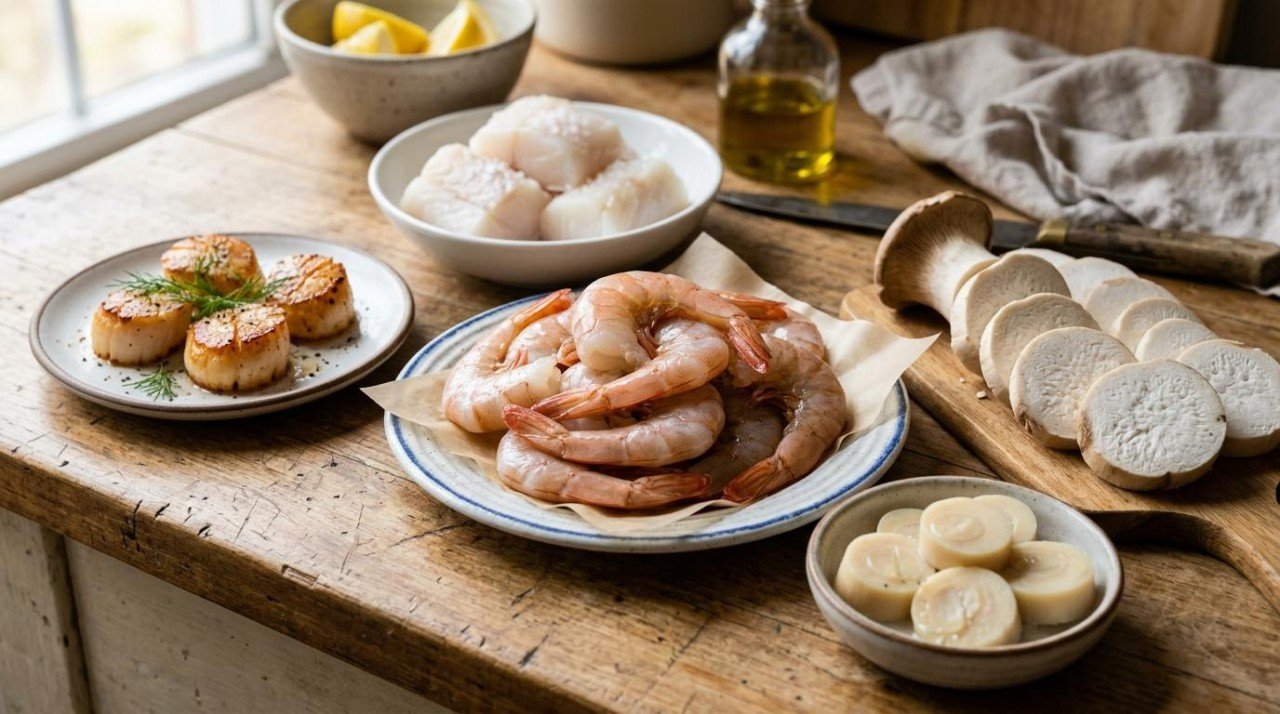
- Scallops — the closest match on sweetness, speed, and firm bite
- Firm white fish (cod, halibut, monkfish) — the everyday seafood swap for tacos, curries, and stews
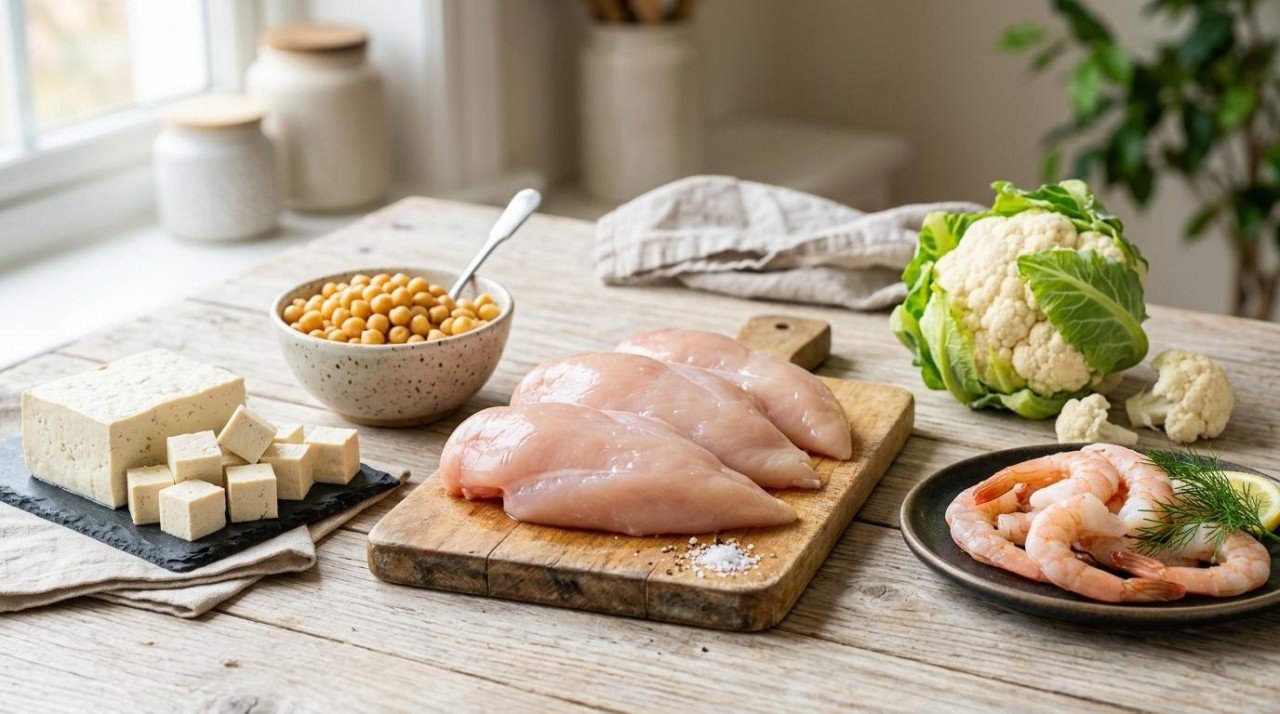
- Chicken — the non-seafood default; works anywhere shrimp is sauteed or stir-fried
- Crawfish, langostino, or lobster — nearly interchangeable with shrimp, off-limits with a shellfish allergy
- Crab meat — for cold salads, dips, and anything folded in at the end
- Squid (calamari) — quick-cooking and chewy-sweet, for paella and seafood stews
- Extra-firm tofu — the plant swap with the most protein and the best sauce absorption
- Hearts of palm — the most convincing plant-based shrimp texture
- King oyster mushrooms — sear the stems for a scallop-like, garlicky bite
- Chickpeas or white beans — the pantry answer for scampi and curries, with real fiber
- Imitation crab — cheap and useful cold; never safe with a shellfish allergy
- Store-bought plant-based shrimp — when the shrimp shape itself matters
First: If This Is About a Shellfish Allergy
Shrimp is a crustacean, and the protein behind most shellfish reactions is tropomyosin, which is highly shared across shellfish species. In crustaceans it is close to identical: the amino acid sequences of tropomyosin overlap by 91 to 100 percent between shrimp, prawns, lobster, and crab. That is why an allergist will normally tell you to treat the whole crustacean group as off-limits: crab, lobster, crawfish, langostino, and prawns are all out.
Mollusks — scallops, squid, clams, mussels, oysters — are a genuinely different group with much lower cross-reactivity. The American College of Allergy, Asthma and Immunology notes that many shellfish-allergic people can eat mollusks with no problem, but that anyone with shellfish allergy symptoms should consult an allergist before eating any other kind of shellfish. Do not run that experiment on a weeknight based on a blog post.
Finned fish is the reassuring one: the protein in crustacean shellfish is different from fin fish, so shellfish-allergic people generally can eat fin fish. And the trap to know about: imitation crab is made from pollock, but imitation shellfish (surimi) may contain shellfish or use shellfish as flavoring. It is not an allergy-safe swap.
If you are cooking for a shellfish allergy, your reliable lanes here are white fish, chicken, tofu, hearts of palm, king oyster mushrooms, and chickpeas.
Scallops
- Swap: 1 lb shrimp → 1 lb scallops. Bay scallops go in whole and are almost exactly shrimp-sized; sea scallops should be halved or quartered. Cook bay scallops 2 to 3 minutes total, sea scallops about 90 seconds per side
- Best for: Scampi, garlic butter pasta, stir-fries, paella, skewers (sea scallops), sheet-pan dinners
- Skip it for: Shrimp cocktail, and anything simmered for more than a few minutes
- Shellfish allergy: A mollusk, not a crustacean — lower cross-reactivity, but clear it with an allergist first
- Health notes: Same nutritional territory as shrimp — lean, high in protein, almost no fat
Scallops share the two things that make shrimp shrimp: a clean sweetness and a firm, springy bite that arrives in about two minutes. Nothing else on this list matches both. Buy dry-packed scallops if you can find them; wet-packed scallops are treated with a phosphate solution that makes them weep water into the pan and refuse to brown.
Pat them dry, use a hot wide pan, and do not crowd it. The failure mode is identical to shrimp: one minute past done, you have a rubber eraser. Pull them when the outside is opaque and the center still looks faintly translucent.
Firm White Fish: Cod, Halibut, or Monkfish
- Swap: 1 lb shrimp → 1 lb skinless firm white fish, cut into 1-inch chunks. Add 4 to 6 minutes of cooking; it is done at 145F, when it turns opaque and flakes
- Best for: Fish tacos, curries, chowders, paella, tomato-based stews, skillet dinners
- Skip it for: Shrimp cocktail, and vigorous stir-fry tossing, which breaks the chunks apart
- Shellfish allergy: Generally fine — finned fish is a different protein family
- Health notes: Cooked cod runs about 89 calories, 19 grams of protein, and under a gram of fat per 3 ounces — near-identical to shrimp
Monkfish is the standout if you can find it. It is dense and springy rather than flaky, sweet, and firm enough to hold a cube through a stew — it gets called poor man's lobster for a reason, and it is the closest textural stand-in for shrimp of any fish. Halibut and swordfish hold their shape almost as well.
Cod, haddock, and pollock taste right but flake, so treat them gently: add them near the end, lay the pieces in rather than stirring them in, and turn them once with a thin spatula. If the dish is a taco or a curry where a little breakup does not matter, cod is the cheap and excellent choice.
Chicken
- Swap: 1 lb shrimp → 1 lb boneless chicken breast or thigh, cut into 3/4-inch pieces. Cook 5 to 8 minutes to 165F, and add it much earlier in the recipe than the shrimp would have gone in
- Best for: Scampi, stir-fries, fajitas, fried rice, curries, pasta, skewers
- Skip it for: Shrimp cocktail and ceviche, and expect a genuinely different dish in gumbo or paella
- Shellfish allergy: Safe
- Health notes: Comparable protein per serving; thighs carry a little more fat and are far harder to overcook
This is the swap most people actually need, because a lot of households have one person who does not eat seafood. Chicken slots into every sauteed shrimp dish, with one adjustment: timing. Shrimp gets added at the end; chicken has to go in near the beginning, or come out of the pan and return at the end. Cut the pieces small and even so they cook through before the sauce reduces to nothing.
What chicken cannot do on its own is shrimp's sweet, briny background. Push the flavor back in with more garlic, a hard squeeze of lemon at the end, and a pinch of smoked paprika or Old Bay. If seafood flavor is not off the table, half a teaspoon of fish sauce does the job invisibly. For the details of each cut, see the guides to chicken breast substitutes and chicken thighs.
Crawfish, Langostino, or Lobster
- Swap: 1 lb shrimp → 1 lb cooked tail meat, 1:1. It is almost always sold precooked, so fold it in during the last minute, ideally off the heat
- Best for: Etouffee, bisque, seafood pasta, rolls, cold salads, dips
- Skip it for: Anything with a long cook time, which turns it rubbery, and any recipe on a budget if you are buying lobster
- Shellfish allergy: All crustaceans — completely off-limits
These are the true one-for-one swaps. Crawfish tails are the closest of all: same sweetness, slightly more mineral, and a bag of frozen Louisiana tails is often cheaper than shrimp. Langostino tails, the ones sold frozen at warehouse and specialty stores, split the difference between shrimp and lobster and cost far less than lobster does.
The only real rule is restraint. Precooked crustacean meat is already at the finish line, so every extra minute in the pan is a minute of shrinkage and toughening. Build the sauce first, kill the heat, then stir it in.
Crab Meat
- Swap: 1 lb shrimp → 1 lb lump crab meat, or three to four 6-ounce cans, drained. Fold in at the very end with a light hand
- Best for: Cold seafood salads, dips, creamy pastas, chowders, rolls, cakes and patties
- Skip it for: Skewers, stir-fries, or anything that needs a firm individual bite — crab shreds
- Shellfish allergy: A crustacean — off-limits
Crab brings the sweetness but not the structure. Where a shrimp holds its shape and gives you something to bite, crab dissolves into the dish, which is wonderful in a cream sauce or a dip and disappointing on a skewer. Canned claw meat is a fraction of the price of lump and perfectly good anywhere it is going to be mixed in.
Squid (Calamari)
- Swap: 1 lb shrimp → 1 lb cleaned squid, cut into 1/2-inch rings with the tentacles left whole. Cook it either 2 minutes or 30 to 45 minutes — nothing in between
- Best for: Paella, fra diavolo, seafood stews, stir-fries, fried calamari
- Skip it for: Shrimp cocktail, and any recipe with a 10-minute simmer you cannot adjust
- Shellfish allergy: A mollusk — see the allergy section above
Squid is cheap, sustainable, and criminally underused, but it has the strictest timing on this list. Hot and fast keeps it tender; long and slow breaks the connective tissue down and makes it tender again. The dead zone in the middle produces the rubber-band texture that put people off calamari in the first place. Pick a side and commit.
Extra-Firm Tofu
- Swap: 1 lb shrimp → one 14 to 16 oz block of extra-firm tofu, pressed 15 minutes, torn or cut into 1-inch pieces and browned hard before the sauce goes in
- Best for: Scampi, stir-fries, curries, fried rice, tacos, noodle bowls
- Skip it for: Cold platters, and any dish where a snappy bite is the whole point
- Shellfish allergy: Safe (check for soy allergies instead)
- Health notes: About 10 grams of protein per 3 ounces — half of shrimp's, but the most of any plant option here, plus calcium when it is set with calcium sulfate
Tofu is a blank canvas, which is exactly the problem and exactly the opportunity. It will not taste like shrimp on its own, so give it the flavors that surrounded the shrimp: garlic, butter or olive oil, lemon, Old Bay, chili flakes. A pinch of crumbled nori or kelp granules in the marinade adds the sea-salt note that makes people say the dish tastes like seafood.
For a chewier, more shrimp-like texture, freeze the pressed block, thaw it, and squeeze the water out. The ice crystals open up the structure and the result holds sauce far better.
Hearts of Palm
- Swap: One 14 oz can of whole hearts of palm stands in for about 8 oz of shrimp. Rinse well, slice into 1/2 to 3/4-inch pieces, toss with Old Bay and a little lemon, then sear or bread and air-fry
- Best for: Shrimp-style tacos, po' boys, cold "shrimp" salad, breaded and fried bites
- Skip it for: Carrying the meal's protein on its own, and long simmers, which turn it to mush
- Shellfish allergy: Safe
- Health notes: About 41 calories, 3.7 grams of protein, and 3.5 grams of fiber per cup, but 622 mg of sodium — rinse it well
Of all the plant-based options, hearts of palm has the most convincing texture: mildly sweet, faintly briny from the brine it is packed in, and pleasantly flaky-springy in a way that reads as seafood rather than as vegetable. Sliced into rounds, the center pops out and leaves you with rings that look uncannily like calamari.
Be honest about what it is, though: it is a vegetable, with roughly a fifth of shrimp's protein. Serve it alongside beans, tofu, or a grain, not as a solo protein.
King Oyster Mushrooms
- Swap: 1 lb shrimp → 1 lb king oyster mushrooms. Slice the thick stems into 3/4-inch rounds, score a shallow crosshatch on each cut face, and sear 3 to 4 minutes per side in a hot, barely oiled pan until deeply golden
- Best for: Scampi, garlic butter pasta, seared "scallop" plates, grain bowls, skewers
- Skip it for: Cold dishes and anything raw
- Shellfish allergy: Safe
- Health notes: Very low in calories with some fiber, but not a meaningful source of protein
The dense white stems of king oyster mushrooms have a firm, yielding chew that lands closer to a scallop than to a mushroom. A short soak in soy sauce, lemon, and a little kelp or nori before searing gets flavor into the middle of the medallion, which is the difference between a convincing swap and a plain seared mushroom.
Everything then depends on the sear. Pat them dry, use a wide pan, leave space between the pieces, and do not touch them until a real crust forms. Crowd the pan and they steam into something limp and gray.
Chickpeas or White Beans
- Swap: 1 lb shrimp → 2 cans (about 3 cups) drained chickpeas or cannellini beans. Crisp them in the pan first, then add them back in the last 5 minutes
- Best for: Scampi, garlic-lemon pasta, curries, stews, grain bowls, cold salads with celery and lemon mayo
- Skip it for: Shrimp cocktail, skewers, and any dish where a distinct bite of protein is the point
- Shellfish allergy: Safe
- Health notes: About 269 calories, 15 grams of protein, and 12 grams of fiber per cooked cup
This is the swap that is always available, always cheap, and the only one on the list that beats shrimp nutritionally on any axis — namely fiber, which shrimp has none of. In a garlic, white wine, and lemon sauce, chickpeas are shockingly good; the sauce was always doing most of the work.
Do not just tip them in from the can. Drain, dry, and fry them in the oil or butter until the edges blister and brown, then build the sauce around them. That step is what gives them a meaty presence instead of a soft, canned one. Chickpeas are also a straightforward win for the plant variety your gut bacteria feed on.
Imitation Crab (Surimi)
- Swap: 1 lb shrimp → 1 lb imitation crab sticks or flakes, cut into bite-sized pieces and added off the heat or in the final 30 seconds
- Best for: Cold seafood salads, sushi bowls, dips, California-roll-style dishes, feeding a crowd cheaply
- Skip it for: Any hot cooked dish, where it goes soft, sweet, and stringy
- Shellfish allergy: Not safe — it may contain shellfish or shellfish-derived flavoring
- Health notes: Pollock plus starch, sugar, and salt, so noticeably less protein and more sodium and refined carbohydrate than real seafood
Imitation crab earns its place for one job: cold, creamy, mayonnaise-bound seafood salads where nobody is fooled and nobody minds. It is inexpensive and needs no cooking. It is also the one item here that is closer to an ultra-processed product than a whole food, so treat it as an occasional convenience rather than a staple.
Store-Bought Plant-Based Shrimp
- Swap: Follow the package, but it is typically 1:1 by weight and needs only 2 to 3 minutes to heat through
- Best for: Cocktail platters, scampi, tacos, and any dish where the curled shrimp shape is part of the appeal
- Skip it for: Protein — most versions have very little — and long cooking, which breaks the gel structure down
- Shellfish allergy: Usually safe, but read the label for wheat, soy, and shared-equipment warnings
These are typically built from konjac, algae or seaweed, mung bean protein, and starch, which together mimic shrimp's springy snap better than any whole food does. They are the right call when the visual matters — a cocktail platter, a paella you are serving to guests. They are expensive per serving and thin on nutrition, so think of them as a shape and texture solution rather than the protein of the meal.
Which Swap for Which Dish
- Scampi and garlic butter pasta: Scallops, chicken, king oyster mushrooms, chickpeas
- Shrimp cocktail and cold salads: Crawfish, langostino, lobster, imitation crab, plant-based shrimp
- Tacos: Cod or other white fish, chicken, hearts of palm
- Stir-fries and fried rice: Chicken, squid, bay scallops, extra-firm tofu
- Curries and coconut milk dishes: White fish, chicken, chickpeas, tofu
- Paella, gumbo, and seafood stews: Squid, firm white fish, scallops, or chicken with andouille
- Grilling and skewers: Sea scallops, monkfish or swordfish, chicken, king oyster mushrooms
- Breaded and fried: Hearts of palm, squid rings, cod
The Healthier Angle, Honestly
Shrimp is not the ingredient to feel bad about. A 3-ounce serving delivers about 84 calories and 20 grams of protein, with almost no saturated fat, plus iodine, selenium, and vitamin B12. The old worry about its cholesterol has largely been walked back: for most people, dietary cholesterol has a modest effect on blood cholesterol, since the liver simply produces less when you eat more. Saturated fat matters far more, and shrimp has very little.
So the genuine upgrade is not replacing shrimp with something leaner — almost nothing is. It is what a swap can add that shrimp cannot. Shrimp contains zero fiber; a cup of chickpeas brings 12 grams. Beans, mushrooms, and hearts of palm all count toward plant variety, which is the single most useful thing most of us can do for our gut bacteria.
The honest caveat runs the other way too. Hearts of palm, king oyster mushrooms, and konjac-based shrimp are texture solutions, not protein sources. If one of them is the centerpiece, build the rest of the plate around beans, lentils, tofu, or a whole grain so the meal still adds up.
Take the Guesswork Out of Eating Well
Eat Well Planner helps you organize your favorite recipes, plan balanced meals, and automatically generate shopping lists — all in one place. Whether you're tracking macros, managing dietary restrictions, or just trying to stop asking "what's for dinner?", we've got you covered.
Our AI-powered tools can adapt any recipe to your dietary needs, help you discover new meals you'll love, and even log your nutrition effortlessly. It's meal planning made simple.
Start Organizing Your Meals — FreeWhat Not to Use
- Crab, lobster, crawfish, or imitation crab, if the reason is an allergy. The first three are crustaceans; the fourth frequently carries shellfish flavoring
- Delicate flaky fish in stirred dishes. Tilapia, sole, and flounder shred into threads in a stir-fry or a stew. Save them for a gentle poach or a pan-fry
- Button or cremini mushrooms as a 1:1 swap. They release too much water and have none of the firm chew. It is the dense king oyster stem specifically that works
- Silken or soft tofu. It collapses the moment it meets a spatula. Extra-firm only
- Dried shrimp or shrimp paste. These are seasonings that deliver concentrated shrimp flavor, not a protein you can swap by weight — and they are not allergy-safe
- Canned tuna in a scampi. It turns pasty and its flavor is far too strong for a delicate garlic and lemon sauce
- Any swap on shrimp's clock. Three minutes leaves chicken raw and eight minutes turns scallops to rubber. Adjust the timing, not just the ingredient
The Bottom Line
Match the swap to the dish and the reason. If you just ran out, scallops or firm white fish will get you closest. If seafood is off the menu entirely, chicken is the easy answer and chickpeas are the quietly excellent one. If it is an allergy, stay well clear of the whole crustacean family and check anything labeled imitation.
A guide can only tell you what usually works. If you want to know what fits the specific recipe in front of you, Eat Well Planner lets you save that recipe and ask its AI recipe chat directly: "I am making this shrimp curry for someone with a shellfish allergy — what should I use, and how does the timing change?" It answers with your actual ingredient list and method in view. For a full rewrite rather than a line-by-line adaptation, Recipe Variations will regenerate the whole recipe shellfish-free, and if you are curious what a swap does to the nutrition, the Recipe Playground shows the change live before you commit. It is free to use.