The beef is browned, the pot is hot, and the recipe says add 1 cup dry red wine and scrape up the browned bits — and there is no red wine in the house. Or there is, but you do not drink, or you are cooking for someone who does not, and opening a bottle for half a cup was never the plan.
Red wine is replaceable, but it asks a little more of you than white does. In a savory dish it brings four things: acidity that cuts through fat, liquid to deglaze the pan, dark fruity depth, and — the one people forget — tannin, the faint grippy astringency that gives a braise its backbone and keeps a rich stew from tasting flat and sweet. Rebuilding the first two is easy. The last two are the negotiation.
The right pick depends entirely on what you are making. A two-hour beef braise forgives almost anything; a quick pan sauce where the wine is the sauce forgives very little. And if you are swapping to avoid alcohol specifically, there is a detail most recipes gloss over, so that comes first.
The Quick List
- Beef broth + red wine vinegar — the standard alcohol-free fix; works nearly everywhere
- Non-alcoholic red wine — closest flavor match, but read the label if you need true 0.0%
- Pomegranate juice + vinegar — the best juice option; tart enough to pass for wine
- Red grape juice + vinegar — intuitive and decent, but needs diluting
- Cranberry juice + vinegar — tart and dark; excellent in beef and game dishes
- Tomato paste + broth — rebuilds depth rather than fruit; made for bolognese and stews
- Red vermouth — seamless in braises, and it keeps for months (contains alcohol)
- Mushroom broth + soy sauce — the vegetarian umami route
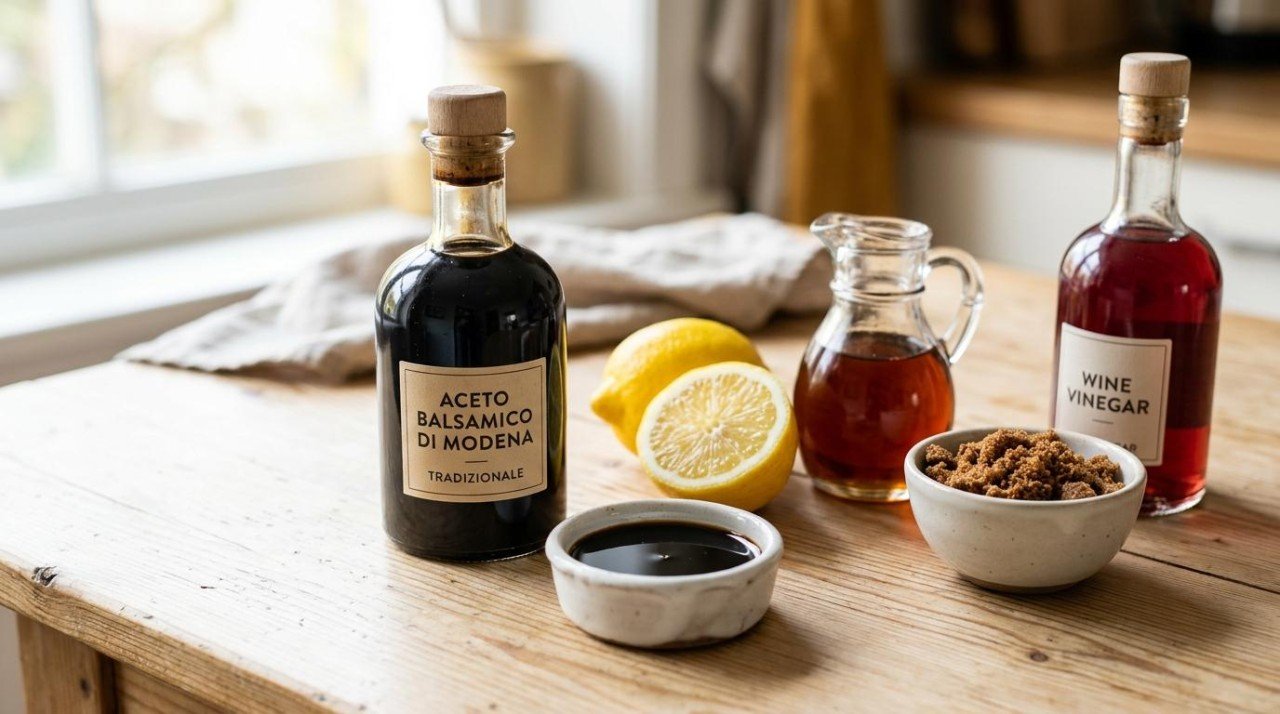
- Balsamic vinegar, diluted — for small amounts only; never straight
- Water + a splash of acid — the last resort, and better than you would guess
First, the Truth About Alcohol Cooking Off
You have heard that the alcohol burns off. It mostly does not — at least not as quickly as the saying implies. The USDA Table of Nutrient Retention Factors includes measured alcohol retention by cooking method:
- Stirred into hot liquid: 85% retained
- Flamed: 75% retained
- Added, not stirred in, baked 25 minutes: 45% retained
- Stirred in, simmered or baked 15 minutes: 40% retained
- Stirred in, simmered or baked 30 minutes: 35% retained
- Stirred in, simmered or baked 1 hour: 25% retained
- Stirred in, simmered or baked 1½ hours: 20% retained
- Stirred in, simmered or baked 2 hours: 10% retained
This matters more for red wine than white, because red wine dishes split so cleanly. A quick pan sauce keeps most of its alcohol; a three-hour beef braise drives nearly all of it out — 2 hours is as far as the USDA table goes, at 10% retained. But nothing reaches zero.
For most people this is trivia: a cup of wine divided across six servings of stew, most of it simmered away, is a very small amount. But if you are pregnant, in recovery, avoiding alcohol for medical or religious reasons, or cooking for a child, it is the difference between a swap that matters and one that does not. If that is you, skip the vermouth section and go to broth, a dealcoholized bottle, or juice.
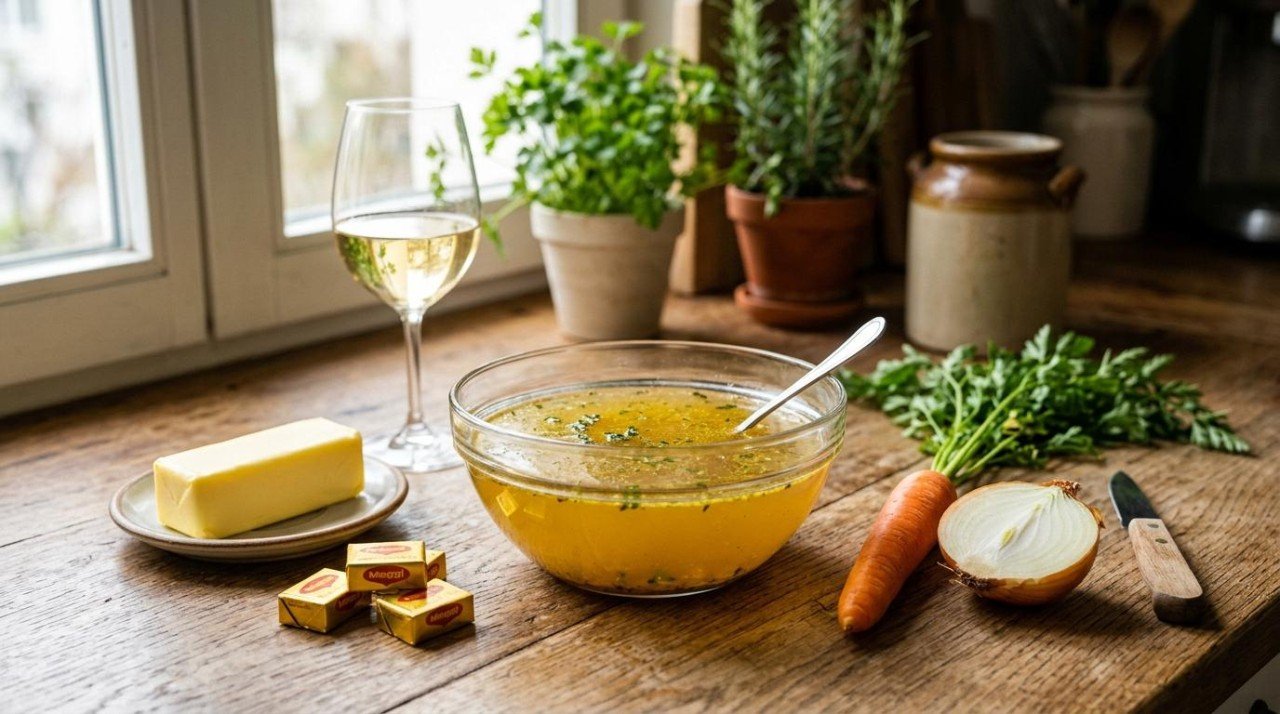
Beef Broth + Red Wine Vinegar
- Swap: 1 cup red wine → 1 cup beef broth + 2 teaspoons red wine vinegar (America's Test Kitchen uses ½ cup broth plus 1 teaspoon of vinegar or lemon juice)
- Best for: Braises, stews, pot roast, bolognese, pan sauces, deglazing — almost anything savory
- Skip it for: Nothing much, though it will not give you wine's fruit or color
- Health notes: Beef broth is where the sodium hides — see below
This is the answer for most people most of the time, and a genuinely good one rather than a consolation prize. The broth covers the liquid and savory depth, the vinegar covers the brightness, and in a long-cooked dish the gap between this and real wine is small enough that nobody at the table will raise it. Use mushroom or vegetable broth to keep it meat-free.
Two technique notes decide whether this works. Add the vinegar late, near the end of cooking, because acidity fades over a long simmer and a stew that tasted balanced an hour ago will taste flat by the time it is served. And start with less than you think: vinegar runs 5 to 7% acidity while wine is under 1%, so a heavy pour turns a braise sour in one go. Taste, then add more. Red wine vinegar is the natural match, but balsamic works if you pull back slightly on any sugar in the recipe.
Non-Alcoholic Red Wine
- Swap: 1:1
- Best for: Any dish where you want the wine flavor specifically — coq au vin, beef bourguignon, red wine pan sauces, risotto
- Skip it for: Strict 0.0% avoidance, unless the label says so (see below)
Dealcoholized reds have improved a lot, and in a cooked dish — where nobody is scrutinizing the finish — a decent dry one is close to seamless. It is the only swap that brings fruit, color, tannin, and acidity in one bottle, which is exactly why it is the pick when the dish is named after the wine.
One label detail matters if you are avoiding alcohol strictly. In the US, the term alcohol-free requires 0.0% ABV with no detectable alcohol, while wines under 0.5% ABV that still carry traces are labeled alcohol-removed or dealcoholized. For most cooks the distinction is academic. For some it is the entire point, so read the bottle rather than the shelf tag.
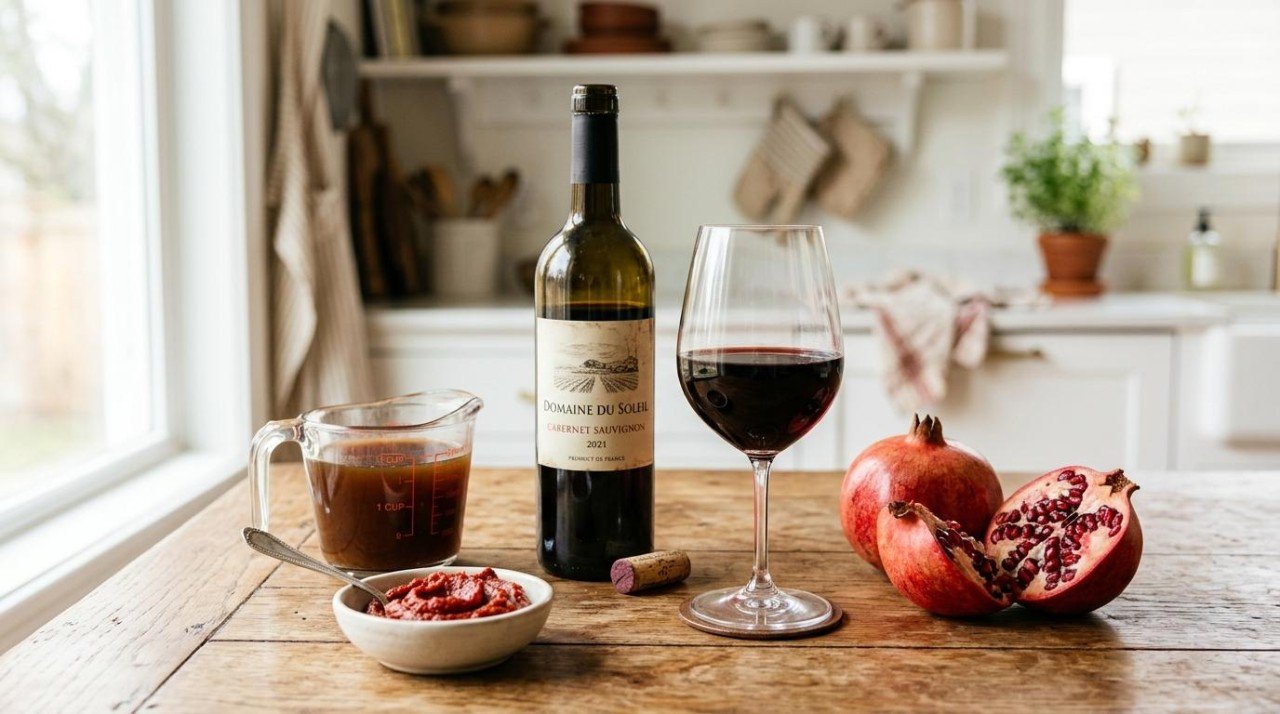
Pomegranate Juice + Vinegar
- Swap: 1 cup red wine → 1 cup pomegranate juice + 1 tablespoon red wine vinegar. For savory braises, cut it: ¾ cup juice + ¼ cup water + 1 tablespoon vinegar
- Best for: Beef and lamb braises, short ribs, pan sauces, glazes, anything Middle Eastern-leaning
- Skip it for: Delicate dishes, and any recipe already carrying a lot of sugar
- Health notes: About 32 g of sugar per cup — real, but see the honest math below
Pomegranate is the best of the juice options and the one worth buying on purpose. It is genuinely tart rather than merely sweet, and it carries a puckery, slightly astringent edge that is the closest thing on this list to wine's tannin — the quality every other alcohol-free swap misses. It is dark enough to keep a braise looking like a braise, too, which grape and cranberry manage but broth does not.
Buy 100% juice, not a cocktail blend. Even unsweetened it is sweeter than dry wine, so cut it with water in a savory dish and add the vinegar at the end. In lamb, short ribs, or anything with warm spices, this is not a downgrade at all — plenty of cooks reach for it deliberately.
Red Grape Juice + Vinegar
- Swap: 1 cup red wine → ¾ cup red grape juice + ¼ cup water + 1 tablespoon red wine vinegar
- Best for: Braises, pot roast, stews, glazes, anything already a little sweet
- Skip it for: Savory pan sauces and bolognese — the sweetness sticks out
Grape juice is the intuitive swap, and it is half right: it has the grape, but wine is dry and juice is emphatically not, so used straight it makes savory dishes taste faintly of dessert. Cutting it with water and adding real acid pulls it back toward dry. Even then it stays sweeter than wine, so taste before committing.
Where that sweetness is an asset — a pot roast, a braise with root vegetables, a glaze headed for the oven — it is a solid choice. Where the dish is savory and long-simmered, tomato paste and broth will serve you better. Unsweetened Concord grape juice is the best version of this swap; the sweetened purple stuff from concentrate is the worst.
Cranberry Juice + Vinegar
- Swap: 1 cup red wine → ¾ cup unsweetened cranberry juice + ¼ cup water + 2 teaspoons red wine vinegar
- Best for: Beef, venison and game, duck, holiday braises, pan sauces for red meat
- Skip it for: Delicate dishes; anything where a sharp berry note would read as odd
Cranberry is the sleeper here. It is already tart — tart enough that it needs noticeably less vinegar than grape juice does — and its astringency stands in for tannin better than most people expect. The color is right, too.
The catch is the label. Most supermarket cranberry juice is a sweetened cocktail carrying as much sugar as soda; you want 100% unsweetened juice, which is bracing enough to make you wince on its own and is exactly right in a pan. If all you have is the cocktail, skip the added vinegar entirely at first, taste, and expect the dish to lean sweet.
Tomato Paste + Broth
- Swap: 1 cup red wine → 1 cup broth + 1 tablespoon tomato paste + 2 teaspoons red wine vinegar
- Best for: Bolognese, ragu, beef stew, chili, braises — anything long-cooked and meaty
- Skip it for: Pan sauces and light dishes; anything where a tomato note would intrude
This one thinks differently from the rest. Instead of chasing wine's fruit, it rebuilds the depth — the savory background note that made you add wine in the first place. Fry the paste in the hot pan for a minute until it darkens before adding liquid; that step is doing the real work, building the same kind of background richness that anchovies or soy sauce bring.
In a bolognese this is not a compromise, it is arguably a lateral move — many classic recipes use both wine and tomato paste anyway, so leaning on one when the other is missing is a small adjustment rather than a rewrite. Most tomato-based recipes already contain paste, in which case simply add an extra tablespoon and make up the liquid with broth.
Red Vermouth
- Swap: 1:1, and cut back slightly on any sugar or sweet element in the recipe
- Best for: Braises, stews, pan sauces, mushroom dishes, anything you want a bit richer
- Skip it for: Alcohol-free cooking (it is fortified, typically 16 to 18% ABV — stronger than wine)
If you cook with wine occasionally but do not drink enough to justify opening bottles, this is the tip worth taking. Sweet red vermouth is wine fortified and infused with botanicals, so it brings acidity, structure, and dark fruit plus a faint bitter-herbal edge that suits beef and mushrooms especially well.
The real advantage is shelf life. Open red wine is tired within days, which is precisely why the half cup a recipe wanted turned into a wasted bottle; refrigerated vermouth keeps tasting good for months. Buy a decent bottle, keep it cold, and the problem stops recurring. The same logic applies to white wine, where dry vermouth plays the identical role.
Mushroom Broth + Soy Sauce
- Swap: 1 cup red wine → 1 cup mushroom broth + 1 teaspoon soy sauce + 2 teaspoons red wine vinegar
- Best for: Vegetarian and vegan braises, lentil and bean stews, mushroom ragu, anything meatless that needs body
- Skip it for: Dishes where you want fruit rather than savory depth
Meatless dishes lose the most when the wine goes, because there is no browned meat underneath doing the heavy lifting. This swap fills that hole from the umami side instead of the fruit side. Dried porcini soaked in hot water make the best version — use the strained soaking liquid and chop the mushrooms into the dish.
Go easy on the soy sauce: a teaspoon adds savory depth, a tablespoon makes the dish taste like soy sauce. A dash of Worcestershire does a similar job if the dish need not be vegetarian.
Balsamic Vinegar, Diluted
- Swap: 1 cup red wine → 1 cup broth or water + 1 tablespoon balsamic vinegar. Never use balsamic straight
- Best for: Recipes calling for small amounts of wine — a splash to deglaze, a couple of tablespoons in a sauce
- Skip it for: Any recipe where wine is a main liquid; it will bully everything else
Balsamic has the dark color, the grape origin, and a sweet-sour depth that reads as wine-adjacent — but it is a vinegar, several times more acidic than wine and considerably sweeter. It works when it is a supporting player and fails when asked to carry the dish.
Treat it as a seasoning rather than a liquid: dilute it, add it late, and taste. If the recipe wanted two tablespoons of wine to finish a pan sauce, a teaspoon of balsamic plus a splash of broth lands remarkably close.
Water + a Splash of Acid
- Swap: 1 cup red wine → 1 cup water + 2 teaspoons red wine vinegar, added late
- Best for: Deglazing, quick pan sauces, any recipe using a small amount of wine
- Skip it for: Dishes where the wine is the sauce — coq au vin has nowhere to hide
This is the swap people apologize for, and it works better than its reputation. When a recipe calls for a splash of wine to lift the browned bits off a pan, water does that job perfectly well — the flavor was in the fond, not the bottle. Add the acid at the end and most people will not notice a thing. It only collapses when wine is a headline ingredient rather than a supporting one.
Which Swap for Which Dish
Because the same substitute can be perfect in one pot and wrong in the next:
- Beef stew, pot roast, short ribs: Beef broth plus red wine vinegar, or pomegranate juice cut with water. The most forgiving case — everything mellows over two hours.
- Bolognese and ragu: Tomato paste plus broth. Skip the juices; sweetness in a long-simmered meat sauce is the classic mistake.
- Coq au vin and beef bourguignon: Dealcoholized red or red vermouth. The wine is the dish, so nothing thinner will do.
- Red wine pan sauce: Broth plus vinegar, or pomegranate juice. Add the acid off the heat at the end.
- Deglazing: Broth or plain water — the wine was mostly a solvent here. Acid at the end.
- Vegetarian stews and lentils: Mushroom broth plus a teaspoon of soy sauce. This is where the wine is missed most, so rebuild the savory side.
- Risotto: Broth plus a splash of vinegar at the end. Wine's job is cutting the butter and cheese, so keep the acid.
The Healthier Angle: The Resveratrol Thing, and the Sugar Math
Somebody always mentions that red wine is good for you, so it is worth being straight about it. The health halo rests largely on resveratrol, and the numbers do not support cooking with wine as a health strategy. Cancer Research UK notes that a low research dose of 5 mg is roughly the amount in a large glass of some red wines, while the high dose in the same trial was 1 gram — about 200 times more. That research used purified resveratrol, not wine, and the same piece notes that alcohol's own cancer risk outweighs any benefit the resveratrol might offer. Divide one glass across six servings of stew and you are well past nutritional relevance. Cook with wine because it tastes good — and do not feel you are losing anything by swapping it out.
The sugar in the juice swaps is a fairer concern, but it also shrinks under arithmetic. Bottled pomegranate juice runs about 32 g of sugar per cup. That sounds alarming until you remember you are using one cup across a pot that feeds six — roughly 5 g of added sugar per serving, less than a teaspoon, in a dish that also contains a good deal of meat and vegetables. Worth knowing, not worth worrying about.
The swap that genuinely deserves scrutiny is the popular one. Beef broth is where sodium enters a dish that had almost none — and even the reduced-sodium version carries about 540 mg per cup, roughly 23% of a day's limit, for 14 calories. The regular stuff runs higher still, and brands vary enormously. So: buy the lowest-sodium broth you can find, salt the dish yourself at the end, and lean on acid to do some of the work salt was doing. A splash of vinegar makes food taste more seasoned, not less, which is the single most useful trick in this post.
Take the Guesswork Out of Eating Well
Eat Well Planner helps you organize your favorite recipes, plan balanced meals, and automatically generate shopping lists — all in one place. Whether you're tracking macros, managing dietary restrictions, or just trying to stop asking "what's for dinner?", we've got you covered.
Our AI-powered tools can adapt any recipe to your dietary needs, help you discover new meals you'll love, and even log your nutrition effortlessly. It's meal planning made simple.
Start Organizing Your Meals — FreeWhat Not to Use
- "Cooking wine." The bottle in the vinegar aisle is poor wine with salt and preservatives added — harsh, and a quarter cup can bring several hundred milligrams of sodium. If you would not drink it, do not cook with it.
- Straight vinegar, 1:1. The most common mistake by far. Vinegar runs 5 to 7% acidity; wine is under 1%. Always dilute, always taste.
- Sweet or fruity wines. Port, sweet reds, and sangria make a savory braise cloying. Dry means dry.
- White wine, in dark dishes. It works flavor-wise in a pinch, but a beef braise made with white wine looks pallid and washed out. Reach for broth instead.
- Sweetened cranberry cocktail or grape drink. Sugar-water with a fruit note. If it is not 100% juice, it belongs in a glass, not a pan.
- Skipping the acid entirely. If you take one thing from this post: plain broth with no acid is why the substituted version tastes flat. The acid is the point.
The Bottom Line
Keep low-sodium broth and red wine vinegar in the pantry and you can rescue almost any red wine recipe on the spot. Add pomegranate juice if you cook alcohol-free often, or a bottle of red vermouth if you do not — either one turns the emergency into a non-event.
The catch with any substitution guide is that it deals in generalities, and you are not cooking a generality — you are cooking one specific dish. That is where Eat Well Planner helps: import the recipe you are actually making and ask the AI recipe chat what to use instead. It answers with your ingredients and method in front of it, so it knows whether the grape juice will clash with your bolognese or whether plain water is genuinely fine for that splash of deglazing liquid. Cooking alcohol-free for good? Recipe Variations rewrites the whole recipe with the swaps already worked in, so you are not adapting line by line every time.