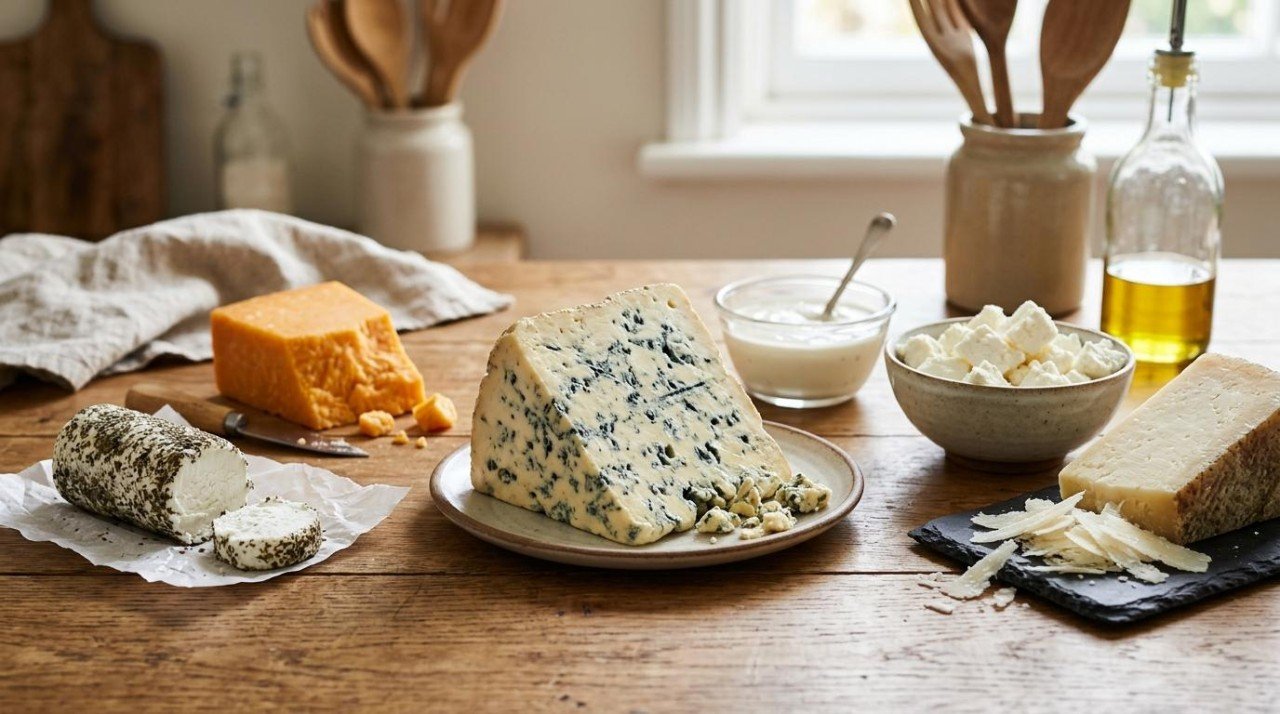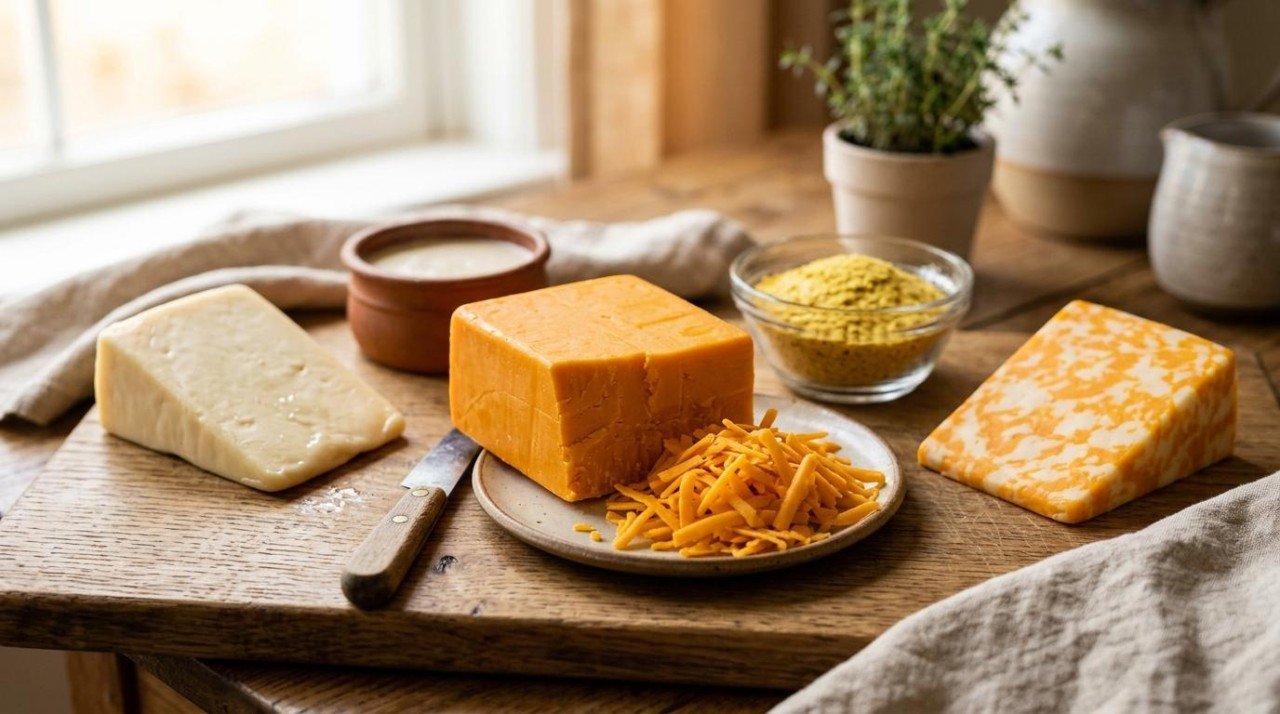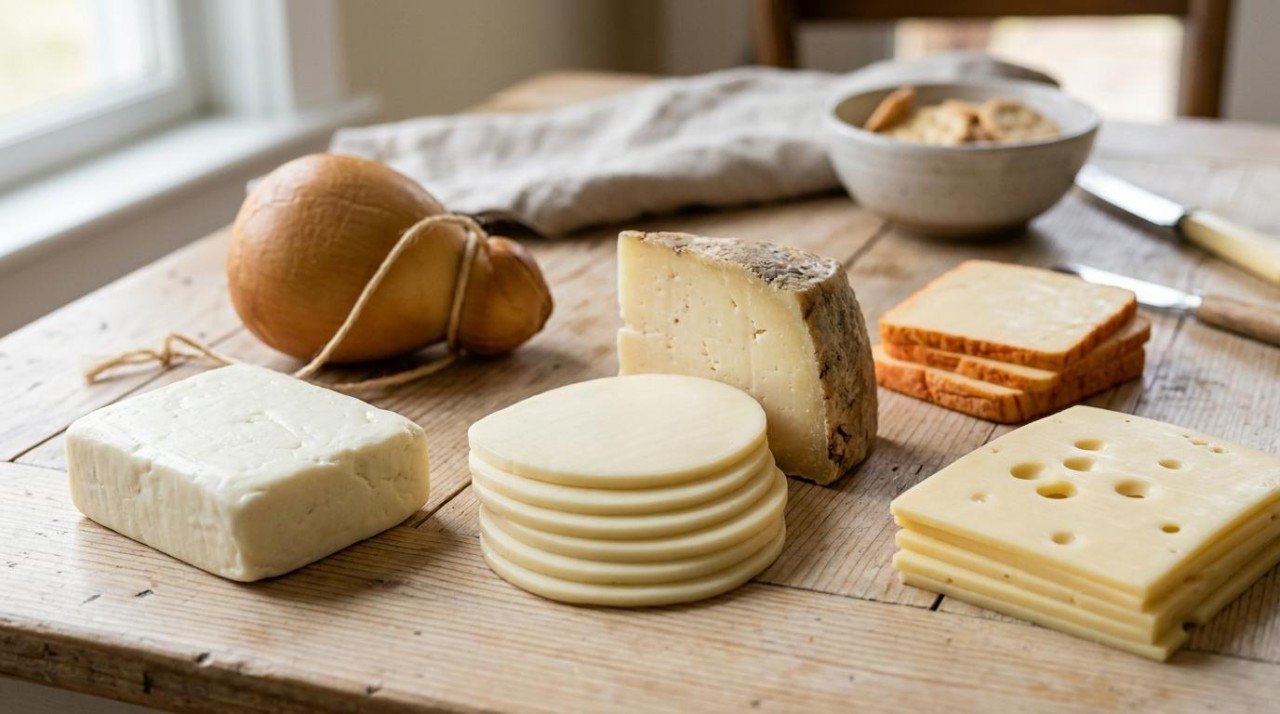
The steak is shaved, the onions are browning, the rolls are split — and the provolone drawer is empty. Or you are layering a baked ziti, building Italian subs for a crowd, or the recipe just says "8 slices provolone" and the store had none. Good news: provolone is one of the easier cheeses to replace, as long as you know which provolone the recipe meant.
Provolone is an Italian stretched-curd (pasta filata) cheese made from cow's milk, a cousin of mozzarella that has been aged. It comes in two very different styles. Provolone dolce ("sweet") is mild, smooth, and buttery — that is the sliced deli provolone most American recipes mean. Provolone piccante ("sharp") is aged at least four months and gets its tangy, almost peppery bite from goat-derived enzymes. Some provolone is also smoked.
So the right swap depends on two questions: is the cheese going to melt (cheesesteaks, hot subs, baked pasta) or stay cold (Italian subs, antipasto, sandwiches), and does the recipe want mild or sharp? Here is what works for each, with exact swaps.
The Quick List
- Low-moisture mozzarella — the closest relative; same stretch, milder flavor
- Fontina — silky, nutty, and an even better melter; great in baked pasta and hot sandwiches
- White American — the creamy cheesesteak classic; melts into the meat
- Muenster — mild, gooey, and widely sold sliced; a near-perfect sub for mild provolone
- Swiss or Emmental — nutty, stretchy, and the lowest-sodium option on the list
- Monterey Jack — buttery and very melty; good for hot sandwiches and bakes
- Young Gouda or Havarti — creamy, mild melters for sandwiches and panini
- Smoked scamorza or smoked mozzarella — the stand-in for smoked provolone
- Aged Asiago — for recipes that want sharp (piccante) provolone
- Mozzarella + Parmesan or Pecorino — a cheap blend that fakes sharp provolone in cooked dishes
- Dairy-free provolone-style slices — for a plant-based version
Which Substitute for Which Dish
If you are mid-recipe, start here:
- Philly cheesesteak: White American for the creamiest, most traditional result; Muenster or mild fontina for the closest flavor to mild provolone; low-moisture mozzarella in a pinch.
- Hot subs (meatball, chicken parm, sausage and peppers): Low-moisture mozzarella, fontina, or Muenster. A sprinkle of Parmesan on top brings back some of provolone's savory edge.
- Baked ziti, lasagna, and other baked pasta: Low-moisture mozzarella, fontina, or a mix of the two. A little Parmesan or Pecorino in the blend covers sharp provolone.
- Cold Italian subs and deli sandwiches: Muenster, Swiss, young Gouda, or Havarti for mild provolone; aged Asiago for sharp.
- Antipasto platters and cheese boards: Aged Asiago for sharp provolone; fontina or smoked scamorza for mild or smoked.
- Pizza: Low-moisture mozzarella — many pizzerias blend it with provolone anyway, so mozzarella alone is a small change.
Low-Moisture Mozzarella
- Swap: 1:1 by weight or slice for slice; for sharp provolone, use the mozzarella + Parmesan blend below
- Best for: Baked ziti, lasagna, pizza, meatball and chicken parm subs
- Skip it for: Cold sandwiches where provolone is the main flavor; mozzarella tastes faint cold
- Health notes: Part-skim mozzarella has about 72 calories and 2.9 g saturated fat per ounce, versus about 100 calories and 4.8 g for provolone
Mozzarella and provolone are made the same basic way: the curd is heated and stretched into a smooth, elastic mass. The difference is that provolone is aged, which firms it up and develops its flavor. That shared method is why low-moisture mozzarella melts and pulls almost exactly like provolone. On a baked ziti or a meatball sub, most people will not notice the swap.
Use the firm, low-moisture block or slices, not fresh mozzarella in water — fresh mozzarella releases liquid as it bakes and can make a sub soggy. Mozzarella is noticeably milder, so for a sandwich where provolone was carrying the flavor, add a pinch of salt and black pepper, or a sprinkle of Parmesan. Our mozzarella substitutes guide covers the reverse swap, and provolone is its top pick.
Fontina
- Swap: 1:1 by weight or slice for slice
- Best for: Baked pasta, hot subs, panini, cheesesteaks, grilled cheese
- Skip it for: Recipes that want sharp provolone's bite
Fontina may be the best all-around provolone stand-in for anything hot. It is an Italian cow's milk cheese from the Aosta Valley with a creamy, mild but savory flavor and a nuttiness that increases with aging, and it melts smooth and silky without turning greasy. In a baked ziti it gives a richer, creamier layer than provolone; on a cheesesteak it melts into the meat beautifully.
The Danish and American fontinas in most supermarkets are milder and softer than the Italian original, which actually makes them a close match for mild deli provolone. Italian Fontina Val d'Aosta is earthier and more flavorful — a good choice for a cheese board or when you want a bit more character. Fontina is softer than provolone, so it can be tricky to slice thin; chilling it well first helps.
White American
- Swap: 1:1 by weight or slice for slice
- Best for: Philly cheesesteaks, burgers, breakfast sandwiches, hot subs
- Skip it for: Baked pasta, cold Italian subs, and cheese boards
- Health notes: Processed American cheese is much saltier — about 420 mg sodium per ounce, versus about 250 mg for provolone
If you are making a cheesesteak, white American is not a compromise: it is one of the three most commonly used cheeses on the sandwich, alongside provolone and Cheez Whiz. Its emulsifying salts let it melt into a smooth, creamy coating that clings to every bit of shaved steak instead of sitting on top as a separate layer. Ask the deli counter for white American sliced thin.
The trade-off is flavor and salt. American cheese is mild and creamy with none of provolone's tang, and USDA data puts processed American at about 422 mg sodium per ounce. If you go this route, go light on salting the meat. And if you want a deeper look at how cheese choice changes this sandwich, our healthier Philly cheesesteak tested it.
Muenster
- Swap: 1:1 by weight or slice for slice
- Best for: Cheesesteaks, grilled sandwiches, cold subs, melts
- Skip it for: Recipes calling for sharp or aged provolone
American Muenster is a pale, semi-soft cheese with an orange rind and a very mild flavor and smooth, soft texture. It melts easily and gets gooey, which is why it shows up in grilled cheese, tuna melts, and quesadillas. Flavor-wise it sits very close to mild deli provolone, and nearly every supermarket deli sells it pre-sliced — often right next to the provolone.
Muenster is a little softer and browns faster than provolone, so on a hot sub under the broiler, keep an eye on it. On a cold sandwich, it is one of the most seamless swaps on this list.
Swiss or Emmental
- Swap: 1:1 by weight or slice for slice
- Best for: Cold subs and deli sandwiches, hot ham or turkey melts, cheesesteaks with mushrooms
- Skip it for: Baked ziti and pizza, where its sweet, nutty flavor reads as "not Italian"
- Health notes: About 54 mg sodium per ounce — less than a quarter of provolone's
Swiss and provolone are the two default deli cheeses for a reason: both slice cleanly, both stay pliable cold, and both melt into a smooth, stretchy layer. Swiss tastes sweeter and nuttier, with less of provolone's salty, tangy edge. On an Italian sub loaded with salami, peppers, and vinaigrette, the difference is easy to miss.
Its big advantage is sodium. According to USDA data, Swiss has about 54 mg sodium per ounce, compared to about 248 mg for provolone. On a sandwich that is already stacked with cured meats, that is a meaningful cut. For more on Swiss-style cheeses, see our Gruyere substitutes guide.
Monterey Jack
- Swap: 1:1 by weight or slice for slice
- Best for: Hot sandwiches, cheesesteaks, melts, baked dishes
- Skip it for: Cold Italian subs and antipasto, where it tastes bland
Monterey Jack is a mild, buttery American cheese that melts extremely well. It is softer and creamier than provolone, so it blankets food instead of stretching into strings — great on a cheesesteak or a hot turkey sub, less convincing if you want that provolone pull. Pepper Jack works too, if you are happy to add a little heat to a cheesesteak or chicken sandwich.
Young Gouda or Havarti
- Swap: 1:1 by weight or slice for slice
- Best for: Panini, grilled sandwiches, cold deli sandwiches
- Skip it for: Baked pasta and pizza; aged Gouda in particular is too sweet
Young Gouda and Havarti are both mild, creamy, buttery cheeses that slice well and melt smoothly — the same jobs mild provolone does on a sandwich. Gouda is slightly sweeter, Havarti a bit softer and tangier. Stick with young Gouda here: aged Gouda is firm and caramel-sweet, which is a different cheese entirely. Smoked Gouda is a good stand-in for smoked provolone on a sandwich.
Smoked Scamorza or Smoked Mozzarella
- Swap: 1:1 by weight
- Best for: Recipes that call for smoked provolone — baked pasta, panini, antipasto, pizza
- Skip it for: Recipes using mild, unsmoked provolone, where the smoke takes over
Scamorza is a southern Italian stretched-curd cheese with an elastic, stringy texture, shaped into a pear and hung to dry — very much in the provolone family. The smoked version (scamorza affumicata) has an almond-colored rind and a gentle smoky flavor, which makes it the natural replacement for smoked provolone. It is firmer and drier than fresh mozzarella, so it melts into a bake without turning watery.
If you cannot find scamorza, smoked mozzarella does the same job. In a pinch, smoked Gouda works on sandwiches, though it is sweeter.
Sharp Provolone Substitutes
Provolone piccante tastes very different from mild deli slices: sharp, salty, and tangy enough to stand up to cured meats and pickled peppers. Mild cheeses will taste flat in its place. These swaps bring back the bite.
Aged Asiago
- Swap: 1:1 by weight
- Best for: Antipasto platters, cheese boards, Italian subs, grating over pasta
- Skip it for: Recipes that rely on provolone's melt and stretch
Aged Asiago is a firm Italian cow's milk cheese with a sharp, nutty, savory flavor — the closest single-cheese match for sharp provolone on a board or in a cold sandwich. Slice it thin, since it is firmer and crumblier than provolone. Fresh (young) Asiago is mild and semi-soft, so check the label: you want the aged version.
Mozzarella + Parmesan or Pecorino
- Swap: For every 1 cup shredded sharp provolone, use 3/4 cup shredded low-moisture mozzarella + 1/4 cup finely grated Parmesan or Pecorino Romano
- Best for: Baked ziti, lasagna, stuffed shells, hot subs, pizza
- Skip it for: Cold sandwiches; it does not slice
This is the supermarket fix for sharp provolone in anything that bakes. Mozzarella supplies the melt and stretch, and a smaller amount of hard aged cheese supplies the salty, tangy depth. Pecorino Romano is sheep's milk and sharper than Parmesan, so it gets closer to piccante's bite — but it is also saltier, so cut back a little on any added salt. Keep the hard cheese to about a quarter of the blend, or it turns clumpy and oily instead of melting smoothly.
Out of one of those too? Our Parmesan and Pecorino Romano guides have options. Sharp white cheddar can also stand in on a hot sandwich, though it tastes like cheddar rather than Italian — see our cheddar guide.
Healthier and Dairy-Free Options
Provolone is not a nutritional problem cheese. According to USDA data, an ounce has about 100 calories, 7.3 grams of protein, 4.8 grams of saturated fat, and 214 mg of calcium — roughly a sixth of the daily value. Where it adds up is in the dishes it goes into: subs piled with cured meats and baked pastas with several cheeses. A few swaps help.
Part-Skim Mozzarella for Less Saturated Fat
- Swap: 1:1 by weight
- Best for: Baked ziti, lasagna, pizza, hot subs
- Health notes: About 72 calories, 2.9 g saturated fat, and 175 mg sodium per ounce, versus about 100 calories, 4.8 g, and 248 mg for provolone
Part-skim mozzarella has about 72 calories, 6.9 grams of protein, and 2.9 grams of saturated fat per ounce — about 40% less saturated fat than provolone with nearly the same protein. It still melts and browns well, which makes it the easy lighter swap in any baked pasta. In a big pan of lasagna using a pound or more of cheese, that difference adds up.
Swiss for Less Sodium
As above, Swiss has about 54 mg sodium per ounce versus about 248 mg for provolone. On an Italian sub or a grinder salad sandwich, where salami, ham, and pepperoncini already bring a lot of salt, swapping the cheese for Swiss is one of the simplest ways to bring the sandwich's total down.
Use Less of a Sharper Cheese
Because sharp provolone, aged Asiago, and Pecorino taste so much stronger than mild cheeses, a smaller amount delivers the same flavor. On a hot sub, try two thin slices of sharp provolone or Asiago where the recipe calls for three of mild — or swap a third of the mozzarella in a bake for a smaller amount of grated Pecorino. Less cheese, same impact.
Dairy-Free Slices
- Swap: Dairy-free provolone- or mozzarella-style slices, 1:1 slice for slice
- Best for: Hot sandwiches, cheesesteaks, baked pasta
- Skip it for: Cold sandwiches and cheese boards, where the texture is most noticeable
Several brands make dairy-free provolone-style slices, usually from coconut oil and starch. They melt best covered or under a lid, where steam helps them soften. Cold, they can be waxy, so they shine more on a hot sub than an Italian sub. For a dairy-free baked pasta, a sprinkle of nutritional yeast over a vegan mozzarella-style shred adds back some of the savory depth.
Take the Guesswork Out of Eating Well
Eat Well Planner helps you organize your favorite recipes, plan balanced meals, and automatically generate shopping lists — all in one place. Whether you're tracking macros, managing dietary restrictions, or just trying to stop asking "what's for dinner?", we've got you covered.
Our AI-powered tools can adapt any recipe to your dietary needs, help you discover new meals you'll love, and even log your nutrition effortlessly. It's meal planning made simple.
Start Organizing Your Meals — FreeWhat Not to Use
Fresh mozzarella on a hot sub or cheesesteak. It melts, but it releases a lot of water and turns the bread soggy. Use the firm, low-moisture kind.
Parmesan or Pecorino on their own. They bring flavor but will not melt into a smooth, stretchy layer — on a sandwich they crisp or clump. Use them as a flavor booster blended with a melting cheese.
Reduced-fat or fat-free slices. Provolone's melt comes from its fat. Low-fat cheese tends to turn rubbery or stay stiff on a hot sandwich. If you want lighter, part-skim mozzarella is the better route.
Aged cheddar on Italian dishes. It melts fine, but its tang reads clearly as cheddar, which can feel off in a baked ziti or a chicken parm sub. Save it for hot sandwiches where you do not mind the change.
The Bottom Line
For baked pasta and pizza, use low-moisture mozzarella or fontina. For a cheesesteak, white American, Muenster, or fontina. For cold subs, Muenster, Swiss, or young Gouda. For sharp provolone, aged Asiago on a board or a mozzarella-and-Pecorino blend in a bake. For smoked provolone, smoked scamorza or smoked mozzarella. And for a lighter dish, part-skim mozzarella or Swiss are easy wins.
A guide like this can only cover the general cases. The best swap depends on your actual recipe — how much cheese it uses, whether it melts or stays cold, and what else is in the dish. That is where Eat Well Planner helps: ask the AI recipe chat "I am making this baked ziti and have no provolone — what should I use?" and it answers for that recipe and amount. And if you want to see what swapping provolone for part-skim mozzarella does to a dish's saturated fat and nutrition score, the Recipe Playground shows the change live before you commit.