The recipe calls for four pork chops. The fridge has chicken, or a package of turkey cutlets, or a pork roast that is the wrong shape - and the pan is already hot.
Here is the encouraging part: a pork chop is one of the easiest things in the meat case to replace, because a chop is a shape and a cooking method more than it is a flavor. It is a thick, lean, quick-cooking slab that you sear, bake, bread, or grill and serve whole. Almost anything cut to roughly that shape will fill the slot.
The catch is temperature, and it trips up more dinners than any ratio. Whole cuts of pork are safe at 145°F followed by a three-minute rest, which is exactly why a chop can come off the heat juicy and faintly pink at the center. Poultry gets no such allowance - all raw poultry has to reach 165°F. So most chicken and turkey swaps walk into the pan with a 20-degree handicap, and cooking them on the recipe's clock is what turns them to cardboard. Nearly every fix below is a version of the same three moves: cut it thinner, cook it less, and brine it.
The Quick List
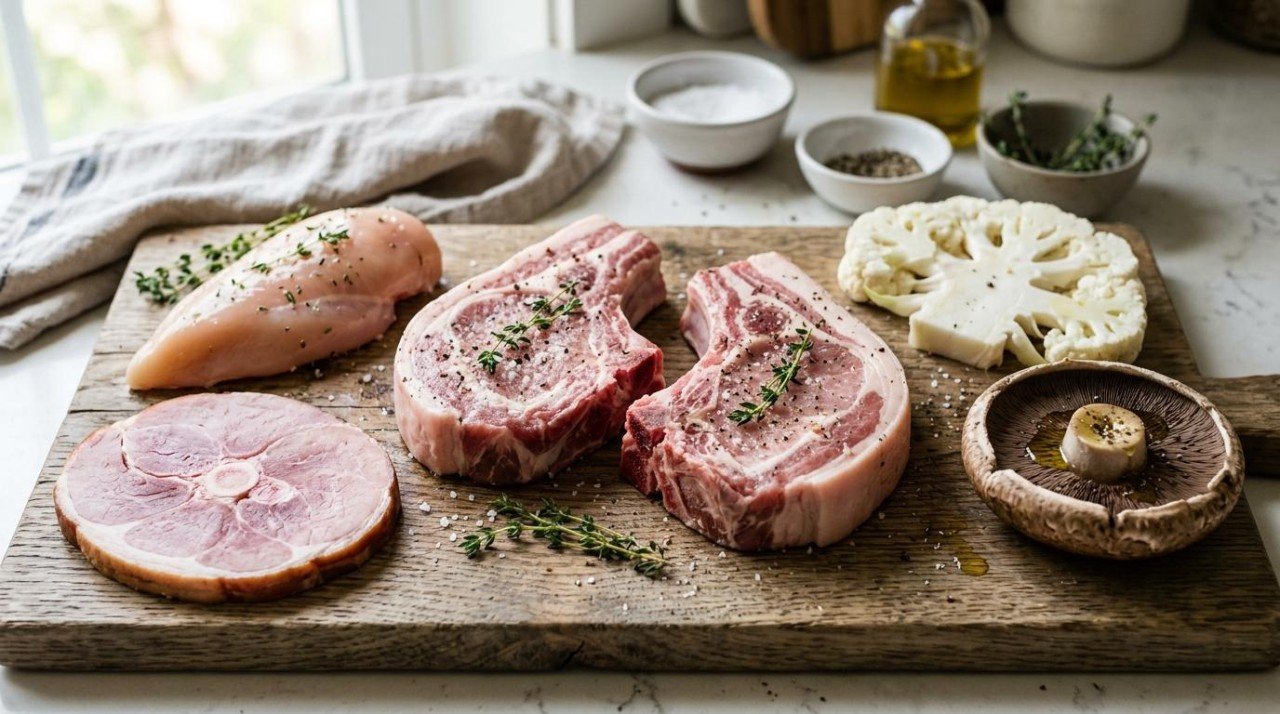
- Boneless, skinless chicken breast — the one you probably already have; leaner and cooks hotter, so cut it thinner and brine it
- Pork tenderloin medallions — same animal, same flavor, same 145°F; the closest swap there is
- A boneless pork loin roast you slice yourself — literally the same muscle as a center-cut chop, usually cheaper per pound
- Turkey cutlets — the leanest option here and the fastest to overcook; brilliant breaded
- Boneless, skinless chicken thighs — the forgiving pick when the chops were headed for a braise or a distracted weeknight
- Pork shoulder blade steaks or country-style ribs — the right cut for smothered and braised chop recipes
- Ham steak — already cooked and cured; the fastest dinner on this list, and the saltiest
- Lamb or veal loin chops — the same anatomy from a different animal, cooked exactly the same way
- Top sirloin steak or cube steak — the beef answer, and cube steak is the best breaded-cutlet swap of all
- Extra-firm tofu slabs — the plant swap that covers the widest range of chop recipes
- Seitan or store-bought plant-based cutlets — the chewiest, most cutlet-like plant option
- Portobello caps or cauliflower steaks — the plate-shape swap; pair them with beans for a real meal
Boneless, Skinless Chicken Breast
- Swap: 4 boneless pork chops (about 6 oz each) → 4 boneless, skinless chicken breasts. If the breasts are thicker than about ¾ inch, halve them horizontally into cutlets or pound them even
- Best for: Breaded and pan-fried chops, skillet chops with a pan sauce, grilling, baked and sheet-pan dinners
- Skip it for: Long braises and smothered-chop recipes - lean breast goes stringy over an hour in liquid
- Cook & moisture: Pull at 165°F, not a degree more, and start checking several minutes early. A 30-minute salt brine is the single biggest upgrade you can make
- Health notes: Slightly leaner - about 140 calories, 3 grams of fat and 1 gram of saturated fat per 3 ounces against 153 calories, 6.2 grams of fat and 1.8 grams of saturated fat for a trimmed loin chop. Closer than most people expect
Chicken breast is the swap almost everyone reaches for, and it works well as long as you respect the two differences. It has to go 20 degrees hotter to be safe, and it has less fat to spare while it gets there. That combination is why chicken-for-pork swaps so often disappoint.
Thickness fixes most of it. A 1-inch pork chop and a 1-inch chicken breast look interchangeable, but the chicken has to spend far longer in the pan to reach 165°F at the center, and the outside pays for it. Slice the breast horizontally into two thin cutlets and it cooks in three or four minutes a side, which is barely time to dry out. Brine it first - salt denatures the protein strands so they form a matrix that traps water - and you close most of the remaining gap. A tablespoon of kosher salt per cup of water, 30 minutes, then pat dry. Our full guide to substitutes for chicken breast covers the reverse problem if you end up swapping the other way.
Pork Tenderloin, Cut Into Medallions
- Swap: 4 chops → 1 whole pork tenderloin (1 to 1¼ lb), cut crosswise into 1½-inch pieces and pressed down to about 1 inch thick
- Best for: Anything a boneless chop does - searing, grilling, breading, sheet-pan roasting, glazes and pan sauces
- Skip it for: Braises and slow cookers, and recipes that want the bone for presentation or flavor
- Cook & moisture: Identical rules - 145°F and a three-minute rest. Medallions are thinner than they look, so start checking at 4 minutes a side
- Health notes: About 159 calories, 26 grams of protein, 5.4 grams of fat and 1.9 grams of saturated fat per 3 ounces - essentially the same as a trimmed loin chop, with a little more protein
This is the closest swap on the list because it barely counts as one. Tenderloin sits right alongside the loin the chop was cut from, cooks to the same temperature, tastes the same, and takes the same rubs and glazes. Cut into thick medallions and pressed flat with your palm, it plates like a small boneless chop.
Two practical notes. Peel off the silverskin - the pearly membrane along one side - with a thin knife first, or it shrinks and curls the medallions in the pan. And tenderloin is genuinely lean with no bone or fat cap for insurance, so it is the one pork cut where a thermometer earns its keep.
A Boneless Pork Loin Roast, Sliced Into Your Own Chops
- Swap: 4 chops → a 2 lb boneless pork loin roast, cut crosswise into four to five 1-inch chops
- Best for: Every chop recipe there is, since this is exactly what you would have bought
- Skip it for: Nothing, other than recipes built around a bone-in chop
- Cook & moisture: 145°F and a three-minute rest. Cut them thicker than the packaged chops at the store - 1 to 1¼ inches is far more forgiving than ½ inch
- Health notes: Same cut, same numbers as a center-cut chop
Pre-cut chops are often the same loin roast sliced by someone else, sold at a markup, and usually sliced too thin. Buying the roast and cutting your own takes two minutes and lets you pick the thickness, which matters more than almost anything else for a juicy chop. Thin chops hit 145°F at the center before the outside has browned; thick ones give you time to build a crust.
Turkey Cutlets or Turkey Breast Steaks
- Swap: 1½ lb pork chops → 1½ lb turkey cutlets, or a piece of boneless turkey breast sliced into ½-inch steaks
- Best for: Breaded cutlets (turkey schnitzel and milanese are excellent), quick skillet dishes with a pan sauce, sandwiches
- Skip it for: Grilling over high heat, braises, and any recipe longer than about 15 minutes
- Cook & moisture: The least forgiving swap here. Cutlets are thin and must reach 165°F, so they need only 2 to 3 minutes a side over medium-high heat. Brine or salt them; do not skip it
- Health notes: The leanest option on this list - about 125 calories, 26 grams of protein, 1.8 grams of fat and 0.5 grams of saturated fat per 3 ounces, under a third of the saturated fat of a trimmed pork chop
Turkey cutlets are what the meat case sells when it slices a boneless turkey breast into thin sheets, and they are a genuinely good chop substitute in one specific situation: when the chop was going to be breaded. Coated in flour, egg and breadcrumbs, they cook in five minutes total, and the crust does the job the pork's fat used to do.
Everywhere else, treat them with suspicion. There is almost no fat here, and 165°F is a long way for a thin piece of white meat to travel. Salt them at least 30 minutes ahead, get the pan properly hot so they brown before they overcook, and pull them the second they are opaque through. If they still come out dry, a pan sauce built on the browned bits with a splash of stock and a knob of butter is the standard rescue.
Boneless, Skinless Chicken Thighs
- Swap: 4 chops (6 oz each) → 6 to 8 boneless, skinless chicken thighs (they usually run 3 to 4 oz apiece)
- Best for: Smothered chops, braised and saucy chop recipes, slow cookers, grilling, sheet-pan dinners
- Skip it for: Recipes where a neat, sliceable piece is the point, and breaded cutlets - thighs are uneven and hard to bread flat
- Cook & moisture: The most forgiving meat here. Safe at 165°F but genuinely better at 175°F and up, because the collagen needs heat to melt. Almost impossible to dry out
- Health notes: About 170 calories, 9 grams of fat and 3 grams of saturated fat per 3 ounces - fattier than a lean pork chop, and richer in iron and zinc than chicken breast
If the pork chops were destined for a covered skillet with onions and gravy, thighs are the better swap by a distance. Dark meat carries the fat and collagen that a lean chop does not, so it improves over a long, wet cook instead of tightening up. Two thighs stand in for one chop by weight, and they take the same seasoning.
The trade-off is presentation. A thigh is a floppy, irregular piece of meat, so it will not plate like a chop and it will not bread neatly. Fold it in half or roll and tie it if you need something upright on the plate. Our chicken thigh substitutes guide has more on how dark meat behaves once you start swapping around it.
Pork Shoulder Blade Steaks or Country-Style Ribs
- Swap: 4 chops → 4 pork blade steaks (also sold as shoulder steaks or pork steaks), or about 2 lb boneless country-style ribs
- Best for: Smothered chops, braises, slow cookers, barbecue, anything that simmers under a lid
- Skip it for: Fast 15-minute skillet chops and breaded cutlets - they will be chewy
- Cook & moisture: These are safe at 145°F long before they are pleasant to eat. Brown them hard, then give them 60 to 90 minutes covered in liquid until a fork twists in with no resistance
- Health notes: More marbling than a loin chop, which is the point. Trim the big exterior fat and skim the braise before serving
Blade steaks are shoulder meat cut chop-thick, so they look like chops and behave like pot roast. That makes them the wrong swap for a quick dinner and the right one for every recipe that puts a lid on the pan. Where a loin chop gets tougher and drier the longer it cooks, a blade steak gets more tender.
If your recipe is a Southern-style smothered chop with onion gravy, this is genuinely an upgrade over what the recipe asked for - the collagen melts into the gravy and gives it body a lean chop never could.
Ham Steak
- Swap: 4 chops → 1½ lb ham steak, cut into 4 portions
- Best for: Skillet chops with a glaze (pineapple, mustard, maple, brown sugar), breakfast-for-dinner, chops with beans or greens
- Skip it for: Anything breaded, and any recipe with its own salt, brine, or salty sauce - the seasoning will double up
- Cook & moisture: Already fully cooked, so you are only browning and heating it. 3 to 4 minutes a side in a dry or barely oiled pan. No temperature to chase
- Health notes: Cured, so the sodium is in a different league from fresh pork. Skip every grain of added salt in the recipe and taste before you season anything else
Ham steak is the fastest dinner on this list and the one people forget is an option. It is cured pork from the leg, sold as a thick round slab, and it slots straight into any chop recipe built around a sweet or tangy glaze. Score the fat edge so it does not curl, get a hard sear on both sides, and brush the glaze on at the end so the sugar does not burn.
The honest caveat is that it is a processed meat, so it is a fine occasional swap rather than a weekly one. If sodium is what you are watching, the deli ham substitutes guide covers lower-sodium ways to get the same cured-pork flavor.
Lamb or Veal Loin Chops
- Swap: 4 pork chops → 4 lamb loin chops or veal loin chops of similar weight (lamb chops are usually smaller, so plan on 2 per person)
- Best for: Grilling, pan-searing with garlic and herbs, broiling - the same fast, dry-heat methods
- Skip it for: Mild, sweet glazed recipes where lamb's flavor would fight the sauce, and long braises (use shoulder chops instead)
- Cook & moisture: Whole cuts, so the same 145°F and three-minute rest applies, and many people pull lamb earlier for medium-rare. More forgiving than lean pork thanks to the extra fat
- Health notes: Richer - about 177 calories, 23 grams of protein, 9.1 grams of fat and 3.4 grams of saturated fat per 3 ounces for a trimmed lamb loin chop, roughly double the saturated fat of a lean pork chop
A lamb loin chop is the same cut from a different animal - loin muscle, small tenderloin, T-shaped bone - so it needs no adjustment to method or timing at all. Veal loin chops are even closer in flavor, mild and lean in a way that sits almost exactly where pork does.
The only thing that changes is character. Lamb is assertive and will take over a delicate recipe, so it suits garlic, rosemary, lemon, and mustard far better than apples and maple syrup. Trim the fat cap down if the richness is a concern.
Top Sirloin Steak or Cube Steak
- Swap: 4 chops → 4 top sirloin steaks of similar thickness, or 4 cube steaks (about 5 oz each) for anything breaded
- Best for: Grilled and pan-seared chops (sirloin), and breaded, pan-fried chops and country-fried cutlets (cube steak)
- Skip it for: Sweet fruit glazes built for pork, and long simmers - both cuts are lean and turn chalky
- Cook & moisture: Same 145°F line for whole cuts, and most people take steak lower for medium-rare. Cube steak is thin and pre-tenderized; it needs only 2 to 3 minutes a side
- Health notes: Comparable protein, more saturated fat than a trimmed loin chop, and a useful source of heme iron and zinc
Cube steak deserves more attention than it gets here. It is lean beef run through a mechanical tenderizer, which leaves it thin, flat, and dimpled - a shape that grips breadcrumbs better than anything else on this list. If the pork chop recipe was breaded and pan-fried, cube steak is the closest possible replacement, and it is usually the cheapest cut in the case.
Top sirloin covers the grilled and seared versions. Season it more simply than you would pork, since beef does not need the sweetness that pork invites, and let it rest properly before slicing. If your recipe called for ground pork rather than chops, the ground pork substitutes guide handles that case.
Extra-Firm Tofu, Cut Into Slabs
- Swap: 4 chops → 2 blocks (14 to 16 oz each) extra-firm or super-firm tofu, pressed and cut lengthwise into ¾-inch slabs
- Best for: Breaded cutlets, marinated and grilled slabs, sheet-pan dinners with a glaze, anything saucy
- Skip it for: Recipes built on the meat's own richness, and long braises where slabs break apart
- Cook & moisture: No safe temperature to hit, so you cook purely for texture and browning. It cannot dry out, but it needs a hot pan and a dry surface or it steams instead of searing
- Health notes: About 80 calories, 8 grams of protein and 0.5 grams of saturated fat per 3 ounces, and a complete plant protein with all nine essential amino acids
Tofu covers more chop recipes than people expect, because so many chop dinners are really about the crust or the sauce. Pressed and cut into thick slabs, it takes a breading beautifully and holds its shape on a grill pan.
Two rules decide whether it works. Press it - 20 minutes under something heavy, or buy super-firm, which comes pressed. And marinate it, because tofu contributes almost no flavor of its own where pork contributed plenty. If tofu has let you down before, our guide to cooking tofu and tempeh so they actually taste good walks through the technique.
Seitan or Store-Bought Plant-Based Cutlets
- Swap: 4 chops → about 1½ lb seitan cutlets, or 4 store-bought plant-based cutlets
- Best for: Breaded schnitzel-style cutlets, pan-seared chops with gravy, sandwiches
- Skip it for: Anyone avoiding gluten, and long wet braises, which turn seitan spongy
- Cook & moisture: Already cooked, so it only needs browning and heating - the fastest swap here after ham steak. It holds its texture and will not dry out
- Health notes: Very high in protein at about 24 grams per 100 grams, but it is a processed food with very little fiber and off-limits for anyone with celiac disease
Of the plant options, seitan comes closest to the dense, sliceable chew of a cutlet, which is precisely why so many vegan schnitzels are built from it. Slice it into flat pieces, bread it, and pan-fry - it is a texture and protein swap rather than a nutritional upgrade, but for a breaded chop recipe it is the most convincing one available.
Portobello Caps or Cauliflower Steaks
- Swap: 4 chops → 4 large portobello caps, or 4 thick slabs cut through the core of two large cauliflower heads (only the middle slices hold together)
- Best for: Grilled and glazed chop recipes, sheet-pan dinners, anything where the point is a browned slab on the plate
- Skip it for: Meals where this is the only protein - neither carries much
- Cook & moisture: Portobellos release a lot of water first, then concentrate; give them space and real heat. Cauliflower steaks want 425°F for 20 to 25 minutes, flipped once, until the edges caramelize. No overcooking risk with either
- Health notes: Low in calories and high in plant diversity. In a Johns Hopkins crossover trial, swapping mushrooms for beef cut daily energy and fat intake substantially while ratings of palatability, appetite, satiation and satiety did not differ significantly
These are shape swaps first and protein swaps a distant second. A marinated portobello cap grilled hard and brushed with the same glaze the chops were going to get is a genuinely good plate, and a browned cauliflower steak is one of the few vegetables that reads as a main course. Just serve them alongside beans, lentils, or a grain so dinner adds up, and count each one toward your plant variety for the week.
Which Swap for Which Dish
With chops, the cooking method decides the swap more than the flavor does:
- Quick skillet chops with a pan sauce: Pork tenderloin medallions, sliced loin roast, chicken breast cutlets, or lamb loin chops
- Breaded and pan-fried (schnitzel, milanese, country-fried): Cube steak, turkey cutlets, chicken cutlets, or seitan - all flat, thin, and easy to coat
- Grilled with a rub or glaze: Pork tenderloin, top sirloin, lamb chops, ham steak, portobello caps, or pressed tofu slabs
- Smothered chops, braises, and slow cookers: Pork blade steaks, country-style ribs, or chicken thighs - the cuts with collagen to melt
- Baked and sheet-pan dinners: Sliced loin roast, chicken thighs, tofu slabs, or cauliflower steaks
- Fastest possible dinner: Ham steak or plant-based cutlets, both already cooked
When you are not sure which one fits the specific thing you are cooking, that is exactly the question for the AI recipe chat in Eat Well Planner: it reads your actual recipe - the method, the pan time, the glaze, the rest of the ingredients - and tells you which swap suits that dish and how to adjust the timing and the seasoning, which no general guide can do. If you want to convert a recipe permanently, say to a plant-based or lower-sodium version, Recipe Variations rewrites the whole thing with the swap already worked in.
And when the swap is also a chance to eat a little better - trading some of the meat for tofu, mushrooms, or beans - Make It Healthier proposes exactly those changes and runs the numbers through a calculator to verify the real gain in fiber and protein before suggesting them. If you would rather see the effect before you commit, the Recipe Playground lets you swap the chops for chicken or tofu and watch the nutrition score move, live.
Take the Guesswork Out of Eating Well
Eat Well Planner helps you organize your favorite recipes, plan balanced meals, and automatically generate shopping lists — all in one place. Whether you're tracking macros, managing dietary restrictions, or just trying to stop asking "what's for dinner?", we've got you covered.
Our AI-powered tools can adapt any recipe to your dietary needs, help you discover new meals you'll love, and even log your nutrition effortlessly. It's meal planning made simple.
Start Organizing Your Meals — FreeWhat Not to Use
- Chicken breast in a smothered or braised chop recipe. The most common mistake here. An hour in gravy turns lean breast to string. Use thighs, or add the breast in the last 10 minutes
- Cooking a chicken or turkey swap on the pork recipe's timing. Poultry has to reach 165°F, not 145°F. If you leave a chicken breast in for the full chop time at chop thickness, it dries out - cut it thinner instead of cooking it longer
- Pork blade steaks or country-style ribs for a 15-minute skillet dinner. They need an hour under a lid. Seared fast, they are chewy
- Ham steak in a recipe with its own brine, salt, or salty sauce. It is already cured. Doubling up makes the dish inedible
- Thin-cut chops or cutlets on a hot grill. Anything under ½ inch overshoots before it can char. Save thin cuts for the skillet and breading
- Silken or soft tofu. There is no slab to sear; it collapses. Extra-firm or super-firm, pressed dry, only
- Portobellos or cauliflower as the meal's only protein. Both nail the plate shape and bring very little protein - pair them with beans, lentils, or a grain
The Bottom Line
If the dish is fast and dry-heat - seared, grilled, breaded - pork tenderloin medallions or a loin roast you slice yourself are the closest swaps, and chicken cutlets or turkey cutlets work well as long as you cut them thin and brine them. If the dish is slow and saucy, ignore the lean cuts entirely and reach for pork blade steaks or chicken thighs, which get better the longer they cook. And for the plant-based version, pressed tofu slabs cover the most recipes, seitan gives you the best breaded cutlet, and portobellos handle the grill.
The underlying rule is worth carrying to every protein swap you make: match the cut's fat and collagen to the cooking method, then adjust the timing to the new safe temperature. Once that clicks, substitutes for chicken breast and substitutes for chicken thighs will feel like the same puzzle. And any time you are standing over a hot pan wondering whether the thing in your fridge will actually work, the AI recipe chat in Eat Well Planner was built for exactly that question.