You are halfway through a recipe, or packing a lunchbox for a nut-free classroom, and the peanut butter jar is either empty or off the table. The good news: peanut butter is one of the easiest ingredients to replace, because most nut and seed butters behave almost identically in the jar and on the spoon.
The catch is that they do not all taste the same, and only some of them are safe for a peanut or tree-nut allergy. A sandwich swap, a batch of cookies, and a satay sauce each reward a slightly different pick. So the best substitute depends on two things: what you are making, and whether it needs to be allergy-safe.
Here is what actually works, with exact swaps, which jobs each one suits, and clear flags for which are safe in a nut-free house.
The Quick List
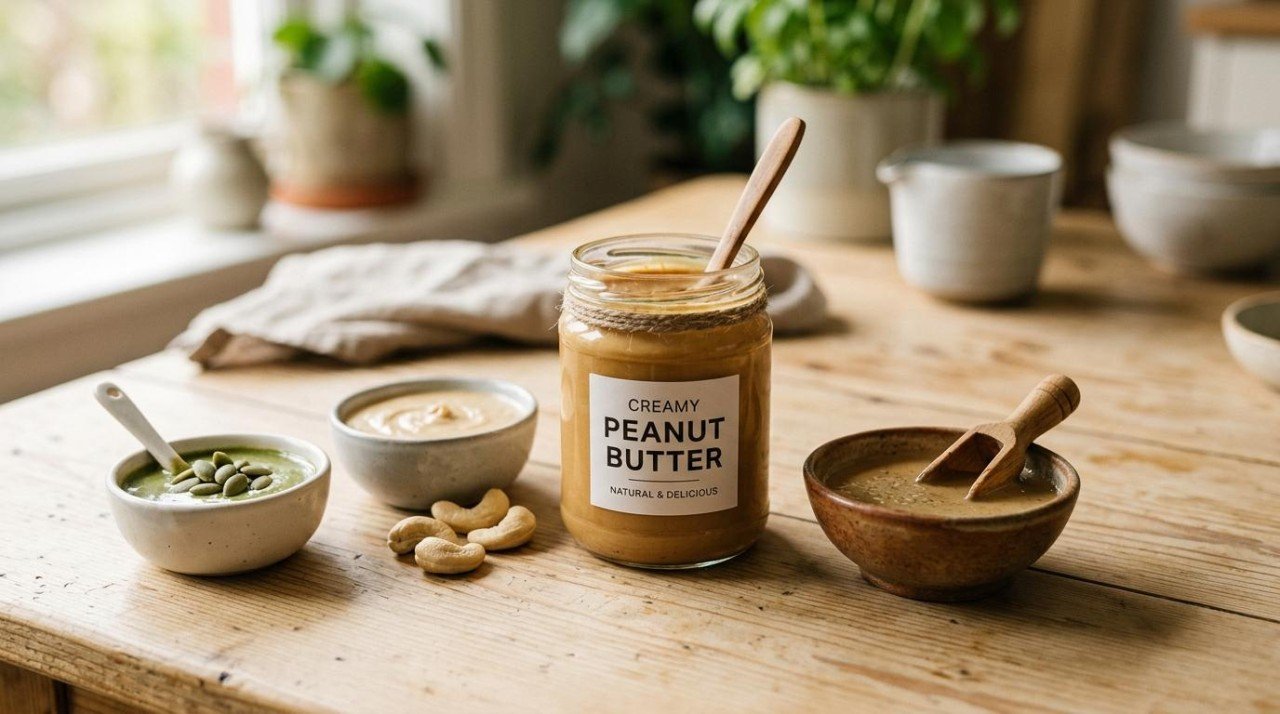
- Sunflower seed butter — the closest all-purpose stand-in, and school-safe
- Soy nut butter (like WOWBUTTER) — the closest to peanut butter in taste, and school-safe
- Almond butter — mild and versatile for sandwiches, baking, and smoothies (tree nut)
- Cashew butter — the mildest and creamiest, best for satay and noodle sauces (tree nut)
- Tahini — the savory-sauce specialist, and school-safe
- Pumpkin seed butter — the highest-protein seed option, and school-safe
- Powdered peanut butter — for smoothies and baking with far less fat (still peanut)
- Hazelnut butter — for sweet and dessert uses (tree nut)
A quick note on allergies before you scroll: the seed and soy butters (sunflower, soy nut, pumpkin seed, tahini) contain no peanuts or tree nuts, which is why they dominate school lunchboxes. Almond, cashew, and hazelnut butter are tree nuts and are not safe for a nut allergy. Powdered peanut butter is still peanut, so it helps you cut fat but does nothing for an allergy. When you buy any of these for allergy reasons, look for a brand made in a dedicated peanut-free and tree-nut-free facility, since cross-contamination is the real risk.
Sunflower Seed Butter
- Swap: 1:1 — 2 tablespoons peanut butter becomes 2 tablespoons sunflower seed butter
- Best for: Sandwiches, smoothies, oatmeal, satay sauces, most baking
- Watch out for: Baked goods can turn green (harmless, explained below)
- Health notes: About 170 calories and 6g protein per 2 tablespoons, with more vitamin E, magnesium, and selenium than peanut butter
Sunflower seed butter is the workhorse swap. The texture is nearly identical to peanut butter, it spreads the same, and it slides into sandwiches, sauces, and cookies without any recipe changes. The flavor is earthier and a touch less sweet, so kids raised on sweet peanut butter may notice, but it is the substitute most people forget is a substitute. Per the University of Connecticut's nutrition breakdown, it also carries more vitamin E and magnesium than peanut butter.
The one quirk: sunflower seeds are high in chlorogenic acid, which reacts with the alkaline baking soda in cookies and muffins to produce a harmless blue-green tint. The treats are perfectly safe and taste normal. To prevent it, cut the baking soda by about a third, or add an acidic ingredient like lemon juice, yogurt, or honey in place of a more alkaline sweetener. It is a fun fact, not a dealbreaker.
Soy Nut Butter (WOWBUTTER and Similar)
- Swap: 1:1 in every use
- Best for: PB&J and any recipe where you actually want the peanut butter taste
- Health notes: Similar calories and protein to peanut butter; soy adds a complete protein
Made from roasted soybeans, soy nut butter is the closest thing to peanut butter in flavor, aroma, and texture — close enough that it is the go-to for kids who miss their PB&J in a nut-free school. It spreads identically and swaps in at 1:1 everywhere. Because it is peanut-free and tree-nut-free, it clears most classroom allergy policies, though soy is itself a common allergen, so it is not universal. If your goal is to fool a peanut-butter loyalist, this is the pick.
Almond Butter
- Swap: 1:1
- Best for: Sandwiches, toast, oatmeal, smoothies, baking
- Skip it for: Any nut-allergy situation
- Health notes: About 196 calories and 7g protein per 2 tablespoons, with more than double the vitamin E of peanut butter and more calcium
Almond butter is the most popular peanut butter alternative for people without a nut allergy, and it earns it. The flavor is mild and slightly sweet, the texture is close (natural versions can be a little thicker and oilier), and it works in essentially every peanut butter application. It is pricier, but nutritionally it is a small upgrade: more vitamin E, calcium, and fiber than peanut butter, with comparable protein. For a general everyday swap on toast or in a smoothie, it is hard to beat.
Cashew Butter
- Swap: 1:1
- Best for: Satay sauce, noodle dressings, creamy blended sauces, mild smoothies
- Skip it for: Nut allergies; recipes that need a bold nutty flavor
- Health notes: About 180 calories and 5g protein per 2 tablespoons
Cashew butter has the mildest, creamiest flavor of any nut butter, which makes it the secret weapon for sauces. When you want the silky body of a peanut sauce without the assertive peanut taste taking over — a satay marinade, a noodle dressing, a blended dip — cashew butter melts in smoothly and lets the other aromatics lead. It is lower in fiber and protein than the others, so it is more of a flavor-and-texture choice than a nutrition one.
Tahini
- Swap: 1:1, but taste and adjust — it is more bitter and less sweet
- Best for: Savory sauces, satay, noodle dressings, salad dressings
- Skip it for: A straight sweet PB&J — the bitterness reads as off to peanut butter fans
- Health notes: About 180 calories per 2 tablespoons, and notably high in calcium and iron
Ground from sesame seeds, tahini is the savory specialist. In a peanut satay or a cold noodle sauce, it delivers the same creamy body with a toasty, slightly bitter depth. Because it is more bitter and far less sweet than peanut butter, balance it: add a little extra sweetener like maple syrup or honey, a splash of soy sauce for salt, and a few drops of toasted sesame oil to push it back toward that rich, nutty satay flavor. Being seed-based, it is also school-safe, and it brings more calcium and iron than any of the nut butters.
Pumpkin Seed Butter
- Swap: 1:1
- Best for: Smoothies, oatmeal, savory sauces, spreading — anywhere its earthy flavor fits
- Health notes: Among the highest-protein spreads, around 8g per 2 tablespoons, matching or beating peanut butter, plus iron, magnesium, and zinc
Pumpkin seed (pepita) butter is the nutrition standout and another school-safe seed option. It carries about as much protein as peanut butter, sometimes a touch more, along with a strong dose of iron, magnesium, and zinc. The flavor is distinctly earthy and green, and the color is a deep green that surprises kids, so it shines more in smoothies, oatmeal, and savory dishes than in a classic sweet sandwich. If you want the most nutrient-dense swap and do not mind a bolder taste, this is it.
Powdered Peanut Butter
- Swap: For spreading, mix 2 tablespoons powder with about 1 to 1.5 tablespoons water; for smoothies and batters, add the powder dry
- Best for: Smoothies, oatmeal, protein baking, dressings where you want peanut flavor with less fat
- Skip it for: Peanut allergies (it is still peanut), and any spread you want thick and rich
- Health notes: Most of the oil is pressed out, so it has a fraction of the fat and calories while keeping the protein and flavor
Powdered peanut butter is not an allergy substitute — it is made from peanuts — but it solves a different problem: getting peanut flavor into smoothies, oatmeal, or baking with far less fat, since most of the oil is pressed out before grinding. Blend it in dry, or reconstitute it with water for a thinner spread. It will never match the luxurious texture of the real thing, but for a flavor hit in a shake or a lighter cookie, it is genuinely useful.
Hazelnut Butter
- Swap: 1:1
- Best for: Sweet uses — spreading on toast, swirling into oatmeal, dessert baking
- Skip it for: Nut allergies; most savory sauces
Hazelnut butter (the unsweetened, cocoa-free kind, not chocolate hazelnut spread) leans sweet and dessert-forward. It is lovely on toast, in banana bread, or drizzled over oatmeal, but its distinctive roasted flavor does not blend into a savory satay the way cashew or tahini does. Treat it as a treat-leaning swap rather than an everyday one.
Matching the Swap to the Job
If you only remember one line: nut and seed butters swap in for peanut butter 1:1 almost everywhere, so the real decision is flavor and allergy-safety, not ratios. Quick guide:
- Sandwiches and PB&J: Soy nut butter or sunflower seed butter (school-safe); almond butter if nuts are fine.
- Baking (cookies, bars): Sunflower seed butter or almond butter — just manage the green tint with sunflower.
- Satay and noodle sauces: Cashew butter or tahini, balanced with a little sweetener and soy sauce.
- Smoothies and oatmeal: Almost anything, including Greek yogurt for creaminess or powdered peanut butter for a lighter option.
Where a general guide runs out of road is your specific recipe. That is exactly what the AI recipe chat in Eat Well Planner is for: pull up the dish you are making, ask "I am out of peanut butter and need this to stay nut-free — what should I use?", and it answers for that recipe rather than in the abstract. If you are adapting a whole recipe for an allergy, the Recipe Variations feature can rewrite it end to end with the swaps already worked in, and the nutrition score updates so you can see how a seed-butter swap actually changes the dish.
Take the Guesswork Out of Eating Well
Eat Well Planner helps you organize your favorite recipes, plan balanced meals, and automatically generate shopping lists — all in one place. Whether you're tracking macros, managing dietary restrictions, or just trying to stop asking "what's for dinner?", we've got you covered.
Our AI-powered tools can adapt any recipe to your dietary needs, help you discover new meals you'll love, and even log your nutrition effortlessly. It's meal planning made simple.
Start Organizing Your Meals — FreeWhat Not to Use
A few swaps that come up but tend to disappoint:
- Chocolate hazelnut spread in a savory recipe — the sugar and cocoa hijack the dish. It is a dessert spread, not a peanut butter stand-in.
- Plain mashed banana or apple butter as a one-to-one replacement — they add moisture and a little stickiness, so they can help bind in baking or spread on toast, but they bring almost no protein or fat and none of the nutty character.
- Nutritional yeast or "nutty" seasonings — they add a savory note but none of the body or richness a recipe expects from peanut butter.
The Bottom Line
For an everyday swap, reach for sunflower seed butter or almond butter. For a nut-free lunchbox, soy nut butter tastes the most like the real thing. For a satay or noodle sauce, cashew butter or tahini carry the flavor. And for the biggest nutrition bump, pumpkin seed butter quietly out-proteins the original.
Once you have found the swaps your family likes, Eat Well Planner makes them stick: save your go-to recipes, let the app plan the week around them, and build a shopping list that keeps the right jar in the pantry so you are never caught mid-recipe again.