You are halfway through dinner, the sauce is simmering, and the pasta box in the cupboard is empty — or it is full, but you have been meaning to make the base of the meal do a little more than plain white noodles. Either way, you need to know what actually works in its place.
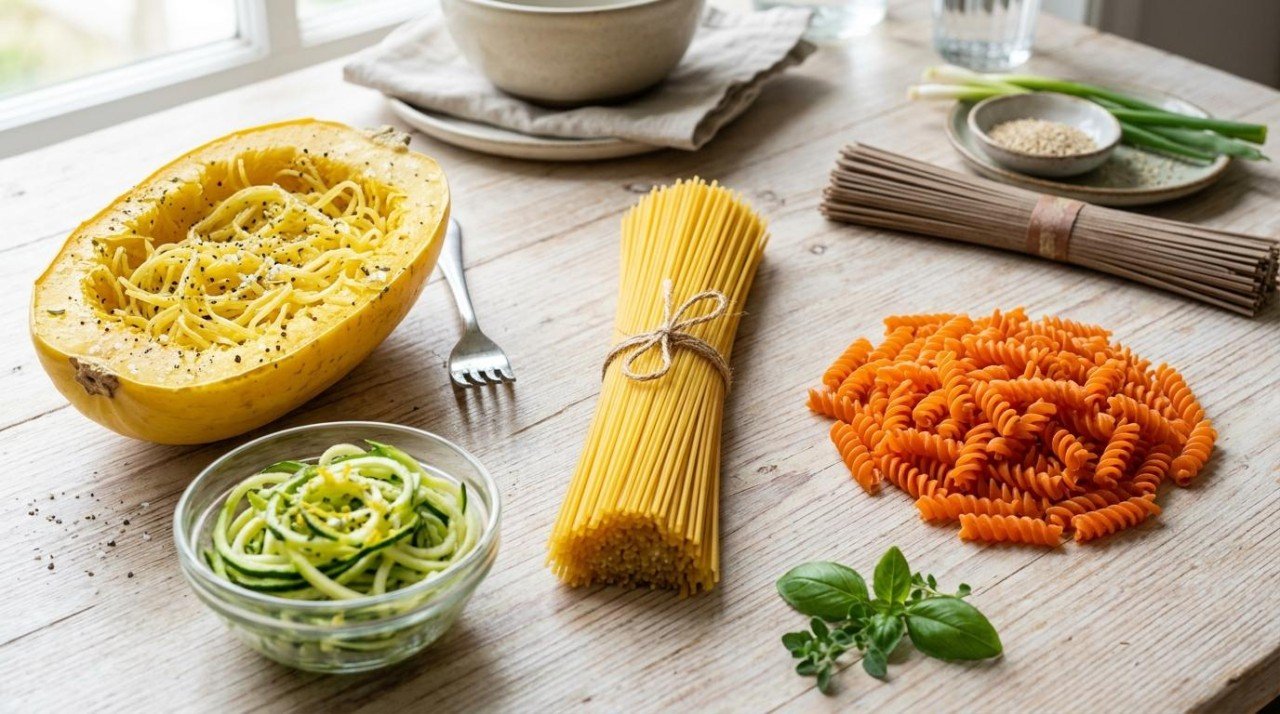
Here is the honest part up front: nothing on this list is a perfect, invisible stand-in for a bowl of white-flour spaghetti. Some come very close (whole wheat, bean pastas), and some are a different food that happens to hold sauce (spaghetti squash, zucchini noodles). Nobody is fooled by zoodles pretending to be spaghetti, and pretending otherwise is how you end up disappointed. The trick is matching the swap to what you are making and to how much you want to change the dish.
The good news is that pasta is one of the easiest things in the kitchen to swap, because most substitutes cook the same way — boil, drain, sauce — and several of them quietly add protein, fiber, and plant variety your usual noodles do not. Below, ranked roughly from easiest one-to-one swap to biggest nutritional upgrade, with the sauces each one suits.
The Quick List
- Whole wheat pasta — the closest thing to a free upgrade; cooks and behaves almost exactly like regular pasta
- Chickpea pasta — nearly double the protein and fiber; best for hearty tomato and meat sauces
- Red lentil pasta — same protein-and-fiber boost, softer and milder; great for kids and lighter sauces
- Edamame or black bean pasta — the highest-protein option, with a firmer bite and a distinct color
- Soba (buckwheat) noodles — not spaghetti, but excellent in their own right for brothy and sesame dishes
- Whole grains as the base — farro, barley, or quinoa when you just need something chewy to carry the sauce
- Spaghetti squash — a real vegetable with a stringy texture; best with brothy, punchy sauces
- Zucchini noodles — light and fresh; treat them as a vegetable, not a noodle
- Other spiralized vegetables — carrot, sweet potato, and beet noodles for color and crunch
Whole Wheat Pasta
- Swap: 1:1 by weight or by the box serving — no math needed
- Best for: Almost anything regular pasta does — tomato sauces, meat ragus, baked pastas, pesto
- Skip it for: A guest who thinks they hate whole wheat and is watching you cook a delicate dish
- Health notes: Roughly 5 to 6 grams of fiber per cooked cup versus about 2.5 grams in regular spaghetti, plus more iron and magnesium
This is the easiest upgrade on the list because it is still pasta — durum wheat, same shapes, same cooking method. The difference is that it keeps the bran and germ, which pushes cooked fiber from around 2.5 grams a cup up to roughly 5 to 6 grams, according to USDA data. It cooks a touch faster and can turn gummy if overdone, so start checking a minute or two before the box time and drain it while it still has bite.
The flavor is nuttier and the texture slightly firmer, which sturdy sauces love — a garlicky tomato sauce, a Bolognese, sausage and greens, a baked ziti. It is less flattering under a delicate lemon-butter or a thin cream sauce, where the wheatiness competes. If your household is whole-wheat-skeptical, a 50/50 mix with regular pasta is a genuinely useful stepping stone.
Chickpea Pasta
- Swap: 1:1 by weight; cook to just tender and drain promptly
- Best for: Hearty tomato sauces, meat sauces, baked pastas, anything you want to be a full meal on its own
- Skip it for: Delicate dishes where you want the noodle to disappear; it has a definite bean flavor
- Health notes: About 14 grams of protein and 8 grams of fiber per 2-ounce dry serving — roughly double both versus regular pasta
This is the swap that turns a side of pasta into an actual protein source. Made mostly from chickpea flour, brands like Banza advertise about 50% more protein, three times the fiber, and 25% fewer net carbs than regular pasta — and the label backs it up at roughly 14 grams of protein and 8 grams of fiber in a 2-ounce dry serving, against about 7 grams of protein and 3 grams of fiber in traditional pasta. That fiber and protein together is why a bowl of it actually keeps you full.
The catch is texture and timing. Bean pastas go from perfect to mushy fast, so cook them a minute short of the box time, taste often, and drain the second they are tender — do not let them sit in the hot water. They release more starch, so a quick rinse or a splash of pasta water stirred into the sauce keeps things from turning pasty. The flavor is mild but present, which is why it shines under bold, saucy dishes rather than subtle ones.
Red Lentil Pasta
- Swap: 1:1 by weight; watch it closely, it cooks fast and softens quickly
- Best for: Kid dinners, lighter tomato and vegetable sauces, mac-style bakes
- Health notes: Around 13 to 14 grams of protein and 6 grams of fiber per 2-ounce dry serving
Red lentil pasta is chickpea pasta's softer, milder cousin. It carries a similar protein and fiber payload but has a gentler, less beany taste and a more tender bite, which makes it the easier sell for children or anyone new to legume pastas. The color ranges from coral to orange, which is either fun or off-putting depending on the crowd.
Because it is soft to begin with, it is even less forgiving of overcooking than chickpea pasta — a minute too long and it slumps. Treat it gently, pair it with lighter sauces, and it makes a genuinely good weeknight dinner. If you love lentils for their own sake, our guide to the best nutritional value in the lentil aisle is worth a look.
Edamame or Black Bean Pasta
- Swap: 1:1 by weight; cook briefly and drain immediately
- Best for: High-protein bowls, Asian-leaning noodle dishes, stir-fried noodles
- Skip it for: Classic Italian dishes where the dark color and firm bite feel out of place
- Health notes: The protein champion — often 20 to 25 grams per serving — plus heavy fiber
If protein is the whole point, edamame and black bean pastas push it furthest, sometimes over 20 grams per serving with a big fiber number to match. They hold their shape better than chickpea or lentil pasta, with a firmer, almost springy bite, so they overcook a little less easily. The trade-off is a stronger flavor and a striking green or near-black color that reads better in a peanut-noodle bowl or a stir-fry than under marinara. These are more a swap for the idea of noodles than a stand-in for spaghetti specifically.
Soba (Buckwheat) Noodles
- Swap: 1:1 by cooked volume; rinse under cool water after boiling
- Best for: Brothy noodle soups, chilled sesame or peanut noodles, stir-fries
- Skip it for: Italian dishes — the earthy buckwheat flavor fights tomato and cream
- Health notes: Buckwheat brings soluble fiber and manganese; some brands are 100% buckwheat and gluten-free
Soba is not a spaghetti replacement so much as the right noodle for a whole other set of dishes. Made from buckwheat (a seed, not a wheat), it has a nutty, earthy flavor that is wonderful in a dashi broth, tossed cold with sesame and scallions, or stir-fried, and completely wrong under a Sunday gravy. Healthline notes that buckwheat is naturally gluten-free and a source of soluble fiber, but many soba brands blend in wheat flour — so if you need it gluten-free, read the label and look for 100% buckwheat.
Two technique notes make or break soba: do not overcook it (three to five minutes is usually plenty), and rinse it under cool water the moment it drains to wash off surface starch and stop it clumping. Buckwheat is also a plant most people rarely eat, which makes it an easy way to add variety — more on why that matters below.
Whole Grains as the Base
- Swap: Cook the grain separately per its own instructions and spoon the sauce over, or stir it through
- Best for: Chunky, brothy, or saucy dishes where you just need something chewy to carry the flavor
- Skip it for: Anything that relies on long strands twirling around a fork
- Health notes: Intact whole grains bring fiber, minerals, and staying power white pasta lacks
Sometimes what you actually want from pasta is a warm, chewy base for a great sauce — and in that case a whole grain does the job beautifully. Farro, pearl barley, quinoa, or even brown rice turn a puttanesca, a ragu, or a pile of roasted vegetables into a grain bowl instead of a pasta dish. It is not a swap for the shape of pasta, but it is often a better swap for the role of pasta.
These do not cook in the sauce the way noodles do — cook them separately, then combine. If you are leaning this direction often, our roundup of the whole grains most people are missing covers cook times and textures, and the same logic drives our white rice substitutes guide.
Take the Guesswork Out of Eating Well
Eat Well Planner helps you organize your favorite recipes, plan balanced meals, and automatically generate shopping lists — all in one place. Whether you're tracking macros, managing dietary restrictions, or just trying to stop asking "what's for dinner?", we've got you covered.
Our AI-powered tools can adapt any recipe to your dietary needs, help you discover new meals you'll love, and even log your nutrition effortlessly. It's meal planning made simple.
Start Organizing Your Meals — FreeSpaghetti Squash
- Swap: 1 medium squash yields about 4 to 5 cups of strands — roughly enough to stand in for a pound of pasta across four servings
- Best for: Brothy, garlicky, punchy sauces; marinara and meatballs; baked and stuffed dishes
- Skip it for: Cream sauces and anything needing the noodle to hold structure — the strands stay a little crisp and watery
- Health notes: About 42 calories and 2.2 grams of fiber per cup — a fraction of pasta's calories and carbs
Spaghetti squash is the vegetable that comes closest to a pasta shape, separating into mild, faintly sweet strands when roasted. Per Healthline, a cup has about 42 calories and 10 grams of carbs — roughly 18% of the calories and 21% of the carbs in a cup of cooked pasta. That is a real drop if you are managing carbs, but be honest with yourself: it is a vegetable that holds sauce, not a bowl of noodles.
Roast it for the best results — halve it, scoop the seeds, rub with a little oil, and bake cut-side down at 400 degrees Fahrenheit for about 40 minutes, then rake the strands out with a fork. The strands shed water, so pair them with bold, slightly thick sauces that can stand up to a little dilution, and drain or blot them if things get soupy. It is fantastic in a baked, cheesy casserole where a bit of moisture is welcome.
Zucchini Noodles
- Swap: About 1 to 2 medium zucchini per person, spiralized; they cook down a lot
- Best for: Fresh, light dishes — pesto, garlic and oil, cherry tomatoes, a quick summer saute
- Skip it for: Long-simmered sauces or make-ahead meals; they turn watery and limp fast
- Health notes: Very low calorie, adds a vegetable serving; not a meaningful protein or calorie replacement for the pasta itself
Zoodles are best understood as a warm vegetable side that happens to be noodle-shaped, not as spaghetti. Treated that way, they are genuinely good: bright, fresh, and quick. Treated as a spaghetti replacement, they disappoint, because zucchini is mostly water and releases all of it the moment it hits heat.
The fix is to cook them barely and drive off moisture. Salt the raw noodles, let them sit 10 to 15 minutes, then squeeze out the water in a clean towel before cooking. Saute them hot and fast — one to two minutes, just until bendable — and sauce them right away rather than letting them sit. A common and satisfying middle path is half zoodles, half real pasta: you keep the bite and body of noodles while adding a full serving of vegetables.
Other Spiralized Vegetables
- Swap: Spiralize and cook to just-tender; amounts vary by vegetable
- Best for: Color, crunch, and variety — carrot, sweet potato, and beet noodles
- Skip it for: Any expectation that they taste or behave like pasta
Beyond zucchini, a spiralizer opens up carrot noodles (sweet and sturdy, great raw in cold sesame salads or lightly sauteed), sweet potato noodles (heartier and a little starchy, excellent roasted or pan-fried), and beet noodles (earthy, dramatic, and staining). None of these read as pasta, but as vegetable noodles they add color, fiber, and a different plant to the plate. Sweet potato in particular is filling enough to anchor a bowl on its own.
The Healthier Upgrade, Honestly
If your goal is a more nourishing plate rather than an emergency swap, the standouts are the bean pastas and whole grains — they add the two things white pasta is short on: fiber and protein. A cup of regular cooked spaghetti gives you about 8 grams of protein and 2.5 grams of fiber; a serving of chickpea or lentil pasta roughly doubles both, and does it without changing how you cook dinner. Fiber is the piece most of us fall short on, and it comes in two forms that do different jobs, which is worth understanding — our guide to the two kinds of fiber breaks it down.
There is a second, quieter benefit: variety. Gut health research points to eating a wide range of different plants each week, and swapping in chickpea, lentil, buckwheat, edamame, or squash-based options is an effortless way to add plants you would not otherwise eat — each one counts toward the 30 different plants a week that seems to matter for the microbiome. You do not have to overhaul anything; you just cook a different box of noodles.
What to Skip
- Regular gluten-free corn or white-rice pasta as a "healthier" choice. It is a fine swap if you need gluten-free, but nutritionally it is usually no better than white pasta — sometimes worse on fiber. Choose it for the dietary need, not the health halo.
- Zoodles in a make-ahead or long-simmered dish. They weep water and go limp. Keep them for fresh, fast, cook-to-order meals.
- Any bean pasta boiled to the full box time. The line between tender and mush is about 60 seconds. Undershoot and taste.
- Soba under Italian sauces. The buckwheat flavor clashes with tomato and cream. Keep it in its own lane of broths and sesame.
- Ultra-processed "low-carb" novelty pastas built mostly from isolated fibers and gums. Read the ingredient list; whole ingredients (chickpeas, lentils, whole wheat) beat a lab-built fiber blend.
Not Sure Which One Fits Your Dish?
A blog post can only give you the general rules — but the right pasta swap really does depend on the exact sauce, the cook time, and who you are feeding. That is where Eat Well Planner earns its keep: open any recipe and its AI chat can tell you which substitute fits that dish, adjust the ratios, and flag what will change about the texture. Ask it something like "I am making baked ziti but want more protein — chickpea or whole wheat?" and it answers for your actual recipe, not a generic one.
If you want to see the payoff before you commit, the app's Make It Healthier feature proposes swaps like these and verifies the real nutritional gain with a calculator, and its Plant Points tracker counts each new plant you work in toward a more diverse, gut-friendly week. Healthy eating gets a lot easier when the tool does the thinking and you just cook the noodles.