You are halfway through a risotto, a batch of meatballs, or a big bowl of pasta, and the wedge of Parmesan in the fridge is a bare rind. It happens. Parmesan is one of those ingredients that shows up in a dozen recipes a week, so running out mid-cook is almost a rite of passage.
The good news: Parmesan is a hard, aged, salty, savory cheese, and there is a whole family of hard aged cheeses that do the same job. Most of them grate, melt, and brown just like Parmesan, and most swap in at 1:1. What Parmesan really brings to a dish is a big hit of glutamate, the compound behind that deep savory umami flavor — so the best substitutes are the ones that bring their own savory punch.
The right pick depends on the job. Grating over pasta or a salad is forgiving; melting smoothly into a cream sauce is fussier; and if you need a fully dairy-free version, that is a different section entirely. Here is what actually works.
The Quick List
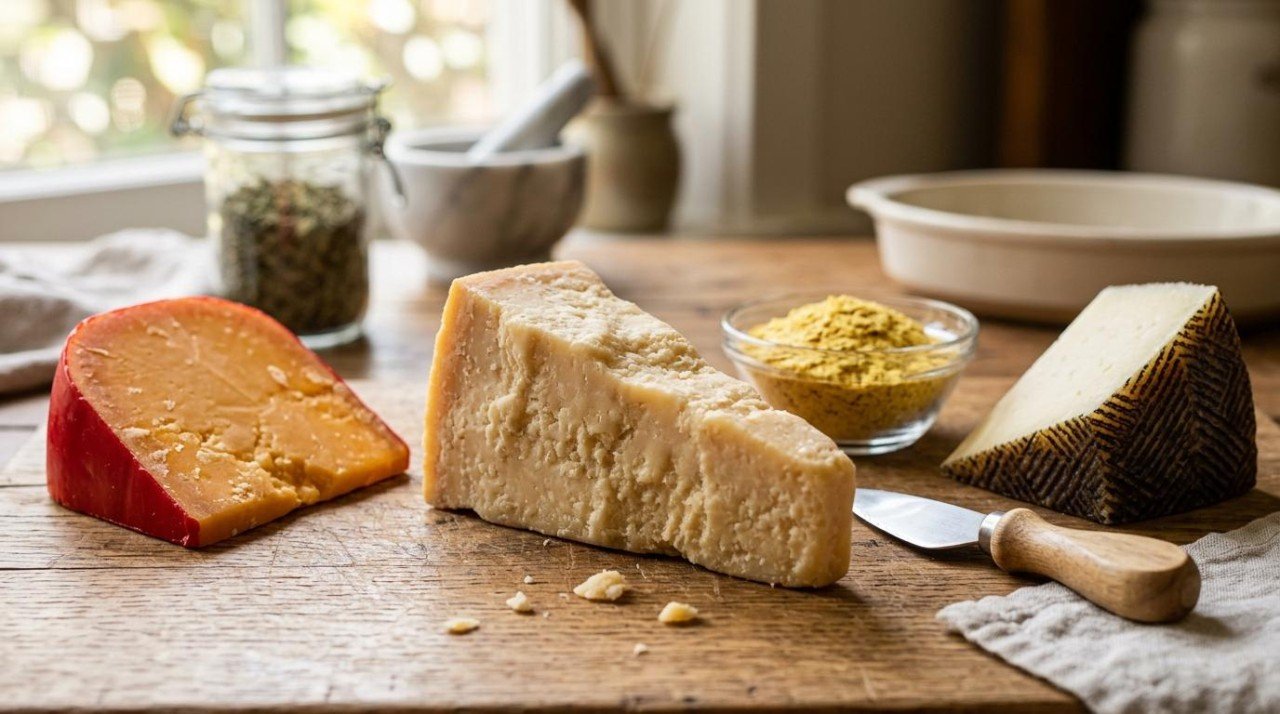
- Grana Padano — the closest all-purpose stand-in; use it exactly like Parmesan
- Pecorino Romano — sharper and saltier; excellent on pasta, but cut back the added salt
- Asiago (aged) — nutty and firm; grates and bakes beautifully
- Aged Gouda — nutty with caramel notes; melts a little creamier
- Dry Jack — the American answer to Parmesan; a natural for grating
- Aged Manchego — sheep-milk richness; great grated over finished dishes
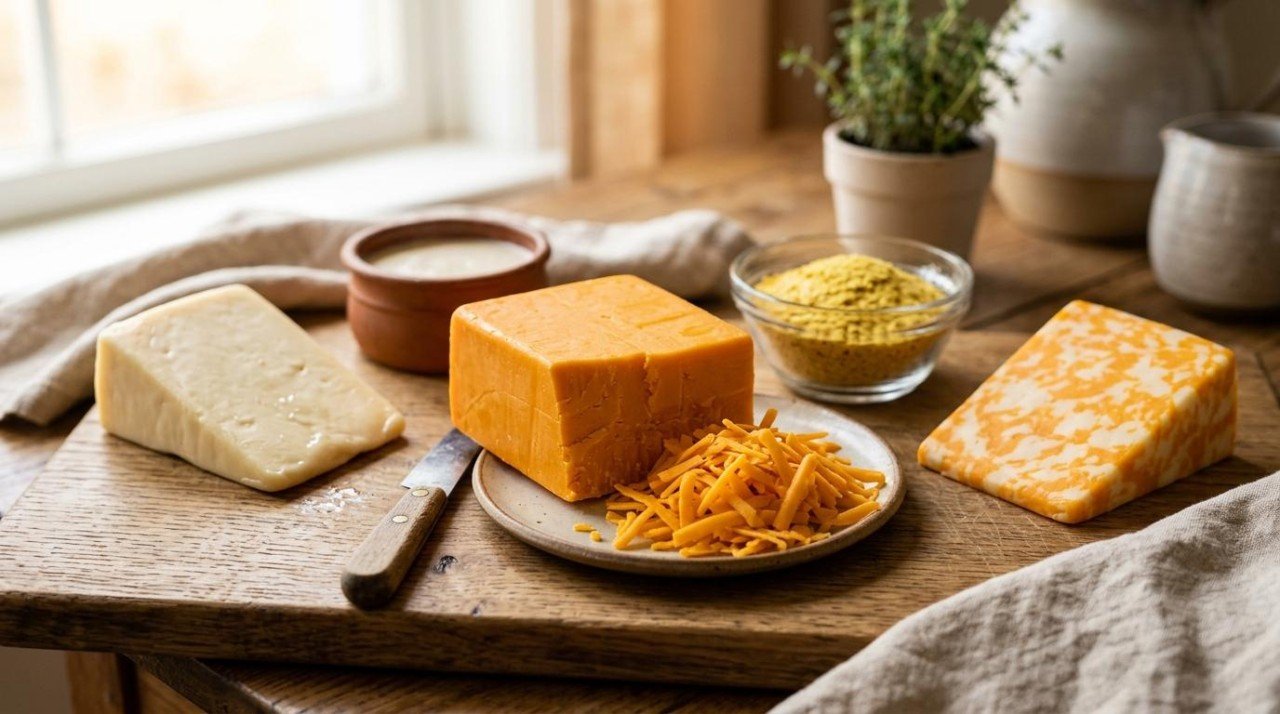
- Gruyere or aged white cheddar — best when you need it to melt into a sauce or gratin
- Nutritional yeast — the vegan pick, with real savory flavor and often added B12
- DIY vegan parm (nuts + nutritional yeast) — the closest dairy-free sprinkle for finishing
Grana Padano
- Swap: 1:1, by weight or volume
- Best for: Everything Parmesan does — grating, melting, baking
- Skip it for: Nothing, really; it is the easiest one-to-one swap
Grana Padano is Parmesan's close cousin. It comes from the same part of northern Italy, is made in the same hard, granular style (grana means grainy), and is aged for months to develop a similar nutty, savory depth. It is usually a touch milder and often a little cheaper, which makes it the substitute to reach for when you just want the dish to taste right without thinking about it.
Use it anywhere you would use Parmesan: shredded over pasta, stirred into risotto, folded into meatballs, or melted into a sauce. If anything, taste as you go, since it is slightly less sharp — you may want a touch more.
Pecorino Romano
- Swap: Start with about three-quarters the amount and reduce the added salt
- Best for: Pasta (it is the classic cheese for cacio e pepe and carbonara), grating over vegetables
- Skip it for: Delicate cream sauces where its sharpness would dominate
Pecorino Romano is made from sheep's milk, which gives it a sharper, tangier, distinctly saltier flavor than Parmesan. That is a feature, not a bug — it is the traditional cheese in several Roman pasta dishes and brings a punch that Parmesan can't. Just respect the salt: because Pecorino is noticeably saltier, start with a bit less than the recipe calls for and cut back on any salt you add elsewhere, then taste before adding more.
It shines grated over finished pasta and roasted vegetables. In a mild bechamel or a subtle cream sauce, its intensity can take over, so either blend it half-and-half with a milder cheese or save it for bolder dishes.
Asiago (Aged)
- Swap: 1:1, using aged Asiago (Asiago d'Allevo), not the young soft kind
- Best for: Grating over pasta and salads, baking into breads and crusts
- Skip it for: Recipes needing Parmesan's exact sharpness — aged Asiago is a little nuttier and mellower
Asiago comes in two very different forms. Young Asiago (Asiago Pressato) is soft, mild, and meltable but nothing like Parmesan. Aged Asiago (Asiago d'Allevo) is firm, dry, and nutty, and that is the one you want here — it grates into the same fluffy pile and browns nicely under heat.
It is a great everyday swap for finishing pasta or baking into savory scones and gratins. Just check that you have the aged version; the label often says "aged," "vecchio," or "stravecchio."
Aged Gouda
- Swap: 1:1 for grating and finishing
- Best for: Grating over pasta, soups, and roasted vegetables; anywhere a nutty-sweet edge is welcome
- Skip it for: Dishes where you want Parmesan's clean, salty sharpness rather than caramel sweetness
Aged Gouda (look for cheese aged a year or more) develops a firm, crystalline texture and deep butterscotch-caramel, almost savory notes. It is not a dead ringer for Parmesan, but it delivers the same concentrated, umami-rich hit, and many people love what its sweetness adds to a dish.
It melts a little creamier than Parmesan, which makes it lovely stirred into a risotto or a soup. Because it leans sweet rather than sharp, it is best in dishes where that plays well — think butternut squash, caramelized onions, or a hearty grain bowl.
Dry Jack
- Swap: 1:1
- Best for: Grating and finishing, exactly like Parmesan
- Skip it for: Nothing in particular — it is one of the closest matches you can buy in the US
Dry Jack is aged Monterey Jack, hardened and matured until it turns firm, golden, and nutty. It was actually created as a domestic answer to Italian grating cheeses, so it is purpose-built for this job. If you can find it (it is common on the West Coast), it grates and behaves almost identically to Parmesan, with a slightly sweeter, buttery character.
Use it anywhere — over pasta, into a gratin, or shaved onto a salad. It is one of the few substitutes that needs no adjustment at all.
Aged Manchego
- Swap: 1:1 for grating over finished dishes
- Best for: Finishing pasta, vegetables, and soups; adding richness to baked dishes
- Skip it for: Smooth cream sauces — sheep-milk cheeses can turn slightly grainy when melted hard
Manchego is a Spanish sheep's-milk cheese, and the aged version (curado or viejo) is firm enough to grate with a nutty, slightly tangy flavor that echoes Parmesan while being distinctly its own. Like Pecorino, it comes from sheep's milk, so expect a bit more richness and tang.
It is best grated over a dish at the end rather than melted into a delicate sauce, where it can get a touch grainy. Over roasted vegetables, into a Spanish-inflected pasta, or shaved onto greens, it is excellent.
Gruyere or Aged White Cheddar (for Melting)
- Swap: 1:1 by weight when the cheese needs to melt into a sauce or gratin
- Best for: Cream sauces, gratins, baked pasta, anywhere smooth melting matters
- Skip it for: A finishing sprinkle where you want that dry, grated-Parmesan texture
Sometimes the job is not grating but melting — a creamy sauce, a bubbling gratin, a cheesy baked pasta. Here, a good melting cheese with savory depth beats a hard grating cheese. Gruyere is the standout: nutty, complex, and famous for melting into silky smoothness. A sharp aged white cheddar works too, adding a tangy bite.
These will not give you the exact flavor of Parmesan, and they are not what you want dusted over a finished plate. But when the recipe's real goal is a rich, melty, savory sauce, they often do the job better than Parmesan would.
Dairy-Free and Healthier Options
If you need a fully plant-based version, or you just want a lighter, lower-sodium finish, the aged cheeses above won't help — but two dairy-free options genuinely deliver.
Nutritional Yeast
- Swap: Start with about half the volume and add to taste — for 1/2 cup grated Parmesan, begin with 1/4 cup
- Best for: Finishing pasta, popcorn, roasted vegetables; stirring into vegan sauces
- Skip it for: Any dish where you need cheese to melt and stretch — it dissolves in, it doesn't melt
- Health notes: Complete plant protein, and the fortified kind is loaded with B12
Nutritional yeast is the vegan world's answer to Parmesan, and it earns the comparison. Those golden flakes are savory, nutty, and rich in glutamate — the same compound behind Parmesan's umami — which is why they scratch the same itch. It is also a nutritional standout: nutritional yeast is a complete protein with all nine essential amino acids, and the fortified version is a rare plant source of vitamin B12, with more than 300% of the daily value in a single tablespoon.
The flavor is concentrated, so start light and build up. It is a finishing ingredient, not a melting one — sprinkle it over pasta, popcorn, or roasted broccoli, or whisk it into a plant-based sauce for savory depth. Because it adds plant diversity as well as flavor, it is a nice, low-effort way to nudge a dish toward the kind of variety your gut bacteria thrive on.
DIY Vegan Parmesan
- Swap: Blend 1 cup raw cashews or almonds + 1/4 cup nutritional yeast + 1 teaspoon salt + 1/2 teaspoon garlic powder; use 1:1 as a sprinkle
- Best for: A dry, grate-like finish on pasta, salads, and baked dishes
- Skip it for: Melting into sauces
Pulse those ingredients in a food processor until you have a coarse, sandy powder — a few pulses, not a paste. The nuts give it body and a Parmesan-like crumble, while the nutritional yeast brings the savory, cheesy flavor. It keeps in the fridge for a couple of weeks and gives you the closest dairy-free approximation of that grated-cheese texture and taste.
One genuinely useful aside for anyone who avoids dairy because of lactose: you may not need to. Hard aged cheeses like Parmesan lose essentially all their lactose during aging — authentic Parmigiano Reggiano is certified lactose-free, with the lactose fermented into lactic acid within the first 48 hours of production. The same is broadly true of the aged cheeses above. So if lactose is your only concern, the real thing may still be on the table.
Take the Guesswork Out of Eating Well
Eat Well Planner helps you organize your favorite recipes, plan balanced meals, and automatically generate shopping lists — all in one place. Whether you're tracking macros, managing dietary restrictions, or just trying to stop asking "what's for dinner?", we've got you covered.
Our AI-powered tools can adapt any recipe to your dietary needs, help you discover new meals you'll love, and even log your nutrition effortlessly. It's meal planning made simple.
Start Organizing Your Meals — FreeWhat Not to Use
Fresh mozzarella, mild Jack, or young provolone. These are lovely melting cheeses, but they are mild and mostly missing the salt and savory intensity that make Parmesan Parmesan. Swap one in expecting the same punch and the dish will taste flat.
The shelf-stable powdered stuff in the green can. In a pinch it is technically cheese, but it is drier, saltier in a one-note way, and full of anti-caking agents that keep it from melting smoothly. It works as an emergency dusting; it does not stand in for a wedge of real grating cheese in a sauce.
The Bottom Line
For a true one-to-one swap, reach for Grana Padano or Dry Jack. For pasta with more punch, Pecorino Romano (mind the salt). For melting into a sauce, Gruyere. And for a dairy-free finish, nutritional yeast or a quick DIY blend.
The catch with any substitution guide is that it can only speak in generalities — but the right pick really does depend on your exact dish. That is where Eat Well Planner comes in: its AI recipe chat can look at the actual recipe you are cooking and tell you which substitute fits that sauce or bake, in the right amount. And if you are adapting a recipe to be fully dairy-free, it can rewrite the whole thing as a variation with the swaps already worked in — so you are not adjusting line by line while the pot simmers.