The pasta water is coming to a boil, the eggs and Pecorino are whisked for carbonara, or the onions are waiting for the soup pot, and the pancetta you were sure was in the fridge is not there. Or the store simply did not have any. Either way, you have options, and a couple of them are arguably even better than the original for certain dishes.
Pancetta is cured, usually unsmoked pork belly. In most recipes it does three jobs at once: it renders fat that the rest of the dish cooks in, it seasons everything with salt, and it adds deep, clean, savory pork flavor. The smoke question matters more than people expect. Bacon is the obvious swap, but its smoke can take over a delicate carbonara or a simple bean soup, which is why the best substitute depends on whether you are making a Roman pasta, a pot of beans, or wrapping something to roast.
Here are the swaps that actually work, most versatile first, with exact amounts and an honest note on where each one falls short.
The quick list
- Guanciale — the traditional choice for carbonara and amatriciana; richer and more robust than pancetta
- Blanched bacon — the swap most people have on hand; a 2-minute boil tames the smoke
- Salt pork — unsmoked and close in flavor; best for beans, soups, and stews
- Prosciutto — clean, unsmoked pork flavor, added late or crisped; also the best pick for wrapping
- Speck — a gently smoked cured ham that works in pasta, soups, and wrapping
- Diced ham — the budget, leaner option for peas, soups, and beans
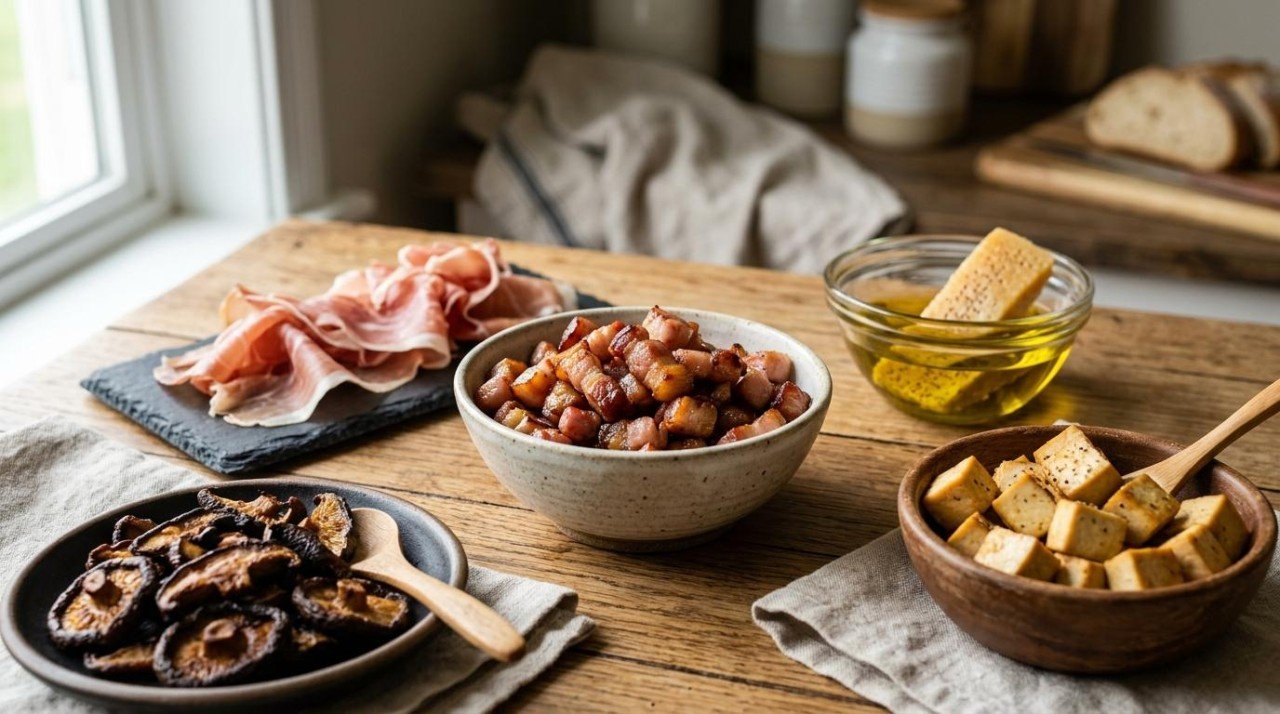
- Crispy shiitake — the best meat-free swap for pasta and anywhere you want savory, chewy-crisp bits
- Smoked tofu — a protein-rich vegetarian swap for pasta, beans, and grain bowls
- Olive oil plus a Parmesan rind — a meat-free flavor base for soups and beans
Guanciale
- Swap: 1:1 by weight, cut to the same size the recipe calls for
- Best for: Carbonara, amatriciana, gricia, and any pasta where pork fat is the sauce
- Skip it for: Wrapping, since it is usually sold as a thick chunk; and dishes where you want less fat
- Health notes: Even fattier than pancetta; one branded entry in USDA's database lists about 64 grams of fat per 100 grams
If you are making a Roman pasta, guanciale is not really a substitute so much as the original. It is cured pork cheek (jowl) rather than belly, and as America's Test Kitchen explains, it is typically cured for a few months, versus roughly two weeks of drying for pancetta, and seasoned with garlic, rosemary, and sage on top of salt and pepper. The result is a more robust flavor and more fat, which is exactly what you want melting into eggs and cheese for carbonara.
Render it low and slow, starting in a cold pan, so the fat melts out before the edges burn. Because it carries more fat than pancetta, you may want to pour off a spoonful before building your sauce. It can be harder to find than pancetta, so look at Italian delis or specialty butchers. It also freezes well, so it is worth buying a piece when you see it.
Blanched bacon
- Swap: 1:1 by weight. Cut thick-cut or slab bacon into pieces, boil for 2 minutes, drain, and pat dry. Add 1 to 2 teaspoons olive oil per 4 ounces if the pan looks dry.
- Best for: Bean soups, minestrone, pasta sauces, braised greens, risotto, Brussels sprouts
- Skip it for: A carbonara you want to taste traditional; even blanched, some smoke remains
Bacon and pancetta are both cured pork belly. The big difference is that American bacon is smoked and pancetta usually is not, so dropping raw bacon into a delicate pasta or white bean soup makes the whole dish taste like a campfire. The fix is simple. America's Test Kitchen blanches the bacon in boiling water for 2 minutes, which removes most of the smoky flavor. In their tests in a Tuscan bean stew and a pasta with beans and chard, tasters still noticed a hint of smoke but found the swap acceptable.
Blanching also pulls out a considerable amount of fat, so you may need a little olive oil to soften your onions and garlic. Thick-cut or slab bacon is a closer textural match than thin strips, which tend to shrivel. A few cracks of black pepper and a pinch of fresh thyme help nudge the flavor toward pancetta's seasoning. If you are out of bacon too, our bacon substitutes guide has more ideas.
Salt pork
- Swap: Use about 3/4 the weight (3 ounces salt pork for 4 ounces pancetta), diced small and rendered slowly; do not add salt to the dish until you taste it
- Best for: Bean soups, pots of beans, chowders, minestrone, stews, braised greens
- Skip it for: Carbonara and quick pastas, where its mostly-fat texture never crisps into meaty bites
- Health notes: Saltier and fattier than pancetta, at about 2,680 milligrams of sodium and 80 grams of fat per 100 grams in USDA data
Salt pork is often described as bacon's saltier, non-smoky cousin. Like pancetta, it usually comes from the belly and is cured with salt but not smoked, so its flavor is closer to pancetta than bacon's is. The catch is that it is mostly fat and much saltier, so use less and treat it as a seasoning and cooking fat rather than a source of meaty bites.
Dice it and render it slowly in your pot with a splash of water, which helps the fat melt out evenly before the bits brown. Then cook your aromatics in that fat and carry on with the recipe. If your salt pork is very salty, a quick rinse or a few minutes in boiling water before rendering takes the edge off. It is a classic in New England chowders and Southern beans for good reason.
Prosciutto
- Swap: 1:1 by weight, chopped or torn; add 1 tablespoon olive oil per 4 ounces to replace the fat pancetta would have rendered
- Best for: Pasta with peas, creamy pastas, risotto, wrapping chicken, pork, asparagus, or melon
- Skip it for: Long simmers and recipes that rely on rendered pork fat to cook the aromatics
Prosciutto is cured, unsmoked pork, so it has the clean flavor pancetta brings without any of bacon's smoke. The difference is that it comes from the leg, so it is much leaner and is meant to be eaten raw. Cook it the way you would cook pancetta, for 10 minutes at the start of a sauce, and it turns tough, dry, and even saltier. Instead, start your dish in olive oil, then stir chopped prosciutto in during the last minute, or crisp it separately in a dry skillet or a 375 degree F oven and crumble it over the top.
For wrapping, prosciutto is the better choice. Thin-sliced rolled pancetta and prosciutto both cling and crisp, and prosciutto is far easier to find. Wrap 1:1 by slice. If you are out of that as well, see our prosciutto substitutes guide.
Speck
- Swap: 1:1 by weight, diced or sliced; add 1 to 2 teaspoons olive oil per 4 ounces when sauteing
- Best for: Pasta, risotto, soups, sauteed cabbage or Brussels sprouts, wrapping
- Skip it for: Recipes where any smoke would feel out of place
Speck is a cured ham from northern Italy that is seasoned with spices like juniper and pepper and then lightly smoked. Think of it as halfway between prosciutto and bacon: leaner than pancetta, with just a whisper of smoke rather than a campfire. That makes it a good match for hearty dishes like cabbage and potatoes, pasta with mushrooms, or a creamy risotto.
Because it is leaner than pancetta, it browns faster and renders less fat. Saute it over medium heat for just a few minutes, and add a little olive oil if the pan looks dry. Thin slices of speck also wrap chicken or pork tenderloin beautifully.
Diced ham
- Swap: 1:1 by weight, using a thick ham steak cut into 1/4 inch dice; brown it in 1 tablespoon olive oil per 4 ounces
- Best for: Split pea and bean soups, pasta with peas, fried rice, quiche, scalloped potatoes
- Skip it for: Carbonara and amatriciana, where its sweet, wet texture never renders
- Health notes: Leaner than pancetta, but still a cured meat with plenty of sodium
Cooked ham is milder, sweeter, and wetter than pancetta, so it will not give you a pool of flavorful fat or crispy edges unless you help it along. Dice it small, pat it dry, and brown it in olive oil over medium-high heat until the edges caramelize. That gets you most of the way there in soups, casseroles, and creamy pastas with peas.
It is also the leanest pork swap on this list, which makes it a practical choice when you want the flavor without as much saturated fat. Smoked ham will add a hint of smoke, so pick an unsmoked or lightly smoked one if you can.
Crispy shiitake
- Swap: About 6 ounces fresh shiitake caps, diced, cooked in 2 tablespoons olive oil with a pinch of salt over medium-high heat for 8 to 10 minutes until browned and chewy-crisp, replaces 4 ounces pancetta. Add 1 teaspoon soy sauce and a pinch of smoked paprika at the end if you want deeper savoriness.
- Best for: Vegetarian carbonara, pasta, risotto, bean soups, greens, grain bowls
- Skip it for: Wrapping, and any recipe where pork fat is the point
- Health notes: Raw shiitake has about 9 milligrams of sodium and 2.5 grams of fiber per 100 grams, so you control the salt
Mushrooms are the best plant-based stand-in for pancetta's savory depth, and shiitakes in particular get meaty and chewy when they are browned well. The trick is to give them space: use a wide pan, do not crowd them, and leave them alone long enough to brown before stirring. Once they release their moisture and start to crisp at the edges, they deliver the same savory, salty bites that pancetta scatters through a pasta.
For a meat-free carbonara, cook the shiitakes as above, toss the drained pasta with them in the pan off the heat, and then add your egg and cheese mixture as usual. The olive oil does the job of the rendered pork fat. If you are out of shiitakes, cremini work too; our mushroom substitutes guide covers what else can step in.
Smoked tofu
- Swap: 1:1 by weight, cut into small cubes and pan-fried in 1 tablespoon olive oil per 4 ounces until browned on several sides
- Best for: Pasta, bean dishes, braised greens, fried rice, grain bowls, salads
- Skip it for: Carbonara purists, since the smoke and texture read differently; and wrapping
- Health notes: Adds plant protein, and is not processed meat
Smoked tofu is firmer and drier than regular tofu and comes already seasoned, so it browns quickly into chewy, savory cubes that work like lardons. It does have a smoky flavor, which makes it more of a bacon-style swap than a true pancetta match, but in hearty bean dishes, cabbage, or greens that smoke is welcome.
Cut it small (about 1/4 inch) so it crisps instead of staying spongy, and season the dish at the end, since smoked tofu brands vary a lot in saltiness. For more ideas, see our tofu substitutes guide.
Olive oil plus a Parmesan rind
- Swap: For 4 ounces pancetta, start the dish in 2 tablespoons olive oil, then simmer a 2 to 3 inch Parmesan rind in the pot; remove the rind before serving. Optional: 1/4 teaspoon smoked paprika with the aromatics.
- Best for: Minestrone, bean soups, lentil soups, braised beans, risotto
- Skip it for: Pasta dishes and anywhere you want bites of meat or crunch
- Health notes: Far less sodium and saturated fat than the pancetta it replaces
In a soup or a pot of beans, pancetta mostly provides fat to cook the aromatics in and savory depth that builds over a long simmer. Good olive oil handles the first job, and a Parmesan rind handles the second, slowly releasing nutty, savory flavor into the broth. A little smoked paprika adds the warmth some cooks like, though leave it out if you want a cleaner, more traditional flavor.
Save your rinds in the freezer so you always have one on hand. Note that traditional Parmesan is made with animal rennet, so strict vegetarians should look for a Parmesan-style cheese made with microbial rennet. If you are out of Parmesan too, see our Parmesan substitutes guide.
Take the Guesswork Out of Eating Well
Eat Well Planner helps you organize your favorite recipes, plan balanced meals, and automatically generate shopping lists — all in one place. Whether you're tracking macros, managing dietary restrictions, or just trying to stop asking "what's for dinner?", we've got you covered.
Our AI-powered tools can adapt any recipe to your dietary needs, help you discover new meals you'll love, and even log your nutrition effortlessly. It's meal planning made simple.
Start Organizing Your Meals — FreeWhich substitute for which dish
Since pancetta does different jobs in different recipes, here is the quick answer by dish:
- Carbonara, amatriciana, or gricia: guanciale first; blanched thick-cut bacon if that is all you have; crispy shiitake for meat-free
- Pasta with peas, creamy pastas, or risotto: prosciutto added at the end, speck, or diced ham
- Bean soups, minestrone, and chowders: salt pork or blanched bacon; olive oil plus a Parmesan rind for meat-free
- Braised greens, cabbage, or Brussels sprouts: speck, blanched bacon, or smoked tofu
- Wrapping chicken, pork, fish, or vegetables: prosciutto or speck; thin-cut bacon if you accept smoke and a longer cook
- Crispy topping for salads or soups: crisped prosciutto or crispy shiitake
Smoked vs. unsmoked: why it matters
Most pancetta sold in the US is unsmoked, and that is the main thing that sets it apart from bacon. Its flavor comes from salt, pepper, and spices like juniper, plus time. Italy does make a smoked version, pancetta affumicata, and Tasting Table describes it as tasting similar to bacon. There are also two shapes to know: flat pancetta (tesa), which is diced or cut into strips for cooking, and rolled pancetta (arrotolata), which is sliced thin and can be eaten raw on a board or used for wrapping.
When a recipe calls for pancetta, it almost always wants that unsmoked, clean pork flavor. That is why the closest swaps here are the unsmoked ones (guanciale, salt pork, prosciutto), why bacon needs blanching, and why the lightly smoked options (speck, smoked tofu) are best saved for hearty dishes that can handle a little smoke.
The healthier angle: the sodium tradeoff
Pancetta is a flavor powerhouse, and it is also rich and salty. In USDA's branded food database, one widely sold pancetta lists 357 calories, 32 grams of fat, 14 grams of saturated fat, and 1,640 milligrams of sodium per 100 grams. Across other branded pancettas in the database, sodium ranges from about 840 to 1,860 milligrams per 100 grams. At that level, a 4-ounce package in a pot of pasta for four adds about 465 milligrams of sodium per serving before you salt the water or add any cheese. The FDA's Daily Value for sodium is less than 2,300 milligrams a day.
It is also a processed meat. The World Health Organization defines processed meat as meat transformed through salting, curing, fermentation, or smoking, and its cancer research agency classifies it as carcinogenic to humans (Group 1), based on evidence linking it to colorectal cancer, with risk rising with the amount eaten. That does not make a plate of carbonara dangerous. It does mean cured pork works best as an occasional flavor accent rather than an everyday base.
Here is how the substitutes stack up if you are looking for a healthier swap:
- Lowest sodium and most nutrition: crispy shiitake and the olive oil plus Parmesan rind base. You control the salt, and mushrooms add fiber and another plant to your week.
- Plant protein, not processed meat: smoked tofu, though check the label, since some brands are fairly salty.
- Leaner cured pork: diced ham, prosciutto, and speck have less fat than pancetta but similar or higher sodium.
- Like-for-like or richer: guanciale, bacon, and salt pork. Great for flavor, but not a health upgrade; salt pork is the saltiest of all.
One trick works with any of these: use half the pancetta (or substitute) the recipe calls for, and make up the volume with diced mushrooms browned in the rendered fat. You keep the porky flavor, cut the sodium and saturated fat roughly in half, and add a vegetable. For a full rework of the classic, see our healthier carbonara, which keeps the traditional no-cream method while improving its nutrition score.
What not to use
- Unblanched smoked bacon in carbonara: it will not ruin the dish, but the smoke takes over the eggs and cheese. Blanch it first or use guanciale.
- Turkey bacon: it is smoked and very lean, so it renders almost no fat and turns dry and chewy instead of crisp and juicy in pasta.
- Pre-cooked bacon bits: they add salt and smoke but no rendered fat, and they go soggy in sauces.
- Salami or pepperoni: the fermented tang and spices change the flavor of the whole dish, and they turn greasy and leathery when cooked down.
- Spanish chorizo: its paprika and garlic are delicious, but they will turn a carbonara or minestrone into a different dish entirely.
Let the app match the swap to your recipe
The right pancetta substitute depends on what is in your pot, and a general guide can only get you so far. In Eat Well Planner, you can open any recipe and ask the AI recipe chat something like "I am making this and I do not have pancetta, what should I use?" It will suggest a swap that fits that specific dish, with amounts adjusted for your servings.
If you want to see what a swap really does to the dish, the Recipe Playground shows the nutrition score change live as you edit ingredients, so you can compare guanciale, blanched bacon, and crispy shiitake before you start cooking. And the Make It Healthier feature can suggest swaps like the half-pancetta, half-mushroom trick automatically, checking the actual nutritional gain before it recommends anything.