There are two kinds of people searching for a mushroom substitute. The first opened the fridge for the cremini the stroganoff recipe calls for and found an empty container. The second has never liked mushrooms, finds them rubbery or slimy, and wants to know how to make a mushroom-heavy recipe without them. Both are fair, and both have good answers. They are just not always the same answer.
The trick is knowing which job the mushrooms were doing. In most recipes they do one or more of three things: they add a meaty, chewy texture (stroganoff, stir-fries, portobello burgers), they add savory, umami depth (gravies, soups, risotto, pasta sauces), or they act as a vessel or topping (stuffed mushrooms, pizza, salads, skewers). A swap that nails the texture can miss the flavor entirely, so this guide splits the substitutes by job, with exact amounts for each.
A useful number to keep in mind: 8 ounces of fresh mushrooms, the standard container, is about 3 cups sliced. Most of the vegetable swaps below replace mushrooms cup for cup, or ounce for ounce.
The Quick List
- Dried or canned mushrooms — if you are just out of fresh ones and like mushrooms fine
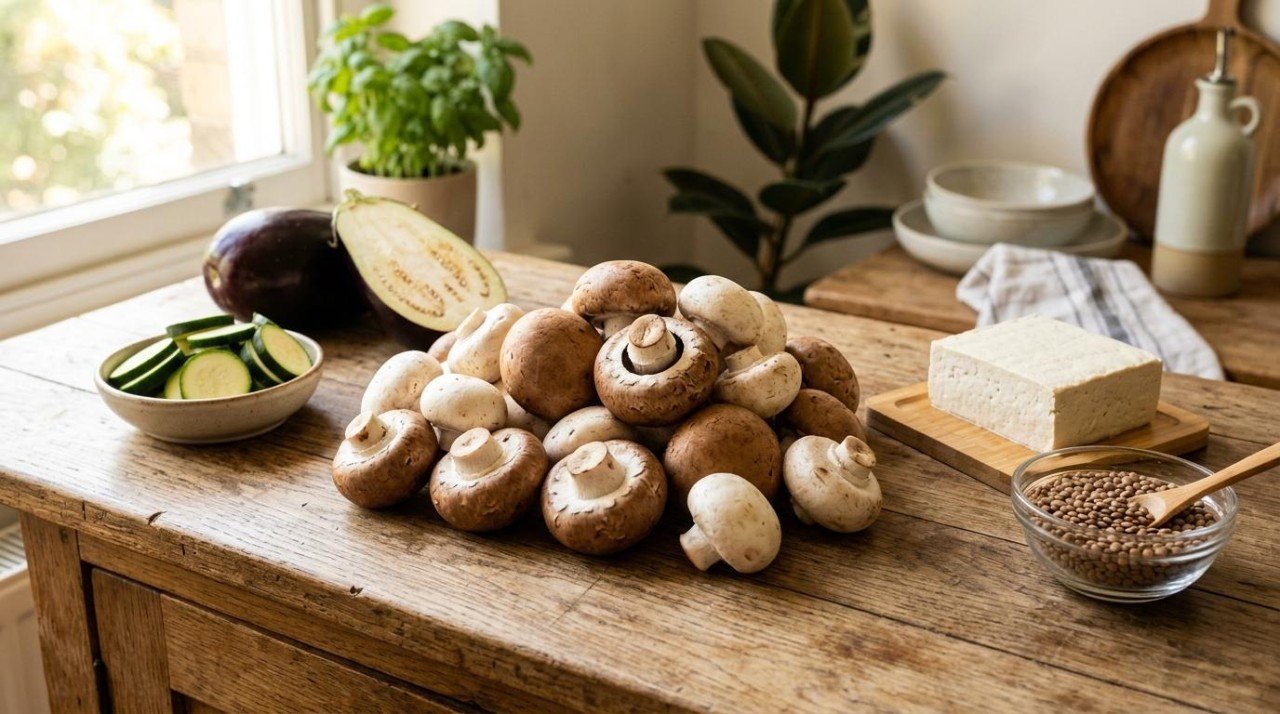
- Eggplant — the closest overall match for meaty, soft-but-chewy texture
- Zucchini or summer squash — a mild, quick-cooking swap for sautés, pasta, and omelets
- Extra-firm tofu — chewy and browns well; great in stir-fries and stroganoff-style sauces
- Cooked lentils — for chopped-mushroom jobs like bolognese, tacos, and shepherd's pie
- Walnuts — finely chopped, for meaty crumbles, stuffings, and "duxelles"-style fillings
- Soy sauce or tamari — the fastest way to put back mushroom-style savory depth
- Miso — rounder, earthier umami for soups, gravies, and creamy sauces
- Sun-dried tomatoes or tomato paste — concentrated umami with no mushroom flavor at all
- Parmesan or nutritional yeast — savory depth for risotto, pasta, and creamy dishes
- Roasted red peppers — soft, silky slices for pizza, sandwiches, and salads
- Artichoke hearts — tender, savory pieces for pizza, pasta, dips, and stuffings
If You Are Just Out of Fresh Mushrooms
If you like mushrooms and simply ran out, the best substitute is another form of mushroom. Start here before reaching for anything else.
Another Fresh Mushroom
- Swap: 1:1 by weight
- Best for: Everything
- Skip it for: Nothing — just expect a shift in flavor strength
White button, cremini, and portobello are the same species at different ages, so they swap freely; cremini and portobellos just taste a little deeper. Shiitake and oyster mushrooms work in nearly any cooked dish too. Remove shiitake stems, which stay woody, and tear oyster mushrooms rather than slicing them. If a recipe wants whole portobello caps for burgers or "steaks," three or four large cremini per cap, sliced and seared, give you the same flavor in a different shape.
Dried Mushrooms
- Swap: About 1 ounce dried for every 8 to 9 ounces fresh. Cover with boiling water, soak 20 to 30 minutes, lift out, and chop.
- Best for: Soups, stews, risotto, gravies, pasta sauces, braises
- Skip it for: Raw uses (salads, crudités) and anything that needs whole caps
- Health notes: Same low-calorie mushroom nutrition, in a form that keeps for months
Mushrooms are mostly water, so dried ones are concentrated. Marx Foods' conversion guide divides fresh ounces by 9 to get dried ounces, and many cooks round to 1 ounce per half pound. They are also far more savory than fresh. Dried shiitake carries roughly 1,060 mg of glutamate per 100 g against 70 for fresh shiitake, which is why a small handful can flavor a whole pot of soup.
Do not throw out the soaking liquid. Let it settle, pour it off the grit (or strain it through a coffee filter), and use it as part of the recipe's broth or water. That liquid is where much of the flavor ends up.
Canned Mushrooms
- Swap: One 4-ounce can, drained, replaces about 6 to 8 ounces of fresh mushrooms in cooked dishes
- Best for: Casseroles, pizza, pasta sauces, stroganoff in a pinch
- Skip it for: Dishes that depend on browning, like a mushroom sauté or burger topping
Canned mushrooms are already cooked, so they have shrunk the way fresh mushrooms do in the pan. They will not brown well and they are softer, but in a sauce or casserole the difference is small. Rinse them if the brine is salty, pat them dry, and add them near the end so they only need to heat through.
Texture Swaps (Stroganoff, Stir-Fries, Pasta, Burgers)
These replace the meaty, substantial bite of cooked mushrooms. None of them taste like mushrooms, so for the best result pair any texture swap with one of the umami swaps further down: a teaspoon of soy sauce or miso does a lot of the flavor work.
Eggplant
- Swap: 1:1 by volume, cut into the same size pieces as the mushrooms (8 oz mushrooms → about 3 cups cubed eggplant)
- Best for: Stroganoff, pasta sauces, curries, stir-fries, grilled "steaks" in place of portobellos
- Skip it for: Raw uses and quick dishes where it would not have time to soften
- Health notes: About 24 calories and 3 g fiber per 100 g raw, roughly three times the fiber of white mushrooms
Eggplant is the closest overall match for cooked mushrooms. It turns soft, silky, and slightly chewy, and it soaks up whatever sauce it sits in, the way mushrooms do. Thick slices brushed with oil and grilled or seared make a good stand-in for portobello caps in burgers and sandwiches.
Its one bad habit is oil. Raw eggplant behaves like a sponge and will drink everything you put in the pan. Microwaving the cubes for 4 to 5 minutes first, or roasting them at 425°F with just a tablespoon of oil, collapses the spongy structure so they brown instead of soaking. Undercooked eggplant is spongy and bitter, so cook it until it is completely tender.
Zucchini or Summer Squash
- Swap: 1:1 by volume, cut into half-moons or chunks
- Best for: Sautés, pasta, omelets and frittatas, pizza, kebabs, stir-fries
- Skip it for: Stroganoff and creamy sauces, unless you brown it well first; it releases water
- Health notes: About 17 calories per 100 g and about 95% water
Zucchini is the mildest swap on the list, which makes it a good choice for people who dislike mushrooms precisely because of their earthy flavor. It cooks in about the same time as sliced mushrooms and holds its shape in a hot pan. Like mushrooms, it is mostly water, so cook it in a single layer over high heat and salt it at the end to keep it from stewing.
Extra-Firm Tofu
- Swap: 8 oz mushrooms → about 7 oz (half a block) extra-firm tofu, pressed and cut into cubes or torn pieces
- Best for: Stir-fries, stroganoff, curries, fried rice, ramen
- Skip it for: Dishes where the mushroom should be soft and silky, like a cream sauce over pasta
- Health notes: Adds real protein, which mushrooms do not
Pressed, browned tofu has a chewy, slightly springy texture that is close to a seared mushroom, and it takes on sauce well. Tearing it into rough pieces instead of cutting neat cubes gives it more craggy edges to brown, which looks and eats more like torn oyster mushrooms. Toss it with a teaspoon of soy sauce before it goes in the pan for color and savoriness. Our guide to cooking tofu so it tastes good covers pressing and browning in detail.
Cooked Lentils
- Swap: 8 oz finely chopped mushrooms → about 1 cup cooked brown or green lentils
- Best for: Bolognese, taco filling, shepherd's pie, sloppy joes, blended "mushroom and beef" burgers and meatballs
- Skip it for: Sliced-mushroom dishes, where the shape matters
- Health notes: One cup of cooked lentils has about 18 g protein and 16 g fiber
Many recipes chop mushrooms finely so they disappear into ground meat or a sauce, adding bulk and moisture without anyone noticing. Lentils do the same job, and they are the healthiest swap on this list. They are brown, earthy, and soft-but-textured, so in a bolognese or a taco filling they blend in completely. Canned lentils, drained and rinsed, work fine.
Lentils are drier than mushrooms, which release liquid as they cook. In a sauce, add a splash of broth or water if it looks tight. In burgers and meatballs, mash about a third of the lentils so the mixture holds together.
Walnuts
- Swap: 8 oz finely chopped mushrooms → about ¾ cup finely chopped walnuts, toasted
- Best for: Meatless taco "meat," stuffing, stuffed vegetables, savory fillings, grain bowls
- Skip it for: Saucy dishes where the mushroom should be soft
- Health notes: An ounce of walnuts carries about 2.5 g of plant omega-3 (ALA), but also about 180 calories, so it is a smaller-quantity swap
Finely chopped, toasted walnuts have a rich, savory crumble that comes surprisingly close to sautéed chopped mushrooms in a filling. Pulse them in a food processor until they look like coarse crumbs, then cook them with the onion, garlic, and a little soy sauce for a minute or two. They make a good mushroom-free version of the chopped filling in stuffed peppers or a holiday stuffing. Because walnuts are so much richer than mushrooms, use less by volume and do not swap them in cup for cup.
Umami Swaps (Sauces, Gravies, Soups, Risotto)
Mushrooms contain natural glutamates, the compounds behind savory umami flavor. When a recipe uses mushrooms mainly for depth, as in a gravy, a risotto, or a soup, these replace that flavor without adding mushroom texture. Pick one, add it a little at a time, and taste.
Soy Sauce or Tamari
- Swap: 1 to 2 teaspoons per 8 oz mushrooms left out, added with the liquid
- Best for: Gravies, stroganoff sauce, stir-fries, stews, French onion and beef soups
- Skip it for: Pale cream sauces, where it darkens the color
- Health notes: One teaspoon carries about 291 mg sodium, so reduce the recipe's salt to match
Soy sauce is the fastest way to put back what mushrooms contributed to a brown sauce. It is fermented and loaded with glutamates, which is the same savory note that browned mushrooms leave in a pan. In a stroganoff made with extra beef or one of the texture swaps above, a teaspoon of soy sauce plus a few drops of Worcestershire brings back most of the depth. Tamari is the gluten-free option and works the same way. If you are out of soy sauce too, our soy sauce substitutes guide has options.
Miso
- Swap: 1 to 2 teaspoons per 8 oz mushrooms left out; whisk with a little warm liquid before adding
- Best for: Creamy soups, gravies, risotto, pasta sauces, braised greens
- Skip it for: Dishes that need a clean, bright flavor
- Health notes: About 634 mg sodium per tablespoon, so a teaspoon or two goes a long way
Miso has a rounder, earthier savoriness than soy sauce, and white or yellow miso keeps pale sauces pale, which makes it the better choice for creamy mushroom-free soups, risotto, and Alfredo-style sauces. Stir it in near the end, off a hard boil, so it stays smooth. Dark red miso is stronger and saltier; use the lower amount.
Sun-Dried Tomatoes or Tomato Paste
- Swap: 8 oz mushrooms → ¼ cup chopped oil-packed sun-dried tomatoes, or 1 tablespoon tomato paste cooked in the oil until brick-red
- Best for: Pasta sauces, stews, grain dishes, pizza, savory tarts, chili
- Skip it for: Creamy white sauces, where the red color and tang stand out
Tomatoes are one of the richest sources of natural glutamate in the produce aisle, and drying concentrates it. The Umami Information Center lists 650 to 1,140 mg per 100 g for dried tomatoes against 40 to 110 for common mushrooms. That makes sun-dried tomatoes an excellent swap for mushroom haters: you get the savory punch with chewy texture and none of the earthiness. Chop them small so they distribute evenly. Tomato paste does the same job in a sauce, and frying it until it darkens gives it a roasted, almost meaty edge. See our tomato paste guide if that is missing too.
Parmesan or Nutritional Yeast
- Swap: 8 oz mushrooms → 2 to 3 tablespoons grated Parmesan or 1 to 2 tablespoons nutritional yeast, stirred in at the end; or simmer a Parmesan rind in the soup or risotto
- Best for: Risotto, creamy pasta, soups, polenta, gratins
- Skip it for: Stir-fries and Asian-style dishes
Parmigiano Reggiano is one of the most glutamate-dense foods there is, at 1,200 to 1,680 mg per 100 g. In a mushroom risotto made without the mushrooms, an extra handful of Parmesan and a Parmesan rind in the simmering broth fill much of the gap. For a dairy-free version, nutritional yeast brings a similar nutty, savory note. See our Parmesan substitutes guide for more.
Stuffing, Pizza, Salads, and Skewers
When mushrooms are a topping or a vessel, what matters is a tender bite and a savory flavor that holds up on its own.
Roasted Red Peppers
- Swap: 1:1 by volume, sliced (one 12-ounce jar, drained, covers most recipes)
- Best for: Pizza, sandwiches, wraps, salads, pasta, frittatas, antipasto
- Skip it for: Brown, savory dishes like stroganoff or gravy
- Health notes: Peppers bring vitamin C, which mushrooms lack
Jarred roasted red peppers have the soft, silky texture of sautéed mushrooms on a pizza or sandwich, with a sweet, smoky flavor in place of an earthy one. Drain and pat them dry before they go on a pizza, or the crust gets soggy. Fresh bell peppers, sliced and sautéed, are a crisper alternative for skewers, fajitas, and stir-fries.
Artichoke Hearts
- Swap: 8 oz mushrooms → one 14-ounce can of artichoke hearts, drained and quartered
- Best for: Pizza, pasta, dips, savory tarts, stuffings, chicken and grain dishes
- Skip it for: Asian-style stir-fries
Artichoke hearts are tender, slightly meaty, and savory, which is why they turn up alongside mushrooms on so many pizzas. They are one of the best swaps for mushroom haters in Italian-style dishes. Canned hearts packed in water are milder and lower in fat than marinated ones; marinated hearts bring more flavor and a little oil. Rinse brined hearts if you want to cut the salt.
Which Swap for Which Dish
Beef Stroganoff
If you are out of mushrooms, use dried mushrooms or simply add more beef and onion. If you dislike them, use eggplant or extra-firm tofu for the texture plus a teaspoon of soy sauce and a few drops of Worcestershire in the sauce for the depth.
Mushroom Risotto
Dried porcini and their soaking liquid are the classic answer. For a mushroom-free version, make it a Parmesan risotto with a rind in the broth and a teaspoon of white miso, and fold in roasted zucchini or artichoke hearts at the end.
Mushroom Soup or Cream of Mushroom
Dried mushrooms rebuild a mushroom soup. To make a creamy soup without mushrooms, use roasted cauliflower or zucchini as the base with miso for depth. If the recipe calls for a can of condensed cream of mushroom soup, that is a different problem: see our cream of mushroom soup substitutes guide.
Stuffed Mushrooms
Keep the filling and change the vessel. Mini sweet peppers halved lengthwise, thick zucchini rounds with a small well scooped out, and canned artichoke bottoms all hold a filling and bake in about the same 15 to 20 minutes.
Portobello Burgers and "Steaks"
Thick slices of eggplant, about ¾ inch, or thick cauliflower "steaks" brushed with oil and soy sauce and grilled or roasted until tender. Both need a little longer than portobello caps.
Pizza, Pasta, and Omelets
Roasted red peppers, artichoke hearts, sun-dried tomatoes, or sautéed zucchini. A few chopped olives add a savory, briny note that partly makes up for the missing earthiness.
Gravy
Drop the mushrooms and add 1 teaspoon soy sauce or miso per cup of liquid. Caramelizing the onions well before adding the flour builds the rest of the depth. Mushroom broth in a gravy can be swapped for beef broth or chicken broth plus a splash of soy.
What You Lose (and Gain) Nutritionally
Mushrooms are easy to dismiss as watery filler, but they carry more than you might think. A 100 g portion of white mushrooms, about 1½ cups sliced, has only 21 calories but about 0.4 mg riboflavin, 3.6 mg niacin, 9 mcg selenium, and 319 mg potassium. That is roughly a third of a day's riboflavin, a fifth of the niacin, and a sixth of the selenium. Mushrooms exposed to UV light are also one of the very few plant sources of vitamin D, which we cover in this post on mushrooms and vitamin D.
None of the swaps replaces all of that, but several bring something mushrooms don't:
- Lentils add far more protein and fiber. One cup of cooked lentils has about 18 g protein, 16 g fiber, and over a third of a day's iron.
- Eggplant brings about three times the fiber of white mushrooms per 100 g.
- Tofu adds complete plant protein.
- Walnuts add plant omega-3 fats, at the cost of more calories.
- Peppers bring vitamin C.
The real healthy move is variety. Swapping mushrooms for eggplant one week and lentils the next adds a different plant to your rotation, and research on gut health points to the number of different plants you eat each week as one of the strongest signals of a diverse gut microbiome. Our post on what 30 plants a week does inside your body explains why.
Which Swap Fits Your Recipe?
This guide can tell you that eggplant works in stroganoff and sun-dried tomatoes work on pizza. It cannot see your actual recipe. Eat Well Planner can: its AI recipe chat has your recipe in front of it, so "I hate mushrooms, what should I use in this risotto?" gets an answer that accounts for your other ingredients, your cooking time, and how much liquid the dish has. If you never want mushrooms in anything, Recipe Variations can rewrite a whole recipe with the swaps already worked in, so you are not adapting it line by line every time.
Curious what trading mushrooms for lentils does to a dish? The Recipe Playground shows the nutrition score update live as you change an ingredient, with a per-edit delta. And Plant Points tracks how many different plants you eat each week, so a new swap literally counts.
Take the Guesswork Out of Eating Well
Eat Well Planner helps you organize your favorite recipes, plan balanced meals, and automatically generate shopping lists — all in one place. Whether you're tracking macros, managing dietary restrictions, or just trying to stop asking "what's for dinner?", we've got you covered.
Our AI-powered tools can adapt any recipe to your dietary needs, help you discover new meals you'll love, and even log your nutrition effortlessly. It's meal planning made simple.
Start Organizing Your Meals — FreeWhat Not to Use
- Truffle oil. Most is flavored with a synthetic aroma, and a few drops overpower a dish. It does not replace mushroom texture or depth; it just tastes of truffle oil.
- Raw eggplant added late. Eggplant needs full cooking. Added at the end of a quick sauce, it stays spongy and bitter.
- Raw zucchini in a cream sauce. It weeps water and thins the sauce. Brown it separately and fold it in at the end.
- A whole mushroom bouillon cube in place of the mushrooms. You get salt, not texture. A small amount for flavor is fine; balance it with less salt elsewhere.
- Rehydrated dried mushrooms in a raw salad. They are chewy and dense once soaked. Save them for cooked dishes.
- Swapping walnuts cup for cup. They are much richer than mushrooms. Use about a quarter of the volume.
The Short Version
If you are just out of fresh mushrooms, use another variety, dried mushrooms (about 1 ounce per 8 to 9 ounces fresh, soaking liquid included), or a drained can. If you dislike mushrooms, separate texture from flavor: eggplant, zucchini, tofu, lentils, or walnuts for the bite, and soy sauce, miso, sun-dried tomatoes, or Parmesan for the savory depth. For pizza, salads, and stuffing, roasted red peppers and artichoke hearts do the job. And when one swap brings in a new vegetable or legume, you get one more plant for the week too.
Want fewer mid-recipe scrambles? Eat Well Planner is free, keeps every recipe in one searchable place, and turns your weekly meal plan into a shopping list, so the mushrooms (or whatever you are using instead) are already in the fridge.