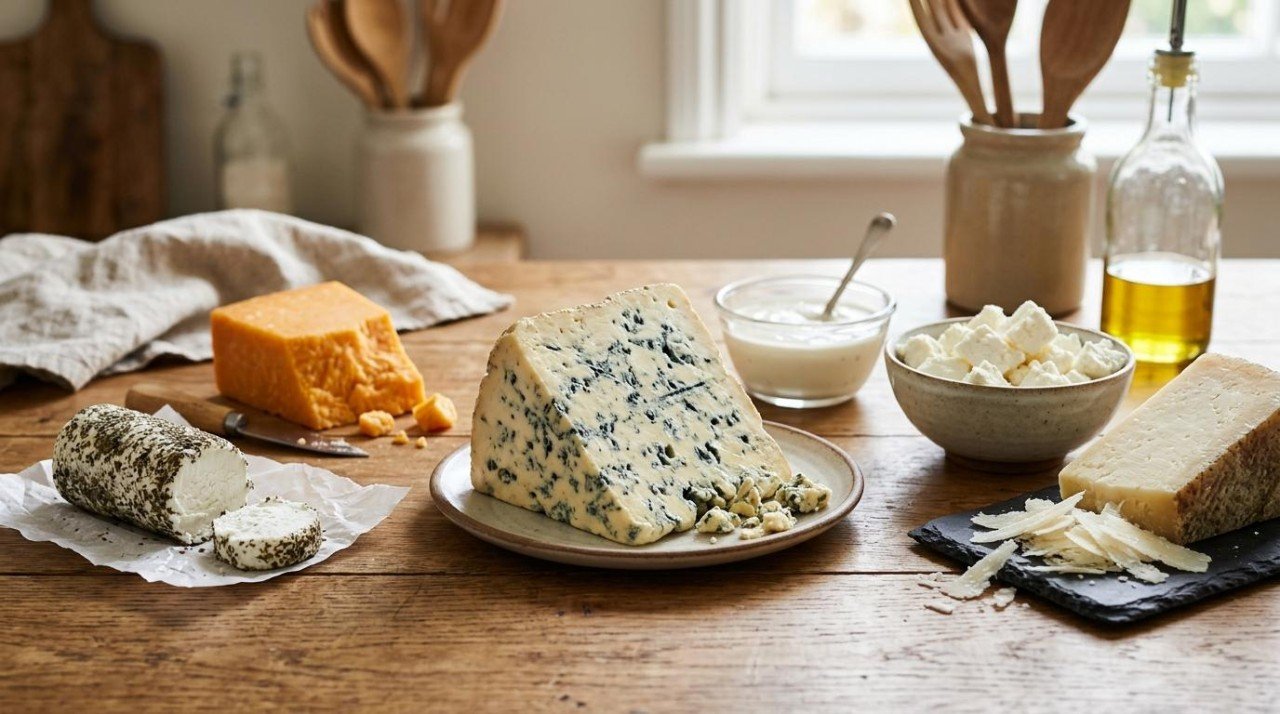
The tortillas are in the pan, the chips are on the sheet tray, the queso pot is warming — and the Monterey Jack is gone. Maybe someone snacked on it, maybe the store was out. Either way, you need something that melts just as smoothly, and you need it now.
Monterey Jack is a mild, slightly sweet, semi-hard cow's milk cheese from California's Central Coast. Most supermarket Jack is aged only about a month, which keeps it high in moisture, buttery, and very easy to melt. That is the whole job it does in Tex-Mex and American cooking: it melts into a smooth, creamy layer without getting greasy or grainy, and it tastes mild enough to let the salsa, chiles, and spices lead.
Plenty of cheeses can do that job, but they are not all good at the same parts of it. A cheese that stretches beautifully in a quesadilla can turn stringy in a queso, and a bold cheddar that is great on nachos can turn oily in a sauce. So here is what works, organized by what you are making, with exact swaps.
The Quick List
- Pepper Jack — literally Monterey Jack with chiles; the closest swap if you want a little heat
- Colby or Colby-Jack — soft, mild, and moist; the best all-purpose stand-in
- Mild white cheddar — the easiest supermarket swap; a little tangier
- Muenster — mild, buttery, and an excellent melter for quesadillas and sandwiches
- Queso Chihuahua — the Mexican melting cheese for queso fundido and chile con queso
- Oaxaca cheese — stretchy and stringy; the classic quesadilla cheese
- Havarti — buttery and creamy; melts fast in sandwiches and sauces
- Mild Fontina — one of the silkiest melters for cheese sauces and mac and cheese
- Young Gouda — smooth melt with a mild, sweet flavor
- Low-moisture mozzarella — the lighter option; best blended with a more flavorful cheese
- Dairy-free shreds or a nutritional yeast sauce — for a plant-based version
Which Substitute for Which Dish
Monterey Jack's uses split into three jobs. Pick based on yours:
- Smooth melts — queso, cheese sauces, mac and cheese, enchilada sauce: Colby, mild white cheddar, Queso Chihuahua, mild Fontina, or Havarti. Avoid the stretchy cheeses (Oaxaca, mozzarella) here; they turn into strings instead of a sauce.
- Stretchy fillings — quesadillas, chiles rellenos, burritos, stuffed peppers: Oaxaca, Muenster, Queso Chihuahua, or low-moisture mozzarella blended with a little cheddar. A cheese pull is a feature here, not a bug.
- Shredded toppings — nachos, enchiladas, tacos, casseroles, burgers: Pepper Jack, Colby-Jack, mild white cheddar, or Muenster. Almost any good melter works when the cheese just needs to bubble on top.
- Cold uses — snacking, sandwiches, salads: Havarti, Colby, young Gouda, or Muenster. These are the closest in flavor and texture straight from the fridge.
Pepper Jack
- Swap: 1:1 by weight or volume
- Best for: Nachos, quesadillas, queso, burgers, enchiladas — anywhere a little heat is welcome
- Skip it for: Kids' food, mild dishes, or recipes that already have plenty of chiles
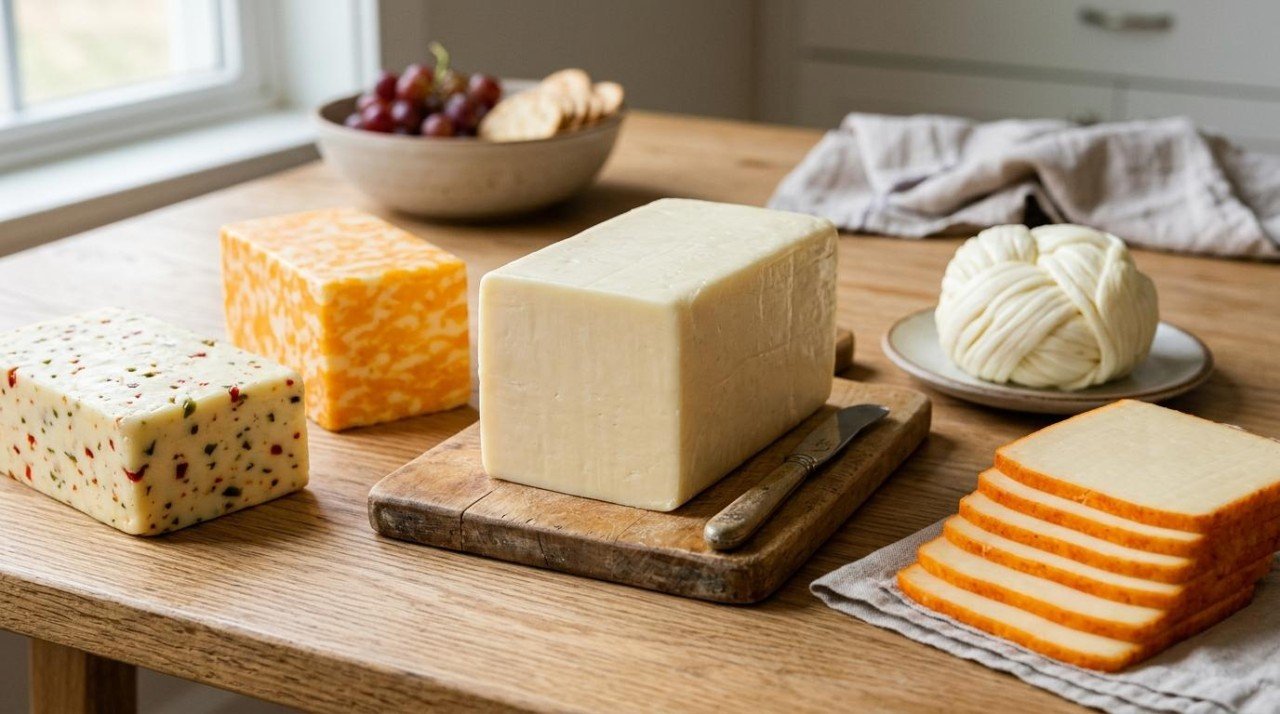
Pepper Jack is not a substitute so much as Monterey Jack in a different outfit. It is the same cheese, with chili peppers, bell peppers, and herbs mixed into the curd. It melts exactly the same way, so there is nothing to adjust except the heat level.
If you are worried about spice, go half and half with a milder cheese like Colby or mild cheddar. In a queso or a pan of enchiladas, a 50/50 blend gives you a gentle warmth that most people do not even register as spicy.
Colby or Colby-Jack
- Swap: 1:1 by weight or volume
- Best for: Nachos, casseroles, quesadillas, queso, sandwiches, snacking
- Skip it for: Recipes where the cheese must stay white; plain Colby is orange
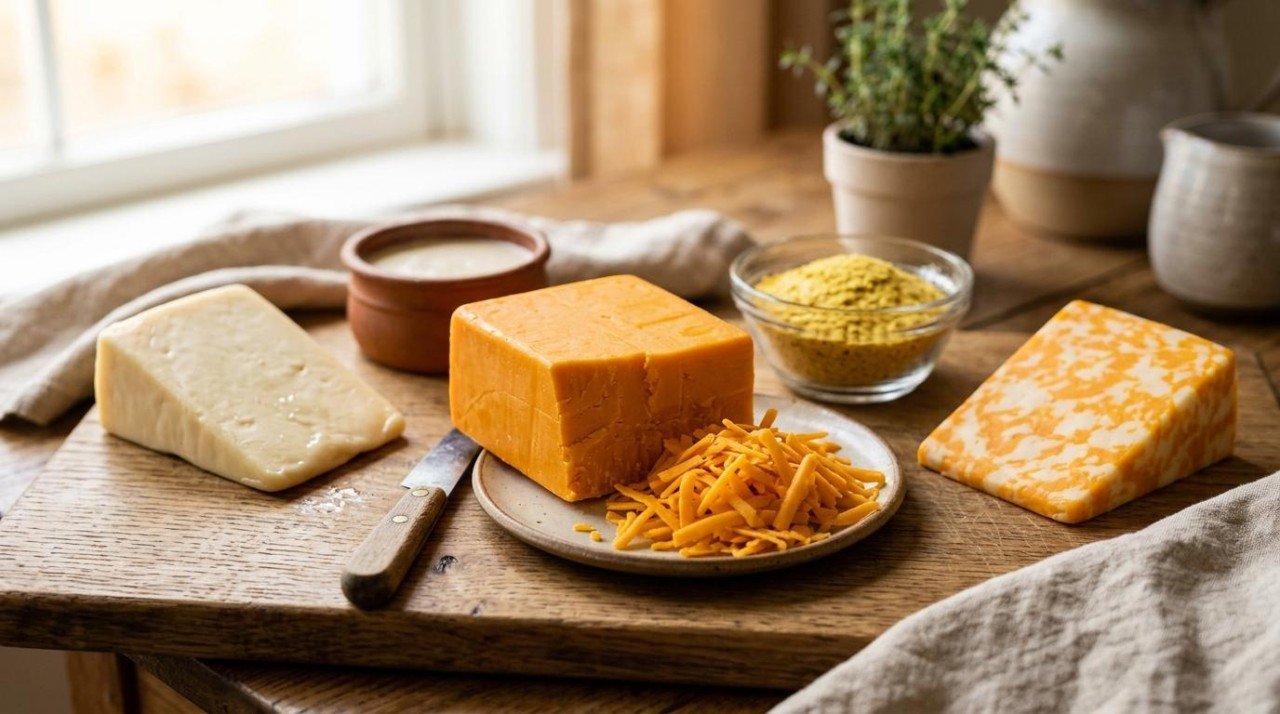
If you only remember one swap, make it this one. Colby is an American cheese made by washing the curds, which gives it a moister and softer texture than cheddar and a mild, milky flavor. That is Monterey Jack's profile almost exactly — just orange, thanks to annatto. It melts smoothly and stays creamy rather than oily.
Colby-Jack, the orange-and-white marbled cheese, is even closer: it is Colby and Monterey Jack curds pressed together. If you have a block of Colby-Jack in the fridge, you have half the cheese the recipe asked for already. Use it 1:1 anywhere.
Mild White Cheddar
- Swap: 1:1 by weight; choose mild or medium, not sharp, for direct melting
- Best for: Nachos, enchiladas, casseroles, burgers, and queso made with evaporated milk
- Skip it for: Stretchy quesadilla fillings; cheddar melts flat rather than stringy
Cheddar is the swap every grocery store carries. A mild white cheddar has a similar color and meltability to Monterey Jack, with a little more tang. Young cheddars melt smoothly; aged, extra-sharp ones have less moisture and can turn grainy or oily when heated on their own, which is why mild is the better pick for a straight 1:1 swap.
For queso, cheddar becomes excellent once you stabilize it. The method that works best tosses freshly shredded cheese with cornstarch and melts it into evaporated milk; one well-tested version uses 2 1/2 cups of cheese, 1 tablespoon of cornstarch, and a 13-ounce can of evaporated milk, and notes that Monterey Jack, Colby, and cheddar all work in it. That dip stays smooth even as it cools, which a straight melted-cheese dip will not. (Out of evaporated milk too? Our evaporated milk substitutes guide has you covered, and our cheddar guide covers swapping the other way.)
Muenster
- Swap: 1:1 by weight
- Best for: Quesadillas, grilled cheese, burgers, chiles rellenos, mac and cheese
- Skip it for: Recipes where you want flavor from the cheese; Muenster is very mild
American Muenster is a pale, smooth, semi-soft cheese with an orange annatto rind and a mild flavor. It is one of the best melters in the dairy case, and it is common in grilled cheese, quesadillas, cheeseburgers, and mac and cheese for exactly that reason. Its texture is so close to Jack's that most people would not notice the swap in a quesadilla.
The rind is edible but slightly tougher; trim it off if you are shredding Muenster for a smooth sauce. Note that this is American Muenster — the French Munster is a pungent washed-rind cheese and a very different thing.
Queso Chihuahua
- Swap: 1:1 by weight
- Best for: Queso fundido, chile con queso, choriqueso, quesadillas, enchiladas
- Skip it for: Nothing in particular; it is one of the most versatile swaps on this list
In Mexico, the cheese that does Monterey Jack's job is Queso Chihuahua. It is a mild white melting cheese often compared to Monterey Jack or a mild white cheddar, first made by Mennonite communities in northern Mexico (where it is still called queso menonita). It is the traditional cheese in queso fundido, choriqueso, and chile con queso.
Look for it in the Latin American section of the dairy case, sold in rounds, blocks, or pre-sliced. If your recipe is Mexican rather than Tex-Mex, Chihuahua is arguably more authentic than the Jack it called for.
Oaxaca Cheese
- Swap: 1:1 by weight; pull it into strands instead of shredding
- Best for: Quesadillas, empanadas, chiles rellenos, tlayudas, stuffed peppers
- Skip it for: Queso and cheese sauces, where it turns stringy instead of smooth
Oaxaca cheese is made like mozzarella — the curd is stretched — but then pulled into long ribbons and wound into a ball like a skein of yarn. It tastes similar to young Monterey Jack, but its texture is closer to string cheese. That stretch is exactly what you want inside a quesadilla, where it delivers the long cheese pull Jack can only hint at.
Do not try to shred it on a box grater; it just smears. Unwind the ball and tear the ribbons into thin strips by hand. If you cannot find it, low-moisture mozzarella is the closest stand-in for the stretch (see below).
Havarti
- Swap: 1:1 by weight
- Best for: Grilled sandwiches, paninis, mac and cheese, cheese sauces, snacking
- Skip it for: Nachos under a broiler; soft Havarti can melt into puddles and slide
Havarti is a Danish semi-soft cheese with a buttery aroma and a mild, slightly sweet flavor that softens quickly at room temperature. It is creamier than Monterey Jack, which makes it a great swap for melting into a sauce or a sandwich and a near-perfect match for snacking and cheese boards.
Watch out for flavored versions. Dill Havarti is common and lovely on a sandwich, but out of place in enchiladas. Plain or cream Havarti is the one you want.
Mild Fontina
- Swap: 1:1 by weight
- Best for: Mac and cheese, queso, cheese sauces, gratins, paninis
- Skip it for: Budget cooking; it usually costs more than Jack
The Danish- and American-style Fontina sold in most supermarkets is soft, mild, and buttery, and it may be the smoothest melter on this list. It turns silky in a cheese sauce and never gets grainy, which makes it an excellent Jack replacement in mac and cheese or a white queso. The Italian original, Fontina Val d'Aosta, is earthier and more pungent — delicious, but not a flavor match here.
Young Gouda
- Swap: 1:1 by weight; use young (mild) Gouda, not aged
- Best for: Grilled cheese, burgers, mac and cheese, casseroles, snacking
- Skip it for: Smoked Gouda in Tex-Mex dishes, where its smoky flavor takes over
Young Gouda is mild, smooth, and slightly sweet, and it melts beautifully. It is not a classic Tex-Mex cheese, but in a quesadilla or casserole it behaves almost exactly like Jack. Aged Gouda is a different animal — firm, crystalline, and caramel-sweet — and will not melt the same way, so check the label.
Low-Moisture Mozzarella
- Swap: 1:1 by weight, ideally as 3/4 mozzarella + 1/4 cheddar or Pepper Jack for flavor
- Best for: Quesadillas, stuffed peppers, enchiladas, casseroles, pizza-style nachos
- Skip it for: Queso and cheese sauces, where it turns into rubbery strings
- Health notes: Part-skim has about a third fewer calories and about half the saturated fat of Monterey Jack
Low-moisture mozzarella (the firm block, not the fresh balls in water) melts and stretches well, browns nicely, and has a clean, milky flavor. On its own it is milder than Jack, which can make a dish taste flat, so blending in a quarter of something with more personality fixes that. It is also the main lighter option on this list; more on that below. See our mozzarella guide for when to use which kind.
Dairy-Free Shreds or Nutritional Yeast Queso
- Swap: Dairy-free melting shreds 1:1 by volume; or for queso, a cashew or potato-and-carrot sauce seasoned with about 1/4 cup nutritional yeast per 1 cup of sauce
- Best for: Shreds on nachos, enchiladas, and quesadillas; nutritional yeast sauces for queso and mac and cheese
- Skip it for: A true cheese pull; no plant-based cheese stretches like Oaxaca or Jack
- Health notes: Nutritional yeast adds protein and, if fortified, vitamin B12; many dairy-free shreds are mostly coconut oil and starch, so they are not automatically lighter
Dairy-free shreds have improved a lot, and the ones labeled "melts" will soften and brown on a tray of nachos. For queso, a blended sauce works better than shreds: soaked cashews or boiled potato and carrot, blended with nutritional yeast, a splash of lime, cumin, and canned green chiles. It is creamy and savory and pours over chips well. Our nutritional yeast guide has more ways to use it.
Lighter and Healthier Options
Monterey Jack is a fairly typical cheese nutritionally. An ounce has about 106 calories, 6.9 grams of protein, 5.4 grams of saturated fat, 211 mg of calcium, and 152 mg of sodium. That actually makes it a little lower in sodium than its usual substitutes: cheddar has about 176 mg per ounce, Colby 171, and Muenster 178. Those are small differences per ounce, but they add up in a dish that uses two or three cups. If you want to lighten a cheesy dish, these are the swaps that actually move the numbers.
Part-Skim Mozzarella for Less Saturated Fat
- Swap: Replace up to half the Jack with part-skim low-moisture mozzarella
- Best for: Quesadillas, enchiladas, stuffed peppers, casseroles
- Health notes: About 72 calories and 2.9 g saturated fat per ounce, versus about 106 calories and 5.4 g for Jack
According to USDA data, an ounce of part-skim mozzarella has about 72 calories, 6.9 grams of protein, and 2.9 grams of saturated fat — the same protein as Jack with about half the saturated fat. Its sodium is slightly higher (about 175 mg per ounce), so this is a saturated-fat swap, not a sodium one. A half-and-half blend keeps most of Jack's flavor and melt.
Use Less of a Bolder Cheese
Mild cheese is easy to over-pour, because you need a lot of it to taste it. Swap Monterey Jack for Pepper Jack or a medium cheddar and you can often cut the cheese by a quarter without the dish tasting less cheesy. We did exactly that in our healthier loaded nachos and sheet pan quesadilla makeovers.
Make Room for Beans and Vegetables
The other way to lighten a cheesy Tex-Mex dish is to give the cheese less space to fill. Mashed or whole black beans, roasted peppers, corn, or sautéed greens inside a quesadilla mean you need less cheese to hold it together, and they add fiber the cheese cannot. That is the approach behind our healthier queso dip, too. And every different plant counts toward Plant Points, Eat Well Planner's weekly tracker for the "30 plants a week" goal linked to a more diverse gut microbiome.
Take the Guesswork Out of Eating Well
Eat Well Planner helps you organize your favorite recipes, plan balanced meals, and automatically generate shopping lists — all in one place. Whether you're tracking macros, managing dietary restrictions, or just trying to stop asking "what's for dinner?", we've got you covered.
Our AI-powered tools can adapt any recipe to your dietary needs, help you discover new meals you'll love, and even log your nutrition effortlessly. It's meal planning made simple.
Start Organizing Your Meals — FreeWhat Not to Use
Pre-shredded bagged cheese for queso. Bagged shreds are coated with an anti-caking powder that can make a cheese sauce grainy. They are fine on nachos and casseroles, but for a smooth queso, buy a block and shred it yourself.
Queso fresco, cotija, or feta. They are often shelved right next to Mexican melting cheeses, but they soften rather than melt. Crumble them on top of finished enchiladas or tacos for a salty finish; do not use them as the main melting cheese. Our queso fresco guide covers what they are good for.
Dry Jack. Despite the name, Dry Jack is Monterey Jack aged for up to two years until it is hard enough to grate. It was famously used as a stand-in for Parmesan. It is delicious, but it will not melt like the young cheese.
Fresh mozzarella. It is very wet and very mild, so it makes quesadillas soggy and adds little flavor. Use low-moisture mozzarella instead.
Fat-free or very low-fat cheese. Jack's melt comes from its fat and moisture. Fat-free cheeses tend to turn rubbery or refuse to melt at all. If you want a lighter result, use the part-skim mozzarella blend above.
The Bottom Line
For the closest swap, use Pepper Jack (if you like heat) or Colby-Jack (if you do not). For a smooth queso or cheese sauce, use Colby, mild white cheddar, Queso Chihuahua, or mild Fontina, ideally with the evaporated milk and cornstarch trick. For a stretchy quesadilla, use Oaxaca or Muenster. And for a lighter dish, blend in part-skim mozzarella and pack in more beans and vegetables.
A guide like this can only speak in general terms. The best swap depends on the recipe in front of you — how much cheese it uses, whether it melts inside or on top, and what else is in the dish. That is where Eat Well Planner helps: ask the AI recipe chat "I'm making these enchiladas and I'm out of Monterey Jack — what should I use?" and it answers for that recipe and amount. And if you want to see what swapping half the Jack for part-skim mozzarella does to a dish's nutrition score, the Recipe Playground shows the change live before you cook.