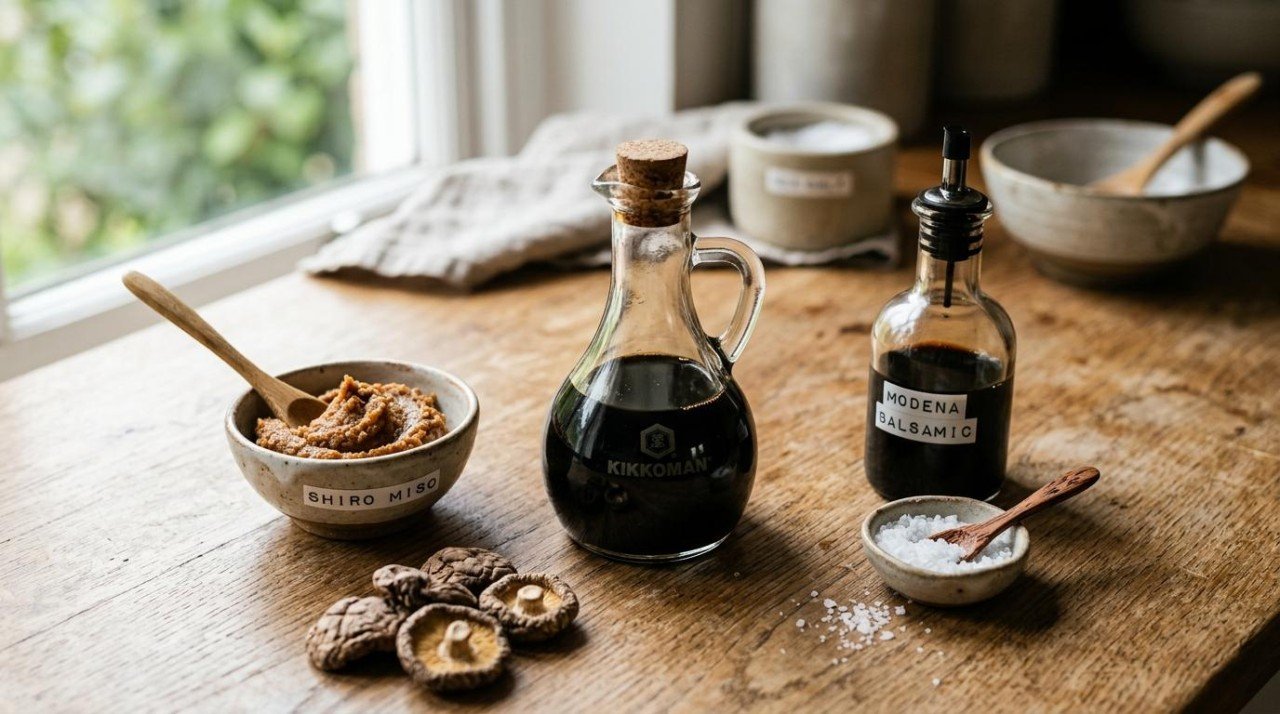
You are mixing up tuna salad or spreading a sandwich and the mayo jar is empty, scraped down to the rim, or was never in the fridge to begin with. Mayonnaise does a specific job — it is a rich, tangy emulsion of oil and egg that binds and moistens without adding much flavor of its own — so the right stand-in depends entirely on which of those jobs you need it for.
A creamy binder for a bowl of tuna is a different problem than a thin schmear for a sandwich, which is a different problem again from the base of a dressing or dip. Some swaps nail one and flop at the others. The good news: mayo is one of the easier things to replace, and several of the best swaps are genuinely more nourishing — mayo runs about 90 to 100 calories and 10 grams of fat per tablespoon, nearly all of it fat, so there is real room to trade up.
Below, the substitutes are ordered from most versatile to most specialized, each with an exact ratio, the job it is best for, and an honest note on flavor and texture. Pick the one that matches what you are making.
The Quick List
- Plain Greek yogurt — the all-purpose healthier pick; creamy and tangy for bound salads, dressings, and dips
- Mashed avocado — rich and buttery for spreads and tuna or egg salad
- Hummus — savory and fiber-rich for sandwiches and bound salads
- Sour cream — the closest texture match for dressings, dips, and cold salads
- Blended cottage cheese — high-protein and neutral for bound salads
- Mustard — a near-zero-calorie tangy spread for sandwiches
- Olive oil — light and Mediterranean for oil-dressed tuna and dressings
- Pesto — a bold, herby swap for sandwiches and salads
- Mashed white beans — creamy plant protein for bound salads
- Tahini — nutty and pourable for dressings and spreads
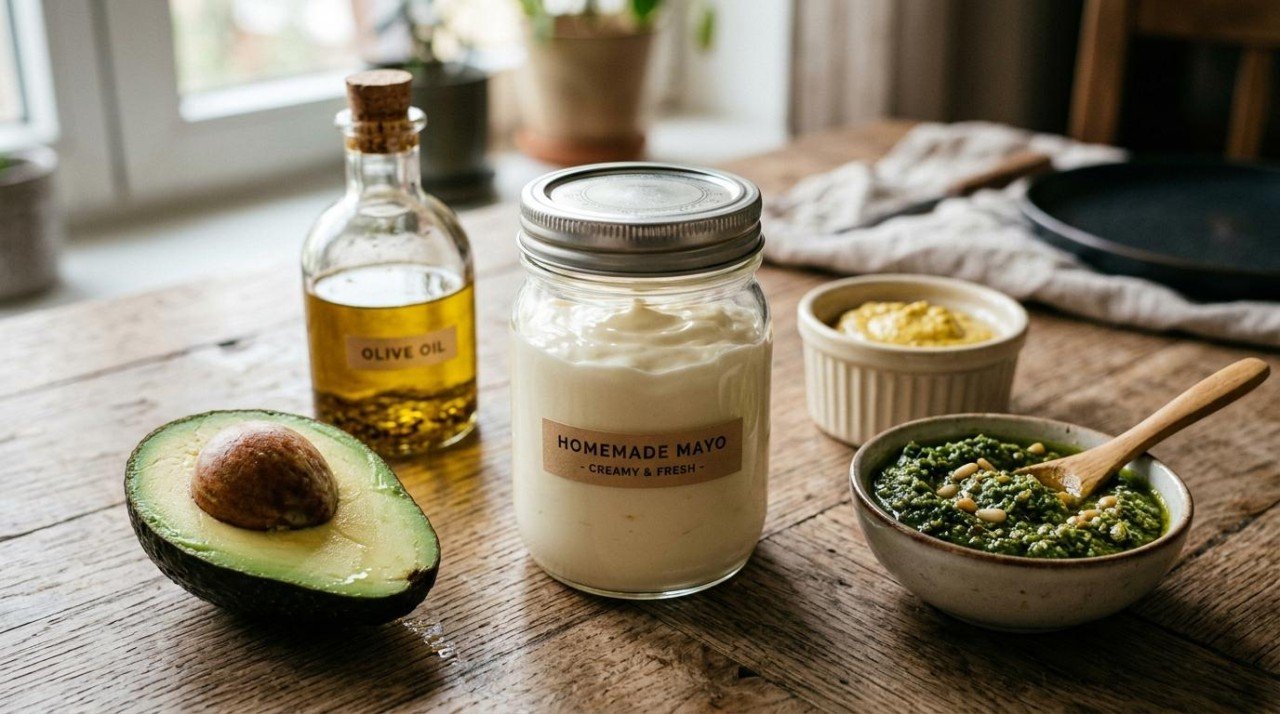
- Quick homemade mayo — when only real mayo will do and you have an egg
Plain Greek Yogurt
- Swap: 1:1, ideally with 1/2 teaspoon Dijon mustard and a squeeze of lemon per 1/4 cup to mimic mayo's tang
- Best for: Tuna, chicken, egg, and potato salad; creamy dressings; dips; coleslaw
- Skip it for: A completely neutral flavor, or hot sauces where it may curdle
- Health notes: Under 10 calories a tablespoon and adds protein instead of fat
Greek yogurt is the workhorse swap and the one worth reaching for first. It brings the thick, spoonable body and the gentle acidity that make mayo work in a bound salad, but with a fraction of the calories and a real hit of protein — roughly 10 grams per 100 grams versus mayo's near-zero. Use full-fat or 5% for the creamiest result. Its one honest trade-off is tang: yogurt is noticeably more sour than mayo, so a little Dijon and lemon actually helps it read as mayo rather than yogurt. If a recipe wants it stirred into something hot, add it off the heat so it does not split. If you keep it on hand, our full guide to Greek yogurt substitutes covers the reverse problem too.
Mashed Avocado
- Swap: About 1/2 a ripe avocado per can of tuna, or 1/4 cup mashed per 1/4 cup mayo, plus lemon or lime juice and salt
- Best for: Tuna and egg salad, sandwich spreads, and anywhere you want richness
- Skip it for: Make-ahead dishes that sit for a day, and anything you need to stay pale
- Health notes: Monounsaturated fat, plus real fiber and potassium
Mashed avocado gives you the buttery mouthfeel mayo provides, from a whole food instead of an emulsion. It is rich in heart-friendly monounsaturated fat and surprisingly filling — a whole avocado carries about 14 grams of fiber, close to half a day's worth, along with a solid dose of potassium. Because it has no acidity of its own, you must add lemon or lime juice and salt or it tastes flat. The real catch is browning: cut avocado oxidizes fast, so avocado tuna salad is best eaten the day you make it. The acid you add for flavor also slows the browning, which is a handy two-for-one.
Hummus
- Swap: 1:1, thinned with a splash of water or lemon juice if it is stiff
- Best for: Tuna and chickpea salad, sandwich and wrap spreads, Mediterranean bowls
- Skip it for: A neutral background flavor — hummus tastes distinctly of garlic and sesame
- Health notes: Chickpeas and tahini add fiber and plant protein
Hummus is an underrated binder because it is already a creamy, savory puree built to coat things. It brings garlic, lemon, and sesame flavor of its own, so it does not disappear the way mayo does — lean into it with Mediterranean partners like cucumber, tomato, olives, and parsley rather than fighting it. Nutritionally it is one of the stronger swaps here, adding fiber and plant protein from the chickpeas and tahini. If it is too thick to coat a bowl of tuna, loosen it with a little water, lemon juice, or olive oil.
Sour Cream
- Swap: 1:1
- Best for: Cold dressings, dips, coleslaw, and bound salads
- Skip it for: Cutting calories or fat, and hot dishes where it can curdle
- Health notes: Similar richness to mayo; more tang, a little less fat, still low in protein
Sour cream is the closest pure texture-and-tang match on this list: thick, silky, and pleasantly sour, it slots into dips, dressings, and cold salads with no adjustment at all. It is a flavor swap more than a health swap — it has plenty of its own fat — but it is often what people actually reach for when they want that mayo mouthfeel without the mayo. For the richest, least-tangy version, creme fraiche works the same way. See our sour cream substitutes if you are out of that too, since half the swaps overlap.
Blended Cottage Cheese
- Swap: 1:1, blended completely smooth first, with a squeeze of lemon
- Best for: Tuna, chicken, and egg salad; high-protein dips
- Skip it for: Spreading straight from the tub — it must be blended, or it stays lumpy
- Health notes: The highest-protein swap here, around 28 grams per cup
If protein is the goal, blended cottage cheese is the champion — it out-protein-ies even Greek yogurt while staying low in fat. Straight from the tub it is lumpy and watery, so pulse it smooth in a blender or food processor first; a whirl of ten seconds turns it into a creamy, mayo-like base. It is milder and less tangy than yogurt, so add lemon juice, plenty of salt, and something with a kick — Dijon, hot sauce, or fresh herbs — to keep it from tasting bland. In a tuna or chicken salad, most people cannot tell it apart from the real thing.
Mustard
- Swap: Use sparingly as a thin spread; start with about half the mayo amount since it is much stronger
- Best for: Sandwiches and wraps that just need moisture and tang
- Skip it for: Binding a salad — it is far too thin and sharp to hold ingredients together
- Health notes: Almost no calories or fat
For a sandwich, mayo is often just there to add moisture and a little tang, and mustard covers both for practically no calories. Dijon is smooth and mellow, whole-grain adds texture, and yellow mustard brings the sharpest bite. It is a spread, not a binder — do not try to hold a potato salad together with it. But smeared on bread under the fillings, a good mustard can make the mayo feel unnecessary. It also plays a supporting role in nearly every other swap on this list, sharpening up yogurt, cottage cheese, and olive oil.
Olive Oil
- Swap: About 1 tablespoon per can of tuna, with lemon juice or vinegar and a little Dijon
- Best for: Italian-style oil-dressed tuna, dressings, and light salads
- Skip it for: A thick, creamy binder — oil coats but does not bind
- Health notes: Monounsaturated fat and antioxidants, though not lower in calories than mayo
Skip the idea of creaminess entirely and dress your tuna the Mediterranean way: good olive oil, a squeeze of lemon or a splash of red wine vinegar, a dab of mustard, and salt. It is lighter, brighter, and lets the fish taste like fish. This will not clump a salad together the way mayo does, so it suits flaky tuna, beans, and greens more than a mashed, scoopable potato salad. It is not a calorie cut — olive oil is pure fat — but it is a better class of fat. Our olive oil guide has more on choosing one.
Pesto
- Swap: 1 to 2 tablespoons per can of tuna, or per sandwich, added gradually to taste
- Best for: Sandwiches, wraps, and tuna or chicken salad that can take a bold flavor
- Skip it for: Anything that needs to stay mild — pesto takes over the dish
- Health notes: Olive oil and nuts bring good fats and a little green nutrition
Pesto is not a subtle swap, and that is the point: basil, garlic, pine nuts, and olive oil turn a plain tuna sandwich into something that tastes designed. It adds enough oil to give a pleasant coating without any dairy, so it is a good pick for dairy-free eaters. Because the flavor is loud, add it a spoonful at a time and taste as you go. It pairs naturally with tomato, mozzarella, and roasted vegetables.
Mashed White Beans
- Swap: 1/4 to 1/3 cup mashed or blended cannellini or butter beans per 1/4 cup mayo, with lemon and salt
- Best for: Tuna and chickpea salad, sandwich spreads, plant-forward bowls
- Skip it for: A silky-smooth finish unless you blend well; hand-mashed stays a little rustic
- Health notes: Fiber and plant protein, and one more plant toward the week's diversity
Canned white beans — cannellini, navy, or butter beans — mash or blend into a creamy, mild base that binds a salad much like mayo while adding fiber and plant protein instead of fat. Drain and rinse them, then mash with a fork for a rustic texture or blend with a little olive oil and lemon for something smoother. They are naturally bland, so season assertively. This is also an easy way to nudge up your plant variety, which is the idea behind the Eat Well Planner Plant Points tracker and the fiber most of us fall short on.
Tahini
- Swap: Thin 2 tablespoons tahini with lemon juice and a little water until pourable, then use to taste
- Best for: Dressings, grain bowls, and spreads with a Middle Eastern lean
- Skip it for: A neutral flavor — tahini is distinctly nutty and can turn bitter if overused
- Health notes: Sesame fats, plus some calcium and iron
Tahini is sesame seed paste, and a little goes a long way toward a creamy, nutty richness with no dairy or egg. On its own it is thick and can taste bitter, so always loosen it with lemon juice and water — as it emulsifies it lightens into a pourable, mayo-like sauce that is excellent over tuna, roasted vegetables, or a grain bowl. Add garlic and cumin and you are close to a Mediterranean dressing. Use a restrained hand: too much and the bitterness dominates.
Quick Homemade Mayo
- Swap: 1 egg yolk + 1 teaspoon Dijon + 1 tablespoon lemon juice or vinegar, whisked while drizzling in 3/4 cup neutral oil
- Best for: Any recipe where only true mayo will do
- Skip it for: Anyone avoiding raw egg, and moments when you have no five minutes to spare
- Health notes: Nutritionally the same as store-bought, but with no additives
If nothing but real mayo will satisfy the recipe, you can make it from pantry staples in about five minutes. Whisk one egg yolk with the mustard and acid, then add a neutral oil (or light olive oil) a few drops at a time at first, whisking constantly, until it starts to thicken; once the emulsion catches, pour the rest in a slow, steady stream. Season with salt. A blender or immersion blender makes it nearly foolproof. Note that this uses raw egg, so skip it if that is a concern for you or anyone you are feeding.
The Healthier Swaps, Ranked
Since trimming mayo is often the whole reason for the search, here is where these land if nutrition is your priority, not just texture:
- Most protein, least fat: blended cottage cheese, then plain Greek yogurt
- Best whole-food fats and fiber: mashed avocado, hummus, and mashed white beans
- A wash on calories, but better fat: olive oil, tahini, and pesto
- A flavor swap, not a health one: sour cream and homemade mayo
None of these is the single right answer, because mayo does several jobs and you are only replacing one at a time. The trick is to match the swap to the task: a binder for the salad, a thin spread for the sandwich, a base for the dressing.
That is exactly the kind of trade-off Eat Well Planner is built to make visible. Every recipe gets a nutrition score, and the Make It Healthier feature proposes swaps like these and verifies the real change with a calculator before you commit — so you can see precisely what trading a half cup of mayo for Greek yogurt or blended cottage cheese does to a dish's protein, fat, and calories, instead of guessing. The Recipe Playground lets you test a swap and watch the score move live before you touch the actual bowl.
Take the Guesswork Out of Eating Well
Eat Well Planner helps you organize your favorite recipes, plan balanced meals, and automatically generate shopping lists — all in one place. Whether you're tracking macros, managing dietary restrictions, or just trying to stop asking "what's for dinner?", we've got you covered.
Our AI-powered tools can adapt any recipe to your dietary needs, help you discover new meals you'll love, and even log your nutrition effortlessly. It's meal planning made simple.
Start Organizing Your Meals — FreeWhat Not to Use
A few things get suggested that tend to disappoint:
- Thin regular yogurt. Standard (non-Greek) yogurt is too runny to bind a salad and makes it watery. Strain it first, or use Greek.
- Sweetened or vanilla yogurt. An easy mistake to grab, and it turns a savory salad oddly sweet. Always use plain.
- Heavy cream or milk on their own. They bring richness but no tang and no body, so a dressing or dip falls flat. Culture or acidify them first, or pick a swap above.
- Ketchup or salad cream as the main binder. Fine as an accent, but too sweet and thin to carry a salad by themselves.
The through-line for mayonnaise is that there is no single replacement, only the right one for the job in front of you. Need a creamy binder? Reach for Greek yogurt, cottage cheese, mashed avocado, or white beans. Dressing a sandwich? Mustard, hummus, or pesto. Building a dressing or dip? Sour cream, olive oil, or thinned tahini. Decide which job you are filling, match the swap to it, and season to taste.
Not sure which one fits the exact recipe in front of you? That is what Eat Well Planner's AI recipe chat is for. Pull up your recipe, tell it you are out of mayo, and it will suggest the substitute that suits that dish, with your ingredients and method already in view — and if you want the whole thing rewritten dairy-free or lighter, the recipe variations feature can rework it end to end. Match the job, make the swap, and get back to eating.