The grill is hot, the zucchini and peppers are cut for skewers, and the halloumi you were sure was in the fridge is not there. Or the store simply didn't have it. Either way, you need a cheese that can take direct heat and come out golden instead of sliding through the grates.
That is the hard part about replacing halloumi. Most cheeses melt when they get hot, because heat loosens their protein network until it flows. Halloumi is made differently: the curds are cooked in hot whey, which kills the acid-producing bacteria and keeps the cheese's pH high. As America's Test Kitchen explains, citing a dairy scientist at the Cyprus University of Technology, that leaves more calcium bonding the proteins together and keeps the network rigid. So halloumi softens and browns, but it doesn't run. A good substitute has to do the same thing, and only a handful of cheeses (plus a couple of plant options) really can.
The best swap depends on what you are making: grilled skewers and halloumi fries, a warm salad, a breakfast plate, or a wrap or burger. Below are the substitutes that actually work, closest match first, with exact swaps and the dishes each one is good (and bad) at. There is also a sodium comparison, because halloumi is one of the saltier cheeses you can buy.
The Quick List
- Queso para freír — the closest match: a firm, mild "frying cheese" made to brown without melting
- Paneer — the easiest to find; holds up on the grill, but needs salt and a marinade
- Kefalograviera or kefalotyri — the Greek saganaki cheeses; saltier and sharper, best pan-fried
- Bread cheese (juustoleipä) — mild, buttery, and made to be heated; great on the grill or griddle
- Queso blanco or panela — mild fresh cheeses that sear well in a hot pan
- Thick-cut provolone — for a gooey, crusty "provoleta" in a skillet, not on the grates
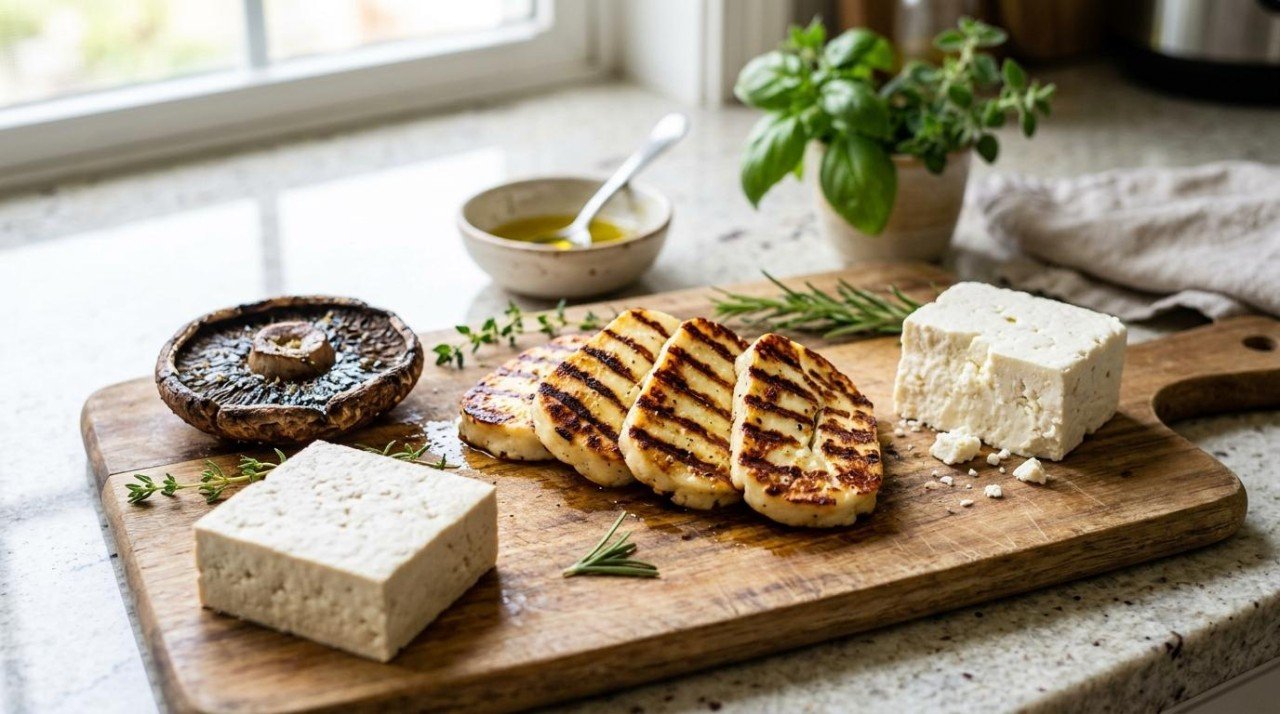
- Extra-firm tofu — the dairy-free pick; sears golden and carries a lemon-oregano marinade
- Block feta — the salad and baked-dish swap; same salty tang, but it won't hold a grill
- Portobello or king oyster mushrooms — the plant-based "meaty slab" for burgers and wraps
Queso para Freír (Frying Cheese)
- Swap: 1:1 by weight; cut into 1/2-inch slabs, pat dry, and sear or grill exactly as you would halloumi
- Best for: Halloumi fries, pan-seared slices, skewers, breakfast plates, salads
- Skip it for: Recipes that depend on halloumi's sharp, briny edge (add a squeeze of lemon and a pinch of salt)
- Health notes: Typically less salty than halloumi; check the label
Queso para freír (also sold as queso de freír) is the Latin American answer to halloumi: a firm, white, mild cheese made specifically for frying. Goya's description sums up why it works: it "does not melt easily, even when exposed to high temperatures" and forms a golden crust with a creamy interior. It is a staple of the Dominican breakfast plate, fried in slices alongside eggs and mashed plantains, and Dominican cooks often name halloumi as the closest substitute in the other direction.
Look for it in the Latin foods section or the specialty cheese case. It tastes milder and less salty than halloumi, so season the finished cheese with a squeeze of lemon, a pinch of flaky salt, or a drizzle of honey and chili flakes. For frying, keep the pan hot and don't crowd it. If a test slice starts to slump, dust the rest lightly with cornstarch before they go in.
Paneer
- Swap: 1:1 by weight; cut into 3/4-inch slabs or cubes, toss every 8 oz with 1 tablespoon olive oil, 1 tablespoon lemon juice, and 1/2 teaspoon salt, and marinate 15 to 30 minutes before searing or grilling
- Best for: Grilled skewers, sheet-pan vegetables, grain bowls, wraps, curries
- Skip it for: Halloumi fries in very thin sticks — paneer is more crumbly and can break
- Health notes: Far less sodium than halloumi; USDA's entry works out to about 50 mg per ounce
Paneer is the substitute most grocery stores actually stock, and it is the most heat-proof cheese you can buy outside the specialty case. It is made by curdling hot milk with acid, a different route to the same result: it browns, softens, and holds its shape without melting. Indian cooks grill it on skewers for paneer tikka all the time, so the grill is home turf.
The difference is flavor. Halloumi is brined and salty; paneer is unsalted and very mild, almost like firm, milky tofu. That is why the marinade matters. Salt, lemon, and olive oil (plus dried oregano or mint for a Cypriot touch) give it the savory edge halloumi has naturally. Paneer is softer and more crumbly, so cut it thicker than you would halloumi, use a well-oiled grill or a nonstick pan, and flip it once. If your block is very firm and dry, soaking it in warm water for 10 minutes softens it.
Kefalograviera or Kefalotyri (Saganaki-Style)
- Swap: 1:1 by weight; cut into 1/2-inch slices, rinse briefly, pat until just damp, dredge in flour, and pan-fry in olive oil over medium-high heat until golden on both sides
- Best for: Pan-fried cheese appetizers, warm salads, meze plates, anywhere halloumi is served with lemon
- Skip it for: Grill grates and skewers — it softens more than halloumi and is best in a pan
- Health notes: These are hard, salty cheeses, so don't add extra salt
If you have ever had saganaki, the flaming fried cheese at Greek restaurants, you have had these. Kefalotyri is the traditional hard, salty choice, and kefalograviera is a slightly softer, nuttier cousin that melts slowly in the pan. They have more personality than halloumi: sharper, saltier, and a little nutty. That makes them a great swap when halloumi is the star of a small plate and a weaker swap when it is supposed to be a mild, chewy background.
The method is what makes them work. The Daring Gourmet's saganaki recipe calls for slices about 1/2 inch thick (thinner ones "will melt too fast in the pan"), a quick rinse so the flour sticks, a coating of flour on every side, and a hot nonstick pan. Flip once, gently, and lower the heat if the outside browns before the inside warms. Finish with a squeeze of lemon. Kasseri and graviera work the same way if those are what you find.
Bread Cheese (Juustoleipä)
- Swap: 1:1 by weight; cut into 1/2-inch slabs or cubes and grill, griddle, or bake for 2 to 3 minutes per side, until warm and browned
- Best for: Grilled cheese on skewers or a platter, breakfast, sweet-savory dishes with honey, fruit, or jam
- Skip it for: Very savory, briny dishes — it is mild and slightly sweet
Bread cheese is a Finnish-style cheese now made in Wisconsin, where it is often sold as juustoleipä. It comes already baked, with toasty brown spots that give it its name. Dairy Farmers of Wisconsin note that "because juustoleipa has such low acidity, it doesn't melt when heated", which is the same principle that keeps halloumi intact. It softens into something warm and almost custardy instead.
The flavor is buttery, mild, and slightly sweet, so it is lovely with honey, figs, or a fruit salsa, and a little less convincing in a salty Mediterranean dish. Fix that with a sprinkle of flaky salt, dried oregano, and lemon zest after cooking.
Queso Blanco or Panela
- Swap: 1:1 by weight; cut into 1/2-inch slabs, pat dry, and sear in a hot oiled nonstick or cast-iron pan for 1 to 2 minutes per side
- Best for: Pan-seared slices, salads, breakfast plates, tacos, wraps
- Skip it for: Open grill grates — they soften more than halloumi; use a grill pan or skillet
- Health notes: About 200 mg of sodium per ounce for queso blanco, versus roughly 340 for halloumi
If you can't find queso para freír, look in the same aisle for queso blanco or panela. Both are mild, fresh Mexican-style cheeses that soften without running, and both brown nicely in a hot pan. Queso blanco is the denser of the two and the better pick for searing; panela is springier and more delicate, so cut it thicker and handle it gently.
Both are milder and less salty than halloumi. USDA data puts queso blanco at 310 calories and about 700 mg of sodium per 100 g, roughly 200 mg per ounce. A squeeze of lime or lemon and a pinch of salt after searing bring them closer to halloumi's bright, salty flavor. If you are also out of queso fresco, our queso fresco guide covers this whole family of fresh cheeses.
Thick-Cut Provolone (Provoleta-Style)
- Swap: 1:1 by weight; buy a 3/4- to 1-inch slab cut from the deli (not pre-sliced), chill it well, and sear in a very hot cast-iron skillet for 2 to 3 minutes per side
- Best for: A hot cheese appetizer with bread, melty sandwiches, a warm topping for grilled vegetables
- Skip it for: Skewers, salads, and anything where the cheese must stay in neat pieces
Provolone isn't a non-melting cheese, and that is worth being honest about. But Argentina has a whole dish built on grilling it: provoleta, a thick disc of provolone seared in a small cast-iron pan until the outside forms a crust and the inside turns gooey, then finished with oregano and chili flakes. If what you want is a hot, savory, browned cheese to eat with bread, it is delicious.
Just know you are changing the dish. You get a molten center and a crust instead of halloumi's chewy, sliceable slab, so this is a swap for small plates and sandwiches, not for a salad or skewers. Keep the slab cold until it hits the pan and serve it right away.
Extra-Firm Tofu (Dairy-Free)
- Swap: 1:1 by weight; press for 15 minutes, cut into 1/2-inch slabs, marinate 20 minutes in 1 tablespoon each of olive oil and lemon juice, 1/2 teaspoon dried oregano, and 1/2 teaspoon salt per 8 oz, then dust with cornstarch and sear until golden
- Best for: Salads, grain bowls, wraps, breakfast plates, skewers (on a well-oiled grill or grill pan)
- Skip it for: Recipes where the squeaky, milky cheese flavor is the whole point
- Health notes: Almost no sodium before seasoning, about 1 g of saturated fat per 100 g versus about 17 g for halloumi, and soy counts toward your weekly plant variety
Pressed extra-firm tofu is the most useful dairy-free stand-in, because it behaves a lot like halloumi in a pan: it holds its shape, browns in a hot skillet, and picks up whatever you marinate it in. The marinade does the work that brine does for halloumi, so don't skip the salt and lemon. Nutritional yeast or a little miso stirred into the marinade adds a more cheese-like savory note.
It is also a real nutritional change. USDA data for extra-firm tofu shows 83 calories, 10 g of protein, and less than 1 g of saturated fat per 100 g, plus about 280 mg of calcium in tofu made with calcium sulfate. Halloumi has more protein by weight, but about four times the calories. For pressing, marinating, and getting a crisp crust every time, see our guide on how to cook tofu so it tastes good, and our tofu substitutes guide if you are out of that too.
Block Feta (For Salads and Baked Dishes)
- Swap: Use about 3/4 the amount by weight; cube or crumble it cold for salads, or bake a whole block at 400°F for 15 to 20 minutes for warm dishes
- Best for: Watermelon and tomato salads, grain bowls, roasted vegetable trays, wraps
- Skip it for: Grilling, skewers, and halloumi fries — it crumbles and slumps
- Health notes: About as salty as halloumi, so don't count on it to cut sodium
A lot of halloumi recipes, especially salads, use it for its salty, milky flavor rather than for the sear. Feta covers that job well. It is white, briny, and tangy, and a firm block holds its cubes in a salad the way halloumi does. It won't get a golden crust on the grill, though, and it falls apart if you try.
For a warm salad, bake the block instead: it softens and turns creamy at the edges without melting away, and you can break it over roasted vegetables or warm grains. Use a little less than the recipe's halloumi, since feta's sharper tang goes further. If you are out of feta too, our feta substitutes guide has more options.
Portobello or King Oyster Mushrooms (For Burgers and Wraps)
- Swap: 1 large portobello cap in place of each 2- to 3-oz halloumi slab, or king oyster mushrooms sliced lengthwise into 1/2-inch planks; brush with olive oil, season with salt, and grill or sear 4 to 5 minutes per side
- Best for: Halloumi burgers, grilled sandwiches, wraps, pitas
- Skip it for: Salads where the cheese is the main protein, and anything that needs a cheesy flavor
- Health notes: Very low in calories and fat; adds a plant to your week
When halloumi is filling a bun or a wrap, it is mostly doing a texture job: a chewy, salty, browned slab with some heft. A grilled portobello cap or a seared king oyster plank does that surprisingly well, with a deep savory flavor that holds up to hummus, roasted peppers, and tzatziki.
It isn't cheese and it won't pretend to be. If you want some of the dairy flavor back, crumble a little feta into the wrap or spread the bun with labneh. It also has much less protein than halloumi, so add chickpeas, hummus, or a side of Greek yogurt if the cheese was the main protein.
Halloumi's Sodium, and How the Swaps Compare
Halloumi is stored in brine, and it shows. The UK's food composition data puts it at about 1,200 mg of sodium per 100 g, or roughly 340 mg per ounce, along with 311 calories and 16.6 g of saturated fat per 100 g. Brands vary a lot, so check the label, but a typical 3-ounce grilled portion can easily cover close to half a day's sodium on its own.
Here is roughly how the swaps compare per ounce, before any added salt or marinade:
- Halloumi: About 340 mg sodium
- Feta: About 320 mg (from USDA data) — no real saving
- Provolone: About 205 mg (from USDA data)
- Queso blanco: About 200 mg
- Paneer: About 50 mg in USDA's entry (some brands add none at all)
- Extra-firm tofu: About 1 mg
- Kefalotyri and kefalograviera: Hard, salty cheeses; treat them as at least as salty as halloumi
The catch with paneer and tofu is that they need salt to taste right, so you will add some back. You still control how much: a 1/2 teaspoon of salt spread across 8 oz of paneer adds roughly 140 mg per ounce, which leaves it well under halloumi. And if you just want to keep using halloumi, soaking the slices in cold water for 20 to 30 minutes before cooking takes the edge off the saltiness, and you can serve less of it alongside more vegetables, chickpeas, or grains.
Which Swap for Which Dish
When you are not sure which substitute fits, match it to the job:
- Grilled skewers: Paneer, queso para freír, or bread cheese; extra-firm tofu on a well-oiled grill
- Halloumi fries: Queso para freír (the closest), or thick-cut paneer sticks dusted in cornstarch
- Pan-fried cheese appetizer: Kefalograviera or kefalotyri, saganaki-style, or a provoleta for something gooey
- Warm salads and grain bowls: Seared queso blanco, paneer, tofu, or baked feta
- Cold salads (watermelon, tomato, cucumber): Block feta, cubed
- Breakfast plates with eggs: Queso para freír, queso blanco, bread cheese, or seared tofu
- Burgers, wraps, and pitas: Paneer slabs, queso para freír, a portobello cap, or king oyster planks
- Dairy-free anything: Marinated extra-firm tofu, or mushrooms for sandwiches
Still not sure which one suits the recipe in front of you? That is exactly what Eat Well Planner's AI recipe chat is for. It can see your actual recipe and tell you which substitute fits that dish, whether it will survive your grill or needs a pan, and how to season it so it tastes right. If you need the whole recipe dairy-free, Recipe Variations can rewrite it with marinated tofu already worked in, marinade and cooking times included.
Take the Guesswork Out of Eating Well
Eat Well Planner helps you organize your favorite recipes, plan balanced meals, and automatically generate shopping lists — all in one place. Whether you're tracking macros, managing dietary restrictions, or just trying to stop asking "what's for dinner?", we've got you covered.
Our AI-powered tools can adapt any recipe to your dietary needs, help you discover new meals you'll love, and even log your nutrition effortlessly. It's meal planning made simple.
Start Organizing Your Meals — FreeHow to Grill or Sear Any Halloumi Substitute
A few habits make every swap on this list behave more like halloumi:
- Cut thick. Aim for 1/2 to 3/4 inch. Thin slices of any cheese melt or break before they brown.
- Pat dry. Surface moisture causes splatter and steams instead of searing. The exception is saganaki-style frying, where a slightly damp surface helps the flour stick.
- Chill first. A cold slab browns on the outside before the inside gets soft enough to slump.
- Get the pan or grill very hot, and oil it. A hot surface sears fast; a lukewarm one gives the cheese time to soften and stick.
- Leave it alone. Let it release on its own before you flip, and flip only once.
- Use a pan for the softer ones. Queso blanco, panela, feta, and provolone do better in a grill pan or cast-iron skillet than on open grates.
- Season after cooking. Lemon juice, flaky salt, dried oregano or mint, chili flakes, or a thread of honey all go on the hot cheese.
What to Skip
A few common reaches don't hold up:
- Regular mozzarella, cheddar, or Monterey Jack on the grill. They melt straight through the grates. Fine in a sandwich, wrong on a skewer. Our mozzarella guide covers what to use when you do want a melt.
- Queso fresco for searing. It is from the right family, but it is moist and crumbly, so slabs break apart in the pan. Use queso blanco or queso para freír instead.
- Fresh goat cheese. It is too soft to sear in slices and smears in the heat.
- Pre-sliced deli provolone. It is too thin to hold up and simply melts. Ask for a thick slab or buy a chunk.
- Swapping feta 1:1 in a grilled recipe. Its flavor is right, but it won't survive the grill. Save it for salads and baked dishes.
The Bottom Line
Halloumi is hard to replace only because so few cheeses refuse to melt. For grilling, frying, and searing, reach for queso para freír if you can find it, paneer if you can't, or bread cheese for a milder, slightly sweet version. For a pan-fried appetizer, go Greek with kefalograviera or kefalotyri. For a salty salad, use block feta. For dairy-free, marinate and sear extra-firm tofu, and for burgers and wraps, grill a portobello.
If you cook this way often, it helps to keep your recipes somewhere that can adapt them for you. In Eat Well Planner you can import any recipe, ask the AI chat for a substitution with your exact dish in context, and use Make It Healthier to try a lower-sodium swap like marinated paneer or tofu, with the nutrition change verified before you commit. You can also test a swap in the Recipe Playground and watch the nutrition score move before you change the original, and swaps like tofu or mushrooms add to your weekly Plant Points along the way.