The dumpling wrappers are thawed, the cabbage is shredded, and the package in the fridge is ground turkey — not the ground pork the recipe asked for. Or the meatball recipe wants a pound of pork you do not have, and dinner is in an hour.
Ground pork is easy to replace on paper and easy to get wrong in practice, because two things make it special. It is mild and slightly sweet, so it never fights the other flavors in a filling. And it is fatty — about 21 grams of fat per 100 grams raw, roughly a fifth of its weight. That fat is what makes a dumpling juicy, a meatball tender, and a ragu silky. Swap in something leaner and forget to account for it, and you get a dry, crumbly version of the dish you wanted.
So every option below comes with an exact swap, the dishes it belongs in, where it falls flat, and — for the lean ones — how much fat and moisture to add back. A few of these are cheaper than pork, and several bring fiber, which no ground meat has any of.
The Quick List
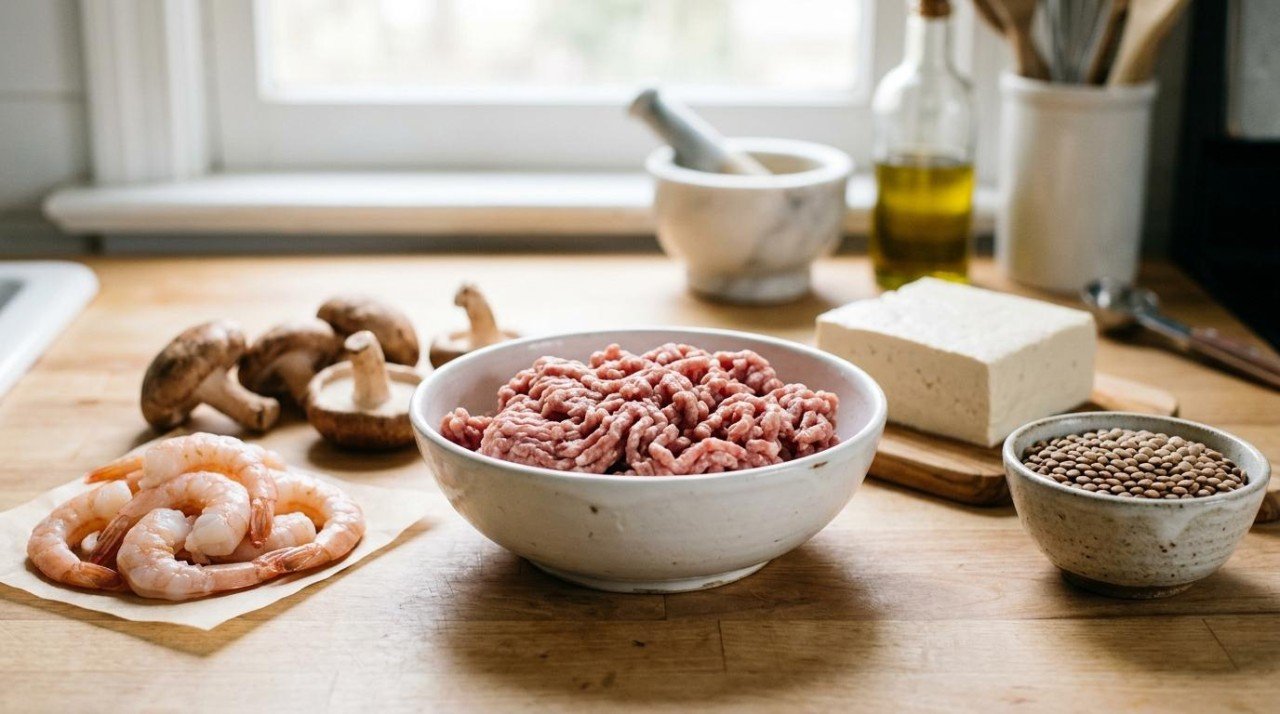
- Ground chicken — the closest match in flavor; add fat and it disappears into any pork dish
- Ground turkey — same idea, easiest to find; buy a dark-meat grind, never the 99% lean
- Ground beef — the meatiest 1:1; perfect in ragu and meatloaf, too assertive for delicate fillings
- Ground veal — mild and tender, the classic meatball partner; leaner than pork
- Ground lamb — matches pork's richness, brings a much bigger flavor
- Bulk sausage — already pork, already seasoned; cut the recipe's salt and spice
- Chopped shrimp — the traditional swap for dumplings, wontons, and shumai
- Finely chopped mushrooms — umami-rich; blend with anything or use alone in saucy dishes
- Crumbled extra-firm tofu — the plant swap for mapo tofu and stir-fries
- Lentils — the champion for ragu, chili, and sloppy joes; fiber for pennies
- Plant-based crumbles — the fastest meat-free 1:1, with an ultra-processed caveat
Ground Chicken
- Swap: 1 lb ground pork → 1 lb ground chicken plus 1 to 2 tablespoons neutral oil (or 1 teaspoon toasted sesame oil plus 1 tablespoon neutral oil for Asian dishes). Ask for a thigh grind if your butcher will do it
- Best for: Dumplings, wontons, meatballs, stir-fries, larb, lettuce wraps, meatloaf
- Skip it for: Breakfast sausage patties, where pork fat is doing most of the work
- Health notes: Far leaner than pork, and no processed-meat concerns; you give up pork's standout thiamin and selenium, though almost no one is short on either
Of every meat here, ground chicken tastes most like ground pork. Both are mild and faintly sweet, both take a punchy sauce without arguing with it, and in a seasoned filling most people cannot tell them apart. That is why it works in the dishes where pork is hardest to replace — Chinese dumplings, meatballs, larb, anything where the meat is a canvas.
The fat is the whole adjustment. Add a tablespoon or two of oil per pound and stop worrying. Also note the temperature change: ground poultry needs to reach 165°F to be safe, against 160°F for ground pork, so a lean grind is being cooked hotter than the fatty meat it replaced. Pull it the moment it hits temperature.
Ground Turkey
- Swap: 1 lb ground pork → 1 lb ground turkey plus 1 to 2 tablespoons oil. Buy 93/7 or a dark-meat grind; avoid 99% lean breast entirely
- Best for: Meatloaf, meatballs, bolognese, chili, tacos, stir-fries, stuffed peppers
- Skip it for: Dishes built around pork's richness — sausage patties, or dumplings if you are not going to add fat and moisture back
- Health notes: A big drop in fat. A 93/7 turkey grind runs about 170 calories, 9.4 grams of fat, and 2.5 grams of saturated fat per 4 ounces, against roughly 21 grams of fat per 100 grams for standard ground pork
Turkey is the swap most people actually have, and it does the job as long as you respect the gap. It is a little more assertive than chicken and a little drier, so it wants a confident hand with garlic, ginger, soy, or whatever the recipe already uses.
The grind matters more than the bird. Extra-lean 99% turkey is breast meat only and turns chalky in a meatball or dumpling — the exact failure people blame on turkey in general. A 93/7 grind with some dark meat behaves far more like pork. For more on handling it, see our guide to substitutes for ground turkey, which covers the same lean-meat problem from the other direction.
Ground Beef
- Swap: 1 lb ground pork → 1 lb ground beef. Use 80/20 to match pork's richness, or 90/10 to lighten it; brown and drain before saucing either way
- Best for: Meatloaf, meatballs, bolognese and ragu, lasagna, chili, tacos, burgers
- Skip it for: Chinese dumplings, wontons, and shumai — beef's mineral flavor takes over a delicate filling
- Health notes: A lean grind lands below pork: 93/7 beef is about 172 calories and 3.3 grams of saturated fat per 4 ounces
Beef is the most flavorful 1:1 on the list and the easiest to buy, which makes it the default answer for Western dishes. In an Italian ragu or a meatloaf, where pork was there for sweetness and fat, beef simply makes the dish beefier — still excellent, just different.
Where it disappoints is the delicate end. Pork is used in dumpling and wonton fillings precisely because it recedes; beef does not. If beef is all you have and dumplings are the plan, cut it with chopped shiitake and cabbage and lean hard on ginger, scallion, and white pepper. Our substitutes for ground beef guide has the reverse playbook.
Ground Veal
- Swap: 1 lb ground pork → 1 lb ground veal, straight across. Add a panade (see below) for meatballs, since veal is leaner
- Best for: Meatballs, meatloaf, ragu bolognese, terrines and pates, stuffed pasta
- Skip it for: Budget cooking, and heavily spiced dishes where its delicacy is wasted
- Health notes: Leaner than pork — roughly 167 calories and 11 grams of fat per 3 ounces raw, versus about 225 calories and 18 grams for the same weight of ground pork
Veal is pork's closest cousin in character: mild, pale, finely textured, and tender. It is the third meat in the classic Italian meatball and meatloaf trinity for a reason — it contributes softness and a gentle flavor rather than a strong one, which is exactly pork's role in those recipes.
It costs more and it is leaner, so treat it like the other lean swaps: bread soaked in milk in the mix, a light hand on cooking time, and no pressing meatballs into hockey pucks.
Ground Lamb
- Swap: 1 lb ground pork → 1 lb ground lamb, or half lamb and half beef if you want the flavor dialed down. No added fat needed
- Best for: Meatballs, kofta, ragu, moussaka, stuffed vegetables, tacos, hearty dumplings
- Skip it for: Mild dishes and delicate fillings where lamb would dominate
- Health notes: Fattier than pork and the highest in saturated fat here — about 282 calories, 23 grams of fat, and 10 grams of saturated fat per 100 grams raw
Lamb is the one swap that needs no fat correction, because it is at least as rich as pork. Meatballs stay juicy, ragu turns glossy, and nothing dries out. What changes is the flavor, which is unmistakably lamb — wonderful in Mediterranean and Middle Eastern cooking, out of place in a mild Italian-American meatball unless you cut it with beef.
It is not automatically wrong for dumplings, either: lamb-and-cumin dumplings are a Xinjiang staple. Just cook the dish toward lamb's strengths rather than pretending it is pork.
Bulk Sausage, Italian Sausage, or Chorizo
- Swap: 1 lb ground pork → 1 lb sausage squeezed out of its casings. Cut the recipe's added salt, fennel, garlic, and chili by roughly half, then taste before adding more
- Best for: Ragu and pasta sauce, meatloaf, meatballs, stuffing, pizza, bean soups, breakfast patties
- Skip it for: Anything that needs a neutral base — Chinese dumplings, mild meatballs, delicate fillings
- Health notes: Seasoned and cured sausages are processed meats and much higher in sodium; fresh Italian sausage is milder on that front than cured Spanish chorizo
If there is a package of Italian sausage or fresh Mexican chorizo in the freezer, you already have ground pork — just pre-seasoned. Slip it out of the casings and it crumbles and browns identically, and in a ragu or a stuffing the built-in fennel and garlic are a bonus rather than a problem.
Two things to watch. Salt is the big one: sausage is seasoned to be eaten as sausage, so a recipe's own salt will double up if you do not pull it back. And this is the swap that moves a dish into processed-meat territory, which is worth knowing if it becomes a habit rather than a Tuesday — our piece on what the red meat evidence actually says covers where that line sits.
Finely Chopped Shrimp
- Swap: 1 lb ground pork → 1 lb peeled raw shrimp, hand-chopped so some is minced to a paste and some is left in 1/4-inch pieces, plus 1 tablespoon neutral oil for richness. Half shrimp and half ground chicken is even better
- Best for: Dumplings, wontons, shumai, spring rolls, Asian-style meatballs, lettuce wraps
- Skip it for: Meatloaf, ragu, tacos, chili — anything simmered long enough to turn shrimp rubbery
- Health notes: Extremely lean and protein-dense at about 101 calories, 1.4 grams of fat, and 19 grams of protein per 3 ounces cooked
This is the swap most substitute lists miss, and it is the best one for dumplings. Shrimp is traditional in Chinese dumpling and shumai fillings, often alongside pork, and on its own it gives that springy, bouncy bite that a good wonton is supposed to have.
Chop by hand, not in a food processor — you want texture, not a uniform puree. And add a spoonful of oil, because shrimp has essentially no fat of its own and a filling without fat tastes thin no matter how well seasoned it is.
Finely Chopped Mushrooms
- Swap: 1 lb ground pork → about 1 1/2 lb mushrooms (cremini, or shiitake for Asian fillings), chopped fine and browned hard; they shrink by more than half. Or replace just half the pork
- Best for: Ragu, meat sauce, dumpling and bao fillings, stir-fries, tacos, meatloaf with a strong binder
- Skip it for: Patties and meatballs on their own; there is nothing to bind them
- Health notes: Roughly 15 to 20 calories per cup raw with almost no fat, and in a University of Minnesota crossover trial, people eating mushrooms in place of meat reported less hunger and greater fullness
Mushrooms are loaded with the savory glutamates that make meat taste meaty, so they stretch or replace pork better than their calorie count suggests. Shiitake in particular is already a classic partner in dumpling and bao fillings, which makes it the natural pick when you are short on pork rather than out of it entirely.
Everything depends on driving off water. Mushrooms are about 90 percent moisture, and a crowded pan steams them into a gray heap. Chop small, use a wide pan on medium-high heat, and let them sit and brown before stirring.
Crumbled Extra-Firm Tofu
- Swap: 1 lb ground pork → one 14 to 16 oz block extra-firm tofu, pressed dry and crumbled by hand into ragged pieces, browned hard in 1 tablespoon oil
- Best for: Mapo tofu, stir-fries, dan dan noodles, lettuce wraps, tacos, dumplings alongside mushrooms and cabbage
- Skip it for: Meatballs without a serious binder, and any dish where the meat is meant to carry the flavor
- Health notes: About 22 grams of protein and 1.6 grams of saturated fat per half cup (126 g), plus a large dose of calcium when it is set with calcium sulfate
Tofu's blankness is the point. Crumbled and browned until the edges catch, it soaks up soy sauce, doubanjiang, ginger, and garlic and reads convincingly as minced pork in exactly the dishes pork dominates — mapo tofu, dan dan noodles, stir-fried noodles with a punchy sauce.
Press it first, tear it by hand so the pieces are irregular, and over-season with confidence. If you have not had much luck with tofu before, our guide to cooking tofu and tempeh so it actually tastes good is the technique fix.
Lentils
- Swap: 1 lb ground pork → about 2 1/2 to 3 cups cooked brown or green lentils (roughly 1 cup dry), simmered 20 to 25 minutes until tender but still intact. Not red lentils
- Best for: Ragu and bolognese, chili, sloppy joes, tacos, shepherd's pie, lasagna filling
- Skip it for: Dumplings, meatballs, and patties, where they will not hold a shape
- Health notes: 18 grams of protein and 16 grams of fiber per cooked cup with 0.1 grams of saturated fat, plus 37% of a day's iron and 90% of a day's folate
For saucy, long-simmered pork dishes, lentils are the standout plant swap and the cheapest thing on this list. They hold a firm, meaty bite, drink up tomato and spice, and bring the one thing pork has none of at all: fiber, 16 grams of it per cup. That is a big part of why lentils are the best nutritional value in the grocery store.
Cook them just short of soft so they keep structure in the sauce, and season hard — an under-seasoned lentil ragu tastes exactly like one. A half-and-half split with pork is the easiest way in: same richness, double the fiber.
Plant-Based Crumbles
- Swap: 1 lb ground pork → 1 lb store-bought plant-based ground, used straight across and browned as usual. It needs no added fat
- Best for: Ragu, tacos, meatloaf, chili — fast meat-free versions of Western dishes
- Skip it for: Whole-food or lower-sodium cooking, and subtle fillings where its own flavor shows
- Health notes: These are ultra-processed and often no leaner than the pork they replace — coconut and other oils can push saturated fat up near meat's, with a lot of added sodium
Commercial crumbles are engineered to brown and crumble like ground meat, and at that narrow job they succeed with no learning curve. If someone at the table does not eat pork and you need dinner on the table, they are the path of least resistance.
Just be clear about the trade. If the reason for the swap was to eat more simply or more lightly, lentils, mushrooms, or tofu get you there and crumbles may not.
Which Swap for Which Dish
- Dumplings, wontons, shumai: Ground chicken (with added fat), chopped shrimp, or a shrimp-and-chicken mix. Shiitake and cabbage stretch any of them
- Meatballs: Veal, beef, chicken, or a beef-veal blend — all with a panade. Lamb if you want it bold
- Meatloaf: Beef, turkey, veal, or sausage. This is the most forgiving dish on the list
- Ragu and bolognese: Beef, sausage, lentils, or finely chopped mushrooms; a beef-and-mushroom blend is outstanding
- Stir-fries, mapo tofu, dan dan noodles: Ground chicken or turkey for meat, crumbled tofu or mushrooms for plant versions
- Breakfast sausage patties: Dark-meat ground turkey or chicken with extra oil, sage, and maple — this one truly needs the fat added back
- Tacos and saucy skillet dishes: Almost anything works; bold spices cover the difference
Putting the Fat and Moisture Back In
This is the step that decides whether a lean swap tastes like a downgrade. Ground pork is about a fifth fat by weight, and every poultry, seafood, or plant option here has far less. Four fixes cover it:
- Add oil. One to two tablespoons of neutral oil per pound of lean ground meat, mixed into the raw filling rather than just added to the pan. A teaspoon of toasted sesame oil on top for Asian dishes.
- Use a panade for meatballs and meatloaf. Soak about 1/2 cup breadcrumbs in 1/4 cup milk per pound and mix it in. The starch holds water through cooking, which is most of what pork fat was doing.
- Add liquid to dumpling fillings. Work about 1/4 cup cold broth or water into a pound of lean filling a splash at a time, stirring in one direction until it is fully absorbed and the mixture turns sticky. Salted and squeezed napa cabbage adds moisture too.
- Season harder and brown harder. Lean meat needs more help: soy sauce, oyster sauce, ginger, white pepper, or a spoonful of tomato paste for Western dishes. And let the crumbles sit in a hot, uncrowded pan long enough to take on real color.
Knowing the general rule is one thing; knowing whether it applies to the recipe open on your counter is another. That is where Eat Well Planner helps: its AI recipe chat reads your actual recipe and tells you which of these swaps fits that dish and exactly how to adjust the fat, liquid, and seasoning. If you are switching for dietary reasons rather than convenience, Recipe Variations will rewrite the whole recipe with the substitution already worked in. And when a swap brings plants to the plate — lentils, mushrooms, tofu — Plant Points counts it toward the 30-different-plants-a-week target from gut microbiome research.
Take the Guesswork Out of Eating Well
Eat Well Planner helps you organize your favorite recipes, plan balanced meals, and automatically generate shopping lists — all in one place. Whether you're tracking macros, managing dietary restrictions, or just trying to stop asking "what's for dinner?", we've got you covered.
Our AI-powered tools can adapt any recipe to your dietary needs, help you discover new meals you'll love, and even log your nutrition effortlessly. It's meal planning made simple.
Start Organizing Your Meals — FreeWhat Not to Use
- 99% lean ground turkey or chicken breast. In a dumpling or meatball it turns dry and chalky. This single choice is responsible for most bad reviews of poultry swaps.
- Bacon, ham, or pancetta as a 1:1. They are cured and salty, not a neutral ground meat, and they will blow out the salt in the dish. Great as a flavoring alongside a swap — see our bacon substitutes guide for that job.
- Red lentils. They collapse into puree in about 15 minutes. Brown or green only.
- Silken or soft tofu. It will not brown or crumble; it turns into a wet scramble. Extra-firm, pressed.
- Sausage without cutting the recipe's salt. The most common way this swap goes wrong is a meatloaf nobody can eat.
- Cooking a leaner swap the way you cooked pork. Poultry needs a higher finish temperature and has much less margin above it. Use a thermometer and pull it right at 165°F.
The Bottom Line
For dumplings and other delicate fillings, ground chicken with a tablespoon of oil is the closest thing to invisible, and chopped shrimp is the swap worth making on purpose. For meatballs and meatloaf, veal or beef with a panade; for ragu, beef, sausage, or lentils. And if pork was the plan mainly because it is what the recipe said, mushrooms or lentils will get you a cheaper, higher-fiber version of the same dish without anyone feeling shortchanged.
Whatever you land on, the fat is the part to think about — add a little back, season a little harder, and almost any of these swaps holds up. If you are not sure which one suits the specific recipe in front of you, ask the AI recipe chat in Eat Well Planner; it works from your actual ingredient list rather than general advice. And if the goal is partly to cut your meat budget without going vegetarian, ground pork dishes are one of the easiest places to start.