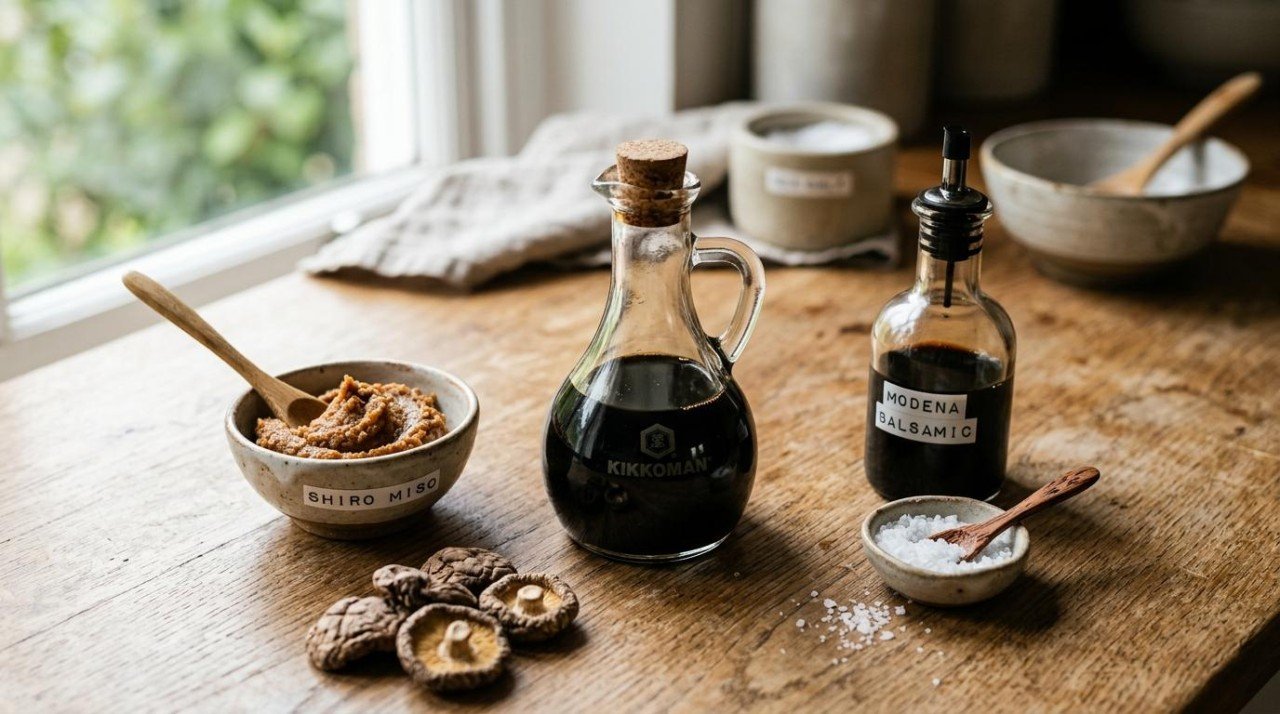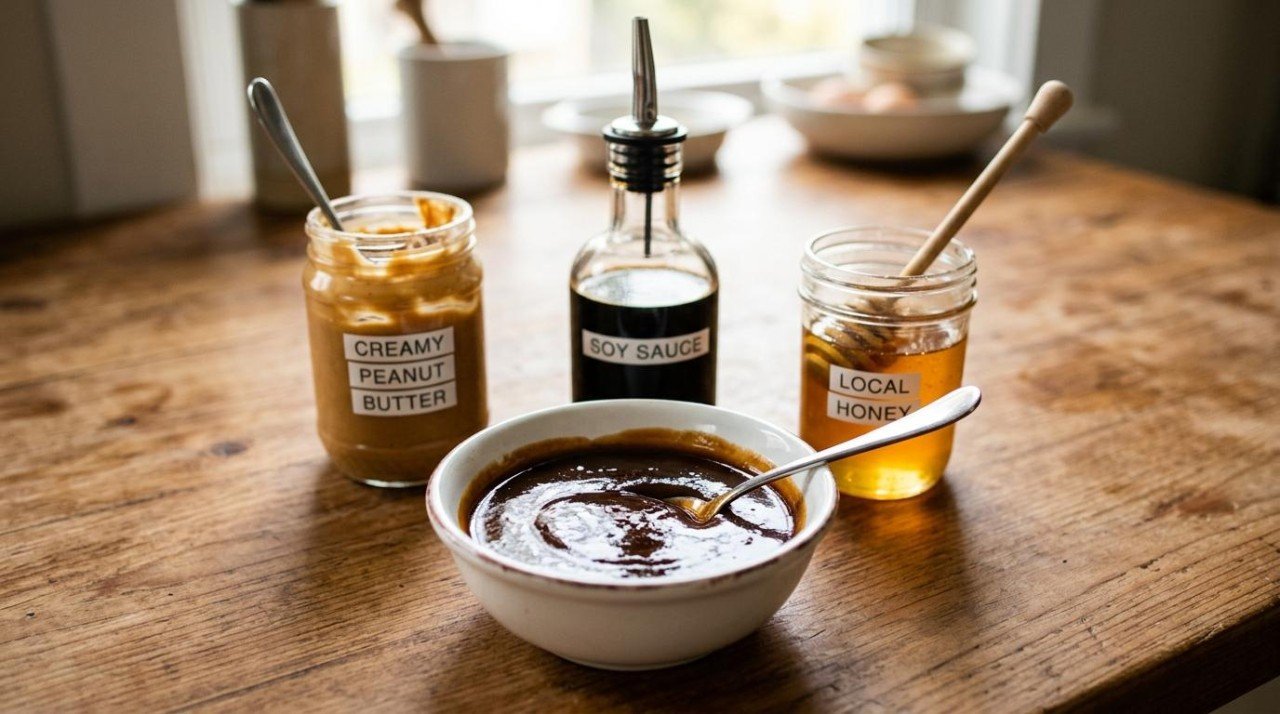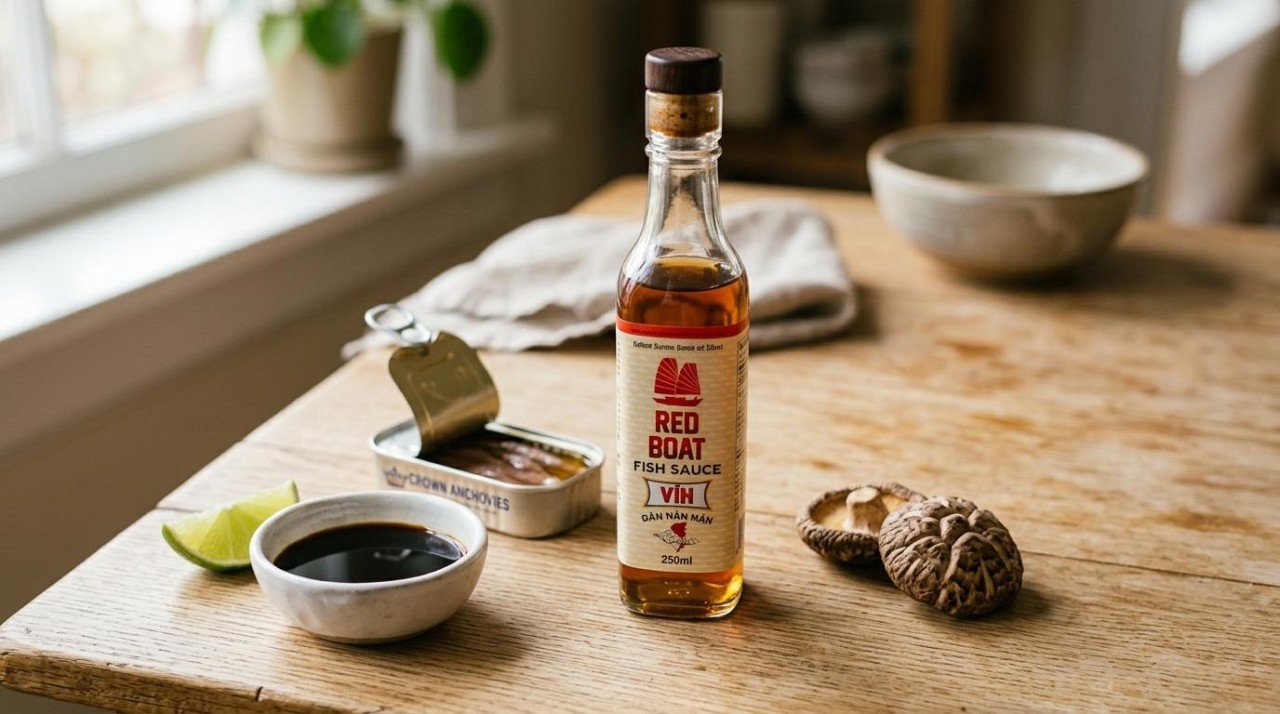
You are halfway through a pad thai or a pot of green curry, you reach for the fish sauce, and the bottle is empty. Or maybe you are cooking for someone who is vegetarian, allergic to fish, or simply cannot get past the smell. Either way, you need something to stand in for that salty, deeply savory hit right now.
Here is the key to doing it well: fish sauce is not really a fishy ingredient in the finished dish. It is a concentrated shot of umami — the savory, mouth-filling fifth taste — plus a big load of salt and a little funk. It is made by fermenting fish (usually anchovies) with salt for months, which produces the free glutamates that make everything around them taste richer and rounder. That is what you are actually replacing: umami, salt, and a touch of tang — not "fish." Once you think of it that way, the substitutes make a lot more sense. (If the science of umami interests you, we get into it in the story of MSG.)
The best stand-in depends on what you are making. In a cooked dish — a curry, stir-fry, or marinade — fish sauce melts into the background, so almost anything savory and salty will do the job. In a raw dipping sauce like Vietnamese nuoc cham, fish sauce is front and center and much harder to fake. The picks below are ordered from most versatile to most specialized, each with an exact ratio.
The Quick List
- Soy sauce + lime — the everyday workhorse for stir-fries, curries, and marinades
- Soy sauce + rice vinegar — best when you want the tang back, as in dressings and dipping sauces
- Worcestershire sauce — closer than you think; it is built on fermented anchovies
- Anchovies or anchovy paste — the closest flavor cousin for anything cooked
- Oyster sauce — rich and savory for stir-fries, but sweeter
- Coconut aminos — soy-free, gluten-free, and far lower in sodium
- Store-bought vegan fish sauce — the closest plant-based match
- DIY mushroom-seaweed broth — the from-scratch vegan option, great for big batches
Soy Sauce + Lime
- Swap: 1 tablespoon fish sauce → 1 tablespoon soy sauce + ½ teaspoon fresh lime juice (start with a little less soy and taste up)
- Best for: Stir-fries, curries, marinades, pad thai
- Skip it for: Nothing major — though for a raw dipping sauce it is a solid rather than perfect match
This is the swap most cooks reach for, and for good reason. Soy sauce covers the two biggest jobs — salt and umami — while a squeeze of lime restores the bright, sour edge that fish sauce (especially when mixed into dipping sauces) brings on its own. Add the lime gradually; too much tips the dish from savory into sour.
One thing to watch: soy sauce is darker than fish sauce, so it will deepen the color of pale dishes slightly. And because saltiness varies by brand, start with a little less than the recipe calls for and adjust up rather than over-salting from the start.
Soy Sauce + Rice Vinegar
- Swap: Equal parts soy sauce and rice vinegar, used 1:1 for the fish sauce
- Best for: Dressings, dipping sauces, cold noodle and cucumber salads
- Skip it for: Rich braises where you do not want extra acidity
A close relative of the lime version, this combination leans harder into tang, which makes it the better pick when acidity is part of the point — think a nuoc-cham-style dipping sauce or a punchy salad dressing. Rice vinegar is milder and slightly sweeter than distilled white vinegar, so it stays closer to the balance of the original.
Worcestershire Sauce
- Swap: 1:1, but start with half and taste — its flavor is more assertive
- Best for: Cooked dishes — stews, stir-fries, marinades
- Skip it for: Delicate Thai or Vietnamese dipping sauces, where its spiced profile reads Western
- Health notes: Much lower in sodium — around 65 mg per teaspoon
People are often surprised by this one, but Worcestershire is a closer cousin than it looks: classic recipes are built on fermented anchovies plus tamarind, giving you both the umami and the tang in a single bottle. The catch is the rest of its supporting cast — cloves, molasses, onion, and garlic — which adds a distinctly Western, spiced character. That blends in beautifully in cooked dishes but stands out in a clean, bright dipping sauce.
Anchovies or Anchovy Paste
- Swap: 1 oil-packed anchovy fillet (or about ½ teaspoon anchovy paste) per tablespoon of fish sauce, mashed into the hot pan; finish with a squeeze of lime
- Best for: Curries, stir-fries, pasta sauces — anything cooked where it can dissolve
- Skip it for: Raw, no-cook sauces (it needs heat to melt down)
Since fish sauce is literally fermented anchovies, this is the closest flavor match on the list. Mash the fillet or paste into your oil and aromatics early on and it dissolves completely — no one will find a fishy lump, just a deeper, savorier base. The one thing it lacks is fish sauce's tang, so add a little lime or a splash of vinegar to round it out.
Oyster Sauce
- Swap: 1:1, thinned with a little water if it seems too thick
- Best for: Stir-fries and cooked savory dishes
- Skip it for: Anyone avoiding shellfish, and dishes that should not turn sweet
Oyster sauce brings the same shellfish-driven umami and plenty of savory depth, but it is thicker and noticeably sweeter — some brands carry up to 4 grams of sugar per tablespoon. That makes it a natural fit for stir-fries that already lean savory-sweet, and a poor fit anywhere you want a clean, salty-sour profile. If you use it, you may want to dial back any other sugar in the recipe.
Coconut Aminos
- Swap: 1:1; taste and add a pinch of salt, since it is much less salty than fish sauce
- Best for: Soy-free, gluten-free, and lower-sodium cooking; most cooked dishes
- Skip it for: When you need a big salty punch and do not want to adjust seasoning
- Health notes: Dramatically lower in sodium — roughly 90 to 130 mg per teaspoon, versus about 320 to 600 mg for fish sauce
Made from fermented coconut tree sap, coconut aminos are savory and slightly sweet, with a mellow, less-intense flavor than soy or fish sauce. They shine for anyone avoiding soy, gluten, or excess sodium, and they swap in cleanly for cooked dishes. Because they are so much milder and less salty, expect to add a little salt and maybe a squeeze of lime to hit the same intensity. (If gluten is your only concern and you still want a full-strength salty punch, tamari — a wheat-free soy sauce — works as a straight 1:1 swap, with lime added for brightness.)
Store-Bought Vegan Fish Sauce
- Swap: 1:1
- Best for: Vegans, vegetarians, and anyone with a fish allergy — works in any dish, cooked or raw
- Skip it for: Nothing, really — it is the closest plant-based match you can buy
Vegan fish sauces have gotten genuinely good. Most are built from shiitake mushrooms, seaweed, and liquid aminos or soy sauce — a combination that captures the briny, umami-rich complexity of the real thing better than any single-ingredient swap. If you cook Thai or Vietnamese food regularly and want a bottle that behaves like fish sauce in both curries and dipping sauces, this is the one to keep on hand.
DIY Mushroom-Seaweed Broth
- Swap: Make it concentrated, then use about 2 parts broth to 1 part fish sauce
- Best for: From-scratch vegan cooking, soups, curries, and big batches
- Skip it for: Last-second fixes — it takes 20 to 30 minutes
When you have a few minutes, this is the most satisfying vegan option: dried mushrooms and seaweed are two of the richest natural sources of glutamate, so together they build real umami depth without any fish. Simmer 3 to 4 cups water with ¼ to ½ ounce dried sliced shiitake mushrooms, an optional 4-inch piece of kombu (dried kelp), and 3 tablespoons soy sauce for about 15 to 20 minutes, until reduced by half. Rest 10 minutes, then strain. It keeps in the fridge for a week or in the freezer for months, so a single batch covers a lot of cooking.
The Healthier Angle: Cutting the Sodium Bomb
Fish sauce is one of the saltiest ingredients in the kitchen. A single tablespoon carries roughly 1,250 milligrams of sodium — about 55% of the daily value — which is worth knowing if you use it with a heavy hand or cook for anyone watching their blood pressure. You are not replacing fish sauce to "eat clean"; you are replacing it because you ran out. But if the swap can also lighten the salt load, that is a genuine bonus.
Two options above do exactly that. Coconut aminos deliver a similar savory-sweet note with a fraction of the sodium, making them the easiest one-for-one upgrade. And the DIY mushroom-seaweed broth builds its umami from whole plants rather than salt — plus mushrooms and seaweed both count toward the plant variety that feeds a healthy gut microbiome. Neither one asks you to give up flavor; they just get there by a slightly different route.
The honest caveat: none of these will taste identical to fish sauce, and in a purist dipping sauce the difference is real. In everyday cooked dishes, though, most people never notice.
Take the Guesswork Out of Eating Well
Eat Well Planner helps you organize your favorite recipes, plan balanced meals, and automatically generate shopping lists — all in one place. Whether you're tracking macros, managing dietary restrictions, or just trying to stop asking "what's for dinner?", we've got you covered.
Our AI-powered tools can adapt any recipe to your dietary needs, help you discover new meals you'll love, and even log your nutrition effortlessly. It's meal planning made simple.
Start Organizing Your Meals — FreeWhat to Skip
A few things people reach for that will let you down:
- Plain table salt. It covers the saltiness but none of the savory depth — the whole reason fish sauce is in the recipe. Use it only as a last resort, and expect a flatter dish.
- Teriyaki or sweet chili sauce. Both are loaded with sugar and will push your dish toward candy-sweet. If sweetness is not what you want, look elsewhere.
- Straight soy sauce with no acid in a dipping sauce. On its own it is one-dimensional and overly salty. It needs the lime or vinegar to come alive — which is exactly why the top two picks pair it with acid.
Which One Fits Your Dish?
The right substitute really does depend on what is in the pan — a curry can take anchovy paste or oyster sauce without blinking, while a nuoc cham lives or dies on the soy-and-lime balance. If you are not sure which swap suits your recipe, that is exactly the kind of question Eat Well Planner's AI recipe chat is built for: it reads your actual recipe and tells you which substitute fits that dish, in what amount. Cooking for someone who avoids fish entirely? The app can generate a full dairy-free, vegetarian, or fish-free variation of any recipe with the swaps already worked in — no line-by-line adapting required. And because it tracks nutrition, you can see at a glance how a lower-sodium swap changes the numbers before you commit. Good cooking is mostly knowing what to reach for when the bottle runs dry.