You are building a Greek salad, or a tray of roasted vegetables is coming out of the oven, and the feta container in the fridge is empty. Now what?
The good news: feta is one of the easier cheeses to stand in for, because it does three fairly simple jobs. It brings salty brine, a fresh tangy bite, and a crumbly texture that holds its shape without melting into a puddle. Any cheese that covers those same jobs will get you most of the way there.
The catch is that the best swap depends on what you are making. A dry, salty crumble that is perfect scattered over a salad behaves very differently baked into spanakopita, and a soft fresh cheese that melts into a pasta bake is useless as a finishing crumble. Here is what actually works, sorted by how versatile each option is, with exact swaps and the uses each one shines in.
The Quick List
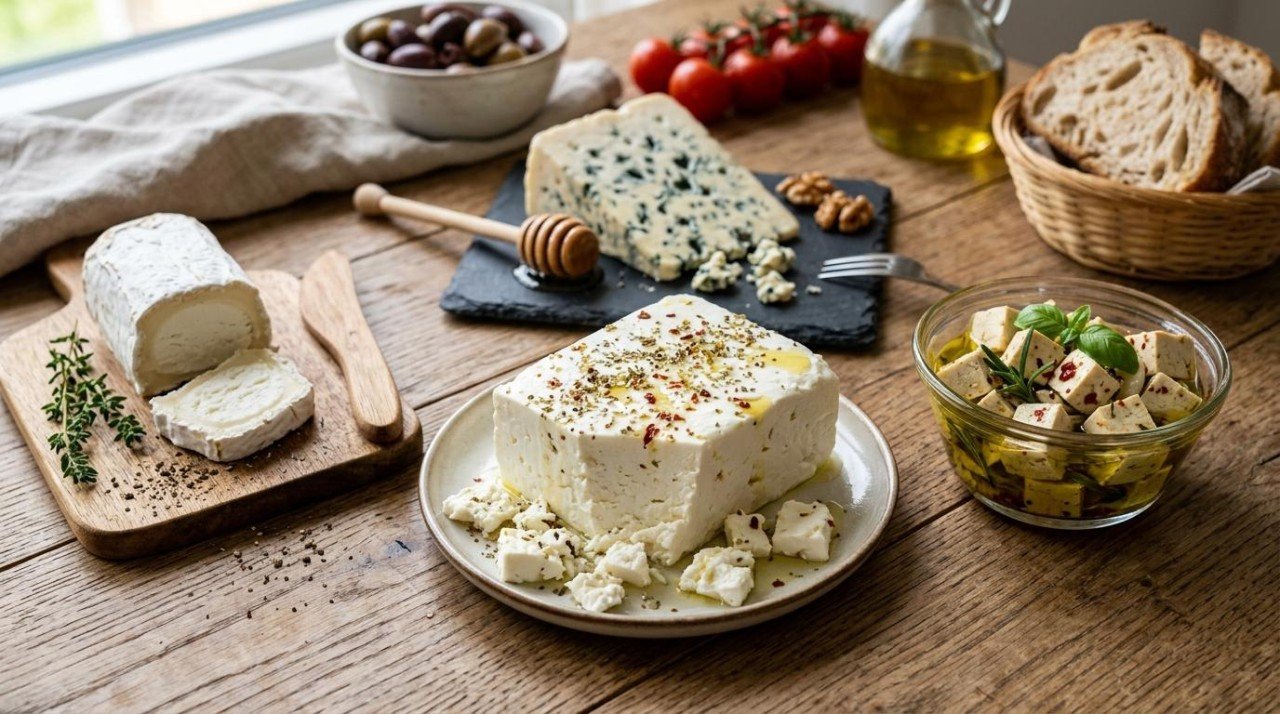
- Goat cheese — closest tangy flavor match; creamier, much less salty
- Ricotta salata — the best texture match: dry, firm, crumbles just like feta
- Cotija — dry and very salty; a great finishing crumble (use a little less)
- Queso fresco — mild and fresh; the pick if feta is usually too salty for you
- Marinated tofu feta — the dairy-free crumble, and it adds plant protein
- Halloumi — when you need firm cubes that hold shape in a baked or grilled dish
- Blue cheese — a bolder, punchier crumble for salads and savory pastries
- Cottage cheese or ricotta — for baked fillings where creaminess is welcome
Goat Cheese (Chevre)
- Swap: 1:1 by weight; crumble the firmer log style, or dot the soft style in clumps
- Best for: Salads, grain bowls, pasta, pizza, tarts, anywhere you want feta's tang
- Skip it for: Recipes that need firm, separate crumbles that hold their shape
- Health notes: Similar calories and fat to feta, but far less sodium
Fresh goat cheese is the closest match to feta's signature flavor: bright, tangy, and a little grassy. It is softer and creamier, so it will not give you the same distinct crumbles, but that same creaminess is an asset in warm pasta, on pizza, or spread on toast. The log-style (aged) goat cheese is firmer and crumbles more cleanly than the soft tub kind.
It is also the friendlier choice for anyone watching salt. Feta is brined, so it carries roughly 315 mg of sodium per ounce, while plain goat cheese has a fraction of that. Because goat cheese is milder, taste and add a pinch of salt if the dish was leaning on feta for seasoning.
Ricotta Salata
- Swap: 1:1 by weight; crumble or shave it
- Best for: Salads, pasta (especially with tomatoes or greens), roasted vegetables
- Skip it for: Dishes relying on feta's sharp tang — ricotta salata is milder
If texture is what you care about most, this is the winner. Ricotta salata is ricotta that has been pressed, salted, and aged until it is firm, dry, and crumbly — essentially built for the same jobs as feta. It crumbles into clean pieces on a salad and shaves beautifully over pasta.
The trade-off is flavor: ricotta salata is nutty, milky, and salty but noticeably less tangy than feta. If you want that sour bite back, a squeeze of lemon over the finished dish makes up the difference.
Cotija
- Swap: Start with about 3/4 the amount, since cotija is saltier; add more to taste
- Best for: Finishing crumble on tacos, corn, roasted vegetables, and salads
- Skip it for: Anyone on a lower-sodium diet, or delicate dishes that would be overwhelmed
Cotija is a firm, dry, aged Mexican cheese with a sharp, salty punch. Young cotija crumbles much like feta; aged cotija is harder and better grated. It leans savory and salty rather than tangy, which makes it fantastic scattered over grain bowls, elote, and roasted vegetables where feta would also feel at home.
Because cotija is even saltier than feta, start with less and adjust — and go easy on any other salt in the recipe.
Queso Fresco
- Swap: 1:1 by weight; crumble by hand
- Best for: Salads, tacos, and bowls when you find feta too salty or too sharp
- Skip it for: Dishes that need feta's assertive tang, or anything that needs the cheese to melt
- Health notes: Milder and less salty, with noticeably lower sodium than feta
Queso fresco is the gentle cousin: fresh, soft, milky, and only lightly salted. It crumbles well and is the natural pick if feta has always struck you as too aggressive. It also carries meaningfully less sodium, which makes it an easy upgrade if you are trying to dial back salt without giving up a crumbly white cheese.
Just know what you are trading away: queso fresco is mild, so it will not deliver the same sour, briny hit. It also softens when heated rather than holding a sharp edge, so it is best used fresh rather than baked.
Marinated Tofu Feta (Dairy-Free)
- Swap: Press a 14 oz block of extra-firm tofu, cube it, and marinate several hours in about 1/4 cup lemon juice, 1 tablespoon vinegar, olive oil, salt, and dried oregano
- Best for: Salads, grain bowls, wraps, and any dish where feta is served uncooked
- Skip it for: A last-minute crumble — it needs time in the marinade to taste right
- Health notes: No dairy or cholesterol, and it adds a plant to your week
For a dairy-free crumble that genuinely tastes the part, pressed extra-firm tofu is the answer. Pressing drives out water so the tofu firms up and soaks in the marinade. The lemon juice and vinegar recreate feta's tang, salt and a little olive brine bring the brininess, and a few hours (ideally overnight) in the fridge let it all sink in. This marinated tofu feta approach works on salads, grain bowls, and pasta.
Use extra-firm, not silken, so it holds a cube. Beyond skipping the dairy, tofu brings plant protein and counts toward your weekly plant variety — a small bonus feta does not offer.
Halloumi (When You Need It to Hold Shape)
- Swap: Cube and pan-fry, grill, or bake in place of feta where structure matters
- Best for: Grilled skewers, warm salads, and baked dishes where you want intact cubes
- Skip it for: A cold, raw crumble — halloumi turns rubbery and squeaky straight from the fridge
Feta's third trick is holding its shape under heat, and halloumi does that even better. It has a famously high melting point, so it browns and crisps on the outside while staying firm inside — perfect for grilling or roasting. It is salty and firm like feta, though its texture is bouncier and less crumbly.
The key difference: halloumi is at its best warm. Cold, it goes firm and squeaky, so save it for dishes where the cheese gets cooked rather than scattered raw over a salad.
Blue Cheese
- Swap: Use about half to two-thirds the amount, since it is much stronger
- Best for: Salads and savory pastries where a bold, tangy crumble is welcome
- Skip it for: Anyone who wants feta's milder tang — blue cheese takes over a dish
Blue cheese is a texture-and-tang match rather than a flavor match. It crumbles like feta and brings its own sharp, briny bite, so it works well on a hearty salad or folded into a savory tart. The flavor is far more intense, though, so use a lighter hand and treat it as a bold statement rather than a quiet background note.
Cottage Cheese or Ricotta (for Baked Fillings)
- Swap: 1:1 by weight in fillings; drain cottage cheese well first and season with lemon and salt
- Best for: Spanakopita, stuffed vegetables, pasta bakes, and other creamy baked fillings
- Skip it for: A crumbly topping — both are too soft and wet to scatter over a salad
When feta is baked into a filling rather than crumbled on top, its job is more about creamy body than sharp crumbles, and softer fresh cheeses can step in. Well-drained cottage cheese or ricotta both work in spanakopita, borek, or a baked pasta. Because they are milder, brighten them with lemon juice, a good pinch of salt, and a little tang from plain Greek yogurt to get closer to feta's flavor.
These are filling swaps only. Straight out of the tub they are far too wet to mimic a crumble, so keep them inside a bake.
Which Swap for Which Dish
When you are not sure which one fits, match the substitute to the job:
- Greek salad, watermelon salad, grain bowls: Goat cheese or ricotta salata (closest), or queso fresco if you want it milder
- Tacos, roasted corn, Mexican-style bowls: Cotija or queso fresco
- Spanakopita and baked fillings: Drained ricotta or cottage cheese, brightened with lemon
- Baked feta pasta and roasted vegetable trays: Goat cheese or ricotta salata (both soften and brown nicely)
- Grilled skewers or warm salads with intact cubes: Halloumi
- Dairy-free anything served cold: Marinated tofu feta
Still not sure which swap suits the specific recipe in front of you? That is exactly the kind of question Eat Well Planner's AI recipe chat is built for — it can see your actual recipe and tell you which substitute fits that dish, adjust the salt for you, or rewrite the whole thing dairy-free with the swap already worked in. A blog post gives you the general rules; the chat gives you the answer for tonight's dinner.
Take the Guesswork Out of Eating Well
Eat Well Planner helps you organize your favorite recipes, plan balanced meals, and automatically generate shopping lists — all in one place. Whether you're tracking macros, managing dietary restrictions, or just trying to stop asking "what's for dinner?", we've got you covered.
Our AI-powered tools can adapt any recipe to your dietary needs, help you discover new meals you'll love, and even log your nutrition effortlessly. It's meal planning made simple.
Start Organizing Your Meals — FreeWhat to Skip
A few common reaches do not hold up:
- Pre-shredded mozzarella or other melting cheeses. Feta is prized for not melting into a smooth pool. Swap in a stretchy melter like mozzarella and a salad crumble turns greasy — save those for when you actually want melt.
- Parmesan on its own. Parmesan is salty and firm, but it is hard, granular, and nutty rather than fresh and tangy. It is a fine finishing cheese, just not a feta stand-in.
- Cream cheese. It has none of the tang or crumble, and it is far too soft. It will only work if you are deliberately building something creamy and spreadable.
- Forgetting to adjust the salt. Feta is doing a lot of seasoning work. If you switch to a milder cheese like queso fresco or goat cheese, taste and add salt; if you switch to a saltier one like cotija, pull back on the salt elsewhere.
The Bottom Line
Feta is easy to replace once you know which of its three jobs you actually need. For the closest flavor, reach for goat cheese; for the closest crumble, ricotta salata; for a bold finishing hit, cotija; for a gentler, lower-sodium bite, queso fresco; and for dairy-free, marinated tofu. It is also worth remembering that feta itself is lower in fat than many harder cheeses — its main downside is the sodium, which several of these swaps quietly improve on.
If you cook this way often, it helps to keep your recipes somewhere that can adapt them for you. In Eat Well Planner you can import any recipe, ask the AI chat for a substitution with your exact dish in context, and use Make It Healthier to swap in lighter, lower-sodium options — with the nutrition change verified before you commit. Eating well gets a lot easier when the planning does the heavy lifting.