The tortillas are warm, the filling is ready, the oven is preheating, and the can of enchilada sauce you were sure was in the pantry is not there. Or it is there, but it is green and the recipe says red. Either way, dinner is stalled at the most annoying possible moment.
Here is the reassuring part. Enchilada sauce is one of the easiest sauces in the American kitchen to rebuild from scratch, because the canned version is much simpler than it looks. Read the label on a can of Old El Paso mild red and the ingredients run water, tomato puree, modified corn starch, salt, chile pepper, then oil, vinegar and spices. Salt comes before the chile. That is a thickened, seasoned tomato-chile broth, and you can make a better one in about 10 minutes with chili powder, broth and a spoonful of tomato paste.
Which substitute is best depends on what you are making and which color you need. A rolled, sauced pan of cheese enchiladas wants a smooth, pourable sauce. A layered enchilada casserole or a smothered burrito forgives a chunkier one. Green enchiladas need something tangy and bright, not a red sauce with the color off. Below are 10 substitutes that genuinely work, with exact ratios, plus a few that people reach for and regret.
The Quick List
- 10-minute homemade red sauce (chili powder + broth + tomato paste) — the best all-around replacement for red; works in everything
- Tomato sauce + chili powder — the fastest no-roux version, if you have a can of tomato sauce
- Dried chile sauce (guajillo + ancho) — the most flavorful red sauce on the list; worth the extra 20 minutes
- Tomato sauce + chipotle in adobo — a smoky red with real heat
- Red salsa, blended and thinned — the pantry shortcut for casseroles and smothered burritos
- Taco sauce, thinned — closest store-bought texture to canned red sauce
- Mole paste, diluted — a richer, sweeter, deeper sauce for enmoladas
- Salsa verde, blended and thinned — the quickest stand-in for green enchilada sauce
- Roasted tomatillo-poblano sauce — the homemade green sauce, and a big flavor upgrade over the can
- Canned green chiles + broth — a mild New Mexico-style green sauce from two small cans
Before You Swap: Red vs. Green, and How Much You Need
Red and green are different sauces, not different colors of the same sauce. Red enchilada sauce is built on dried red chiles (or chili powder) and usually tomato, so it tastes earthy, a little sweet and deep. Green enchilada sauce is built on fresh or canned green chiles and usually tomatillos, so it tastes tangy, grassy and bright. Structurally they are interchangeable: both are thin, pourable sauces that soak into tortillas. Flavor-wise, swapping one for the other changes the dish. That is not a disaster. Red with chicken is classic, green with beef is fine, and green with cheese and sour cream is wonderful. Just know that the swap is a flavor choice, and pick a substitute from the matching color section below if you want the dish to taste like the recipe intended.
Can sizes, in cups. Recipes usually call for a can, but the substitutes below are measured in cups. Based on the label's 1/4-cup (60 g) serving:
- 10 oz can ≈ 1 1/4 cups
- 19 oz can ≈ 2 1/4 cups (the usual amount for a 9x13-inch pan of enchiladas)
- 28 oz can ≈ 3 1/4 cups
The texture to aim for is roughly heavy cream: thin enough to pour and soak into the tortillas, thick enough to coat a spoon. Too thick and the enchiladas bake up dry and pasty. Too thin and the pan turns soupy. Nearly every substitute below ends with "simmer until it coats a spoon" for that reason, and you can always thin with a splash of broth.
Red Enchilada Sauce Substitutes
1. 10-Minute Homemade Red Enchilada Sauce
- Swap: For about 2 cups (close to a 19 oz can): 2 tablespoons olive or vegetable oil + 2 tablespoons all-purpose flour + 3 tablespoons chili powder + 1 teaspoon ground cumin + 1/2 teaspoon garlic powder + 1/2 teaspoon dried oregano + 2 tablespoons tomato paste + 2 cups low-sodium chicken or vegetable broth + 1 teaspoon apple cider vinegar + 1/4 teaspoon salt, then adjust to taste
- Best for: Everything that calls for red enchilada sauce: rolled enchiladas, enchilada casserole, smothered burritos, enchilada soup, chilaquiles
- Skip it for: Nothing. This is the default answer
- Health notes: Made this way, roughly 195 mg sodium per 1/4 cup against 290 mg in canned (about 125 mg if you skip the added salt). The math is below
This is the classic Tex-Mex enchilada gravy, and it is the template America's Test Kitchen uses in its Tex-Mex cheese enchiladas: chili powder, flour and tomato paste cooked briefly in oil, then broth whisked in and simmered until it thickens. Heat the oil in a saucepan over medium heat, stir in the flour and cook for about a minute, then add the chili powder, cumin, garlic powder, oregano and tomato paste and stir for 30 seconds to 1 minute, just until fragrant. Do not walk away during that step. Chili powder scorches quickly, and burnt chili powder makes a bitter sauce. Slowly whisk in the broth so the flour does not clump, bring it to a simmer, and cook 5 to 7 minutes until it coats a spoon. Stir in the vinegar, then taste and add salt.
Two things decide how this tastes. The first is the chili powder: American chili powder is a blend that already contains cumin, garlic and often salt, so a fresh jar matters more than anything else in the pot. If you are out, our chili powder substitutes guide has a salt-free homemade blend that works perfectly here. If you have pure ground ancho or New Mexico chile instead, use the same amount and expect a fruitier, more authentic flavor. The second is the broth. Low-sodium broth is not just a health choice: the sauce reduces, so a salty broth gets saltier. If you need a broth stand-in, see our chicken broth substitutes guide. The sauce keeps for 5 days in the fridge and freezes well for about 3 months, so doubling it is worth the extra 2 minutes.
2. Tomato Sauce + Chili Powder
- Swap: 1 cup enchilada sauce → 3/4 cup canned tomato sauce + 1/4 cup broth + 1 tablespoon chili powder + 3/4 teaspoon ground cumin, bloomed in 1 teaspoon oil and simmered 5 minutes
- Batch version (about 2 3/4 cups): 1 tablespoon oil + 1 finely chopped onion + 3 tablespoons chili powder + 2 teaspoons cumin + two 8 oz cans tomato sauce + 3/4 cup low-sodium broth + salt to taste
- Best for: Rolled enchiladas, casseroles, enchilada-style skillets, anything where you want a thicker, more tomato-forward sauce
- Skip it for: Recipes where you want the chile to dominate, like a simple cheese enchilada, unless you push the chili powder up
- Health notes: Use no-salt-added tomato sauce. USDA data puts regular canned tomato sauce at 1,161 mg sodium per cup and the no-salt-added version at 27 mg
No flour, no whisking. The batch version is straight from America's Test Kitchen's stacked chicken enchiladas: soften the onion in oil for about 5 minutes, bloom the chili powder and cumin for 30 seconds, then add the tomato sauce, broth and salt and simmer about 5 minutes until slightly thickened. No onion on hand? Use 1/2 teaspoon onion powder and skip the softening step. Because tomato sauce is already thick, there is nothing to thicken, which is exactly why this is the fastest red sauce on the list.
The trade-off is that tomato sauce tastes like tomato sauce, so this version leans more toward a mild, rounded red than a deep chile red. In a casserole with beans, cheese and corn, nobody will notice. In a minimalist cheese enchilada, add another teaspoon of chili powder per cup and a pinch of cocoa or a 1/2 teaspoon of brown sugar to round off the acidity. And the salt choice matters more here than anywhere else in this guide. Made with regular tomato sauce plus the salt, this sauce actually lands above the can on sodium. Made with no-salt-added tomato sauce and salted to taste at the end, it can come in under 100 mg per 1/4 cup.
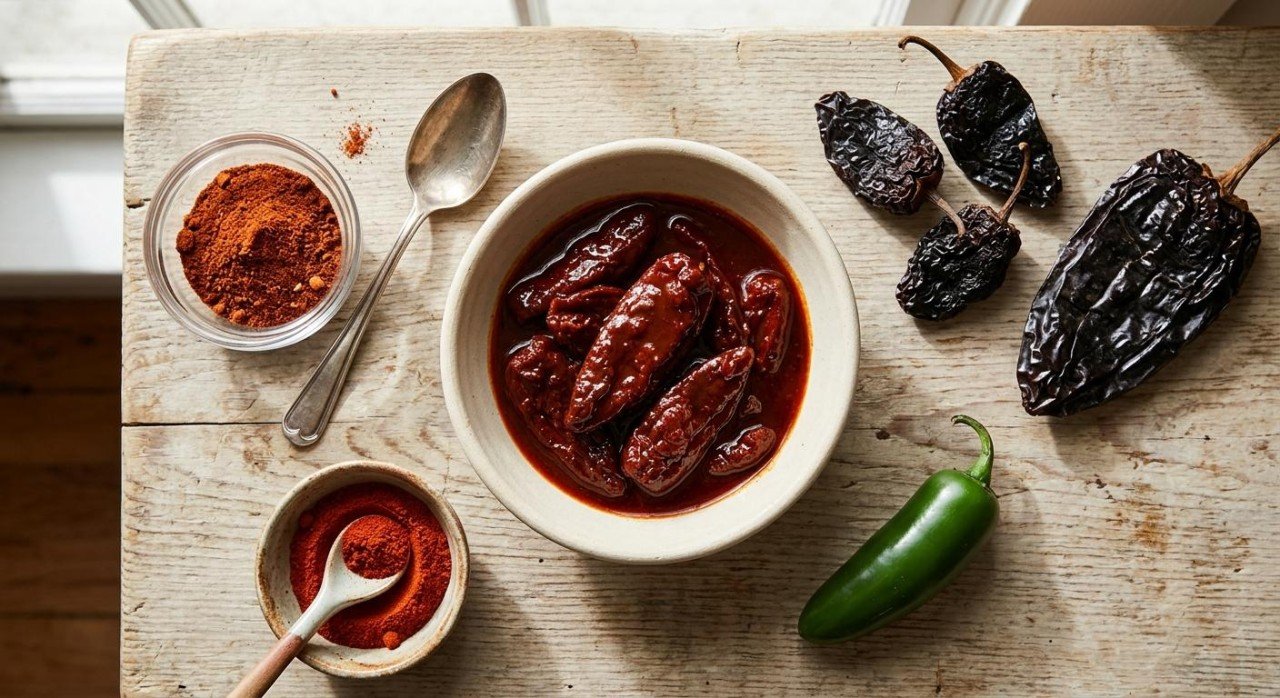
3. Dried Chile Sauce (Guajillo + Ancho)
- Swap: For about 2 1/2 cups: 4 dried guajillo chiles + 2 dried ancho chiles (stemmed and seeded), toasted and soaked, then blended with 1 1/2 cups low-sodium broth + 1 tablespoon tomato paste + 2 garlic cloves + 1/2 teaspoon cumin + 1/2 teaspoon dried oregano, and simmered in 1 tablespoon oil for 10 minutes
- Best for: Any red enchilada where flavor is the point, especially cheese, beef or pork enchiladas, and enchiladas rojas
- Skip it for: A 15-minute weeknight dinner. This takes about 35 minutes, mostly hands-off
- Health notes: No salt at all until you add it, and the whole dried chiles bring fiber the canned sauce barely has
This is what canned enchilada sauce is imitating. Guajillos bring the bright brick-red color and a tangy, slightly berry-like flavor; anchos (dried poblanos) bring raisiny sweetness and depth. Together they are why restaurant enchiladas taste like chile rather than like tomato soup. Toast the chiles in a dry skillet over medium heat for 20 to 30 seconds per side, just until they smell toasty and soften slightly. If they start to smoke, they have gone too far and will taste bitter. Cover them with very hot water, weigh them down with a small plate, and soak 15 to 20 minutes until pliable.
Drain the chiles (taste the soaking water first; if it is bitter, discard it, and if it tastes good, use it in place of some of the broth), then blend with the remaining ingredients until completely smooth. For a restaurant-silky sauce, push it through a fine-mesh strainer to catch the skins. Fry it in the oil for a minute, which deepens the flavor, then simmer 10 minutes and salt to taste. This is the sauce we used in our healthier chicken enchiladas makeover, where replacing the canned sauce and condensed soup with dried chiles cut 570 mg of sodium per serving and was the swap that changed what the dish tasted like.
4. Tomato Sauce + Chipotle in Adobo
- Swap: 1 cup enchilada sauce → 3/4 cup tomato sauce + 1/4 cup broth + 1 chipotle in adobo (minced) + 1 teaspoon adobo sauce + 1/2 teaspoon ground cumin + 1/4 teaspoon dried oregano, blended and simmered 5 minutes
- Best for: Beef, pork, black bean and sweet potato enchiladas; enchilada casseroles; anyone who finds canned sauce bland
- Skip it for: Kids and heat-sensitive eaters. Start with half a chipotle if you are not sure
A single chipotle turns plain tomato sauce into something smoky and serious. Blend everything (an immersion blender in a measuring cup is perfect) so the pepper disappears into the sauce rather than leaving hot pockets in one enchilada. Chipotles are smoke-dried jalapenos, so the heat is real; one pepper per cup lands at a pleasant medium for most people. If the can is empty too, our chipotle in adobo substitutes guide has a smoked paprika version that works here.
5. Red Salsa, Blended and Thinned
- Swap: 1 cup enchilada sauce → 3/4 cup jarred red salsa, blended smooth + 1/4 cup unsalted broth or water + 1 teaspoon chili powder + 1/4 teaspoon cumin, simmered 5 minutes
- Best for: Layered enchilada casseroles, smothered burritos, enchilada-style skillet dinners, chilaquiles
- Skip it for: Classic rolled enchiladas where you want a smooth, chile-forward sauce
- Health notes: Jarred salsa is saltier per spoonful than enchilada sauce. Pace medium chunky salsa runs 230 mg sodium per 2 tablespoons, so cutting it with unsalted broth matters
Salsa is the substitute most people already have, and it is closer to enchilada sauce than it looks: both are chile-and-tomato based. The differences are texture (chunky vs. smooth), temperature (salsa is a raw, fresh-tasting sauce, while enchilada sauce is cooked) and spice (salsa skips the warm cumin-and-chili-powder note). Blending fixes the first, simmering for 5 minutes fixes the second and mellows the raw onion, and the chili powder and cumin fix the third.
Restaurant-style or roasted salsa is the best kind for this; very chunky pico-style salsa is mostly fresh tomato and onion and makes a watery, pale sauce. If your blended salsa still tastes thin, stir in a tablespoon of tomato paste per cup.
6. Taco Sauce, Thinned
- Swap: 1 cup enchilada sauce → 3/4 cup taco sauce + 1/4 cup broth or water + 1 teaspoon chili powder + 1/4 teaspoon cumin
- Best for: Rolled enchiladas and casseroles when you want the smooth, pourable texture of canned sauce with zero cooking
- Skip it for: Recipes that need a lot of sauce. Taco sauce comes in small bottles, and you need most of one per cup
- Health notes: Ortega original taco sauce has 115 mg sodium per tablespoon, with corn syrup as the third ingredient, so this swap is a little saltier and sweeter than canned enchilada sauce
Taco sauce is a cousin of canned enchilada sauce: tomato puree, vinegar, chile and spices, already smooth. It is tangier and slightly sweet, so the extra chili powder and cumin push it back toward enchilada territory and the broth loosens it to the right consistency. No simmering needed, although 2 minutes in a small pan takes the vinegar edge off. Hot or medium taco sauce works better than mild, which tends to taste mostly of tomato and vinegar.
7. Mole Paste, Diluted
- Swap: 1 cup enchilada sauce → 3 tablespoons jarred mole paste whisked into 3/4 cup warm low-sodium broth (about 1 part paste to 4 parts broth), simmered 5 minutes and thinned as needed
- Best for: Chicken enchiladas (as enmoladas), turkey or leftover roast enchiladas, cheese and potato enchiladas
- Skip it for: When you want the dish to taste like regular red enchiladas. Mole is its own, very different sauce. Also skip it for peanut or wheat allergies: Dona Maria's paste contains both
- Health notes: Mole paste is built on oil and crackers. A 2-tablespoon serving of Dona Maria has 170 calories, 13 g fat and 400 mg sodium, so a cup of the diluted sauce lands around 250 calories against about 70 for canned enchilada sauce, but with less sodium
Enchiladas covered in mole instead of red chile sauce are a classic dish in their own right in Mexico, called enmoladas, so this is less a compromise than a delicious detour. The jar's directions call for about 4 parts broth to 1 part paste; break the paste up with a fork in a saucepan over low heat, add the broth a little at a time, and whisk until smooth. It thickens as it simmers, so plan on adding another splash of broth before you pour it.
Straight from the jar with only broth, mole can taste heat-forward and one-note. A guide from Hormel Foods suggests grating in some fresh tomato and onion for depth. A tablespoon of tomato paste and a pinch of cinnamon do the same job in a hurry.
Green Enchilada Sauce Substitutes
8. Salsa Verde, Blended and Thinned
- Swap: 1 cup green enchilada sauce → 3/4 cup jarred salsa verde + 1/4 cup unsalted chicken or vegetable broth + 1/4 teaspoon ground cumin, blended and simmered 5 minutes
- Lower-sodium version: 1/2 cup salsa verde + 1/2 cup unsalted broth + 1/2 teaspoon cumin + 1 tablespoon chopped cilantro, simmered 8 to 10 minutes to thicken slightly
- Best for: Chicken enchiladas verdes, green chile casseroles, smothered burritos, chilaquiles verdes
- Skip it for: Nothing in the green column. This is the default green swap
- Health notes: Herdez salsa verde carries 310 mg sodium per 2 tablespoons, more than double canned green enchilada sauce spoon for spoon (Old El Paso mild green is 280 mg per 1/4 cup). The half-and-half version lands right around the can
Salsa verde and green enchilada sauce are built on the same foundation: tomatillos, green chiles, onion and cilantro. Salsa verde is just sharper, fresher and saltier. Cooking it for a few minutes mellows the raw tang, the broth stretches it to the right consistency, and the cumin adds the warmth that canned green enchilada sauce has and jarred salsa usually does not.
If you have a little sour cream or Greek yogurt, a few spoonfuls stirred into the warm sauce (off the heat, so it does not curdle) gives you the creamy, Suiza-style green sauce many restaurants use. Roasted salsa verde, if you can find it, is the closest match to the can's cooked flavor.
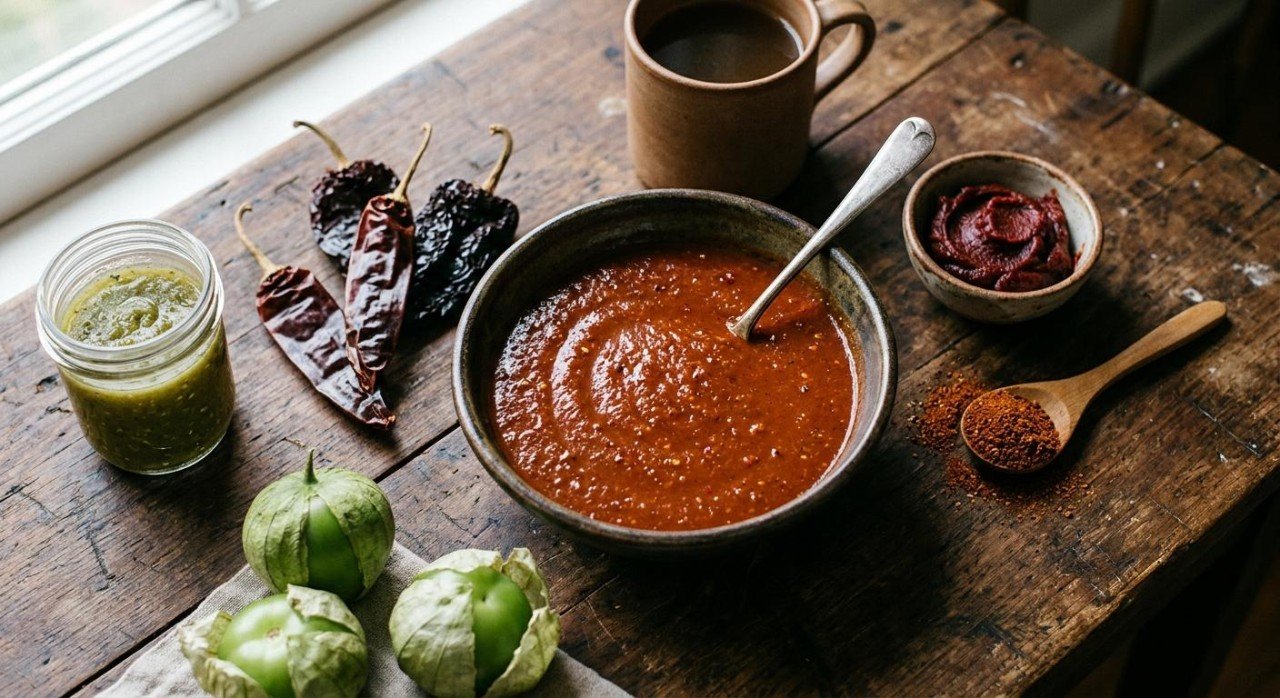
9. Roasted Tomatillo-Poblano Sauce (Homemade Green)
- Swap: For about 3 1/2 cups: one 28 oz can whole tomatillos (drained) + 3 poblano chiles (halved and seeded) + 1 onion (cut in wedges) + 1 jalapeno + 5 garlic cloves, broiled until charred, then blended with 1/4 cup water + 1/4 cup cilantro + 1 teaspoon each cumin, dried oregano and sugar, plus salt and pepper to taste
- Best for: Any green enchilada recipe, especially chicken, pork or cheese
- Skip it for: When you have only 10 minutes. Budget about 30
- Health notes: This is mostly vegetables, so it brings fiber, vitamin C and plant variety the canned sauce lacks, and you control every gram of salt
This is America's Test Kitchen's sauce for its green chile chicken enchiladas, and they built it from scratch because, in their words, premade enchilada sauces "tasted too acidic." Spread the drained tomatillos, poblanos (skin side up), onion, jalapeno and garlic on a foil-lined sheet pan, toss with 1 tablespoon oil, and broil until the poblano skins are blistered and the tomatillos are spotty and soft. Then blend everything with the water, cilantro and seasonings until smooth.
Fresh tomatillos work too: use about 1 1/4 pounds, husked and rinsed, and broil them a few minutes longer. Keep the jalapeno seeds in for more heat. It makes enough for two pans of enchiladas, and the extra freezes well.
10. Canned Green Chiles + Broth
- Swap: For about 2 1/2 cups: 2 tablespoons oil + 2 tablespoons flour + 1/2 teaspoon cumin + 1/2 teaspoon garlic powder + two 4 oz cans diced green chiles (undrained) + 1 1/2 cups low-sodium chicken broth, simmered 8 to 10 minutes and partly blended
- Best for: Mild green enchiladas, smothered burritos, green chile chicken casseroles, a kid-friendly green sauce
- Skip it for: When you want the tangy tomatillo flavor of enchiladas verdes. This is a New Mexico-style green chile sauce, mellower and more savory
The little cans of diced green chiles (usually Hatch or Anaheim types) are the backbone of New Mexico's green chile sauce, and the method is the same as the homemade red sauce at the top of this guide: cook the flour in the oil for a minute, add the cumin and garlic powder for a few seconds, whisk in the broth, then add the chiles and simmer until it coats a spoon. Blend about half of it for body and leave the rest chunky, or blend it all for a smooth sauce. A squeeze of lime at the end brightens it if it tastes flat.
Canned green chiles are mild, so for more heat add a minced jalapeno with the chiles. If you have a tomatillo or two, or a few spoonfuls of salsa verde, blending them in pulls this closer to a classic green enchilada sauce.
Take the Guesswork Out of Eating Well
Eat Well Planner helps you organize your favorite recipes, plan balanced meals, and automatically generate shopping lists — all in one place. Whether you're tracking macros, managing dietary restrictions, or just trying to stop asking "what's for dinner?", we've got you covered.
Our AI-powered tools can adapt any recipe to your dietary needs, help you discover new meals you'll love, and even log your nutrition effortlessly. It's meal planning made simple.
Start Organizing Your Meals — FreeThe Sodium Math: Where Homemade Actually Wins
A can of red enchilada sauce is not a dramatically unhealthy food. Old El Paso's mild red runs 18 calories and 290 mg sodium per 1/4 cup. The catch is that a pan of enchiladas uses the whole can, so a 19 oz can brings roughly 2,600 mg of sodium to the dish before the cheese, tortillas and seasoned filling add theirs. Split six ways, the sauce alone is about 435 mg per serving, nearly a fifth of the 2,300 mg daily limit the FDA recommends.
Homemade is not automatically lower. It depends almost entirely on two ingredients. Here is how the 10-minute red sauce (substitute 1) adds up for a 2-cup batch:
- 3 tablespoons chili powder: about 690 mg (store-bought chili powder contains salt; our chili powder guide covers the numbers)
- 2 cups low-sodium broth: up to 280 mg (the FDA's "low sodium" label means 140 mg or less per serving)
- 2 tablespoons no-salt-added tomato paste: about 20 mg
- 1/4 teaspoon salt: about 580 mg (USDA puts a teaspoon of table salt at 2,325 mg)
That totals roughly 1,570 mg for the batch, or about 195 mg per 1/4 cup, a third less than the can. Leave out the added salt and it drops to about 125 mg. Make the same sauce with regular broth (a typical cup is around 860 mg) and it climbs to about 375 mg per 1/4 cup, which is more than the can. The same logic applies to the tomato sauce version: no-salt-added tomato sauce makes it the lowest-sodium sauce in this guide, and regular tomato sauce plus salt makes it one of the highest.
So the healthier upgrade is not really "homemade instead of canned." It is low-sodium broth and no-salt-added tomato products, salted to taste at the end. Do that, and any of the homemade sauces above beats the can while tasting noticeably better. The jarred shortcuts (salsa, salsa verde, taco sauce) all start saltier than enchilada sauce per spoonful, which is why their ratios cut them with unsalted broth.
If you are trying to make the whole dish lighter, the sauce is only one lever. Our healthier chicken enchiladas walks through the full set of swaps (beans in the filling, corn tortillas, Greek yogurt for sour cream) and what each one is worth.
What Not to Use
- Plain tomato sauce on its own. Without chili powder and cumin it just tastes like Italian-style baked tortillas. Use substitute 2 instead, which takes 5 more minutes.
- Ketchup or barbecue sauce. Both are far too sweet and vinegary, and they bake into a sticky glaze rather than soaking into the tortillas. A tablespoon of ketchup in a homemade sauce is fine; a cup in place of the sauce is not.
- Marinara or pasta sauce, straight from the jar. The basil, oregano and sometimes cheese pull the flavor firmly toward Italy. In a real pinch, use it like substitute 2 (3/4 cup sauce + 1/4 cup broth + 1 tablespoon chili powder + 3/4 teaspoon cumin) and accept that it will taste a little like pizza.
- Hot sauce as the sauce. Bottled hot sauce is vinegar and heat with no body. A teaspoon livens up a homemade enchilada sauce; a cup makes the pan inedible.
- Taco seasoning stirred into water. The cornstarch in most packets turns into a gluey gravy when baked. Stir taco seasoning into tomato sauce and broth instead, and leave out any other salt.
Which Substitute Fits Your Enchiladas?
For most nights, it is substitute 1, the 10-minute red sauce, or substitute 8, thinned salsa verde, depending on the color you need. When you have time and want the best-tasting pan, make the dried chile sauce or the roasted tomatillo-poblano sauce, and freeze the extra so next time the "out of enchilada sauce" problem is already solved.
The right pick really does depend on the rest of the recipe, though. A smothered burrito with beans and rice can handle a chunky salsa; a delicate cheese enchilada cannot. That is where Eat Well Planner's AI recipe chat helps: import the enchilada recipe you are actually making, ask what to use instead of the canned sauce, and get an answer that accounts for your filling, your pan and your pantry, not a general rule. If you want to see what a swap does to the nutrition first (that broth decision, for example), the Recipe Playground shows the score and sodium change live as you edit, and Make It Healthier will suggest swaps like these that a calculator has already verified are real improvements.