Maybe the eggplant you bought on Sunday has gone soft and brown by Thursday. Maybe someone at the table cannot stand the texture, or avoids nightshades. Or maybe the store simply had none. Whatever the reason, you can still make the eggplant parm, the curry, or the baba ganoush. You just need to know which job the eggplant was doing.
Eggplant does three very different things in recipes. In stews, curries, ratatouille, and pasta sauces it acts like a sponge, soaking up sauce and oil and melting into silky, almost creamy pieces. In eggplant parm and other fried or breaded dishes it is a sturdy slab that holds a crust and carries cheese and sauce. And in baba ganoush and other dips it is a smoky, soft pulp that blends smooth. No single substitute does all three well, so this guide is split by use, with exact amounts for each.
One thing to know before you swap: eggplant is unusually airy. By USDA weights, a cup of raw eggplant cubes weighs only about 82 g, while a cup of chopped zucchini weighs 124 g. Eggplant also collapses dramatically as it cooks. So swap by weight, not by volume. A typical globe eggplant weighs about 1 1/4 pounds (548 g), which means "1 medium eggplant" in a recipe is asking for about 1 1/4 pounds of whatever you use instead. If the recipe only gives cups of raw eggplant cubes, use about two-thirds as many cups of a denser vegetable like zucchini or cauliflower.
The Quick List
- Another eggplant variety (Japanese, Chinese, Italian, graffiti) — a true 1:1 swap for every use
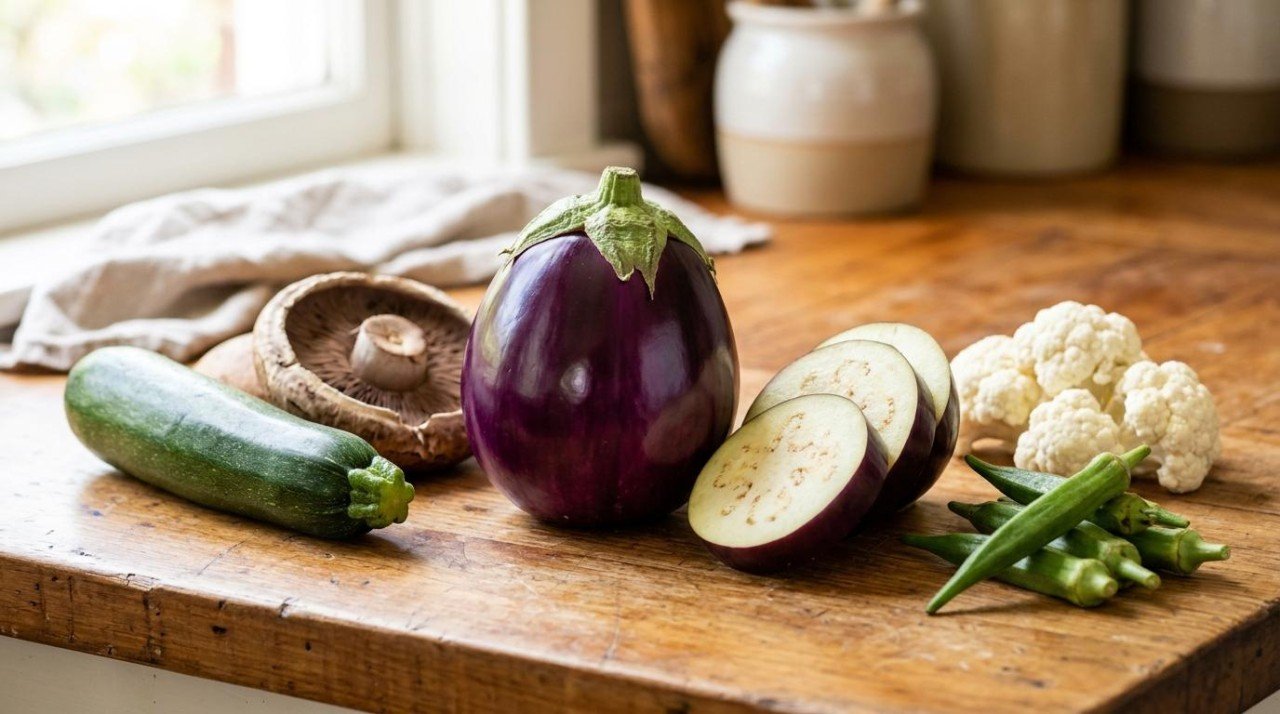
- Zucchini or yellow squash — the most versatile stand-in: stews, parm, grilling, and even baba ganoush
- Mushrooms (especially portobello) — the meatiest, most savory swap for sauces, stews, parm, and stuffing
- Okra — great in curries and tomato-based stews, where it thickens the sauce
- Cauliflower — soaks up curry sauces and roasts into a creamy, nutty dip
- Butternut squash or potatoes — soft, sauce-absorbing chunks for curries and moussaka
- Extra-firm tofu — breaded slabs for a high-protein "parm"
- Chicken cutlets — the classic answer when eggplant parm becomes chicken parm
- Roasted red peppers — a smoky, sweet alternative for dips and antipasti
- Chickpeas or white beans — no-roast dips and protein-rich curries
First Choice: Another Kind of Eggplant
- Swap: 1:1 by weight (1 globe eggplant → about 1 1/4 lb Japanese, Chinese, Italian, or graffiti eggplant)
- Best for: Everything, including parm, curries, stir-fries, grilling, and dips
- Skip it for: Nothing, though tiny "fairy" eggplants are fiddly for parm slices
If the big purple globe eggplants are gone or look tired, check for the long, slender Japanese and Chinese types, the smaller Italian ones, or striped graffiti eggplant. They all behave like eggplant because they are eggplant. Most have thinner skin, fewer seeds, and a slightly sweeter, less bitter flesh, and they cook a few minutes faster. Long Asian varieties are ideal for stir-fries and curries. For parm, slice them lengthwise into planks rather than rounds so you still get wide pieces.
For Stews, Curries, Ratatouille, and Pasta Sauces
Zucchini or Yellow Squash
- Swap: 1:1 by weight (1 lb eggplant → about 1 lb zucchini, or 2 to 2 1/2 medium)
- Best for: Ratatouille, caponata, pasta sauces, vegetable curries, roasted vegetable trays
- Skip it for: Long-simmered dishes where it would go in at the start
- Health notes: About 17 calories per 100 g and 17.9 mg vitamin C, against eggplant's 25 calories and 2.2 mg
Zucchini is the closest everyday swap, and it already shares a pan with eggplant in ratatouille and caponata. The difference is texture: eggplant turns silky and creamy, while zucchini stays tender with a little bite. It also cooks much faster, so it needs different timing. Cut it into slightly larger pieces than the eggplant called for, brown it in a hot pan or roast it at 425°F until golden, and add it to the stew or sauce for the last 10 minutes instead of simmering it from the start. Left in for 45 minutes, it turns to mush and waters down the sauce.
Yellow squash and other summer squash work exactly the same way. If you want more help with zucchini itself, our zucchini substitutes guide goes deeper on how it behaves.
Mushrooms
- Swap: 1:1 by weight (1 lb eggplant → about 1 lb cremini, portobello, or oyster mushrooms)
- Best for: Pasta sauces, stews, ragù, moussaka, stir-fries, curries
- Skip it for: Baba ganoush (the flavor is too earthy for a classic version)
- Health notes: Portobellos have 2.1 g protein per 100 g, about double eggplant's 1 g
Mushrooms give you what many people actually love about eggplant: a soft, meaty, savory bite that drinks up sauce. They bring more savory depth than eggplant does, which works especially well in tomato sauces, Greek moussaka, and Asian stir-fries with soy and garlic. Like eggplant, they release water and shrink a lot, so brown them in batches in a hot pan before adding them to a sauce. Crowd the pan and they steam instead of browning.
Cut cremini into quarters and portobellos into 1-inch chunks so the pieces stay close to eggplant cubes after shrinking. If mushrooms are the thing you are out of, our mushroom substitutes guide covers the reverse direction.
Okra
- Swap: 1:1 by weight (1 lb eggplant → about 1 lb okra, roughly 4 1/2 cups of pods)
- Best for: Tomato-based stews, Indian curries, Middle Eastern and Creole-style braises
- Skip it for: Parm, grilling, dips, and anything where a slick texture would be unwelcome
- Health notes: 3.2 g fiber, 23 mg vitamin C, and 60 mcg folate per 100 g, about ten times eggplant's vitamin C and nearly three times its folate
Okra is a great swap in exactly the dishes where eggplant is stewed in a spiced tomato sauce, and it has a long history of its own in those dishes, from Indian bhindi masala to Middle Eastern bamia. Its famous slipperiness actually helps here: it thickens the sauce slightly, the way eggplant does when it breaks down.
To keep the texture pleasant rather than slimy, trim just the stem caps and leave the pods whole or in large pieces, make sure they are completely dry before cooking, and sear them in a hot pan before they go into the sauce. Tomatoes and other acidic ingredients also help tame the slickness. Frozen cut okra works too: add it straight from frozen.
Cauliflower
- Swap: 1:1 by weight (1 lb eggplant → about 1 lb florets, roughly 4 cups chopped)
- Best for: Curries, roasted vegetable dishes, sheet-pan dinners, and dips (see below)
- Skip it for: Ratatouille and Italian tomato sauces, where its flavor stands out
- Health notes: 48.2 mg vitamin C per 100 g, more than 20 times eggplant's, at the same 25 calories
Cauliflower is the swap to reach for in curries. Its nooks soak up sauce much like eggplant's spongy flesh does, and it softens without falling apart. Cut it into bite-size florets, roast them at 425°F for 20 to 25 minutes until browned at the edges, then stir them into the sauce for the last few minutes. You can also simmer raw florets directly in the curry for about 15 minutes, though roasting gives a deeper flavor.
Butternut Squash or Potatoes
- Swap: 1:1 by weight, cut into 3/4-inch cubes (1 lb eggplant → about 1 lb peeled squash or potatoes)
- Best for: Curries, tagines, hearty stews, moussaka
- Skip it for: Quick stir-fries and anything where the eggplant cooks for under 15 minutes
- Health notes: Butternut squash has 532 mcg vitamin A per 100 g, where eggplant has almost none
These two take longer to cook than eggplant, but they give you soft, sauce-soaked chunks that hold their shape. Butternut squash adds sweetness that suits coconut curries, Moroccan tagines, and anything with warm spices. Potatoes are more neutral and already appear alongside eggplant in many curries and in plenty of moussaka recipes, so swapping the eggplant layer for thinly sliced, par-roasted potatoes is a natural fit there. Add either one early in the simmer, or roast the cubes first until tender, then fold them in.
For Eggplant Parm and Breaded or Fried Eggplant
Zucchini Planks
- Swap: 1 medium eggplant → about 3 medium zucchini, sliced lengthwise into 1/4- to 1/2-inch planks
- Best for: Zucchini parm, breaded and baked slices, grilled slabs
- Skip it for: Deep-fried rounds (they get soggy fast)
Zucchini parm is a classic in its own right. The trick is moisture: zucchini is about 95% water, so salt the planks lightly, let them sit on paper towels for 15 to 20 minutes, and pat them dry before breading. Bake the breaded planks at 425°F on an oiled rack or sheet until golden, about 20 minutes, flipping once, then layer with sauce and cheese and bake again just until bubbly. Slicing lengthwise gives you wide pieces that cover the dish the way eggplant rounds do.
Portobello Caps
- Swap: 1 medium eggplant → about 6 to 7 large portobello caps, left whole or sliced 1/2 inch thick
- Best for: Parm, breaded "cutlets," stacks, and stuffed dishes
- Skip it for: Crisp fried rounds (they release liquid under the breading)
Portobellos make the meatiest parm of any vegetable. Twist off the stems and scrape out the dark gills with a spoon so they do not turn the sauce gray. Then roast the caps at 400°F for about 10 minutes and pat them dry before breading, which keeps the coating from going soggy. Whole caps also make great burger-style stacks with mozzarella and marinara.
Extra-Firm Tofu
- Swap: 1 medium eggplant → one 14-ounce block, pressed and cut into 1/2-inch slabs (roughly 6 to 8)
- Best for: Vegetarian or vegan parm, breaded cutlets, stir-fries
- Skip it for: Stews where you want the vegetable to melt into the sauce
- Health notes: 17 g protein per 100 g (firm, calcium-set), plus 683 mg calcium, versus about 1 g protein in eggplant
Tofu will not taste like eggplant, but breaded, baked, and smothered in marinara and cheese, it makes a satisfying parm with real staying power. Press it for 15 to 20 minutes to remove water, slice it into slabs, then bread and bake it the same way you would eggplant. Season the breading well, since tofu is mild. Our post on how to cook tofu so it tastes good covers pressing and seasoning in more detail.
Chicken Cutlets
- Swap: 1 medium eggplant → about 1 1/4 lb boneless chicken breast, pounded to 1/2 inch
- Best for: Parm and breaded cutlets
- Skip it for: Vegetarian meals, obviously, and anything stewed or blended
Sometimes the honest answer is that eggplant parm becomes chicken parm. Pound the breasts to an even 1/2 inch so they cook through in the same time the crust browns, bread them, and bake at 425°F until they reach 165°F inside, about 15 to 20 minutes. Then add sauce and cheese and finish as usual. If you want to keep some vegetables in the dish, layer a few zucchini planks or sautéed mushrooms underneath.
For Baba Ganoush and Eggplant Dips
Charred Zucchini
- Swap: 1 medium eggplant → about 3 medium zucchini, halved lengthwise
- Best for: A smoky, creamy baba ganoush-style dip
- Skip it for: A dip you want thick right away without draining
Zucchini makes the closest eggplant-free baba ganoush. Broil the halves cut side up, or grill them, until deeply charred and completely soft, about 15 to 20 minutes. Then scrape the flesh into a fine strainer and press out the liquid for a few minutes. Skip that step and the dip will be watery, since zucchini holds more water than eggplant. Blend with tahini, garlic, lemon juice, and olive oil as usual. A pinch of smoked paprika helps if you could not get a good char. (Out of tahini as well? Our tahini substitutes guide has you covered.)
Roasted Cauliflower
- Swap: 1 medium eggplant → 1 small head (about 1 lb) cauliflower
- Best for: Creamy, nutty, hummus-like dips
- Skip it for: A dip that needs to taste smoky without help
Roast florets at 425°F until very tender and well browned, 25 to 30 minutes, then blend while still warm with tahini, lemon, garlic, and enough olive oil or water to make it smooth. It is less smoky and more nutty than baba ganoush, but it has the same spoonable, creamy texture.
Roasted Red Peppers
- Swap: 1 medium eggplant → about 3 large roasted red peppers, or one 12-ounce jar, well drained
- Best for: Smoky-sweet dips and spreads, antipasto platters
- Skip it for: A dip that should taste like classic baba ganoush
Roasted peppers will not taste like eggplant, but they share the same smoky, charred quality and blend into a silky spread. Puree them with a handful of walnuts or bread crumbs to add body, along with garlic, lemon, and a little cumin. That puts you close to muhammara, a Middle Eastern pepper dip that sits happily next to baba ganoush on a mezze plate.
Chickpeas or White Beans
- Swap: 1 medium eggplant → one 15-ounce can, drained and rinsed (about 1 1/2 cups)
- Best for: A no-roast dip in 5 minutes, and adding protein to curries
- Skip it for: Parm or anything where you want a vegetable texture
When you need a dip right now and do not want to turn on the oven, beans are the answer. Blend chickpeas or cannellini beans with tahini, lemon, garlic, and olive oil, and you have hummus or a white bean dip. It is a different dip, but it fills the same spot on the table. In curries, a can of chickpeas will not mimic eggplant's texture, but it adds substance and protein and pairs well with any of the vegetable swaps above.
For Stuffed Eggplant, Grilling, and Moussaka
- Stuffed eggplant: Use zucchini halves with the centers scooped out (leave a 1/4-inch wall), large portobello caps with the gills removed, or halved bell peppers. All need less pre-baking than eggplant: 10 minutes at 400°F for zucchini and portobellos, then fill and bake until the filling is hot.
- Grilling: Zucchini or yellow squash planks, portobello caps, and thick cauliflower "steaks" all grill well. Brush with oil, grill over medium-high heat until marked and tender, 3 to 5 minutes per side for squash and mushrooms and a bit longer for cauliflower.
- Moussaka: Replace the eggplant layer with 1/4-inch slices of par-roasted potato, zucchini, or a mix. Roast the slices until just tender before layering, so they do not release water into the meat sauce and béchamel.
Which Swap for Which Dish
- Eggplant parmesan: Another eggplant variety, then zucchini planks, portobello caps, tofu, or chicken
- Ratatouille or caponata: Zucchini or yellow squash, plus extra bell pepper and mushrooms
- Indian curries: Cauliflower, okra, potatoes, or chickpeas
- Thai or coconut curries: Butternut squash, zucchini, or Japanese eggplant if you can find it
- Pasta alla Norma and tomato sauces: Mushrooms or zucchini
- Stir-fries (like garlic eggplant): Japanese or Chinese eggplant, then zucchini or oyster mushrooms
- Baba ganoush: Charred zucchini, then roasted cauliflower
- Moussaka: Potatoes, zucchini, or both
Healthier Upgrades: Swaps That Add Something
Eggplant is already a light vegetable, with 25 calories and 3 g of fiber per 100 g. The biggest nutrition variable is not the eggplant at all but how much oil it absorbs. That airy, spongy flesh can drink up a surprising amount of oil in a frying pan, which is why fried eggplant parm ends up much richer than the vegetable itself would suggest. Whatever you use instead, baking breaded slices on an oiled sheet instead of pan-frying them keeps that in check.
Beyond that, several swaps bring something eggplant does not:
- More protein: Tofu has about 17 times eggplant's protein per 100 g, and chickpeas or white beans turn a vegetable curry into a filling one-pot meal.
- More vitamin C: Cauliflower (48.2 mg per 100 g), okra (23 mg), and zucchini (17.9 mg) all far outpace eggplant's 2.2 mg.
- More vitamin A: Butternut squash is an excellent source, where eggplant has almost none.
- More fiber and folate: Okra edges past eggplant on fiber (3.2 g vs. 3 g) and has nearly three times the folate.
- More plant variety: Using a mix, such as zucchini plus mushrooms in ratatouille or cauliflower plus chickpeas in a curry, adds more different plants to your week. A wider variety of plants is linked to a more diverse gut microbiome, and our post on eating 30 plants a week explains why that matters.
Not sure which of these fits the recipe in front of you? A guide like this can only speak in general terms. In Eat Well Planner, you can open your saved recipe and ask the AI recipe chat, "I'm making this eggplant curry and I don't have eggplant — what should I use?" It answers with the whole recipe in mind, including cooking times. Or open the recipe in the Recipe Playground, swap eggplant for cauliflower or tofu, and watch the nutrition score change before you shop.
Take the Guesswork Out of Eating Well
Eat Well Planner helps you organize your favorite recipes, plan balanced meals, and automatically generate shopping lists — all in one place. Whether you're tracking macros, managing dietary restrictions, or just trying to stop asking "what's for dinner?", we've got you covered.
Our AI-powered tools can adapt any recipe to your dietary needs, help you discover new meals you'll love, and even log your nutrition effortlessly. It's meal planning made simple.
Start Organizing Your Meals — FreeWhat Not to Use
- Cucumber. It looks like a reasonable stand-in, but cooked cucumber turns limp and watery in minutes and never gets silky. Keep it for salads.
- Spaghetti squash for parm. Once cooked it falls apart into strands, so it cannot hold breading or form a layer.
- Okra in parm, grilling, or dips. Its slippery texture works in a spiced stew and nowhere else eggplant is used.
- Undrained zucchini in baba ganoush or parm. Zucchini holds more water than eggplant. Skip the salting or straining and you get a soggy crust or a runny dip.
- Raw butternut squash or potatoes in a quick stir-fry. They need far more cooking time than eggplant and will still be hard when everything else is done.
- Nightshades, if that is why you are avoiding eggplant. Eggplant belongs to the nightshade family, along with tomatoes, potatoes, and bell and chili peppers. If nightshades are the issue, skip the potato and red pepper swaps and stick with zucchini, mushrooms, cauliflower, okra, butternut squash, tofu, or beans.
The Bottom Line
If the store has any other kind of eggplant, buy that and change nothing. Otherwise, match the swap to the job. For stews and sauces, use zucchini or mushrooms, added late enough that they hold together. For curries, cauliflower, okra, or butternut squash soak up sauce beautifully. For parm, zucchini planks and portobello caps are the best vegetables, with tofu and chicken as the higher-protein routes. For baba ganoush, well-drained charred zucchini comes closest. Swap by weight, not by cups, and most of these will bring a little extra nutrition to the dish.
And when you are looking at a specific recipe and do not want to adapt it line by line, Eat Well Planner can create a recipe variation with the swap already worked in, from the amounts down to the cooking times, so dinner still happens with what you have.