The broth is simmering, the chicken is shredded, and the bag of egg noodles you were counting on turns out to be empty. Or the stroganoff sauce is ready and someone at the table needs it gluten-free. Or you would just like a bowl of noodles that brings a little more fiber than the original. Whatever the reason, you need to know what will actually work.
Egg noodles are wheat noodles enriched with egg, which is what makes them richer, more tender, and more yellow than ordinary pasta. In the US that is a legal definition, not just a style: under the FDA standard for noodle products, egg noodles must contain at least 5.5 percent egg solids by weight. They show up in three very different kinds of dishes: brothy soups like chicken noodle, saucy dishes like beef stroganoff and buttered noodles, and baked casseroles like tuna noodle casserole. The best substitute depends on which one you are making, so the quick list below is split by dish, followed by every substitute with its exact swap, what it is good for, what it is not, and whether it is gluten-free.
The Quick List (By Dish)
For soups (chicken noodle soup, chicken and noodles, beef noodle soup):
- Frozen homestyle egg noodles — thick, chewy, and the classic choice for chicken and noodles
- Broken fettuccine or linguine — the pantry fallback that always works
- Small pasta shapes — ditalini, small shells, or rotini for a sturdier soup
- Potato gnocchi or quick dumplings — for a heartier, chicken-and-dumplings feel
- Rice noodles — gluten-free and soft, best added at the end
For stroganoff, goulash, paprikash, and buttered noodles:
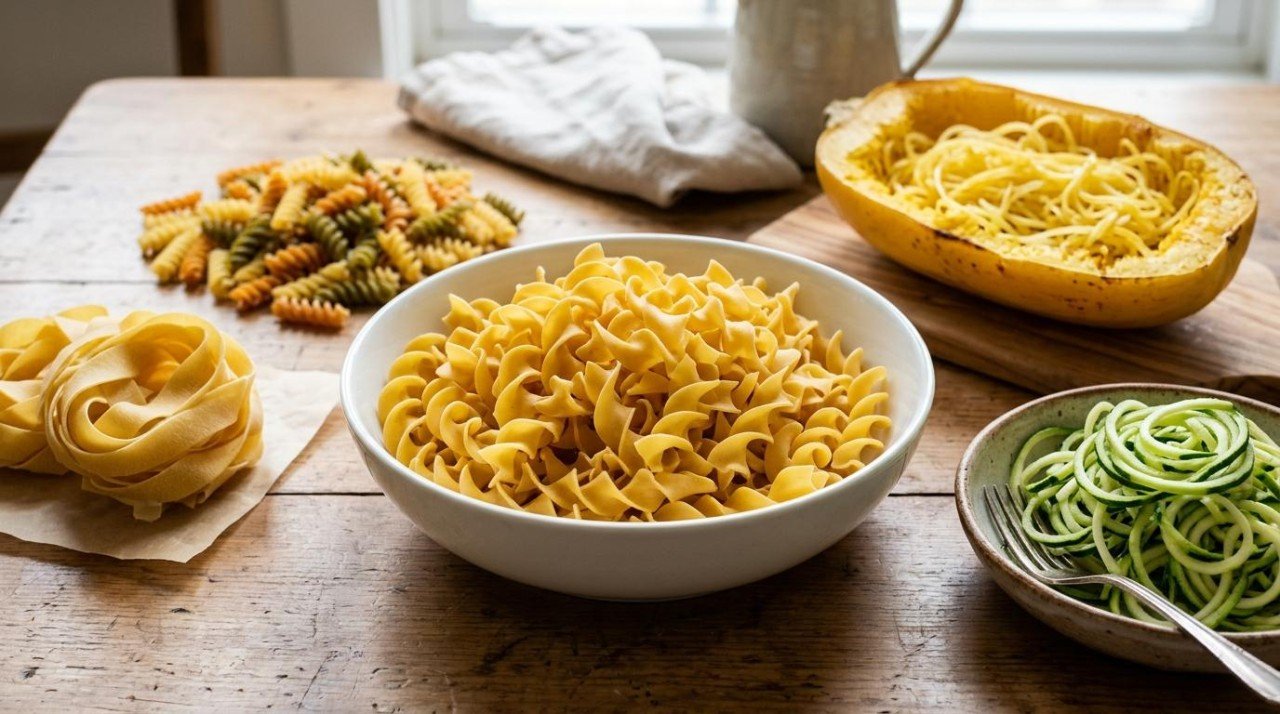
- Egg tagliatelle, fettuccine, or pappardelle — wide ribbons and the closest overall match
- Spaetzle — tender German egg dumplings, made from scratch in 20 minutes
- Mashed potatoes or rice — a common way to serve stroganoff outside the US
- Whole-wheat pasta — the easiest higher-fiber swap
For casseroles (tuna noodle casserole, chicken noodle casserole, haluski):
- Rotini, fusilli, or campanelle — twists and ruffles that trap creamy sauce
- Farfalle or medium shells — sturdy shapes that hold up in the oven
- Chickpea or lentil pasta — turns the casserole into a higher-protein meal
- Gluten-free pasta — rice, corn, or blended shapes that bake well when slightly undercooked
First, a Note on Amounts
Dried egg noodles are light and curly, so a bag of them takes up much more room than the same weight of most pasta. That makes measuring by volume unreliable, and the most dependable way to swap is by weight: if your recipe calls for an 8-ounce bag of egg noodles, use 8 ounces of the substitute. If your recipe gives cups of dry noodles instead, be careful: per USDA data, a cup of dry egg noodles weighs only about 38 grams, while a cup of dry rotini or penne weighs about 95. That means roughly 1 1/2 cups of rotini or penne replaces 4 cups of dry egg noodles, and an 8-ounce bag of egg noodles is about 6 cups.
Once cooked, a cup of egg noodles weighs about 160 grams per USDA data, so 1 cup cooked of a substitute is a fair stand-in for 1 cup cooked noodles. Timing is the other thing to watch. Wide dried egg noodles usually cook in under 10 minutes, and many soup and casserole recipes are written around that. Every section below says how its cook time compares.
Egg Tagliatelle, Fettuccine, or Pappardelle
- Swap: 1:1 by weight
- Best for: Beef stroganoff, goulash, chicken paprikash, buttered noodles
- Skip it for: Soups, unless you break the ribbons into short pieces first
- Gluten-free: No
Wide ribbon pasta is the closest match for any dish where noodles sit under a sauce. Look on the label for "egg" or "all'uovo": a lot of dried tagliatelle and pappardelle, and most fresh fettuccine, are made with egg, so they are essentially Italian egg noodles with a flatter, straighter shape. Plain dried fettuccine made only from semolina and water works too. It is a little firmer and less rich, which you will barely notice under a creamy mushroom sauce.
Cook them to the package time and toss them with a little butter or a splash of the cooking water before adding the sauce so the ribbons do not clump. For chicken noodle soup, snap fettuccine or linguine into 1- to 2-inch pieces before cooking. That turns a stroganoff pasta into a perfectly good soup noodle.
Rotini, Fusilli, or Campanelle
- Swap: 1:1 by weight
- Best for: Tuna noodle casserole, chicken noodle casserole, cheesy baked pasta
- Skip it for: Buttered noodles and stroganoff, where people expect a ribbon
- Gluten-free: No
Casseroles need a noodle that holds its shape in the oven and carries a thick, creamy sauce, and twisted or ruffled shapes do that better than almost anything. The spirals of rotini and fusilli and the frilly bells of campanelle trap the sauce, peas, and flaked tuna in every bite. If you can find mafalda (also sold as reginette or mafaldine), a narrow ribbon with ruffled edges, it looks the most like a classic wide egg noodle.
Pasta keeps cooking in the oven, so boil it about 2 minutes short of the package time before it goes into a baked dish. If you are also out of the canned soup that many casseroles rely on, our cream of mushroom soup substitutes guide has a quick from-scratch sauce.
Farfalle, Medium Shells, or Elbows
- Swap: 1:1 by weight
- Best for: Casseroles, soups with chunky vegetables, kid-friendly dishes
- Skip it for: Stroganoff and paprikash, where the shapes feel out of place
- Gluten-free: No
These are the shapes most people already have, and they work in almost any casserole or soup that calls for egg noodles. Farfalle (bow ties) are the most noodle-like, since they are made from flat sheets of pasta pinched in the middle. Medium shells and elbows are sturdier and great at catching sauce, which makes them a natural fit for a tuna noodle casserole that leans toward mac and cheese.
For soup, smaller is better: ditalini, small shells, or broken pieces of rotini fit on a spoon. Whatever you use, if you plan to eat the soup over several days, cook the pasta separately and add it to each bowl. Pasta left sitting in broth keeps drinking it up, and by the second day you have stew with swollen noodles. That tip applies to egg noodles too.
Frozen Homestyle Egg Noodles
- Swap: 1:1 by weight; simmer about 20 minutes
- Best for: Chicken and noodles, beef and noodles, thick noodle soups
- Skip it for: Quick weeknight recipes timed for dried noodles
- Gluten-free: No
If your store has them, the frozen egg noodles in the freezer case (Reames is the best-known brand) are thicker, chewier, and more like homemade than dried egg noodles. They are the traditional choice for the Midwestern and Southern "chicken and noodles" served over mashed potatoes, where the noodles cook right in the broth and thicken it with their starch.
The difference is cook time. The package directions call for about 20 minutes at a boil, whether in water or in the soup itself, compared with under 10 for most dried egg noodles. Add them to the pot earlier than the recipe says, stir often so they do not stick to the bottom, and expect a thicker, almost gravy-like broth.
Homemade Egg Noodles
- Swap: 2 cups all-purpose flour makes roughly enough to replace an 8-ounce bag
- Best for: Chicken noodle soup, chicken and noodles, buttered noodles
- Skip it for: Nights when dinner needs to be on the table in 20 minutes
- Gluten-free: No
If you have flour and eggs, you can make egg noodles, and they need no special equipment. A simple version from Egg Farmers of Canada uses 2 eggs, 1/4 cup milk, 2 cups all-purpose flour, and 3/4 teaspoon salt. Knead it into a smooth dough, wrap it, and let it rest at least 30 minutes, then roll it very thin, about 1/16 inch, and cut it into strips with a knife or pizza cutter. They boil in 3 to 10 minutes, depending on thickness.
Homemade noodles are softer and more tender than dried ones, and they release a little flour into the pot, which naturally thickens a soup. Cut them wide and a bit thicker for chicken and noodles, thinner for soup. Leftover dough freezes well, so a double batch on a weekend covers a future dinner too.
Spaetzle
- Swap: 1 cup flour, 2 eggs, and 1/4 cup water serves about 2; double it for most recipes
- Best for: Stroganoff, goulash, paprikash, buttered noodles, gravy-heavy dishes
- Skip it for: Clear brothy soups and casseroles with a crisp topping
- Gluten-free: No
Spaetzle are small, tender German egg dumplings, and they are made from almost the same ingredients as egg noodles, so in a saucy dish they are arguably an upgrade. A basic recipe from Oryana Community Co-op uses 1 cup all-purpose flour, 1/2 teaspoon salt, 2 eggs, and 1/4 cup water, mixed into a thick, smooth batter and rested for 15 minutes. You press the batter through the large holes of a spaetzle maker, colander, or box grater into simmering salted water and cook it for 3 to 4 minutes, then toss it in butter until it just starts to brown.
The irregular little shapes are excellent at holding gravy and sour cream sauce, which is why spaetzle are a traditional partner for goulash and paprikash. They are the best from-scratch choice when you want something faster than rolled noodles. The batter takes 5 minutes to mix, and the whole process is done in about 20.
Yolk-Free (Egg White) Noodles
- Swap: 1:1 by weight
- Best for: Everything regular egg noodles do
- Skip it for: Recipes where you want the richest, most golden noodle
- Gluten-free: No
- Health notes: No cholesterol; a whole-grain version is also available
Yolk-free noodles, sold under names like No Yolks, are made with egg whites instead of whole eggs. They come in the same wide, extra-wide, and fine cuts as egg noodles and cook in about the same time, so they are the most seamless swap if you are watching dietary cholesterol. They are a shade paler and slightly less rich, which is hard to notice in soup or under a sauce.
The whole-grain version is the more meaningful upgrade. Its label lists 4 grams of fiber per 2-ounce serving, roughly double the regular version, while keeping the familiar egg noodle shape. Look for it next to the regular bags.
Whole-Wheat Pasta
- Swap: 1:1 by weight in a ribbon or twisted shape
- Best for: Stroganoff, casseroles, hearty soups
- Skip it for: Very delicate broths where you want a pale, mild noodle
- Gluten-free: No
- Health notes: More than three times the fiber of egg noodles per cooked gram
If you are swapping because you want the dish to do more for you, whole-wheat fettuccine, rotini, or penne is the easiest upgrade on this list. It cooks in about the same time and slips into a stroganoff or tuna casserole with no other changes. The flavor is nuttier and the texture firmer, which pairs well with mushrooms, beef, and sharp cheese.
The fiber difference is real. Per 100 grams cooked, whole-wheat pasta has 3.9 grams of fiber and 6 grams of protein, per USDA data, compared with 1.2 grams of fiber and 4.5 grams of protein for enriched egg noodles. Our pasta substitutes guide covers more whole-grain and vegetable-based options.
Chickpea or Lentil Pasta
- Swap: 1:1 by weight in rotini, shells, or elbows
- Best for: Casseroles and saucy baked dishes
- Skip it for: Brothy soups (it releases a lot of starch and softens quickly)
- Gluten-free: Usually (check the label)
- Health notes: Much more protein and fiber than wheat noodles, though amounts vary by brand
Pasta made from chickpea or red lentil flour turns a noodle casserole into something closer to a complete meal. Popular chickpea pastas list about 190 calories, around 11 grams of protein, and 8 to 11 grams of fiber per 2-ounce dry serving, depending on the box, which is several times the fiber of egg noodles. In a tuna noodle casserole with a creamy sauce and a crunchy topping, most people will not notice the switch, aside from feeling full for longer.
Legume pastas foam a lot when boiling and turn mushy if overcooked, so use a big pot, stir a few times, and pull them out 2 minutes early when they are going into the oven. In soup, add them already cooked at the end rather than simmering them in the broth.
Gluten-Free Pasta
- Swap: 1:1 by weight
- Best for: Any egg noodle dish that needs to be gluten-free
- Skip it for: Make-ahead soups (it softens quickly in broth)
- Gluten-free: Yes (check the label)
Gluten-free pasta made from rice, corn, quinoa, or a blend comes in ribbons and twisted shapes that stand in well for egg noodles in stroganoff and casseroles. A few brands even make gluten-free "egg noodle" style pasta. The main difference is texture: gluten-free pasta can go from al dente to mushy faster, so start tasting a couple of minutes early, rinse it briefly if it turns sticky, and for soup, cook it separately and add it to each bowl.
The nutrition varies more than you might expect. Per 100 grams cooked, USDA lists corn pasta at 4.8 grams of fiber, while a corn and rice blend has 1.4 grams, so it is worth reading the label if fiber matters to you. For more on whether you need to avoid gluten in the first place, see is gluten bad for you without celiac disease?
Rice Noodles
- Swap: 1:1 by weight; soak or boil separately, then add to the soup at the end
- Best for: Chicken noodle soup, beef noodle soup, gluten-free brothy dishes
- Skip it for: Baked casseroles and creamy stroganoff (they turn gummy)
- Gluten-free: Yes
Flat rice noodles, the kind used for pad thai or pho, make a soft, silky, gluten-free swap in a brothy chicken soup. They have a neutral flavor, so the broth stays the star. The key is to cook them separately according to the package (many need only a soak in hot water) and add them to each bowl, because they break down quickly if they simmer in the pot.
They are not a good fit for anything baked or heavily sauced, since they get sticky and gummy under a creamy sauce. Our rice noodles guide explains the different widths and how to handle each one.
Chinese Egg Noodles or Ramen
- Swap: 1:1 by weight; discard any seasoning packets
- Best for: Soups, especially quick chicken or beef noodle soups
- Skip it for: Stroganoff and casseroles
- Gluten-free: No
Fresh or dried Chinese egg noodles (sold for lo mein and wonton soup) and plain ramen noodles are also wheat noodles, often made with egg or an alkaline salt that gives them a springy, chewy bite. They cook in just a few minutes, so they are a fast fix for chicken noodle soup. Instant ramen blocks work in a pinch if you toss the seasoning packet, which is where most of the sodium is.
The chew is noticeably bouncier than a classic American egg noodle. That is lovely in soup, but the long, thin strands feel out of place in a stroganoff or baked casserole.
Potato Gnocchi or Quick Dumplings
- Swap: 1 pound shelf-stable or frozen gnocchi for every 8 ounces of dried egg noodles
- Best for: Creamy chicken soups, chicken and dumplings-style dishes
- Skip it for: Clear brothy soups and casseroles
- Gluten-free: No (most brands contain wheat flour)
Gnocchi are small potato dumplings, and in a creamy soup they give you a hearty, comforting bite that is similar to thick homemade noodles. They cook in just a few minutes and float when they are done, so add them right at the end. Because they are already hydrated, they weigh more than dried noodles for the same amount of food, which is why the swap calls for about twice the weight.
Gnocchi in a creamy chicken broth with spinach is a popular dish in its own right. See our healthier chicken gnocchi soup for a version with more vegetables and protein.
Mashed Potatoes or Rice
- Swap: About 1 cup mashed potatoes or cooked rice per serving, in place of the noodles
- Best for: Beef stroganoff, goulash, chicken paprikash
- Skip it for: Soups and casseroles
- Gluten-free: Yes
Egg noodles are the American default for stroganoff, but in much of Europe the dish is just as often served with potatoes or rice. Fluffy mashed potatoes soak up a sour cream and mushroom sauce beautifully, and plain white or brown rice does the same job with almost no effort. Both are naturally gluten-free, which makes this the easiest gluten-free fix for any saucy noodle dish.
Brown rice adds fiber, and leaving the skins on mashed potatoes adds a little more. If the sauce is the star, this swap is so good that you might not go back.
Zucchini Noodles
- Swap: About 1 medium zucchini per serving, spiralized
- Best for: Lighter soups, stroganoff, half-and-half bowls
- Skip it for: Baked casseroles and make-ahead meals (they get watery)
- Gluten-free: Yes
- Health notes: About 17 calories per 100 grams raw
Zucchini noodles work best when you treat them as a vegetable that looks like a noodle, not as pasta. A medium zucchini (about 196 grams) has around 33 calories, per USDA data. Saute the spirals for 1 to 2 minutes or drop them into hot soup right before serving. Cooking them longer turns them limp and floods the bowl with water.
The best approach is often the middle path: replace half the egg noodles with zucchini noodles, and you keep the comfort of the original while adding a serving of vegetables. Our zucchini substitutes guide has ideas if you are out of that too.
Spaghetti Squash
- Swap: About 1 cup cooked squash strands per cup of cooked noodles
- Best for: Stroganoff, buttered "noodles" with herbs and Parmesan
- Skip it for: Soups (the strands fall apart) and baked casseroles
- Gluten-free: Yes
- Health notes: About 42 calories and 2 grams of fiber per cooked cup
Roasted spaghetti squash pulls apart into long, golden strands that look surprisingly like egg noodles, and its mild, slightly sweet flavor works well under a creamy mushroom sauce. Halve the squash, scoop out the seeds, and roast it cut side down at 400°F for about 30 to 45 minutes, until a fork easily scrapes the flesh into strands.
A cup of cooked spaghetti squash has about 42 calories and 2.2 grams of fiber, according to USDA data, compared with about 221 calories for a cup of cooked egg noodles. The texture is softer and wetter than pasta, so let the strands drain for a few minutes before adding sauce.
Healthier Upgrades Worth Trying
Egg noodles are not a bad food. Per 100 grams cooked, they actually have slightly fewer calories than regular pasta, because they hold more water. A cup of cooked enriched egg noodles has about 221 calories, 7 grams of protein, 2 grams of fiber, and 46 milligrams of cholesterol, per USDA data. That cholesterol comes from the egg and is modest; for most people, it matters far less than once thought, as we explain in eggs and cholesterol: the 40-year mistake.
The real limitation is fiber. Egg noodles are a refined grain, so if you want the dish to keep you full longer, here is how the main swaps compare per 100 grams cooked:
- Enriched egg noodles: 138 calories, 4.5 grams of protein, 1.2 grams of fiber
- Regular enriched pasta: 158 calories, 5.8 grams of protein, 1.8 grams of fiber, per USDA data
- Whole-wheat pasta: 149 calories, 6 grams of protein, 3.9 grams of fiber — the easiest swap, with no change in cooking
- Corn-based gluten-free pasta: 126 calories, 2.6 grams of protein, 4.8 grams of fiber
- Chickpea or lentil pasta: the most protein and fiber of any option, depending on the brand
- Spaghetti squash: 27 calories and 1.4 grams of fiber — the light option
Often the bigger win is around the noodles, not in them: more vegetables in the soup, mushrooms and onions stretching the stroganoff, peas and broccoli folded into the casserole. Swapping in a new vegetable or whole grain also adds a different plant to your week, which counts toward the "30 plants a week" goal for gut health. We took exactly that approach in our healthier chicken noodle soup, healthier beef stroganoff, and healthier tuna noodle casserole makeovers.
If you are not sure which swap fits the recipe in front of you, Eat Well Planner's AI recipe chat can help. Import the recipe, then ask something like "I'm out of egg noodles and this casserole needs to be gluten-free — what should I use, and do I need to change the bake time?" It answers with your actual dish in context. If you want to see what a swap like chickpea pasta or half zucchini noodles does to the dish's nutrition before you commit, the Recipe Playground updates the nutrition score live as you change an ingredient. And if you are cooking for someone who avoids gluten or eggs, Recipe Variations can rewrite the whole recipe with the swaps already worked in.
Take the Guesswork Out of Eating Well
Eat Well Planner helps you organize your favorite recipes, plan balanced meals, and automatically generate shopping lists — all in one place. Whether you're tracking macros, managing dietary restrictions, or just trying to stop asking "what's for dinner?", we've got you covered.
Our AI-powered tools can adapt any recipe to your dietary needs, help you discover new meals you'll love, and even log your nutrition effortlessly. It's meal planning made simple.
Start Organizing Your Meals — FreeWhat Not to Use (and Common Mistakes)
- Assuming any noodle is egg-free. If you are swapping because of an egg allergy, check the label. Fresh pasta, egg tagliatelle, spaetzle, and many Chinese noodles contain egg. Plain dried semolina pasta, rice noodles, and most legume pastas do not.
- Simmering pasta in the soup pot overnight. Any noodle, including egg noodles, keeps absorbing broth and turns bloated. Store the noodles and soup separately.
- Fully cooking pasta before it goes into a casserole. It keeps cooking in the oven. Pull it 2 minutes early, or it turns soft and mushy by the time the top is golden.
- Using frozen homestyle noodles on a dried-noodle timeline. They need about 20 minutes. Add them to the pot early.
- Rice noodles in a baked casserole. They turn gummy and stick together under a creamy sauce.
- Long, thin pasta in stroganoff. Unbroken spaghetti and angel hair do not hold a thick sauce the way wide ribbons or twists do.
- Zucchini noodles in a make-ahead dish. They release water as they sit and dilute the sauce or broth. Cook them fresh.
The Bottom Line
For soup, frozen homestyle noodles, broken fettuccine, small pasta, or rice noodles all do the job. For stroganoff and other saucy dishes, wide egg tagliatelle or fettuccine is the closest match, spaetzle is the best from-scratch option, and mashed potatoes or rice are a great gluten-free choice. For casseroles, rotini, fusilli, or campanelle hold the sauce best. And if you want the dish to work harder for you, whole-wheat pasta, chickpea pasta, or a half-and-half mix with zucchini noodles adds real fiber without losing the comfort of the original.
When you are standing over the stove and still not sure, ask Eat Well Planner's recipe chat with your recipe open — it will pick the substitute that fits the dish you are actually making.