You are halfway through the recipe — the bagels are toasted, the cheesecake batter is half-mixed, the frosting bowl is waiting — and the block of cream cheese is gone, or there is not quite enough. It happens constantly, because cream cheese does a lot of different jobs, and running short mid-recipe is one of the most common kitchen emergencies there is.
The good news: cream cheese has more workable stand-ins than almost any dairy ingredient. The catch is that the right one depends entirely on what you are making. A swap that is perfect on a bagel can collapse in a baked cheesecake, and a swap that sets beautifully in cheesecake can be too rich for a dip. So the first question to answer is: are you spreading it, baking with it, or stirring it into something?
Below, the substitutes are grouped by the job you need done — the closest all-purpose swaps first, then baking, then spreading and cooking, then dairy-free — each with an exact ratio and honest notes on where it works and where it falls apart.
The Quick List
- Neufchatel — the near-identical swap; works everywhere, with a third less fat
- Mascarpone — richer and less tangy; excellent in cheesecake and frosting
- Blended ricotta — a mild, workable baking swap once you blend it smooth
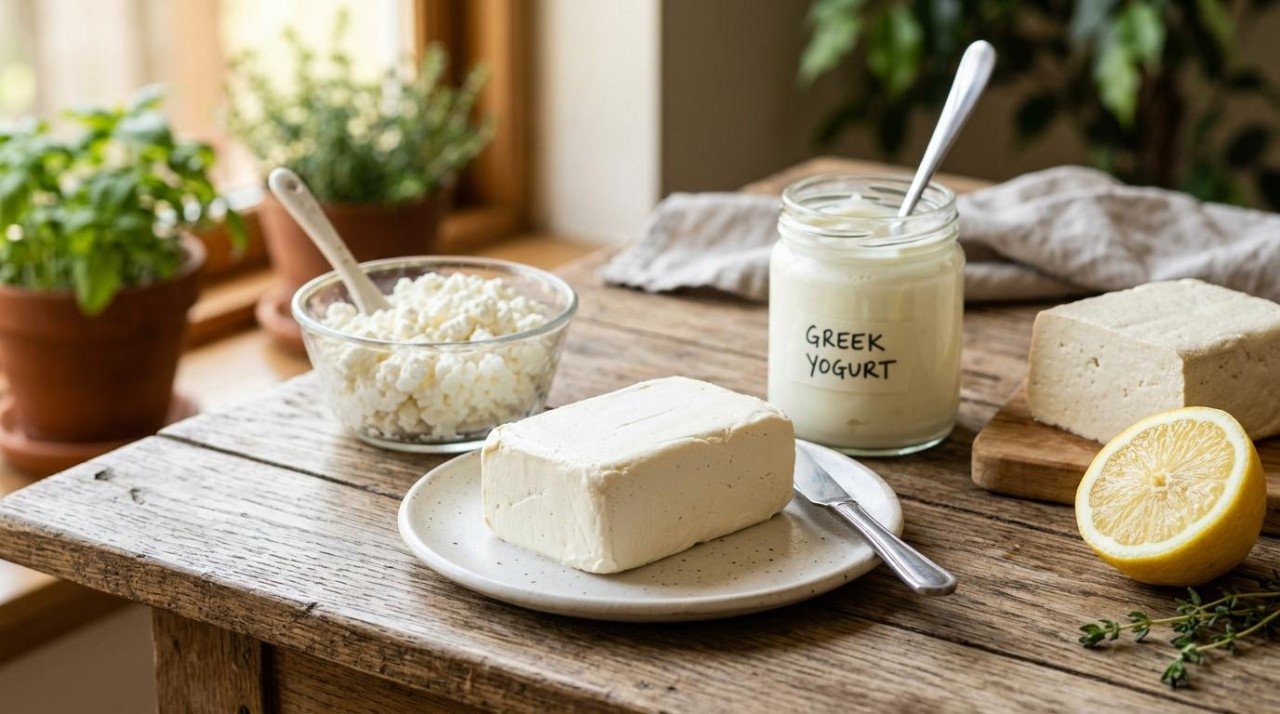
- Blended cottage cheese — the high-protein pick for baking and spreads
- Strained Greek yogurt (labneh) — tangy and protein-rich for spreads, dips, and frosting
- Sour cream — a tangy stand-in for dips, sauces, and some baking
- Silken tofu + lemon — the best dairy-free option, blended smooth
- Store-bought vegan cream cheese — the easiest 1:1 swap when you can grab it
The Closest All-Purpose Swaps
Two options are close enough to cream cheese that you can reach for them in almost any recipe — spreading, baking, or cooking — without rethinking the dish.
Neufchatel
- Swap: 1:1, straight across
- Best for: Absolutely everything — bagels, cheesecake, frosting, dips, sauces
- Skip it for: Nothing, really; it is the safest swap on this list
- Health notes: About a third less fat than cream cheese, with a similar taste
Neufchatel is the answer most people are looking for and do not realize exists. The American version sits right next to cream cheese in the dairy case and is made almost the same way, but with a bit more moisture and less fat. By law, cream cheese must contain at least 33% milkfat, while American Neufchatel runs about 23% milkfat — roughly a third less. It is a touch softer and very slightly tangier, but in a finished dish the difference is almost undetectable. Use it 1:1 anywhere, cheesecake included; the set will be a hair softer but perfectly good.
Mascarpone
- Swap: 1:1; whisk in a teaspoon of lemon juice per half cup to mimic the tang
- Best for: Cheesecake, frosting, no-bake desserts, and creamy pasta
- Skip it for: Dishes where you specifically want cream cheese's sharp tang and firmer body
Mascarpone is Italian cream cheese in all but name — smoother, richer, and noticeably higher in fat, with a mild sweetness instead of the familiar tang. That makes it a luxurious swap in cheesecake and frosting, though the result is softer and more delicate, so a no-bake or refrigerated dessert holds together better than a tall, sliceable cake. Because it lacks the sourness, whisk in a little lemon juice if you want the flavor to read as cream cheese rather than plain richness.
For Baking: Cheesecake and Frosting
Baking is where substitutes get tested hardest. Cream cheese gives cheesecake its firm, sliceable body and gives frosting its structure, and the tangy, wetter substitutes need help to get there. The rule for baked cheesecakes: blend the swap completely smooth, and if it is loose, thicken the batter with an extra egg or a spoonful of cornstarch or flour.
Blended Ricotta
- Swap: 1:1, blended until completely smooth; use whole-milk ricotta
- Best for: Cheesecake, baked dips, stuffed pastas, and savory spreads
- Skip it for: A slick bagel spread — even blended, it is a little grainy and mild
Ricotta is milder and naturally grainier than cream cheese, so the fix is your blender or food processor: run it until it is silky, and it becomes a genuinely good baking substitute. It is a classic base for lighter, Italian-style cheesecakes. Because it is wetter and less tangy, a splash of lemon juice sharpens the flavor, and many bakers mix it half-and-half with Greek yogurt or sour cream for a closer match. For a bagel or a dip you want spreadable and smooth, it is not the best pick on its own.
Blended Cottage Cheese
- Swap: Blend 1:1 until perfectly smooth; strain first if it looks watery
- Best for: Cheesecake, frostings, dips, and high-protein spreads
- Skip it for: Anyone who cannot blend it fully — the curds must disappear
- Health notes: Nearly double the protein of cream cheese with a fraction of the fat
Cottage cheese has had a real comeback, and for good reason: blended completely smooth, it transforms into a thick, creamy base that stands in for cream cheese in cheesecake, frosting, and spreads. The payoff is nutritional — cottage cheese has about 11 grams of protein per 100 grams versus roughly 6 for cream cheese, and far less fat. The one non-negotiable step is blending: any leftover curds will give it away — the same blended-smooth trick that makes it a stand-in for heavy cream. Strain off excess liquid first if your carton is wet, then blend with a squeeze of lemon for tang.
Strained Greek Yogurt (Labneh)
- Swap: Strain full-fat Greek yogurt overnight through cheesecloth, then use 1:1
- Best for: Frosting, bagel spreads, dips, and lighter no-bake cheesecakes
- Skip it for: Tall baked cheesecakes on its own — it is too soft and tangy to set firm
- Health notes: Adds protein and cuts fat, with a bright tang
Strained overnight, Greek yogurt thickens into labneh — a spreadable, tangy cheese that is one of the closest textural matches to cream cheese for anything you are not baking tall. It shines on bagels, in dips, and folded into frosting (add extra powdered sugar to firm it up), and it brings protein and a pleasant sharpness. In cheesecake it works best in no-bake or refrigerated versions, or blended with a firmer partner like Neufchatel; used alone in a baked cheesecake, it stays too loose. Straining is what makes it work — skip that step and it is simply too wet.
For Spreading, Dips, and Cooking
When cream cheese is going into a dip, a sauce, or a savory filling, you have the most freedom, because you do not need it to set. Tangy, softer dairy works beautifully here.
Sour Cream
- Swap: 1:1 for dips and sauces; when baking, add 2 extra tablespoons of flour to compensate for the extra moisture
- Best for: Dips, creamy sauces, savory fillings, and adding tang to batters
- Skip it for: Anything that needs to hold a firm shape, like a sliceable cheesecake or a stiff frosting
Sour cream brings the same tang as cream cheese and blends smoothly into dips, dressings, and sauces at a 1:1 swap. It is much looser, though, so it cannot provide structure on its own — in baking it works best combined with a firmer cheese, or with a little extra flour to soak up the moisture. Full-fat sour cream behaves best; low-fat versions are thinner still and more likely to make a batter runny. And if sour cream turns out to be the thing you are also short on, there are plenty of good sour cream substitutes too.
Dairy-Free Swaps
Two options cover the dairy-free and vegan cases well — one you blend yourself, one you buy.
Silken Tofu and Lemon
- Swap: Blend 1:1 with 1 to 2 teaspoons lemon juice and a pinch of salt per cup until completely smooth
- Best for: Vegan cheesecake, dips, spreads, and savory sauces
- Skip it for: Dishes where you want pronounced dairy richness
- Health notes: High in plant protein and low in saturated fat
Blended silken tofu turns into a smooth, neutral cream that takes on whatever flavors you add, so lemon juice and salt are essential to push it toward that cream cheese tang. It is a strong base for vegan cheesecake and dips, and blending thoroughly is what keeps it from tasting grainy or beany. For extra richness, blend in a spoonful of melted coconut oil or a few soaked cashews. It brings a real protein boost that cream cheese cannot, and adds to your weekly plant diversity.
Store-Bought Vegan Cream Cheese
- Swap: 1:1, straight from the tub
- Best for: Bagels, frosting, dips, and no-bake desserts
- Skip it for: Tall baked cheesecakes — many brands soften with prolonged heat
If a trip to the store is on the table, plant-based cream cheese (usually made from cashews, coconut oil, or soy) is the easiest one-to-one swap of all, and today's versions spread and taste convincingly close to the original. It excels on bagels and in frostings and dips. Check the recipe if you are baking, though — some brands loosen under long, hot bakes, so a no-bake dessert is the safer bet.
The Higher-Protein Upgrades
If your goal is not just filling a gap but making the dish a little more nourishing, cream cheese is one of the easier ingredients to upgrade — it is high in fat and low in protein, so almost any swap toward yogurt, cottage cheese, or tofu tips the balance in your favor. Blended cottage cheese and strained Greek yogurt are the standouts: both roughly double the protein while cutting the saturated fat, and in dips, frostings, and blended cheesecakes the difference in the finished dish is small. The trade-off is a bit more tang and a slightly softer set, which you can manage with a firmer partner cheese or a touch more thickener.
Take the Guesswork Out of Eating Well
Eat Well Planner helps you organize your favorite recipes, plan balanced meals, and automatically generate shopping lists — all in one place. Whether you're tracking macros, managing dietary restrictions, or just trying to stop asking "what's for dinner?", we've got you covered.
Our AI-powered tools can adapt any recipe to your dietary needs, help you discover new meals you'll love, and even log your nutrition effortlessly. It's meal planning made simple.
Start Organizing Your Meals — FreeNot sure which of these fits the exact recipe in front of you? That is exactly what Eat Well Planner's AI recipe chat is for. Pull up your recipe, tell it you are short on cream cheese, and it will recommend the substitute that suits that dish — accounting for whether you are spreading, baking a cheesecake, or stirring it into a sauce. If you want a lighter, higher-protein version, the Make It Healthier feature proposes swaps like blended cottage cheese and Greek yogurt and verifies the real nutritional gain before you commit, and Recipe Variations can rewrite the whole recipe dairy-free if you need it.
What Not to Use
A few instincts backfire:
- Do not use unstrained yogurt or ricotta in a baked cheesecake. Without straining or blending, they are far too wet and will bake up loose and weepy instead of firm and sliceable.
- Do not swap in cottage cheese without blending it. The curds will not melt away in a spread or frosting — the entire trick is running it smooth first.
- Do not expect the soft, tangy swaps to set like cream cheese on their own. Sour cream and plain Greek yogurt need a firmer partner or a thickener to hold structure in a tall dessert.
- Do not reach for processed cheese spread or spray cheese. The flavor and texture are nothing like cream cheese and will not behave in baking.
The through-line for cream cheese is simple: match the swap to the job. For spreading and dips, almost any tangy dairy works — Neufchatel, labneh, or blended cottage cheese. For cheesecake and frosting, reach for Neufchatel or mascarpone first, or blend ricotta or cottage cheese smooth and firm up the batter. And if you have a moment, the higher-protein swaps turn a shortage into a genuine upgrade. Match the job, make the swap, and get back to baking.