The mayo, mustard, and Old Bay are already in the bowl, and the crab is either missing, wildly expensive this week, or meant for someone who can't eat it. Maybe the crab cakes have to happen anyway. Maybe it's the dip you promised to bring.
Crab meat is hard to replace for one reason: it is sweet and delicate at the same time. In a crab cake it's the main event, held together by as little binder as possible. In a dip or a salad it's a sweet, briny thread running through something creamy. A swap that works in one of those can fail in the other, so every option below says which job it does well.
Each entry gives an exact swap by weight, what it's good for, where it falls apart, and a shellfish allergy note, because several of the most common suggestions are crustaceans themselves.
The Quick List
- Canned or pasteurized crab — real crab for a fraction of fresh lump prices; fine anywhere it gets mixed in
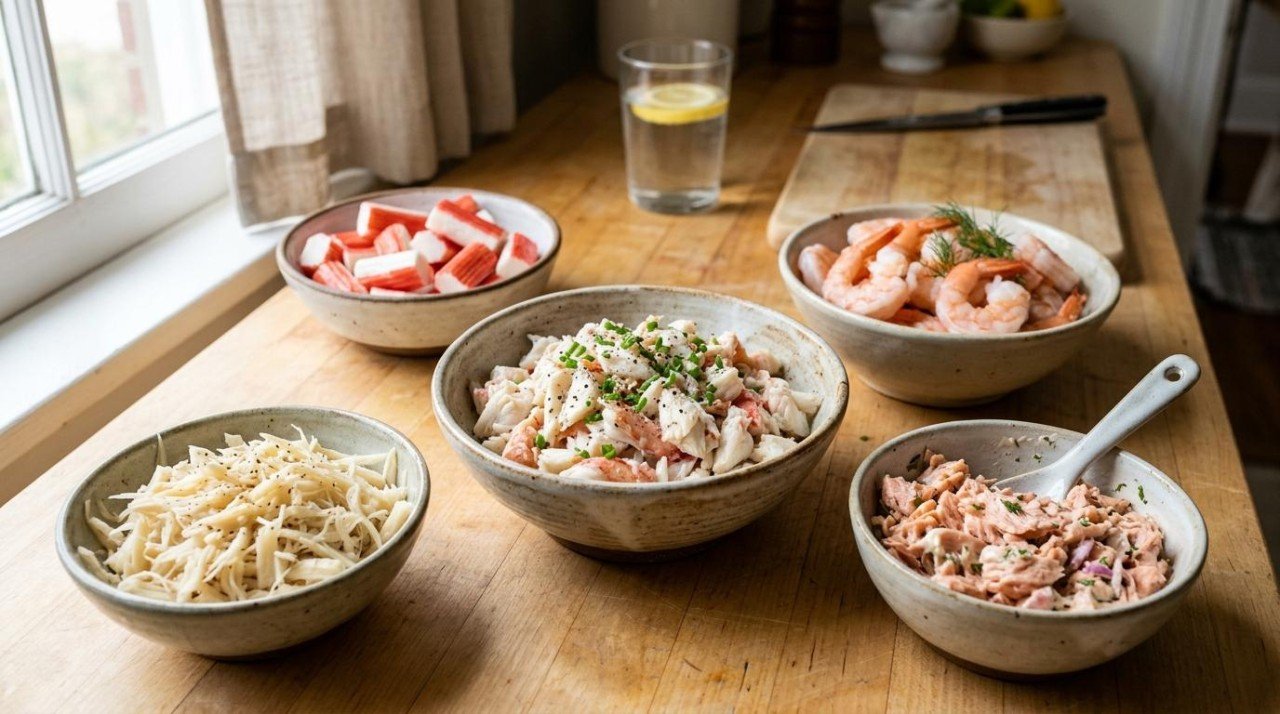
- Imitation crab (surimi) — the cheap, ready-to-eat option for cold salads, sushi, and dips
- Lobster, langostino, or crawfish — the true one-for-one swaps for cakes, rolls, and pasta
- Chopped shrimp — sweet, cheap, and a natural binder in crab cakes
- Bay scallops — the sweetest swap for crab cakes and seafood pasta
- Mild white fish (pollock, cod, haddock) — poached and flaked, the allergy-friendly crab cake base
- Canned salmon — a richer, omega-3-packed cake or salad, though clearly not crab
- Hearts of palm — the most convincing plant-based crab texture
- Lion's mane mushroom — shreds like crab and sears beautifully for vegan crab cakes
- Young green jackfruit — stringy, mild, and good at soaking up Old Bay
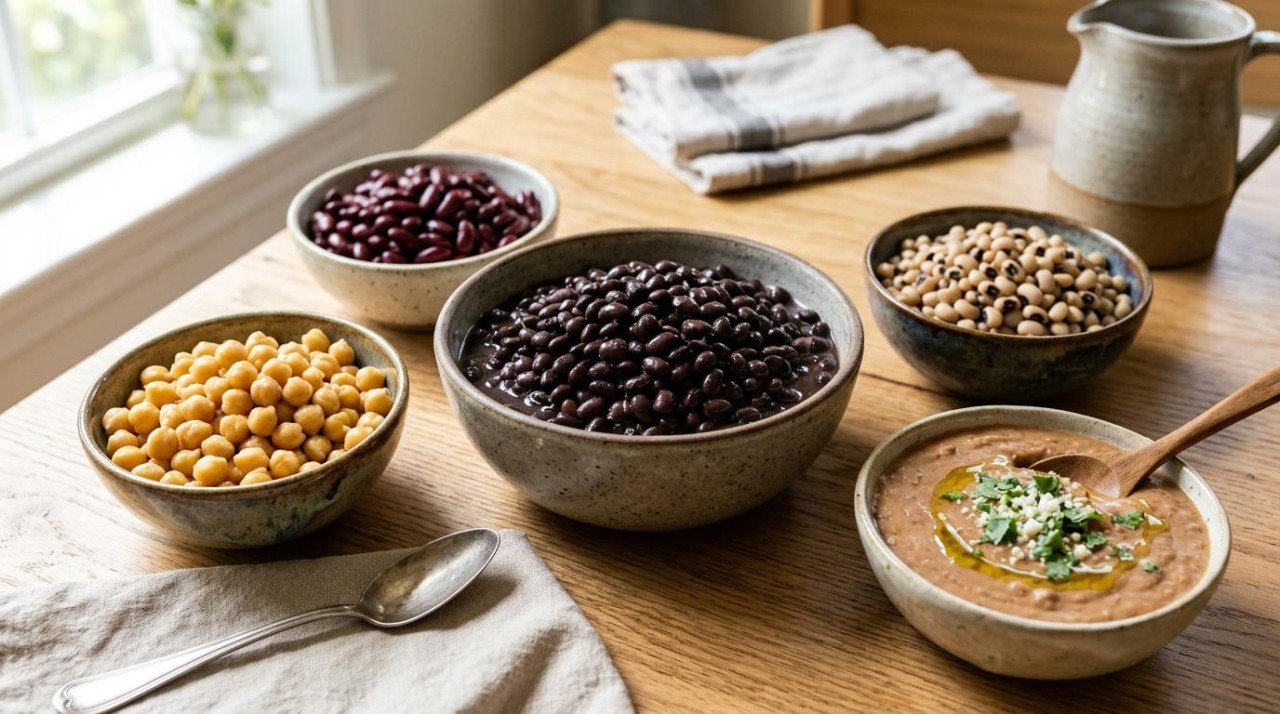
- Chickpeas — the pantry swap for "crab" cakes and salad, with real protein and fiber
- Artichoke hearts — the plant swap built for hot crab dip
First: If This Is About a Shellfish Allergy
Crab is a crustacean, which puts lobster, langostino, crawfish, and shrimp in the same family, and they share the protein behind most shellfish reactions. If you're cooking for a crustacean allergy, those four are out, full stop. The shrimp substitutes guide covers the cross-reactivity research in more detail.
The two less obvious points. Imitation crab is made from fish, but the Food Allergy Awareness Center warns that imitation shellfish (surimi) may contain shellfish or use shellfish as flavoring, so it isn't an allergy-safe swap unless the label proves otherwise. Scallops are mollusks, a separate group with less cross-reactivity, though the same source notes that reactions between crustaceans and mollusks still occur in some people. Get an allergist's okay before treating scallops as safe.
Finned fish is the reassuring one: shellfish-allergic people generally can eat fin fish, with care around cross-contamination. That makes white fish, canned salmon, and the plant options below your reliable lanes.
Canned or Pasteurized Crab
- Swap: 1 lb fresh lump crab → 1 lb refrigerated pasteurized crab, or about four 6-ounce shelf-stable cans, drained well
- Best for: Dips, crab salad, creamy pastas, chowders, quesadillas, crab cakes with plenty of other flavor
- Skip it for: Cold crab cocktail or a crab roll where big, sweet lumps are the whole point
- Shellfish allergy: Crab — off-limits
- Health notes: A cup of cooked blue crab has about 98 calories and 21 grams of protein, plus a big dose of vitamin B12, zinc, and selenium
If your recipe says "fresh lump crab" and the seafood counter wants a car payment for it, this is your answer. The refrigerated tubs of pasteurized crab near the fish counter are closest to fresh, with lump and backfin grades that hold together reasonably in a cake. Shelf-stable cans are softer, more shredded, and slightly metallic, which disappears in a dip or chowder but shows in a simple salad.
Drain it thoroughly, then spread it on a plate and run your fingers through it for bits of shell and cartilage. For crab cakes, press it gently in a paper towel too. Excess water is the number one reason canned-crab cakes fall apart in the pan.
Imitation Crab (Surimi)
- Swap: 1 lb crab meat → 1 lb imitation crab, flaked or chopped. It's precooked, so it can go straight into cold dishes
- Best for: Seafood salad, California rolls and sushi bowls, cold pasta salad, dips, crab rangoon
- Skip it for: Crab cakes meant to taste like crab cakes, and anything simmered, where it turns soft and stringy
- Shellfish allergy: Not safe — may contain shellfish or crab extract; check for egg and wheat too
- Health notes: About 81 calories, 6.5 grams of protein, 12.8 grams of carbohydrate, and 450 mg of sodium per 3 ounces, versus 16.5 grams of protein and no carbs in king crab
Imitation crab is surimi, which is mostly pollock paste, plus water, starch, sugar, egg white, salt, and flavoring, pressed and colored to look like crab leg meat. Healthline notes surimi generally makes up only 35 to 50 percent of the product by weight. That's why it is sweeter and much lower in protein than the real thing, and why it can't hold up to heat: the starch gel goes soft before the dish is done.
About the sodium: imitation crab's 450 mg per 3 ounces is higher than plain cooked blue crab, but real crab isn't automatically low-sodium. The same Healthline comparison puts cooked Alaskan king crab at 910 mg per 3 ounces, about double the imitation version. If salt is your concern, season less and taste before adding more, whichever crab you use. The bigger difference is what imitation crab lacks: in that same comparison, king crab carries roughly 20 times the vitamin B12 and far more zinc. It's a perfectly good convenience food for a cold salad, just not a nutritional stand-in.
Lobster, Langostino, or Crawfish
- Swap: 1 lb crab meat → 1 lb cooked tail meat, chopped into crab-sized pieces. Fold it in at the end; it's already cooked
- Best for: Crab cakes, rolls, seafood pasta, bisque, dips, cold salads
- Skip it for: Long-cooking dishes, which make it rubbery
- Shellfish allergy: All crustaceans — completely off-limits
These are the closest flavor matches on the list: sweet, briny, and delicate. Lobster is firmer and more luxurious, so chop it a little finer than you would in a lobster roll so it binds into a cake. Frozen langostino tails cost far less and sit between shrimp and lobster in texture. Crawfish tails are slightly more mineral and work best where Old Bay or Cajun seasoning is already in charge.
Precooked tail meat is already done, so the only way to ruin it is time. In a dip, stir it in after the base is hot. In a pasta, add it off the heat. In crab cakes, chill the mixture before cooking and cook the cakes just until golden and hot through.
Chopped Shrimp
- Swap: 1 lb crab meat → 1 lb peeled shrimp, chopped into 1/4 to 1/2-inch pieces. Use raw shrimp for cakes, cooked shrimp for cold salads
- Best for: Crab cakes, seafood salad, dumpling and rangoon filling, stuffed mushrooms
- Skip it for: Delicate dishes where you want crab's soft, flaky threads
- Shellfish allergy: A crustacean — off-limits
- Health notes: Lean and high in protein, in the same nutritional range as crab
Shrimp is the best-kept secret for crab cakes. Chop raw shrimp finely, or pulse about a quarter of it into a paste in a food processor and fold the rest in as chunks. The paste binds the cake the way a seafood mousse does, so you need less mayonnaise and fewer bread crumbs, and the cakes hold together far better than canned crab ever does. Because the shrimp is raw, cook the cakes until the shrimp is opaque all the way through, about 4 minutes per side over medium heat.
For a cold crab salad, use cooked shrimp and chop it small. It's firmer than crab, so dice it rather than flaking it, and the salad reads as seafood salad instead of shrimp salad.
Bay Scallops
- Swap: 1 lb crab meat → 1 lb bay scallops, raw and roughly chopped for cakes, or whole and quickly sauteed for pasta
- Best for: Crab cakes, seafood pasta, gratins, chowder
- Skip it for: Cold salads and dips, where raw scallops don't belong and cooked ones turn bouncy
- Shellfish allergy: A mollusk, not a crustacean — lower cross-reactivity, but clear it with an allergist first
Scallops have the sweetness that makes crab special, which is rare in a swap. Roughly chopped, they bind like shrimp does and give crab cakes a tender, almost creamy center. Buy dry-packed scallops if you can; wet-packed ones are treated with a phosphate solution and release water that makes cakes soggy.
In a pasta or gratin, add whole bay scallops in the last 2 to 3 minutes. One minute too long and they toughen, which matters more here than with crab, since precooked crab only needs warming.
Mild White Fish: Pollock, Cod, or Haddock
- Swap: 1 lb crab meat → about 1 1/4 lb raw skinless fillets, gently poached 8 to 10 minutes until it flakes, then cooled, flaked, and pressed dry. That yields roughly 1 lb flaked fish
- Best for: Crab cakes, fish-based "crab" salad, chowder, stuffed peppers or mushrooms
- Skip it for: Sushi, and any recipe that leans entirely on crab's sweetness
- Shellfish allergy: Generally fine — finned fish is a different protein family
- Health notes: Lean, high in protein, and cheap; nutritionally close to crab apart from crab's higher zinc
Pollock is the fish inside imitation crab, which tells you how well mild white fish plays this role. Poached and flaked, it has crab's soft, threadlike texture, and in a seasoned crab cake most people won't spot the difference. Use the poaching liquid to add flavor: water with a bay leaf, lemon slices, and a spoonful of Old Bay.
The crucial step is drying. Poached fish holds a lot of water, so let the flakes cool on a towel and press gently before mixing. Add a little lemon zest and a pinch of sugar to the cake mixture to push back toward crab's sweetness. The white fish substitutes guide covers which species hold together and which fall apart.
Canned Salmon
- Swap: 1 lb crab meat → about 1 lb drained canned salmon (roughly one 14.75-ounce can plus one 5-ounce can), skin removed if you prefer and the soft bones mashed in
- Best for: Salmon cakes in place of crab cakes, salads, sandwiches, pasta
- Skip it for: Dishes where crab's delicate sweetness has to come through, like crab rangoon or a light dip
- Shellfish allergy: Fin fish — generally fine
- Health notes: Unsalted canned pink salmon has about 118 calories, 17 grams of protein, 1.4 grams of omega-3s, and 181 mg of calcium per 3 ounces
Be honest with yourself here: canned salmon makes salmon cakes, not crab cakes. But if the goal is a crisp seafood patty with a creamy remoulade, it does the job brilliantly, with the same binders and method. It's also the biggest nutritional upgrade on the list. Those 1.4 grams of omega-3s per 3 ounces compare with roughly 0.2 grams in the same amount of cooked blue crab, and the soft canned bones add calcium that crab doesn't have.
Salmon is oilier and stronger-tasting than crab, so lean on brighter seasoning: extra lemon, Dijon, fresh dill, or capers. For other directions to take it, see the guides to salmon substitutes and canned tuna substitutes.
Hearts of Palm
- Swap: 1 lb crab meat → two 14-ounce cans of hearts of palm, drained, rinsed, and pulled apart into shreds with a fork, then pressed dry
- Best for: Vegan crab cakes, cold "crab" salad, dips, sushi rolls
- Skip it for: Carrying the meal's protein, and long simmers that turn it mushy
- Shellfish allergy: Safe
- Health notes: About 41 calories, 3.7 grams of protein, 3.5 grams of fiber, and 622 mg of sodium per cup — rinsing helps with the sodium
Of all the plant options, hearts of palm comes closest to crab's texture. Pull the stalks apart lengthwise and they separate into soft, faintly fibrous shreds that look remarkably like lump crab, and their mild, slightly briny flavor takes seasoning well. Add Old Bay, lemon, and a pinch of crumbled nori or kelp granules for the ocean note, and a cold "crab" salad is genuinely convincing.
For crab cakes, press out as much liquid as possible and add a bit more binder than usual, since there's no protein to set as it cooks. A tablespoon or two of extra mayo or a flax egg plus an extra 2 tablespoons of bread crumbs per pound usually does it. Chill the formed cakes for 30 minutes before frying so they hold their shape.
Lion's Mane Mushroom
- Swap: 1 lb crab meat → about 1 1/4 lb fresh lion's mane, torn into shreds and dry-sauteed until it releases its water and starts to brown, about 8 to 10 minutes
- Best for: Vegan crab cakes, crab-style sandwiches, pasta
- Skip it for: Cold dishes and dips, where the texture reads as mushroom
- Shellfish allergy: Safe
- Health notes: Very low in calories, with a little fiber and protein, but not a meaningful protein source
Lion's mane is a shaggy white mushroom that shreds into stringy, tender pieces with a mild, faintly sweet flavor that many people compare to crab or lobster. It's the best plant option for hot crab cakes because, unlike hearts of palm, it browns and crisps at the edges.
The non-negotiable step is cooking off the water first. Raw lion's mane is spongy and wet, and it will flood a crab cake mixture. Tear it, sear it in a dry pan, then add a little butter or oil once it's golden. Let it cool before mixing it with the binder. It's easiest to find at farmers' markets and specialty grocers.
Young Green Jackfruit
- Swap: 1 lb crab meat → two 20-ounce cans of young green jackfruit in brine or water (not syrup), drained, rinsed, hard cores trimmed, and shredded
- Best for: Vegan crab cakes, crab-style dip, tacos
- Skip it for: Cold salads, and as the protein of a meal
- Shellfish allergy: Safe
- Health notes: Barely a gram of protein per serving; it's a texture swap only
Young jackfruit is unripe and nearly flavorless, with a stringy, shreddable texture once cooked. Simmer the shredded pieces for 5 minutes in seasoned water or broth, then squeeze dry before using; that softens the firmer chunks and gets flavor inside. It's slightly more fibrous than hearts of palm, so it works better hot than cold.
Buying the right can matters. Ripe jackfruit in syrup is sweet and fruity, delicious on its own and completely wrong here. Look for "young," "green," and "in brine" or "in water" on the label.
Chickpeas
- Swap: 1 lb crab meat → two 15-ounce cans of chickpeas (about 3 cups), drained, patted dry, and roughly smashed with a fork or pulsed a few times so some pieces stay chunky
- Best for: "Crab" cakes, "crab" salad sandwiches, stuffed avocados
- Skip it for: Dips meant to be silky, and sushi
- Shellfish allergy: Safe
- Health notes: About 269 calories, 15 grams of protein, and 12 grams of fiber per cooked cup
Chickpeas won't fool anyone into thinking they're eating crab, but chickpea "crab" cakes are their own good thing: crisp outside, tender inside, and carried by the same Old Bay, lemon, mustard, and remoulade flavors. It's the only plant option here with real protein, and it adds fiber that crab doesn't have at all.
Leave some texture. Fully pureed chickpeas turn into a falafel-like paste; a rough smash with a few whole beans keeps the cakes flaky. For a mix that's closer to crab, combine chickpeas half and half with shredded hearts of palm, which gives you the texture of one and the protein of the other. A teaspoon of crumbled nori adds the sea flavor. The chickpeas guide has more pantry swaps.
Artichoke Hearts
- Swap: 1 lb crab meat → two 14-ounce cans of artichoke hearts in water, drained, squeezed dry, and chopped
- Best for: Hot crab dip, crab-stuffed mushrooms, creamy seafood-style pasta
- Skip it for: Crab cakes, cold salads, and sushi
- Shellfish allergy: Safe
- Health notes: Adds fiber and plant variety to a dish that would otherwise have none
This one does a single job extremely well. In a hot, cheesy dip, chopped artichoke hearts have the same soft, slightly stringy bite that crab gives, and their mild tang fits right in with cream cheese, Parmesan, and Old Bay. Use artichokes packed in water, not marinated ones, which bring an oily herb flavor that takes over the dip.
Squeeze them hard in a clean towel before chopping. Canned artichokes hold a surprising amount of water, and it will thin a baked dip into a puddle. Mixing artichokes with shredded hearts of palm gets you even closer to the real thing.
Which Swap for Which Dish
- Crab cakes: Lobster or langostino, chopped raw shrimp, bay scallops, poached pollock or cod, canned crab. Plant-based: lion's mane, hearts of palm, chickpeas
- Hot crab dip: Canned crab, langostino, imitation crab, artichoke hearts, hearts of palm
- Cold crab salad: Imitation crab, cooked chopped shrimp, lobster, hearts of palm, chickpeas
- California rolls and sushi bowls: Imitation crab, cooked shrimp, hearts of palm
- Crab pasta: Lobster, langostino, bay scallops, canned crab, lion's mane
- Crab rangoon: Imitation crab, canned crab, finely chopped shrimp
- Chowder and bisque: Lobster, white fish, bay scallops, canned crab
Tips for Crab Cakes With Any Swap
- Get it dry. Wet filling is the number one cause of crab cakes that fall apart. Drain, squeeze, and blot whatever you're using
- Go light on breading. Too many crumbs turn a crab cake into a bread cake. Start with about 1/2 cup panko or bread crumbs per pound of filling and add more only if the mix won't hold
- Chill before cooking. Thirty minutes in the fridge firms the binder so the cakes keep their shape in the pan
- Adjust the seasoning. Plant-based fillings need more salt, acid, and Old Bay than crab does; fish fillings benefit from a little lemon zest and a pinch of sugar
- Mind raw fillings. If you used raw shrimp or scallops, cook until the center is opaque and hot through rather than just browned outside
The Healthier Angle, Honestly
Real crab is a very good food. It's lean, high in protein, and an exceptional source of vitamin B12, zinc, and selenium. What usually changes a crab dish's nutrition is the mayonnaise, cream cheese, and frying, not the crab itself. A swap is not automatically healthier.
The honest upgrades are specific. Canned salmon brings far more omega-3 fat than crab, plus calcium from the bones. Chickpeas bring fiber and plant protein, and hearts of palm, artichoke hearts, and mushrooms all count toward the plant variety that your gut bacteria thrive on. On the other side, imitation crab trades most of crab's protein and minerals for starch and sugar, and hearts of palm, jackfruit, and lion's mane are texture solutions, not protein. If one of those is the main event, round out the plate with beans, lentils, or a whole grain.
If you want to cut back on the rich parts instead, swapping half the mayonnaise in a crab cake or crab salad for plain Greek yogurt keeps it creamy and adds protein.
Take the Guesswork Out of Eating Well
Eat Well Planner helps you organize your favorite recipes, plan balanced meals, and automatically generate shopping lists — all in one place. Whether you're tracking macros, managing dietary restrictions, or just trying to stop asking "what's for dinner?", we've got you covered.
Our AI-powered tools can adapt any recipe to your dietary needs, help you discover new meals you'll love, and even log your nutrition effortlessly. It's meal planning made simple.
Start Organizing Your Meals — FreeWhat Not to Use
- Lobster, shrimp, crawfish, langostino, or imitation crab if it's an allergy. The first four are crustaceans, and imitation crab may contain shellfish or crab extract
- Imitation crab in a hot crab cake you want to taste like crab. It's sweet, soft, and starchy when heated, and the cakes come out gummy
- Ripe jackfruit in syrup. It's a sweet fruit, not the neutral young jackfruit plant-based recipes call for
- Marinated artichoke hearts. The oil and herbs overpower a crab dip
- Canned tuna as a 1:1 crab swap. Its flavor is much stronger and its texture drier, so a tuna "crab" cake just tastes like a tuna cake. Fine on purpose, disappointing by surprise
- Tofu. It mashes into a smooth paste with none of crab's flaky shreds. Save it for dishes where it shines
- Any filling straight from the can or package without drying it. Excess water ruins cakes and thins dips, whatever the swap
The Bottom Line
For crab cakes, chopped shrimp, bay scallops, lobster, or poached white fish get you closest, and white fish is the allergy-friendly pick. For dips and cold salads, canned crab and imitation crab are the easy answers, with artichoke hearts and hearts of palm as excellent plant-based versions. If you want the biggest nutrition boost, canned salmon and chickpeas both make a satisfying cake of their own.
A guide can only tell you what usually works. To find out what fits the recipe in front of you, save it in Eat Well Planner and ask the AI recipe chat directly: "I'm making these crab cakes for a friend with a shellfish allergy. What should I use instead, and how should I change the binder?" It answers with your actual ingredients and method in view. If you'd rather have the whole recipe rewritten shellfish-free or plant-based, Recipe Variations does that in one step, and the Recipe Playground shows what a swap like canned salmon or chickpeas does to the dish's nutrition before you commit. It's free to use.