The skillet is heating in the oven, the buttermilk is measured, and the cornbread recipe wants a cup of cornmeal. The bag in the pantry has two tablespoons in it. Or you are about to slide a pizza onto a hot stone, or dredge catfish for frying, and the cornmeal you were counting on is gone. You can keep going.
Cornmeal does a few very different jobs. In cornbread and corn muffins it brings sweet corn flavor and a pleasantly gritty crumb. On fish, chicken and fried green tomatoes it is a crunchy coating. On a pizza peel or under a loaf of bread it acts like tiny ball bearings so the dough slides off. And simmered in water it becomes polenta. The best substitute depends entirely on which of those jobs you need done, so every swap below says what it is good for and what it is not, with an exact ratio.
All ratios assume standard medium-grind yellow or white cornmeal, the kind most cornbread recipes call for.
The Quick List
- Polenta or corn grits — the closest swap; 1:1 in cornbread (soak first), breading and polenta
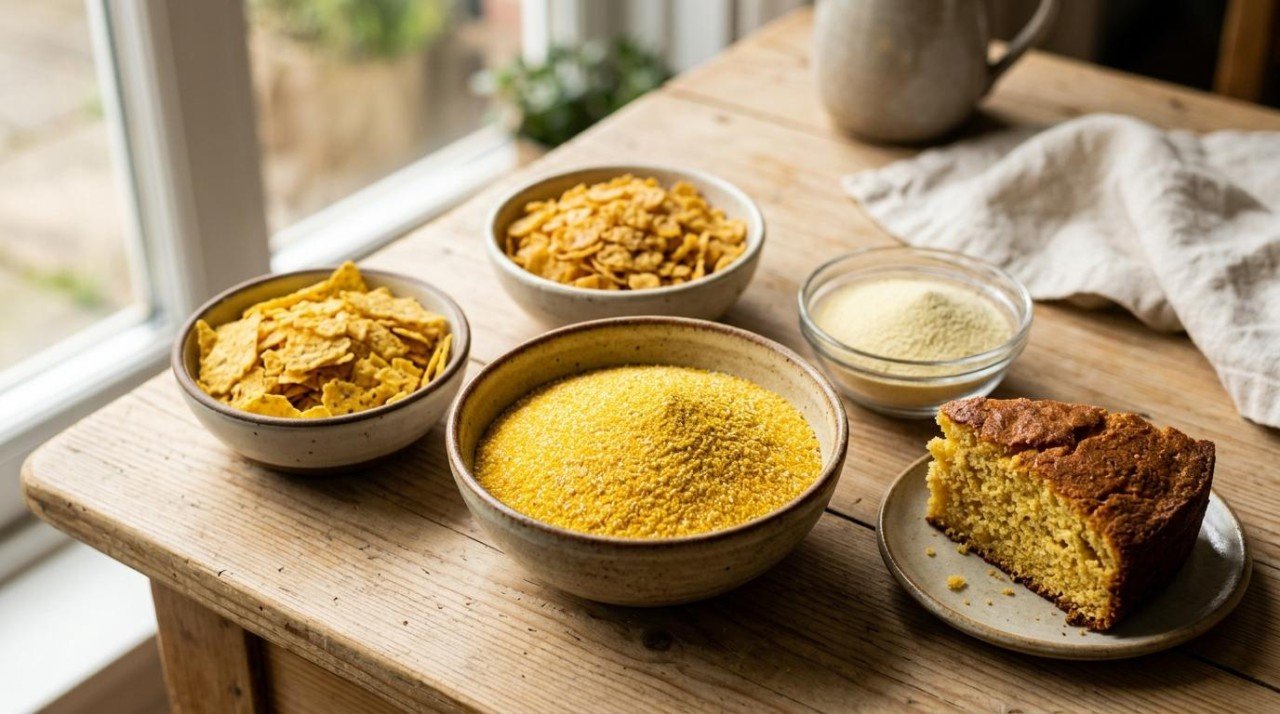
- Corn flour — 1:1 for a finer, more cake-like cornbread and a light, crisp breading
- Masa harina — deep corn flavor for breading and part of the cornmeal in cornbread
- Semolina — the best pizza peel dust, plus breading and a polenta-style porridge
- Rice flour — a clean, gluten-free peel dust and an extra-crisp dredge
- All-purpose or whole wheat flour — a last-resort dust and dredge, and the base for cornbread without cornmeal
- Breadcrumbs or panko — crunchy coating for fish, chicken and vegetables
- Crushed tortilla chips — corn flavor and crunch for breading and casserole toppings
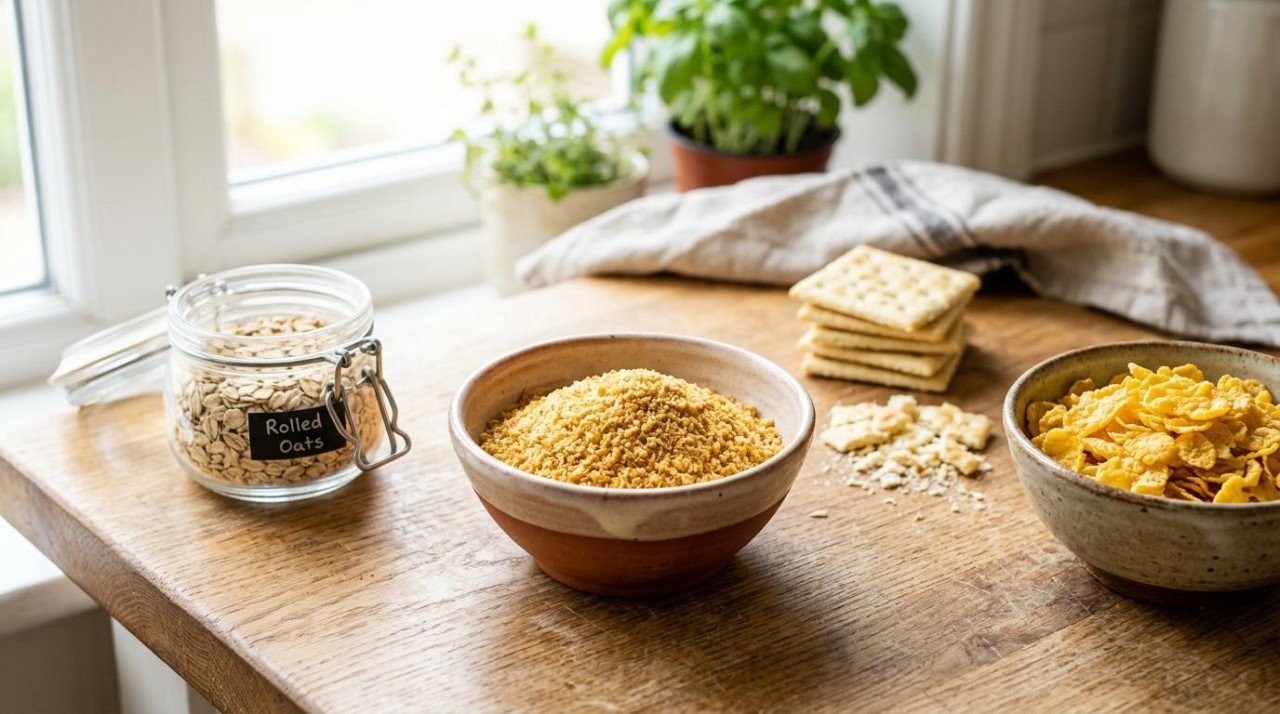
- Crushed cornflakes — a crisp, corn-flavored coating for oven-fried chicken and fish
- Almond flour — a lower-carb, gluten-free coating and a moist partial swap in cornbread
- Ground oats — a whole-grain coating and a partial swap in corn muffins
Cornmeal vs. Corn Flour vs. Cornstarch vs. Masa vs. Polenta
These five sit side by side on the shelf, have nearly the same name, and do not behave the same way. Knowing the difference tells you which ones are a near-perfect swap and which ones will wreck the recipe.
- Cornmeal is dried corn ground into a gritty meal, sold in fine, medium and coarse grinds. Most supermarket cornmeal is degermed: the germ and most of the bran are removed so it keeps longer. Stone-ground cornmeal usually keeps them, and is a whole grain.
- Polenta and grits are both coarse-ground corn. Polenta is also the name of the Italian dish made from it, and grits the name of the Southern one. In the bag, they are essentially very coarse cornmeal.
- Corn flour (in the US) is the same dried corn ground until it is soft and powdery, like wheat flour. Same flavor as cornmeal, none of the grit.
- Masa harina is flour made from corn that was first cooked and soaked in an alkaline solution, usually calcium hydroxide (lime), a process called nixtamalization. That gives it the distinctive flavor of corn tortillas and makes it absorb water very differently from cornmeal.
- Cornstarch is not ground corn at all. It is pure starch extracted from the kernel, used to thicken sauces and puddings. It has no corn flavor and no texture to give. In the UK, cornstarch is sold as "cornflour," which causes endless confusion in recipes that cross the Atlantic.
The rule of thumb: anything that is simply ground corn (polenta, grits, corn flour) is a good cornmeal swap, with the grind changing the texture. Masa harina works but behaves differently. Cornstarch is never a substitute. If you are actually out of cornstarch, our cornstarch substitutes guide has you covered.
Match the Substitute to the Dish
- Cornbread, corn muffins and hush puppies — polenta or grits (soaked), corn flour, part masa harina, part almond flour or ground oats
- Breading and dredging — corn flour, masa harina, semolina, rice flour, breadcrumbs or panko, crushed tortilla chips, crushed cornflakes, almond flour, ground oats
- Dusting a pizza peel, baking sheet or loaf — semolina, rice flour, coarse polenta or grits, all-purpose flour as a last resort
- Polenta and other cornmeal porridge — polenta, corn grits, semolina
- Cornmeal crust on cookies, pie dough or English muffins — semolina, polenta, corn flour
Polenta or Corn Grits
- Swap: 1 cup cornmeal → 1 cup polenta or corn grits; for cornbread, soak it in the recipe's buttermilk or milk for 20 to 30 minutes first
- Best for: Cornbread with a rustic, crunchy crumb, polenta, breading, dusting a pizza peel
- Skip it for: Fine-textured corn muffins and cakes; instant grits and quick-cooking polenta, which are precooked and turn gummy in baking
This is the same ingredient in a bigger grind, so the flavor is a perfect match. The only issue is texture. Coarse corn does not have time to soften in the 20 minutes cornbread spends in the oven, so dry polenta can leave the crumb noticeably crunchy. Soaking it in the recipe's liquid while the oven and skillet heat fixes most of that, and many cooks actually prefer the heartier result. For a finer texture, pulse the polenta in a blender or spice grinder for 20 to 30 seconds before measuring.
For a pot of polenta, the swap is easy: coarse polenta is the traditional choice anyway. Use the package directions; USDA's cornmeal fact sheet gives 1 cup cornmeal to 3 1/2 cups water, simmered 20 to 30 minutes. Bob's Red Mill describes its corn grits/polenta as coarsely ground yellow corn that cooks into a creamy porridge. If your grits are labeled hominy grits, they are made from nixtamalized corn and taste more like masa; they work in polenta and breading but give cornbread a tortilla-like flavor.
Corn Flour
- Swap: 1 cup cornmeal → 1 cup corn flour
- Best for: Tender, cake-like cornbread and corn muffins, light and crisp breading for fish and vegetables, pancakes and waffles
- Skip it for: Dusting pizza peels (too fine to act as ball bearings), polenta (turns pasty), and any recipe where you want the gritty crunch
Corn flour is cornmeal ground fine, so the flavor is identical and the only change is texture. Cornbread made with it is softer, smoother and less crumbly, closer to a corn cake than a skillet cornbread. The batter is a little lighter, so start checking for doneness a few minutes early. Hush puppies stay tender inside but lose some of their craggy exterior.
As a coating it gives a thin, delicate, golden crust, more like a Southern fried fish dredge than a crunchy cornmeal crust. Mixing it half and half with all-purpose flour is a classic combination for frying. Double-check the label: the British "cornflour" is cornstarch, and some stores shelve masa harina as "corn flour" too.
Masa Harina
- Swap: 1 cup cornmeal → 1 cup masa harina for breading; in cornbread, replace up to half the cornmeal and add 2 to 4 tablespoons extra liquid if the batter is stiff
- Best for: Breading fish, chicken and vegetables, thickening chili, Southwestern or chipotle cornbread, savory corn muffins
- Skip it for: Polenta (it sets into a paste), sweet cornbread where you want a classic flavor
Masa harina tastes intensely of corn, but it is the flavor of corn tortillas, not cornbread. That makes it wonderful as a coating, where it fries up crisp and golden with a toasty, tortilla-chip edge, and in chili, where a couple of tablespoons stirred in at the end thickens the pot and deepens the flavor.
Cornbread is where to be careful. Because nixtamalized corn soaks up liquid differently, an all-masa cornbread can come out dense or damp in the middle. Recipes built around it, like this masa harina cornbread from Mexican Please, pair it with wheat flour (1 1/4 cups masa harina to 1 cup all-purpose flour) and add more milk if the batter looks thick; the author found it gives a more intense corn flavor than cornmeal. If your recipe already contains some wheat flour, swapping half the cornmeal for masa is the safe move. Stir the batter, look at it, and loosen it with a splash of milk until it looks like your usual cornbread batter.
Semolina
- Swap: 1 cup cornmeal → 1 cup semolina for breading and porridge; 1 to 2 tablespoons per pizza for dusting a peel
- Best for: Dusting pizza peels and baking sheets, breading, a polenta-style porridge, crusting bread and English muffins
- Skip it for: Cornbread if you want corn flavor; anyone avoiding gluten (it is wheat)
For pizza, semolina is not just a substitute, it is arguably an upgrade. America's Test Kitchen calls it the best way to dust a peel: cornmeal leaves a gritty or crunchy residue on the bottom of the pizza, while semolina releases the dough easily, does not char as readily as all-purpose flour, and leaves much less grit behind. Sprinkle it on the peel, build the pizza, and give the peel a shake before launching.
Semolina is coarse, golden durum wheat, so it also makes a crunchy, golden dredge for fish and vegetables. Cooked in milk or water, it becomes a smooth porridge that stands in for soft polenta: whisk about 1 cup semolina into 4 cups simmering liquid and cook, stirring, for roughly 10 minutes, much faster than polenta. In cornbread it will give you a dense golden crumb with a mild wheat flavor rather than corn; adding a cup of corn kernels brings the corn back.
Rice Flour
- Swap: 1 to 2 tablespoons per pizza for dusting; 1 cup cornmeal → 1 cup rice flour for dredging
- Best for: Dusting pizza peels and bread bannetons, an extra-crisp, light dredge, gluten-free frying
- Skip it for: Cornbread, polenta
White rice flour does not absorb moisture from the dough the way wheat flour does, so it is a favorite of bread bakers for keeping dough from sticking to peels and proofing baskets. It leaves no gritty residue and has almost no flavor. Use it the same way as cornmeal on a peel or sheet pan.
As a coating, rice flour fries up thin, shatteringly crisp and pale. It is a staple in tempura-style and Korean fried chicken batters for exactly that reason. It browns less than cornmeal, so judge doneness by the internal temperature of the food, not the color of the crust. For gluten-free cooking, it is one of the most reliable options here.
All-Purpose or Whole Wheat Flour
- Swap: A light dusting on a peel or sheet; 1 cup cornmeal → 1 cup flour for dredging; for cornbread, see below
- Best for: Dredging chicken and fish, dusting a peel when nothing else is around
- Skip it for: Polenta, anything that relies on cornmeal crunch
Flour is what you almost certainly have. On a pizza peel it works, but America's Test Kitchen notes that too much can lend a dusty, raw-flour taste to the crust and too little lets the dough stick, so use a generous but even layer and shake off the excess. As a dredge it makes a soft, golden crust rather than a crunchy one; doing a flour, egg, then flour-and-breadcrumb sequence gets you closer to the cornmeal crunch.
If you are making cornbread with no corn product at all, you are really making a quick bread. Replace the cornmeal with an equal amount of all-purpose or whole wheat flour, then bring the corn back with 1 cup of fresh, frozen or canned corn kernels, or swap 1/2 cup of the liquid for a can of creamed corn. It will be cake-like rather than crumbly, but still very good with chili. Our all-purpose flour guide covers what to use if you are short on that too.
Breadcrumbs or Panko
- Swap: 1 cup cornmeal → 1 cup dry breadcrumbs or panko
- Best for: Breading fish, chicken cutlets, pork chops, fried green tomatoes, zucchini and eggplant
- Skip it for: Cornbread, polenta, dusting a pizza peel (crumbs burn on the stone and leave crunchy bits)
For coatings, breadcrumbs are the obvious swap. Panko gives the crunchiest, airiest crust; fine dry breadcrumbs give a tighter, more even coat that is closer to cornmeal. Use the same three-step setup: flour, beaten egg, then crumbs. Press the crumbs on firmly and let the breaded pieces sit for 10 minutes before cooking so the coating sets.
To get some corn character back, mix the crumbs with a few tablespoons of corn flour or masa harina if you have a little. Seasoned Italian breadcrumbs add salt and herbs, so cut the recipe's salt accordingly. Out of breadcrumbs as well? Our bread crumb substitutes guide has plenty more ideas.
Crushed Tortilla Chips
- Swap: 1 cup cornmeal → 1 cup finely crushed tortilla chips
- Best for: Breading chicken, fish and shrimp, topping casseroles and mac and cheese
- Skip it for: Cornbread, polenta, dusting
Tortilla chips are fried masa, so they bring real corn flavor and a lot of crunch. Crush them finely in a zip-top bag with a rolling pin or pulse them in a food processor; large shards fall off in the pan. Because the chips are already fried, they brown fast, so these coatings are best baked at 400 to 425°F or pan-fried over medium heat rather than deep-fried.
Most chips are salted, so leave out any salt in the breading mix and taste before seasoning the dish. Plain, lightly salted chips work better than flavored ones, which can burn.
Crushed Cornflakes
- Swap: 1 cup cornmeal → about 1 cup cornflake crumbs (roughly 3 to 4 cups of cereal, crushed)
- Best for: Oven-fried chicken, baked fish sticks, crispy baked vegetables
- Skip it for: Cornbread, polenta, dusting, deep-frying
Cornflakes are toasted corn, so they keep the corn flavor and add a remarkably crisp, craggy shell. They are the secret behind a lot of oven-fried chicken recipes because they crisp up in the oven without needing a pot of oil. Use plain cornflakes, not frosted, and crush them to a coarse crumb.
Like tortilla chips, they brown quickly. Bake on a rack set over a sheet pan at around 400°F so the bottom stays crisp too, and tent with foil if the coating is darkening before the chicken reaches 165°F inside.
Almond Flour
- Swap: 1 cup cornmeal → 1 cup almond flour for coating; in cornbread, replace up to half the cornmeal
- Best for: Lower-carb and gluten-free breading for chicken and fish, moist corn muffins
- Skip it for: Deep-frying (it scorches), polenta, dusting a peel, anyone with a tree nut allergy
Almond flour has no corn flavor, but it makes a good, nutty, golden coating with far fewer carbohydrates than cornmeal and more protein and fat. It browns faster than cornmeal, so pan-fry over medium rather than high heat, or bake. A few tablespoons of grated Parmesan mixed in makes it crisper.
In cornbread, swapping half the cornmeal for almond flour gives a moister, more tender crumb with a little less corn flavor. Replacing all of it does not produce cornbread; low-carb "cornbread" recipes are built from scratch around almond flour and extra eggs. Our almond flour guide explains how it behaves in baking.
Ground Oats
- Swap: 1 cup cornmeal → 1 cup quick or rolled oats pulsed into a coarse meal; in cornbread, replace up to half the cornmeal
- Best for: Coating baked fish and chicken, corn muffins with a heartier crumb
- Skip it for: Polenta, dusting a peel, deep-frying
Pulse oats in a blender or food processor for a few seconds, just until they look like coarse meal rather than flour. As a coating they bake up golden and lightly crunchy with a mild, toasty flavor. In corn muffins and cornbread, half oats and half cornmeal gives a softer, slightly chewier crumb that is still recognizably cornbread. Oats are naturally gluten-free, but buy ones labeled gluten-free if that matters to you; our rolled oats guide explains why.
Healthier Upgrades: Swaps That Add Something
Cornmeal itself can be a whole grain, so the biggest health upgrade is often a better cornmeal rather than a different ingredient:
- Choose whole-grain or stone-ground cornmeal. USDA's cornmeal fact sheet classifies standard yellow cornmeal as a refined grain: milling removes the bran and germ, and with them dietary fiber, iron and many B vitamins. Enrichment adds some B vitamins and iron back, but not the fiber. Whole-grain yellow cornmeal, by contrast, carries about 8.9 g of fiber per cup (USDA data), along with magnesium and iron. Look for "whole grain" or "stone ground" with the germ left in, and store it in the fridge or freezer, because the oils in the germ go rancid faster at room temperature.
- Half oats or almond flour adds staying power. Ground oats bring beta-glucan, the soluble fiber linked to lower LDL cholesterol. Almond flour adds protein and unsaturated fat. Both are swaps for nourishment, not for cutting calories.
- Vegetables bring the corn back. Folding a cup of corn kernels, grated zucchini or roasted peppers into cornbread made with any of these swaps adds fiber, color and another plant to your week.
Our healthier cornbread makeover puts several of these ideas to work, taking a classic buttermilk cornbread from a nutrition score of 24 to 68. If you want to see what a swap does to your own recipe, the Recipe Playground in Eat Well Planner lets you replace the cornmeal with oats, almond flour or a whole-grain meal and watch the nutrition score, fiber and protein change with each edit before you bake. Or tap Make It Healthier and let the app suggest swaps like these, each one checked against the actual nutrition numbers.
Take the Guesswork Out of Eating Well
Eat Well Planner helps you organize your favorite recipes, plan balanced meals, and automatically generate shopping lists — all in one place. Whether you're tracking macros, managing dietary restrictions, or just trying to stop asking "what's for dinner?", we've got you covered.
Our AI-powered tools can adapt any recipe to your dietary needs, help you discover new meals you'll love, and even log your nutrition effortlessly. It's meal planning made simple.
Start Organizing Your Meals — FreeGluten-Free Cornmeal Substitutes
Corn is naturally gluten-free, which is why many people reach for cornmeal in gluten-free cooking. If you need a substitute that keeps it that way, stick with polenta, grits, corn flour, masa harina, rice flour, almond flour and certified gluten-free oats, and check that each package is labeled gluten-free, since corn products can be processed alongside wheat. Semolina, all-purpose and whole wheat flour, breadcrumbs and most cornflakes (which often contain malt flavoring made from barley) all contain gluten.
What Not to Use
- Cornstarch. It is pure starch, not ground corn. In cornbread it makes a gummy, flavorless brick, and as a dredge alone it gives a thin, starchy shell rather than crunch. It is great mixed into a flour dredge for extra crispness, just not as a cornmeal replacement.
- UK "cornflour." That is cornstarch under another name. If a British recipe calls for cornmeal, it means the gritty yellow meal.
- Boxed cornbread mix, cup for cup. It already contains sugar, salt, leavening and often fat, so dropping it into a recipe in place of plain cornmeal doubles up on all of them. It is fine for breading or dusting, but not as an ingredient in another recipe.
- Masa harina in polenta. It does not cook into a soft porridge; it sets into a thick paste.
- Coconut flour, cup for cup. It absorbs several times more liquid than cornmeal and turns cornbread dry and crumbly. It needs its own recipe.
- Instant polenta or instant grits in baking. They are precooked and turn gluey in cornbread. Save them for a fast pot of polenta.
Which Swap for Your Recipe?
The short answer: polenta or grits (soaked) for cornbread, corn flour for a finer crumb, semolina or rice flour for a pizza peel, and masa harina, breadcrumbs or crushed cornflakes for a crunchy coating. If you are making corn dogs, our healthier corn dog makeover shows how a cornmeal batter can work in baked muffins.
And if you are mid-recipe and not sure which of these fits the dish in front of you, ask Eat Well Planner's AI recipe chat. Import the recipe, tell it what is in your pantry ("I'm making jalapeno cornbread and only have polenta and masa harina"), and it will suggest the swap and the adjustments for that exact recipe. Need the whole thing gluten-free? Recipe Variations can rewrite it with every substitution already worked in.