The recipe calls for a can of coconut cream, and the store only had coconut milk. Or you are halfway into a Thai curry, a vegan whipped topping, or a no-bake coconut pie, and the one can you were sure was in the pantry turns out to be light coconut milk instead. Coconut cream is a fairly specialized ingredient, which is exactly why it is so often the thing you are missing.
The good news: coconut cream is simply coconut milk with less water in it. That means the best substitutes either concentrate the coconut milk you already have, or replace its thick, rich body with something just as creamy. Most of the time you can rescue the recipe without a trip to the store.
Which swap is right depends on what the cream is doing. In a curry or soup it adds richness and has to survive a simmer. In a whipped topping it has to hold air, which rules out most options. In desserts like pies, panna cotta, and ice cream it sets the texture. Below are the substitutes that genuinely work, with exact ratios, which use each one suits, and which are dairy-free.
The Quick List
- Chilled full-fat coconut milk — the best swap of all: skim the solid cream off the top (dairy-free, works for everything, including whipping)
- Full-fat coconut milk, reduced — the no-wait fix for curries and soups
- Creamed coconut (the solid block) — dissolve in hot water for real coconut cream on demand
- Coconut milk powder — mix it thick for curries and sauces
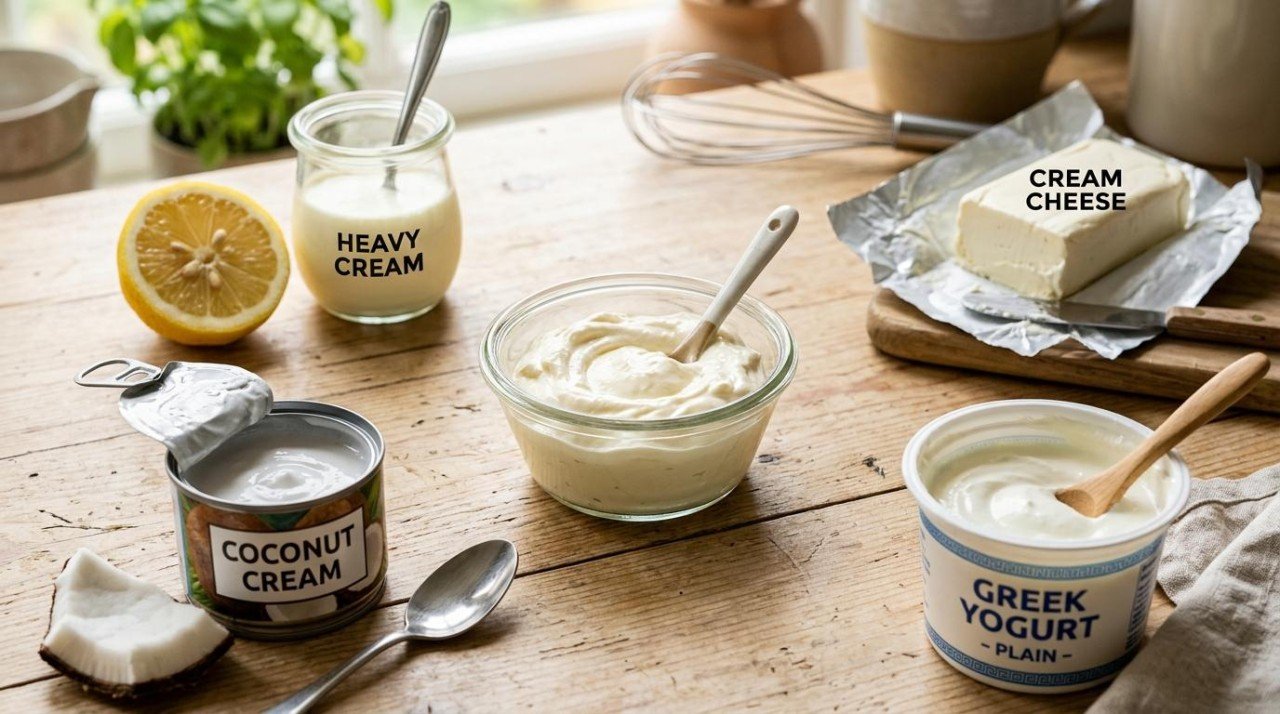
- Heavy cream — the richest all-purpose swap, and it whips (not dairy-free)
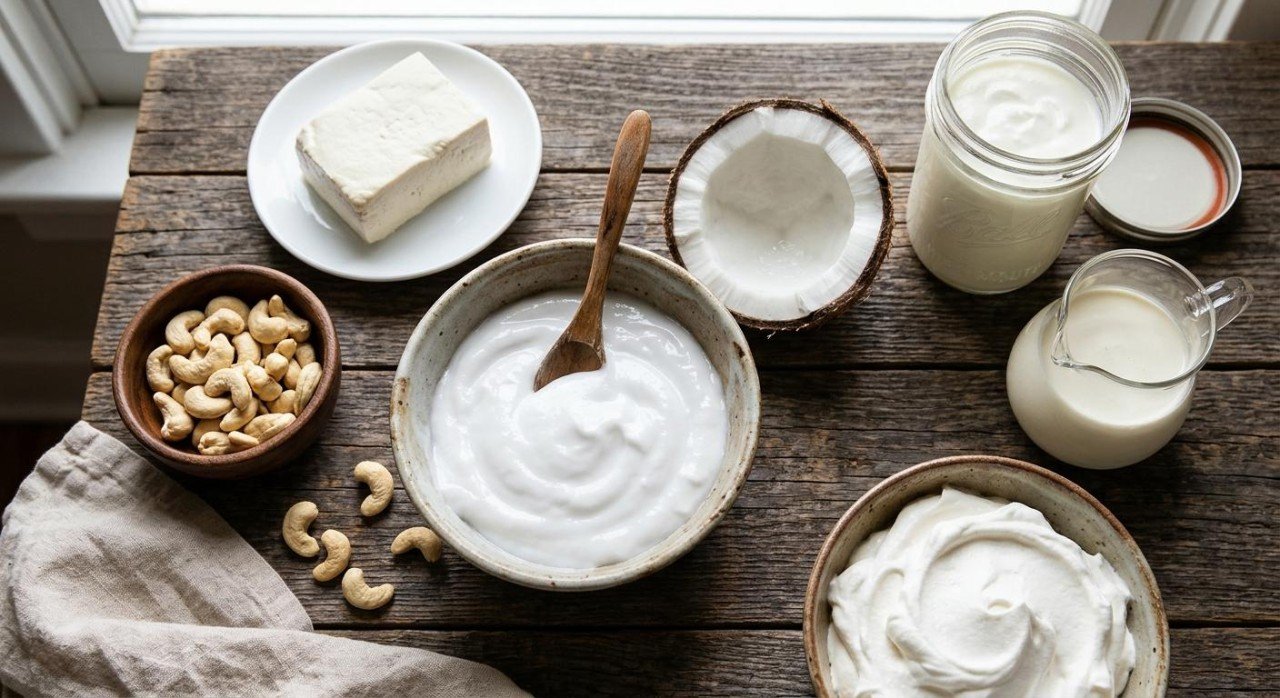
- Cashew cream — the best plant-based match outside the coconut family
- Blended silken tofu — high-protein and silky for desserts, smoothies, and soups
- Greek yogurt — tangy richness for curries and cold desserts, added off the heat
- Aquafaba — the dairy-free, fat-free option for a whipped topping
Chilled Full-Fat Coconut Milk (The Best Swap)
- Swap: Refrigerate a can of full-fat coconut milk for at least 24 hours, then spoon off the solid cream on top. A 13.5-ounce can gives roughly 1/2 cup, so plan on about 2 cans per cup of coconut cream
- Best for: Everything — whipped topping, desserts, curries, frostings
- Skip it for: Last-minute cooking (it needs the overnight chill), or if you only have light coconut milk
- Health notes: Nutritionally the same as store-bought coconut cream
This is not really a substitute so much as making coconut cream yourself. Canned coconut milk naturally separates when it is cold: the fat rises and firms up into a thick white layer, with thin coconut water underneath. Open the can without shaking it, scoop out the solid layer, and you have coconut cream. It is the only swap on this list that matches coconut cream in every way, flavor included, and it whips just like the real thing.
Two catches. First, it has to be full-fat. Light coconut milk is diluted with water and will not separate into a usable layer. Second, some brands add stabilizers like guar gum that keep the can from separating, so if you open a chilled can and it is uniformly creamy all the way down, try a different brand next time. Save the leftover coconut water for smoothies, rice, or thinning a curry.
Full-Fat Coconut Milk, Reduced (For Curries in a Hurry)
- Swap: 1 cup coconut cream → about 1 1/2 cups full-fat coconut milk, simmered gently until it has reduced by about a third
- Best for: Curries, soups, stews, and sauces
- Skip it for: Whipping, and no-bake desserts that rely on cream setting firm
- Health notes: Ends up close to coconut cream; skipping the reduction gives you a lighter dish
No time to chill a can? In anything cooked, you can get most of the way there by simmering full-fat coconut milk to drive off water. Easiest of all is to build that into the recipe: add the coconut milk where the cream would go and let the curry or soup simmer a few extra minutes, uncovered, until it thickens. Keep the heat moderate rather than at a rolling boil, which can make coconut milk look oily and broken.
Honestly, in many curries you can also swap coconut milk 1:1 for coconut cream and simply accept a slightly thinner, lighter sauce. It will still taste right, since the flavor is the same. The difference only really matters in desserts and toppings, where thickness is the whole point.
Creamed Coconut (The Solid Block)
- Swap: By weight, mix 2 parts creamed coconut with 5 parts hot water and stir or blend until smooth. In practice: about 2 ounces of the block dissolved in 1/2 cup hot water makes roughly 3/4 cup coconut cream
- Best for: Curries, soups, sauces, and baking
- Skip it for: Whipping — reconstituted cream will not hold peaks the way chilled canned cream does
Creamed coconut is a hard white block of ground, dried coconut flesh, usually sold in a small box or pouch near the canned coconut milk or in the international aisle. Because it keeps at room temperature for months, it is a handy pantry backup. Mixed with warm water at about 5 parts water to 2 parts coconut by weight, it becomes coconut cream; add more water (about 5 to 1) and it becomes coconut milk. Chop or grate it first so it dissolves quickly, and use a blender or whisk if any grainy bits remain.
Do not confuse it with cream of coconut (the sweetened pina colada mixer) or with coconut cream itself. If you buy it as coconut butter in a jar, it works the same way.
Coconut Milk Powder
- Swap: Start with equal parts powder and hot water, whisk into a smooth paste, then thin a spoonful at a time until it is as thick as you need. Check your package, since brands vary
- Best for: Curries, soups, sauces, and smoothies
- Skip it for: Whipped topping
- Health notes: Many brands contain added maltodextrin or milk protein (casein), so read the label if you need it dairy-free
Coconut milk powder is spray-dried coconut milk, and like the creamed coconut block, its strength is that you control the thickness. Mixed thin, it is coconut milk; mixed thick, it stands in for coconut cream in anything cooked. Whisk it with a little hot water first to avoid lumps, then add the rest. It can also be stirred straight into a simmering curry to thicken and enrich the sauce at the same time. The flavor is a touch milder than canned cream, so taste and adjust.
Heavy Cream (The Richest Swap)
- Swap: 1:1 — 1 cup coconut cream → 1 cup heavy cream
- Best for: Curries, cream soups, panna cotta, ice cream, and whipped topping
- Skip it for: Dairy-free or vegan cooking, and recipes where the coconut flavor is the star
- Health notes: Similar calories to coconut cream, but less saturated fat per cup
For texture alone, heavy cream is the closest outside-the-coconut match. Per 100 grams, heavy cream has 340 calories and 36 grams of fat, nearly identical to coconut cream's 330 calories and 35 grams, so it behaves almost the same way. It enriches a curry without splitting, sets panna cotta and ice cream bases, and whips into stable peaks.
What it cannot do is taste like coconut. In a plain cream soup that is irrelevant, but in a Thai curry or a coconut cream pie it is a real gap. Stir in 1/4 to 1/2 teaspoon coconut extract per cup to bring that note back (start low — it is potent), or fold in a handful of toasted unsweetened shredded coconut where texture allows.
Cashew Cream (The Best Plant-Based Match)
- Swap: Soak 1 cup raw cashews, drain, and blend with 1/2 cup fresh water until completely smooth. Use 1:1
- Best for: Vegan curries, creamy soups, sauces, cheesecake fillings, and dairy-free ice cream
- Skip it for: Nut allergies, whipping (it thickens but will not hold air), and same-minute cooking unless you use the hot-water soak
- Health notes: Cashew fat is mostly unsaturated, and you get a little protein and fiber too
If you need it dairy-free and do not have any coconut product on hand, cashew cream is the substitute to reach for. Soak the cashews in cold water for 2 to 4 hours, or cover them in just-boiled water for about 15 minutes when you are in a hurry, then blend until there is no grit at all. A high-speed blender makes the silkiest result. With only 1/2 cup water per cup of nuts it comes out as thick as coconut cream; add more water to loosen it toward coconut milk.
Its flavor is mild, slightly sweet, and neutral, which makes it especially good in desserts, where it sets up beautifully in no-bake cheesecakes and pie fillings. Add a little coconut extract if you want the coconut note.
Blended Silken Tofu
- Swap: 1 cup coconut cream → 1 cup silken tofu blended until completely smooth (loosen with a splash of plant milk if needed)
- Best for: Puddings, mousse, pie fillings, smoothies, and blended soups
- Skip it for: Whipping, and curries you plan to simmer hard, where it can turn grainy
- Health notes: Very low in saturated fat and a solid source of plant protein
Silken tofu blends into something remarkably close to a thick custard, which is why it is a favorite base for dairy-free chocolate mousse and cream pies. It brings no flavor of its own, so it takes on sweeteners, cocoa, vanilla, and coconut extract happily. In soups and sauces, stir it in toward the end over gentle heat rather than letting it boil. It is noticeably less rich than coconut cream, so it works best where body matters more than fat.
Greek Yogurt
- Swap: 1:1 with plain whole-milk Greek yogurt; stir in a tablespoon of water or milk per cup if it is very thick
- Best for: Curries and creamy sauces finished off the heat, cold dips, smoothies, and chilled desserts
- Skip it for: Anything that boils (it curdles), dairy-free cooking, and sweet dishes where tang would clash
- Health notes: Much higher in protein and far lower in fat than coconut cream
Greek yogurt is a classic way to enrich a curry, but it must be handled gently. Take the pot off the heat, stir a few spoonfuls of the hot sauce into the yogurt to warm it, then stir that back into the pot, and do not let it return to a boil. Whole-milk yogurt is more forgiving than nonfat, which splits more easily. Its tang is welcome in savory dishes and in smoothies, but it will not taste like coconut cream in a sweet coconut dessert.
Aquafaba (For Dairy-Free Whipped Topping)
- Swap: Whip 3/4 cup chilled aquafaba (the liquid from a can of chickpeas) with 1/4 teaspoon cream of tartar until stiff peaks form, then beat in 1/4 cup powdered sugar and 1/2 teaspoon vanilla
- Best for: A light, fluffy, dairy-free topping for pies, fruit, and hot chocolate
- Skip it for: Curries, sauces, or any recipe that needs richness — it has essentially no fat
- Health notes: Close to fat-free, so it is by far the lightest topping here
If you wanted coconut cream specifically for a vegan whipped topping and do not have a chilled can, aquafaba is the clever alternative. The protein and starch in chickpea cooking liquid whip up much like egg whites, so expect something closer to a marshmallowy meringue than a rich cream. A stand or hand mixer is a must, and it can take several minutes to reach stiff peaks. It deflates within a few hours, so whip it just before serving. Drain the chickpeas for hummus or a salad so nothing goes to waste.
Best Pick by Dish
If you are scanning for the one answer for the recipe in front of you:
- Curries, soups, and sauces: Reduced full-fat coconut milk, creamed coconut, or coconut milk powder to keep the coconut flavor. Heavy cream for richness without it. Cashew cream if dairy-free and coconut-free
- Whipped topping: Chilled coconut milk solids (dairy-free) or heavy cream. Aquafaba if you need dairy-free and have no chilled can
- Pies, mousse, and puddings: Chilled coconut milk solids, heavy cream, cashew cream, or blended silken tofu, with coconut extract for flavor
- Ice cream and panna cotta: Heavy cream, chilled coconut milk solids, or cashew cream; silken tofu and yogurt make icier, leaner results
- Smoothies: Almost anything — silken tofu and Greek yogurt add the most protein
A Note on the Nutrition
Coconut cream is delicious and genuinely useful for dairy-free cooking, but it is one of the most concentrated sources of saturated fat in the kitchen. Per USDA data, 100 grams of coconut cream carries about 31 grams of saturated fat. That works out to roughly 18 grams in a quarter cup, close to the full 20-gram Daily Value on a nutrition label. Heavy cream has about 23 grams per 100 grams, and even canned coconut milk comes in at about 19.
The old idea that coconut fat is a special, heart-friendly saturated fat has not held up well. A 2020 meta-analysis of 16 clinical trials in Circulation found that coconut oil raised LDL ("bad") cholesterol by about 10 mg/dL compared with nontropical vegetable oils, even as it nudged HDL up too. That is not a reason to banish coconut cream. A few spoonfuls in a vegetable-packed curry shared among four people is a perfectly reasonable choice. But it is worth knowing if you cook with it often or are watching your cholesterol.
If you would like the creaminess with better numbers, a few swaps here quietly help:
- Blended silken tofu has about 55 calories and less than half a gram of saturated fat per 100 grams, with nearly 5 grams of protein. In a mousse or pie filling, that is a dramatic difference for a texture most people do not notice
- Cashew cream keeps plenty of richness but shifts the fat profile: raw cashews are about 44 grams fat per 100 grams, of which under 8 grams is saturated
- Whole-milk Greek yogurt brings roughly 9 grams of protein per 100 grams with about 2.4 grams of saturated fat — a strong trade in curries and chilled desserts
- Reduced coconut milk instead of cream: even skipping the reduction and using full-fat coconut milk 1:1 cuts the saturated fat by about 40 percent while keeping the flavor exactly right
None of these is "healthier" in every dish. A whipped topping made from silken tofu simply does not exist, and a curry made with yogurt tastes different from one made with coconut. Pick the swap that suits the dish, and use the lighter options where they genuinely fit.
Take the Guesswork Out of Eating Well
Eat Well Planner helps you organize your favorite recipes, plan balanced meals, and automatically generate shopping lists — all in one place. Whether you're tracking macros, managing dietary restrictions, or just trying to stop asking "what's for dinner?", we've got you covered.
Our AI-powered tools can adapt any recipe to your dietary needs, help you discover new meals you'll love, and even log your nutrition effortlessly. It's meal planning made simple.
Start Organizing Your Meals — FreeWhat Not to Use
- Cream of coconut: The canned pina colada mixer is heavily sweetened and syrupy. It will turn a savory curry cloying and throw off the sugar in a dessert recipe. Use it only if the recipe calls for it by name
- Light coconut milk: It is regular coconut milk diluted with water, so it will not separate when chilled, will not whip, and makes a noticeably thin curry. Fine in a pinch for soup, not for anything that relies on thickness
- Coconut water: The clear liquid from inside young coconuts has almost no fat. It brings a hint of flavor and no creaminess at all
- Carton coconut milk beverage: The kind sold next to almond milk is mostly water with thickeners, far thinner than even light canned coconut milk. It cannot stand in for cream
- Low-fat yogurt in a simmering sauce: Nonfat and low-fat yogurts curdle even faster than whole-milk yogurt under heat
Find the Right Swap for Your Recipe
A guide can tell you what usually works, but your recipe has its own quirks: how long it simmers, whether the cream needs to set, how much the coconut flavor matters. That is where Eat Well Planner's AI recipe chat helps. Open your recipe, tell it you are out of coconut cream, and it will suggest the swap that fits that dish, with the right amount and any technique changes.
Cooking dairy-free for someone, or cutting back on saturated fat? The Recipe Variations feature can rewrite the whole recipe with the substitutions already worked in, and Make It Healthier proposes lighter swaps like silken tofu or cashew cream and checks the real nutritional gain before suggesting them. Then chill a can of coconut milk tonight, so next time you will have coconut cream waiting.