The recipe says boneless, skinless chicken thighs. The fridge says otherwise. Maybe you have breast instead, maybe you have pork, maybe you are cooking for someone who does not eat chicken at all - and the curry is already halfway to the stove.
Here is the thing worth knowing before you pick a replacement: thighs are not just another cut of chicken. They are dark meat, which means more fat and far more collagen, and that collagen melts into gelatin as it cooks. That is why thighs stay juicy at temperatures that would wreck a breast - America's Test Kitchen puts the sweet spot at 175°F, or ideally 190 to 195°F, well past the 165°F where they are already safe. Thighs are, in other words, the most forgiving protein in the meat case.
So a good substitute has to do two jobs: fill the same role in the dish, and survive the same cooking. Some swaps below are dark meat too and drop straight in. Others are leaner and need you to shorten the cook. A few need much longer. Below, ordered from most useful to most specialized, with an exact swap, the dishes each one fits, and how to adjust your timing.
The Quick List
- Boneless, skinless chicken breast — the one you probably already have; leaner and less forgiving, so cook it less
- Bone-in thighs, drumsticks, or whole legs — literally the same meat, just add time and adjust the weight
- Turkey thighs — the true dark-meat 1:1, slightly leaner and just as forgiving
- Boneless pork shoulder — the best swap for braises, stews, and shredded dishes; needs a long cook
- Pork tenderloin or boneless chops — the quick-cooking pork option for stir-fries and the grill
- Lamb shoulder — richer and deeply savory in curries, tagines, and slow-cooked stews
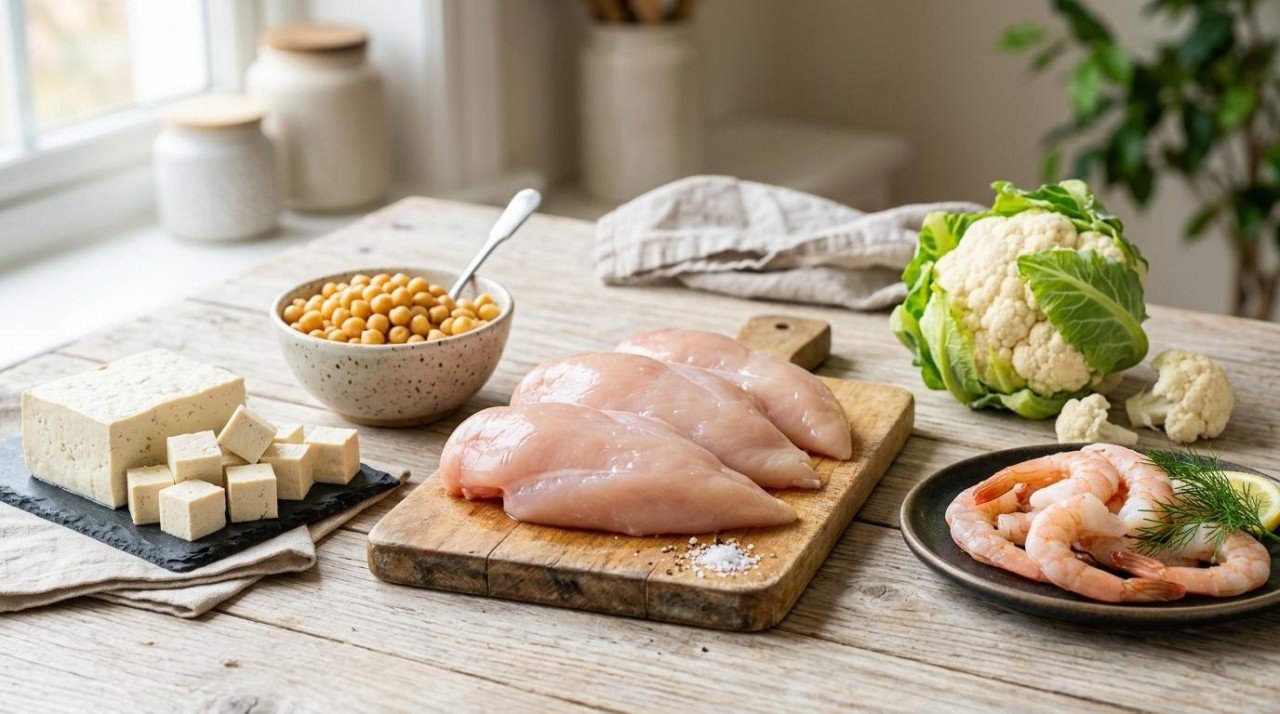
- Extra-firm tofu — the plant swap that fits the widest range of thigh dishes
- Seitan — the chewiest, most meat-like plant option
- Tempeh — firm, nutty, and high in protein, with fiber chicken cannot offer
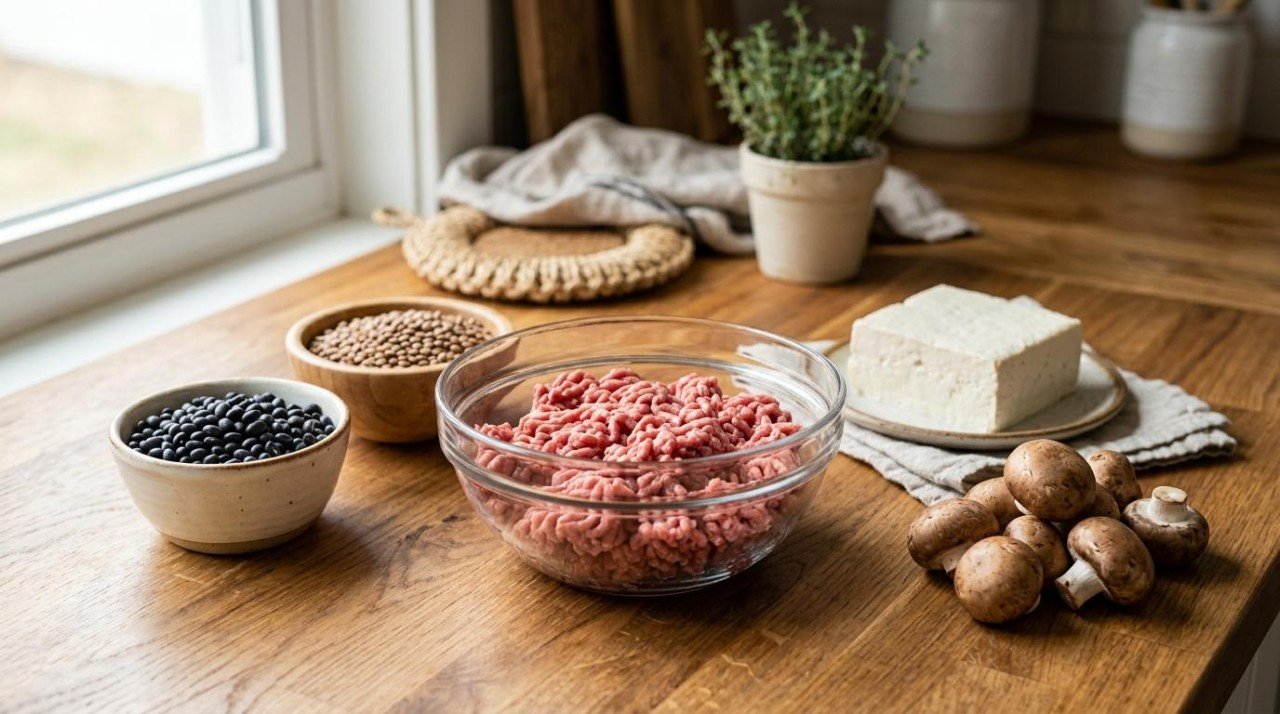
- King oyster or cremini mushrooms — meaty and umami-rich for braises and pulled dishes
- Chickpeas or white beans — the cheapest, fastest swap for curries, stews, and bowls
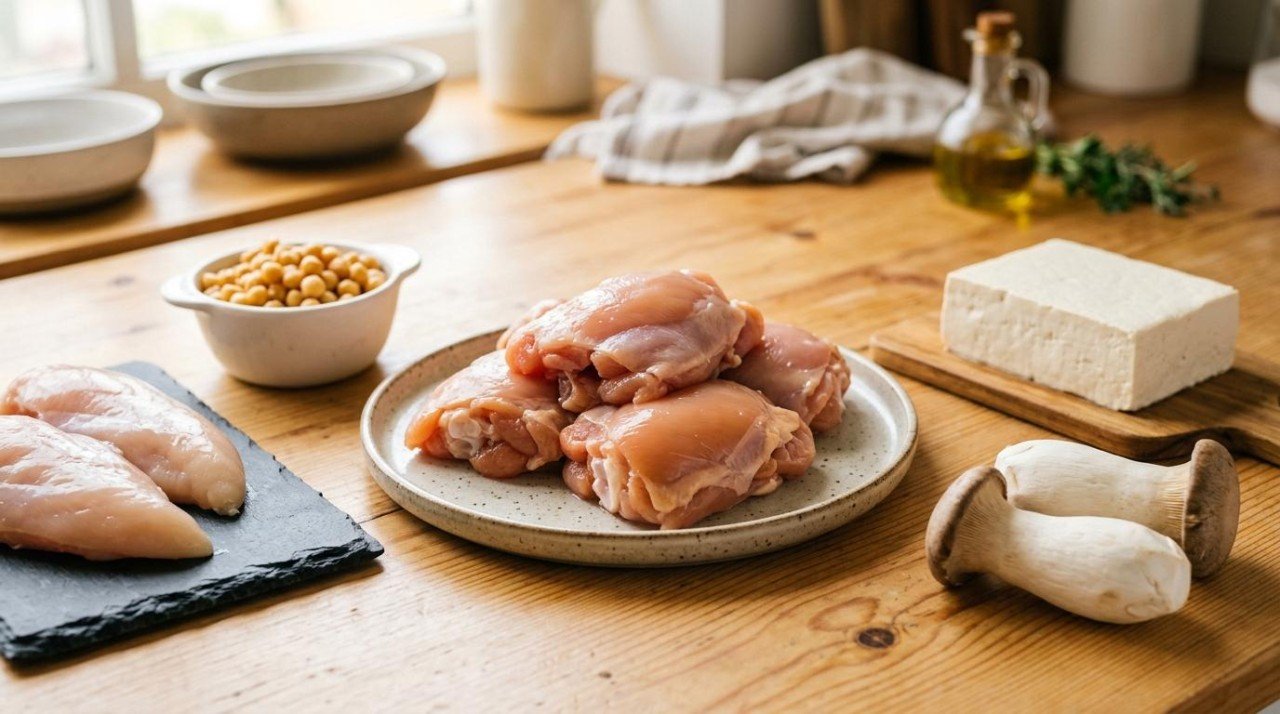
Boneless, Skinless Chicken Breast
- Swap: 1 lb boneless, skinless thighs → 1 lb boneless, skinless breast, cut into pieces or halved horizontally into thin cutlets
- Best for: Stir-fries, sheet-pan dinners, grilling, quick skillet dishes, curries added near the end
- Skip it for: Long braises, stews, and slow cookers - the exact dishes thighs were chosen for
- Cook & moisture: Cooks faster and has a much narrower window. Breast turns dry and tough much above 155°F, yet poultry is only safe at 165°F - so pull it the moment it hits 165°F and rest it
- Health notes: Leaner - about 140 calories, 3 grams of fat, and 1 gram of saturated fat per 3 ounces against roughly 170 calories, 9 grams of fat, and 3 grams of saturated fat for thighs. You do give up some minerals: per 100 grams, thighs carry 0.81 mg of iron and 1.58 mg of zinc versus 0.37 mg and 0.68 mg for breast
Breast is the swap most people reach for, and it works fine as long as you respect what changed. Thighs tolerate a wandering cook time; breast does not. Cut it into similar-size pieces so everything finishes together, start checking several minutes earlier than the recipe says, and take it off the heat the second it is done.
Three habits close most of the gap. Brine it for 20 to 30 minutes in salted water, or salt it and leave it while you prep. Add a little fat - a tablespoon of oil or butter in the pan - to make up for what thighs would have rendered. And if the recipe braises or simmers for more than 20 minutes, add the breast in the last stretch rather than at the start, or shred it in at the end. Our full guide to substitutes for chicken breast covers the reverse problem if you end up swapping in the other direction.
Bone-In Thighs, Drumsticks, or Whole Chicken Legs
- Swap: 1 lb boneless, skinless thighs → about 1.5 lb bone-in, skin-on thighs, drumsticks, or whole legs (bone and skin add weight, so buy roughly half again as much)
- Best for: Braises, roasts, curries, stews, soups, grilling, and anything where the pieces stay whole
- Skip it for: Stir-fries and dishes that need neat cubes, unless you bone them out first
- Cook & moisture: Add roughly 10 to 20 minutes for the bone, and even more forgiving than boneless - the bone and skin protect the meat. Aim for 175°F and up
- Health notes: Identical meat. Leaving the skin on adds fat and calories, so cook with it for moisture and remove it before eating if you would rather not have it
This is the closest swap there is, because it is not really a swap at all. Bone-in dark meat is the same muscle with the bone and skin still attached, which means more flavor and even more insurance against overcooking. Either cook the pieces whole and adjust the timing, or slide a small knife along the bone and lift the meat off - a 30-second job per thigh that gets you exactly what the recipe asked for.
Turkey Thighs
- Swap: 1 lb boneless, skinless chicken thighs → 1 lb boneless turkey thigh meat, cut to the same size (one whole bone-in turkey thigh yields roughly a pound)
- Best for: Braises, stews, chili, curries, slow-cooker dishes, roasting, and shredding
- Skip it for: Fast weeknight stir-fries - turkey thigh is a bigger, tougher muscle that wants more time
- Cook & moisture: Add 15 to 30 minutes over chicken thighs and cut around the tougher sinew. Same 165°F safety line, same reward for pushing past it
- Health notes: Slightly leaner than chicken thigh at about 134 calories, 5 grams of fat, and 1.5 grams of saturated fat per 3 ounces, with the same dark-meat iron and zinc
Turkey thigh is the swap almost nobody thinks of, and it is the most faithful one on this list after chicken itself. It is dark meat with the same collagen, the same forgiving nature, and a slightly deeper flavor - excellent in anything braised, stewed, or shredded. Trim the connective tissue as you cube it and give it a bit more time in the pot. If your recipe called for ground thigh meat, the ground turkey substitutes guide covers that side of it.
Boneless Pork Shoulder (Pork Butt or Country-Style Ribs)
- Swap: 1 lb chicken thighs → 1 lb boneless pork shoulder, cut into 1 to 1.5-inch cubes, or boneless country-style ribs (the same muscle, pre-cut)
- Best for: Braises, stews, curries, chili, tacos, birria, adobo, and anything shredded
- Skip it for: Quick 20-minute dinners, stir-fries, and grilling - it will be tough
- Cook & moisture: Add 60 to 90 minutes of covered, gentle simmering. Pork shoulder is safe long before it is tender; you are cooking it well past that until a fork twists in it with no resistance
- Health notes: Noticeably fattier than chicken thigh, so trim the big exterior fat cap and skim the braise before serving
Pork shoulder is the substitute that fits the spirit of a chicken thigh better than almost anything: cheap, fatty, collagen-heavy, and impossible to ruin by cooking it too long. In a slow-cooker curry, a pot of chili, a batch of tacos, or any braise, cubed shoulder gives you the same rich, shreddable result.
The one non-negotiable is time. Chicken thighs go from raw to tender in 25 or 30 minutes; pork shoulder needs an hour and a half or more of low, moist heat before the collagen surrenders. If your recipe is a quick skillet dinner, this is the wrong swap - use pork tenderloin instead. If it is a Dutch oven or a slow cooker, add liquid, cover it, and give it the time. A guide to chicken broth substitutes is handy here if you are short on braising liquid too.
Pork Tenderloin or Thin Boneless Pork Chops
- Swap: 1 lb chicken thighs → 1 lb pork tenderloin cut into strips or medallions, or thin boneless chops
- Best for: Stir-fries, grilling, sheet-pan dinners, quick skillet dishes, fajitas
- Skip it for: Long braises and slow cookers - these lean cuts dry out, unlike shoulder
- Cook & moisture: Cooks in about the same time as thighs but is far less forgiving. Pork is safe at 145°F with a 3-minute rest, and a hint of pink is fine - which makes it easier to keep juicy than well-done chicken
- Health notes: Tenderloin is the leanest common cut of pork, closer to chicken breast than to thigh on fat
When the dish is fast rather than slow, pork tenderloin is the pork cut you want. Sliced thin against the grain, it stir-fries in minutes and takes marinades happily. Treat it like breast rather than thigh: watch it closely, pull it at 145°F, and rest it for three minutes so the juices settle instead of running out onto the board.
Lamb Shoulder
- Swap: 1 lb chicken thighs → 1 lb boneless lamb shoulder, cut into 1 to 1.5-inch cubes
- Best for: Curries, tagines, stews, biryani, and slow-braised one-pots
- Skip it for: Mild, delicate dishes and quick weeknight cooking - lamb brings a lot of its own flavor
- Cook & moisture: Like pork shoulder, it needs 60 to 90 extra minutes of covered simmering to go tender. Brown it hard first for the best flavor
- Health notes: Higher in saturated fat than chicken thigh, so trim it well and treat it as the richer option
If the recipe is a curry, a tagine, or any spiced slow braise, lamb shoulder is an upgrade rather than a compromise - it is the traditional meat for a lot of those dishes anyway. It behaves like pork shoulder: collagen-rich, forgiving of long cooking, and it needs that long cooking to get there. Just be aware it will change the character of the dish, in a way breast or turkey will not.
Extra-Firm Tofu
- Swap: 1 lb chicken thighs → 1 block (14 to 16 oz) extra-firm or super-firm tofu, pressed and cubed
- Best for: Stir-fries, curries, sheet-pan dinners, grain bowls, skewers - anything saucy or boldly seasoned
- Skip it for: Dishes built on the meat's own richness, and long braises where it can break apart
- Cook & moisture: No safe temperature to hit, so you cook it purely for texture. It will not dry out, but it needs a hard sear or a hot oven to firm up - press it first or it steams instead of browning
- Health notes: About 8 grams of protein per 3 ounces for 80 calories and 0.5 grams of saturated fat, so a whole block lands near 40 grams of protein. A complete plant protein with all nine essential amino acids
Tofu is the plant swap that covers the widest range of thigh dishes, because so many of them - teriyaki, curry, stir-fry, sheet-pan traybakes - are really about the sauce. Pressed and cubed, tofu drinks that sauce up and gives you a satisfying bite in return.
Two rules decide whether it works: press it, and give it real heat. Wet tofu steams and stays bland; pressed tofu seared hard in a hot pan or roasted until the edges catch turns golden and firm. One honest caveat against thighs specifically - tofu brings none of the fat and collagen that made the original dish rich, so lean harder on the seasoning, the browning, and a splash of oil. If tofu has disappointed you before, our guide to cooking tofu and tempeh so they actually taste good walks through the technique.
Seitan
- Swap: 1 lb chicken thighs → about 1 lb seitan, sliced or torn into bite-size pieces
- Best for: Stir-fries, fajitas, sandwiches, skewers, and saucy skillet dishes that want a chewy bite
- Skip it for: Anyone avoiding gluten, and long hard boils, which turn it rubbery
- Cook & moisture: Already cooked when you buy it, so it only needs browning and heating - the fastest swap here. It holds its texture and will not dry out
- Health notes: Very high in protein at about 24 grams per 100 grams, but it is pure wheat gluten with very little fiber, and off-limits for anyone with celiac disease
Of the plant options, seitan comes closest to the chewy pull of dark meat, which is exactly why vegan "chicken" products are built from it. Torn into strips for a stir-fry or fajitas, it gives you a genuinely meaty texture that tofu cannot match. It is a texture-and-protein swap rather than a nutritional upgrade, though - almost no fiber, and a non-starter on a gluten-free diet.
Tempeh
- Swap: 1 lb chicken thighs → 1 lb tempeh (usually two 8-oz packages), cubed or sliced. Steam or simmer it 10 minutes first to mellow the bitterness
- Best for: Stir-fries, grain bowls, curries, marinated skewers, and sandwiches
- Skip it for: Mild, delicate dishes - its nutty, savory flavor makes itself known
- Cook & moisture: No temperature to chase; cook it for flavor and browning. It stays firm and never dries out, and the pre-steam helps it absorb marinade
- Health notes: A fermented whole-soybean cake with about 20 grams of protein per 100 grams, plus fiber and plant diversity that chicken has none of
Tempeh is the pick when you want more chew and more nutrition than tofu delivers. Because it is whole soybeans pressed into a firm cake rather than a curd, it keeps a distinct, meaty texture in a bowl or a stir-fry. Build the habit of a 10-minute steam before you cook it, then marinate, sear, and let the edges crisp.
King Oyster or Cremini Mushrooms
- Swap: 1 lb chicken thighs → about 1.5 lb king oyster mushrooms (shredded or sliced into rounds) or halved cremini - they shrink a lot, so buy more than feels right
- Best for: Braises, stews, pulled and shredded dishes, stir-fries, and anywhere you want savory depth
- Skip it for: Meals where mushrooms are the only protein - they carry very little
- Cook & moisture: Give them space and high heat so they brown instead of steaming. They release a lot of water first, then concentrate and go meaty. No overcooking risk
- Health notes: Low in calories and rich in umami. In a Johns Hopkins crossover trial, swapping mushrooms for beef cut daily energy and fat intake substantially while ratings of palatability, appetite, satiation and satiety did not differ significantly
King oyster mushrooms are the underrated one here: shredded with a fork, the thick stems pull apart into strands that look and feel a lot like shredded chicken, which makes them excellent in tacos, sandwiches, and saucy braises. Creminis, halved and browned hard, bring the same savory depth to a stew. Just pair them with beans, lentils, or a grain so the plate still adds up to a filling meal - and count them toward your plant variety for the week.
Chickpeas or White Beans
- Swap: 1 lb chicken thighs → about 3 cups (two 15-oz cans) chickpeas or cannellini beans, drained and rinsed
- Best for: Curries, stews, soups, grain bowls, wraps - anywhere the chicken would have been cubed or shredded into a sauce
- Skip it for: Grilled pieces, skewers, and anything that needs a sliceable piece of protein
- Cook & moisture: Already tender, so they only need warming through - the fastest swap on this list. Add them in the last 10 minutes so they take on the sauce without going mushy
- Health notes: About 15 grams of protein and 12 grams of fiber per cooked cup for around 270 calories and 0.4 grams of saturated fat - fiber chicken simply does not have
When the thighs were headed for a curry, a stew, or a soup, chickpeas are the cheapest and easiest replacement there is. A can costs a fraction of a pound of chicken and keeps in the pantry indefinitely. Season more assertively than the recipe says, since beans start milder than dark meat, and let them simmer in the sauce rather than sitting on top of it. Trading meat for beans in the dishes that suit it is also one of the simplest ways to cut your meat budget without going vegetarian.
Which Swap for Which Dish
With thighs, the cooking method decides the swap more than the flavor does:
- Braises, stews, and slow cookers: Bone-in chicken, turkey thighs, pork shoulder, or lamb shoulder - all collagen-rich enough to reward the long cook. Mushrooms or chickpeas for plant-based
- Curries: Turkey thighs and pork shoulder for a long simmer; breast, tofu, or chickpeas added late for a quick one
- Stir-fries: Breast, pork tenderloin, seitan, tempeh, or tofu - anything that cooks fast and takes a sauce
- Grilling and skewers: Breast (brined), pork tenderloin, bone-in thighs, or firm tofu and tempeh
- Sheet-pan and roasting: Bone-in chicken pieces, breast cut thick, tofu, or halved creminis
- Shredded and pulled (tacos, sandwiches): Pork shoulder is the champion; king oyster mushrooms or chickpeas for plant-based
When you are not sure which one fits the specific thing you are cooking, that is exactly the question for the AI recipe chat in Eat Well Planner: it reads your actual recipe - the method, the simmer time, the sauce, the other ingredients - and tells you which swap suits that dish and how to adjust the timing and seasoning, which no general guide can do. If you want to switch a recipe over permanently, say to a plant-based or dairy-free version, Recipe Variations rewrites the whole thing with the swap already worked in.
And when a swap is also a chance to eat a little better - trading some of the meat for chickpeas, tofu, or mushrooms - Make It Healthier proposes exactly those changes and runs the numbers through a calculator to verify the real gain in fiber and protein before it suggests them. Plant Points then counts each new plant you rotate in toward the 30-a-week target that gut-microbiome research points to.
Take the Guesswork Out of Eating Well
Eat Well Planner helps you organize your favorite recipes, plan balanced meals, and automatically generate shopping lists — all in one place. Whether you're tracking macros, managing dietary restrictions, or just trying to stop asking "what's for dinner?", we've got you covered.
Our AI-powered tools can adapt any recipe to your dietary needs, help you discover new meals you'll love, and even log your nutrition effortlessly. It's meal planning made simple.
Start Organizing Your Meals — FreeWhat Not to Use
- Chicken breast in a long braise or slow cooker. The single most common mistake. Thighs get better over 90 minutes; breast turns to string. Add it at the end, or pick pork shoulder instead
- Pork tenderloin or loin chops in a stew. Lean pork has no collagen to melt, so a long simmer makes it dry and chalky rather than tender. Shoulder is the braising cut
- Chicken wings as a thigh substitute. They are dark meat, but they are mostly skin and bone - fine for a roast tray, useless where the recipe wants pieces of meat
- Silken or soft tofu. There is nothing to sear or cube; it collapses into a wet scramble. Extra-firm or super-firm only, pressed dry
- Mushrooms or jackfruit as the meal's only protein. Both nail the texture and bring almost no protein, so pair them with beans, lentils, or a grain
- Cooking a lean swap to thigh temperatures. The 190°F that makes thighs melt will destroy breast, turkey breast, and pork tenderloin. Match the temperature to the cut, not to the recipe
The Bottom Line
If dinner is quick - a stir-fry, a sheet pan, the grill - chicken breast or pork tenderloin will do the job, as long as you cut the cook time and pull them on temperature. If dinner is slow - a braise, a stew, a curry, a slow cooker - reach for turkey thighs, pork shoulder, or lamb shoulder, the cuts that share the thigh's collagen and its patience. And for the plant-based version, tofu covers the most dishes, seitan brings the chew, and chickpeas are the cheapest upgrade in the pantry.
The rest of your protein swaps follow the same logic, so once this clicks, substitutes for chicken breast and substitutes for ground beef will feel familiar. And any time you are standing over a recipe wondering whether the thing in your fridge will actually work, the AI recipe chat in Eat Well Planner was built for exactly that question.