The chicken is browned, the butter and lemon are in the pan, and the piccata recipe says "2 tablespoons capers, drained." The little jar you were sure was in the fridge door is not there. Or it is, and it holds three capers floating in a quarter inch of cloudy brine.
Capers are tiny, but they do a specific job. They are the pickled, unopened flower buds of the Capparis spinosa shrub, and what they bring to a dish is a concentrated burst of salt, sour, and a faintly floral, mustardy bitterness — scattered in small pops rather than spread evenly through the sauce. A good substitute has to deliver at least the salt and the sour. The best ones also recreate the pop.
Which swap is right depends on what you are making. A pan sauce wants something that holds up to heat and melts into butter. A tartar sauce or egg salad wants crunch. A smoked salmon bagel wants a sharp bite on top. Below are the substitutes that actually work, with exact ratios and the dishes each one suits, followed by a quick pick-by-dish guide.
The Quick List
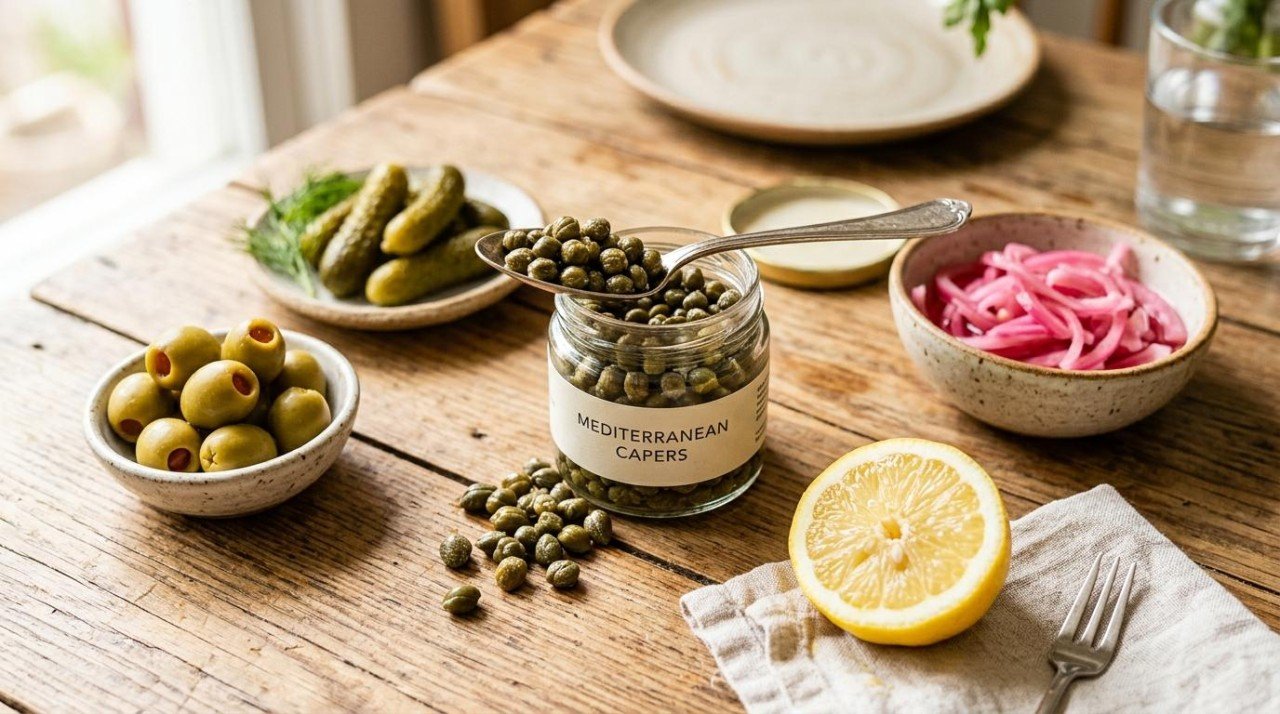
- Chopped green olives — the closest all-around match; briny, firm, and already in most fridges
- Caper berries — the same plant, just milder; mince them and swap 1:1
- Chopped dill pickles or cornichons — sharper and crunchier; ideal for tartar sauce, egg salad, and potato salad
- Brined green peppercorns — salty and caper-like, with a gentle pepper heat; superb in cream and steak sauces
- Quick-pickled red onion or shallot — the bagel-and-lox pick, and the lowest-sodium option
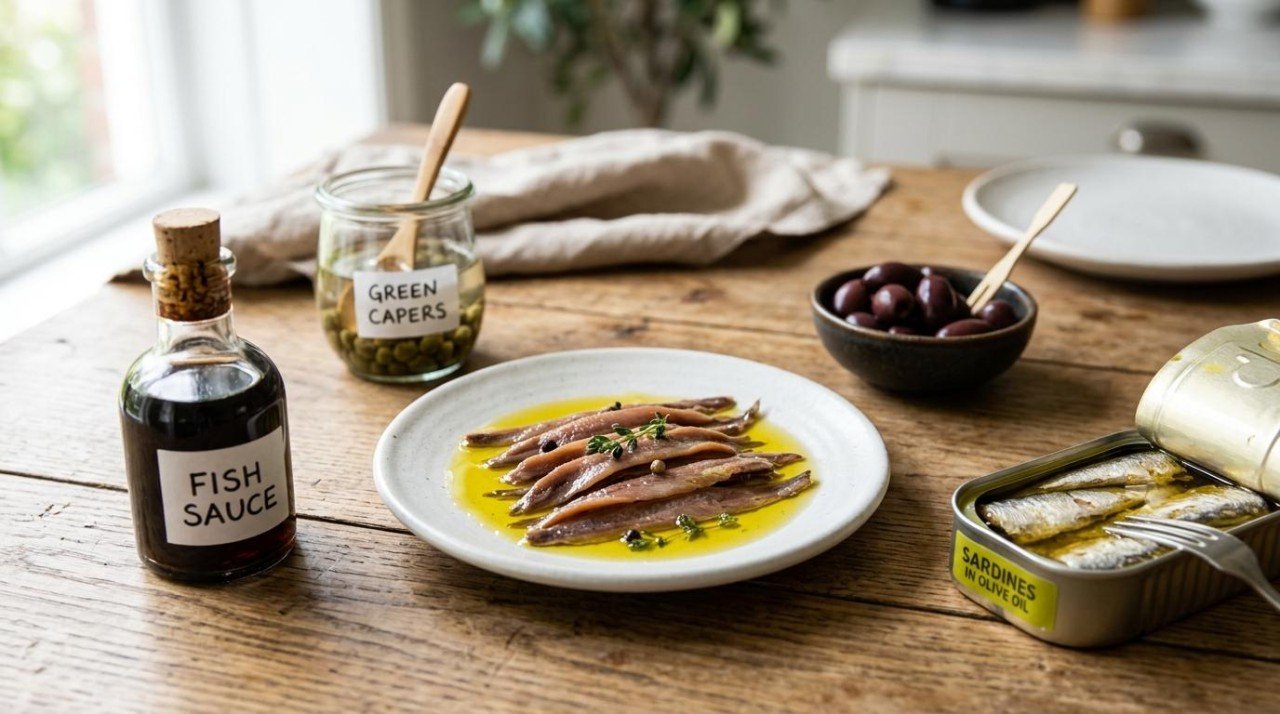
- Anchovies — salty depth for puttanesca, tapenade, and salsa verde
- Preserved lemon rind — salt and sour in one, perfect with chicken and fish
- Lemon juice and zest — the no-shopping fallback for piccata
- Pickled nasturtium seeds — the gardener's homemade "poor man's capers"
Chopped Green Olives
- Swap: 1 tablespoon capers → 1 tablespoon finely chopped green olives, plus 1/4 teaspoon of the olive brine or lemon juice if the dish needs more sharpness
- Best for: Piccata, puttanesca, pasta, tapenade, chicken and fish pan sauces, grain and green salads
- Skip it for: Recipes where the capers are meant to be crisp-fried as a garnish — chopped olive will not puff and crackle
- Health notes: One green olive has about 42 mg of sodium, against roughly 202 mg in a tablespoon of drained capers, so a tablespoon's worth of chopped olive usually lands a little lower
Green olives are the substitute that most cooks reach for first, and for good reason. They are cured in brine just like capers, they share that tangy, savory flavor and yellow-green color, and once they are chopped down to caper size they scatter through a sauce the same way. In a hands-on test, Pantry & Larder chopped green olives into chicken piccata at a 1:1 ratio and rated them a perfect stand-in.
The difference is intensity. Olives are meatier and milder, and the bitterness that gives capers their edge is softer. Firm, sharp Spanish types like Manzanilla get closest; buttery Castelvetranos are lovely but noticeably gentler, so add the splash of brine or lemon with those. Some sources suggest using as little as half a tablespoon of chopped olive per tablespoon of capers, which is a sensible place to start in a delicate fish sauce. Kalamatas work as well, especially in puttanesca and tapenade, but they read fruitier and less tangy, and they can tint a pale butter sauce a muddy purple.
Caper Berries
- Swap: 1 tablespoon capers → 1 tablespoon minced caper berries, stems removed; add a little more for a stronger flavor
- Best for: Piccata, pan sauces, salads, tapenade, anywhere capers are cooked or tossed in
- Skip it for: Whole-caper garnishes where the seeds and size would look odd
Caper berries come from the same shrub. They are what you get when the buds are left to flower and fruit, so America's Test Kitchen describes them as larger, usually sold with stems, and mostly used as a cocktail garnish. Because they share capers' flavor family, they are the most faithful substitute in taste; Pantry & Larder recommends a 1:1 swap with minced caper berries.
The catch is texture. Inside each berry is a cluster of small, crunchy seeds, a little like a kiwi's. Mince them finely and the seeds disappear into a sauce; leave them in big chunks and they read as a different ingredient. If the jar is in your pantry because of a martini phase, this is its moment.
Chopped Dill Pickles or Cornichons
- Swap: 1 tablespoon capers → 1 tablespoon finely chopped dill pickle or cornichon, patted dry
- Best for: Tartar sauce, remoulade, egg salad, potato salad, tuna salad, deviled eggs, and in a pinch, piccata
- Skip it for: Puttanesca and Mediterranean dishes where the pickle's dill flavor would clash
Pickles bring capers' sour edge in a bigger, crunchier package. They are more vinegary and less salty-bitter, which is why they are already a co-star in most tartar sauce and remoulade recipes — in those, a pickle swap is barely a swap at all. Cornichons are the better choice when you have them: they are tiny, tart, and firm, so they chop into caper-sized bits without turning watery.
Pat the chopped pickle on a paper towel before it goes in, especially in a mayonnaise-based sauce, or the extra brine will thin it out. And make sure you are reaching for dill pickles; sweet bread-and-butter pickles and sweet relish add sugar that a caper dish does not want. Surprisingly, they hold up in hot dishes too — Pantry & Larder was surprised by how nicely dill pickles blended into chicken piccata. If you are out of fresh dill for the rest of the recipe as well, our fresh dill substitutes guide covers that.
Brined Green Peppercorns
- Swap: 1 tablespoon capers → 2 teaspoons drained green peppercorns, lightly crushed; taste and work up to 1:1
- Best for: Cream sauces, steak and pork pan sauces, butter sauces for fish, vinaigrettes, terrines
- Skip it for: Raw salads where someone might bite a whole one, or anyone at the table who is sensitive to pepper heat
Green peppercorns are unripe fruit from the black pepper plant, packed soft and fleshy in brine. They are milder than dried black pepper, with a tart, bright flavor and notes of juniper and pine. The European style is processed in a concentrated brine that gives it what America's Test Kitchen calls a "salty, caper-ish quality" — which is exactly the job you need done.
They are the most elegant swap on this list in a rich sauce: a creamy chicken or steak sauce made with green peppercorns instead of capers tastes deliberate, not improvised. The trade-off is heat. Even mild peppercorns add a warm pepper finish capers do not have, which is why it pays to start at two-thirds the amount. Thai-style green peppercorns, sold on the stem in a lighter brine, are less salty and better suited to curries than to piccata.
Quick-Pickled Red Onion or Shallot
- Swap: 1 tablespoon capers → 1 tablespoon finely diced quick-pickled red onion or shallot (thin slices for a bagel)
- Best for: Smoked salmon and bagels, grain bowls, green salads, tuna and chicken salads, tacos, deviled eggs
- Skip it for: Long-simmered sauces, where the onion loses its sharpness and goes sweet
- Health notes: You control the salt, so it can carry a fraction of capers' sodium; red onion is also one of the better everyday sources of quercetin (more on that below)
No jar of pickled onions on hand? You can make enough for one recipe in the time it takes to boil pasta. Slice or dice the onion as finely as you can, cover it with lemon juice, lime juice, or vinegar plus a pinch of salt, and let it sit for 15 to 20 minutes, tossing once. The acid softens the raw-onion bite and turns red onion a bright pink. Drain before using.
Pickled onion does not taste like capers — it is sweeter and more aromatic — but on a smoked salmon bagel, where capers are mostly there to cut through the richness of the fish and cream cheese, it does that job just as well and adds crunch. Think of this as the swap for fresh, uncooked dishes. For the onion-adjacent options when red onion is missing too, see our guide to shallot substitutes.
Anchovies
- Swap: 1 tablespoon capers → 1 anchovy fillet, minced (about 1 teaspoon), plus a squeeze of lemon
- Best for: Puttanesca, tapenade, salsa verde, Caesar-style dressings, roasted vegetables, tomato-based pasta sauces
- Skip it for: Vegetarian and vegan dishes, and anywhere you want visible little pops of brine
Anchovies supply the salt and savory depth capers bring, though not the sour or the texture. In dishes where the two traditionally appear side by side — puttanesca, tapenade, salsa verde — leaving out the capers and keeping the anchovy still gives you a balanced result, especially with the lemon to stand in for the missing acidity. As PureWow puts it, "a little goes a long way."
Mince the fillet almost to a paste, or melt it into the warm oil at the start of cooking, where it dissolves completely and leaves behind savory depth rather than fishiness. Anchovy paste works too; about 1/2 teaspoon replaces a fillet. Our fish sauce guide covers the reverse situation, if the anchovies are the thing you are missing.
Preserved Lemon Rind
- Swap: 1 tablespoon capers → 1 to 2 teaspoons finely minced preserved lemon rind, pulp scraped off and rind rinsed
- Best for: Chicken, fish, and shrimp; grain salads; roasted vegetables; Moroccan and Middle Eastern dishes
- Skip it for: Tartar sauce and other mayonnaise sauces, where its perfume overwhelms everything else
Preserved lemons are cured in salt until the rind turns soft and silky, which means a few minced bits deliver salt and sourness at once — the two things capers bring. They are especially good in piccata-style dishes, which are already built on lemon, and they add a floral, almost bitter lemon note that echoes capers' own slight bitterness.
They are potent, so start at the low end. Use only the rind (the pulp is mostly salt), and give it a quick rinse to keep the sodium in check. Then taste before adding any other salt the recipe calls for.
Lemon Juice and Zest
- Swap: 1 tablespoon capers → 1/2 tablespoon fresh lemon juice plus 1/4 teaspoon finely grated zest; season with a pinch of salt at the end if needed
- Best for: Piccata, lemon-butter fish, chicken pan sauces, green beans, roasted broccoli
- Skip it for: Tartar sauce, salads, and garnishes, where the missing texture is obvious
When there is truly nothing briny in the house, lemon is the fallback. It covers capers' acidity, and the zest adds a little of the aromatic, slightly bitter quality the buds have. Pantry & Larder suggests using half the volume of capers in lemon juice or vinegar, and notes that lemon complements chicken and seafood dishes much the way capers do. A grind of black pepper restores some of the bite.
Most piccata recipes already call for lemon juice, so add the extra at the end, taste, and adjust — it is easy to tip a butter sauce into sour. What you will not get back is the salty pop, which is why a pinch of flaky salt over the finished plate helps. If you are out of lemons too, our lemon juice substitutes guide has you covered.
Pickled Nasturtium Seeds
- Swap: 1:1 with capers, once pickled
- Best for: Anywhere capers go, especially salads, sauces, and garnishes
- Skip it for: Tonight's dinner — they need a week or two in the jar
Nasturtium seeds are the classic "poor man's capers": green seed pods from the garden flower, pickled in vinegar brine. Pick them while still green, rinse them, pack them in a jar, and pour hot brine of water, vinegar, salt, and a little sugar (plus a few dill sprigs) over them. Diggers Club recommends letting them pickle for at least one to two weeks, then storing them in the refrigerator.
The result is a convincing caper look-alike with a sharper, peppery bite, much like the nasturtium leaves themselves. They are not an emergency swap, but if you grow nasturtiums, a jar made in summer means you will rarely run out of capers again.
Which Substitute for Which Dish
Chicken Piccata and Pan Sauces
Chopped green olives or minced caper berries are the closest match, 1:1. Brined green peppercorns make a more luxurious version, especially in a cream sauce. Dill pickle works surprisingly well. With nothing briny on hand, use the lemon juice and zest swap and finish with flaky salt. If the white wine is missing too, our white wine substitutes guide has the swaps for the rest of the pan sauce.
Puttanesca, Tapenade, and Mediterranean Pasta
Use a mix of chopped green and Kalamata olives, and lean a little harder on the anchovy. These dishes are built on brine and salt, so they absorb a missing ingredient easily. Avoid pickles here; dill does not belong in a Neapolitan sauce.
Tartar Sauce, Remoulade, Egg Salad, and Potato Salad
Finely chopped cornichons or dill pickles, patted dry, 1:1. This is the one context where pickles are better than olives, because the crunch and vinegar are what these sauces are built on.
Smoked Salmon, Lox, and Bagels
Thinly sliced quick-pickled red onion, plus a squeeze of lemon. Fresh dill or chives on top adds the green, sharp note capers usually bring. Chopped green olives are a good second choice if you love the briny pop.
Salads, Grain Bowls, and Salsa Verde
Chopped green olives for salads and grain bowls; pickled onion for brightness. For salsa verde, combine a minced anchovy with an extra splash of vinegar or lemon. Preserved lemon is a stellar choice for grain salads with chicken or chickpeas.
The Healthier Angle: Sodium, and a Surprising Plant Compound
Capers are almost calorie-free — about 2 calories per drained tablespoon — so there is nothing to upgrade on that front. The number that matters is sodium: that same tablespoon carries around 202 mg. When we built a healthier bagel and cream cheese, adding capers to the lox version nudged the nutrition score up by just one point while adding about 350 mg of sodium. That is a fine trade for flavor, but worth knowing about if you are watching salt.
If you do have capers, a quick rinse helps. America's Test Kitchen says brined capers usually only need draining, but rinsing makes sense if they taste very salty or vinegary. Salt-packed capers are a different story: they are "unbearably salty" straight from the jar, and ATK found that a soak in cool water for at least 20 minutes, preferably an hour, is what makes them usable.
The less-known side of capers is that they are a remarkably rich source of quercetin, a flavonoid antioxidant. The USDA's flavonoid database lists canned capers at about 173 mg of quercetin per 100 grams, among the highest of any food it measured. Since a tablespoon of capers weighs only about 9 grams, though, that comes to roughly 15 mg per serving — a nice bonus, not a reason to eat them by the spoonful.
Of the substitutes, quick-pickled red onion is the one that keeps some of that benefit and also lets you set the salt yourself. The same USDA database lists raw red onion at about 32 mg of quercetin per 100 grams. Unlike capers, onions are eaten in larger amounts, so a quarter cup of pickled red onion on a salad or bowl can supply a comparable amount, though some of it leaches into the pickling liquid. It also adds another plant to your week, which matters if you are trying to eat a wider variety of vegetables for gut health.
Take the Guesswork Out of Eating Well
Eat Well Planner helps you organize your favorite recipes, plan balanced meals, and automatically generate shopping lists — all in one place. Whether you're tracking macros, managing dietary restrictions, or just trying to stop asking "what's for dinner?", we've got you covered.
Our AI-powered tools can adapt any recipe to your dietary needs, help you discover new meals you'll love, and even log your nutrition effortlessly. It's meal planning made simple.
Start Organizing Your Meals — FreeWhat Not to Use
- Sweet pickles or sweet relish. Bread-and-butter pickles and sweet relish bring sugar to a dish that wants salt and sourness. In piccata or puttanesca, the sweetness tastes like a mistake.
- Dried thyme or other herbs alone. Some lists suggest thyme as a caper substitute. It can add an herbal note to a long-simmered sauce, but it contributes none of the salt or sourness capers are there for. Use it alongside lemon if you like, never on its own.
- A big splash of plain vinegar. Vinegar covers the sour, but in quantity it makes a butter sauce sharp and thin. Use it in small doses, the same way as the lemon swap.
- Just extra salt. Capers' salt comes in concentrated bursts, not evenly dissolved. Extra salt in the sauce makes the whole dish saltier without the contrast that makes capers work. Flaky salt sprinkled on at the end gets closer.
- Leaving the capers out of tartar sauce or piccata without adding anything. The dish will taste flat. Even a little chopped pickle or a squeeze of lemon brings it back.
Not Sure Which One Fits Your Recipe?
This guide can point you toward the right category of swap. What it cannot tell you is how much the capers matter in your specific recipe — whether they are the main accent in a lemony sauce or one briny note among many in a pasta.
That is where Eat Well Planner helps. Import your recipe from any website, Instagram reel, or YouTube video, and its AI recipe chat can answer with the actual ingredient list in front of it: which substitute fits, how much to use, and what else to adjust. If sodium is the reason you are swapping, the Recipe Playground shows how each change affects a recipe's nutrition score as you make it, so you can see whether pickled onion or olives is the better trade before you cook. And Make It Healthier goes further, suggesting swaps across the whole recipe and checking the real nutritional gain of each one before it ever reaches you.