The onions and carrots are softening in the pot, the kale is chopped, and the can you were sure was cannellini turns out to be chickpeas. Or the recipe is a white bean dip for tonight, a tuna and white bean salad for lunch, or a big pot of minestrone, and the shelf with the Italian beans is empty at the store. Good news: cannellini are one of the easiest beans to replace.
Cannellini are large, white, kidney-shaped beans with thick skins and a creamy inside. That combination is why they turn up in so many Italian recipes: they hold their shape in a long-simmered soup, mash into a silky spread, and stay whole and tender in a salad. A substitute that is perfect for one of those jobs can be the wrong pick for another, because some beans hold their shape and some melt into the pot.
So the substitutes below are grouped by what the cannellini were doing in your recipe, with exact amounts and a note on whether each bean stays whole or goes creamy. All swaps assume the standard unit: one 15-ounce can, drained and rinsed, which is about 1 1/2 cups.
The Quick List
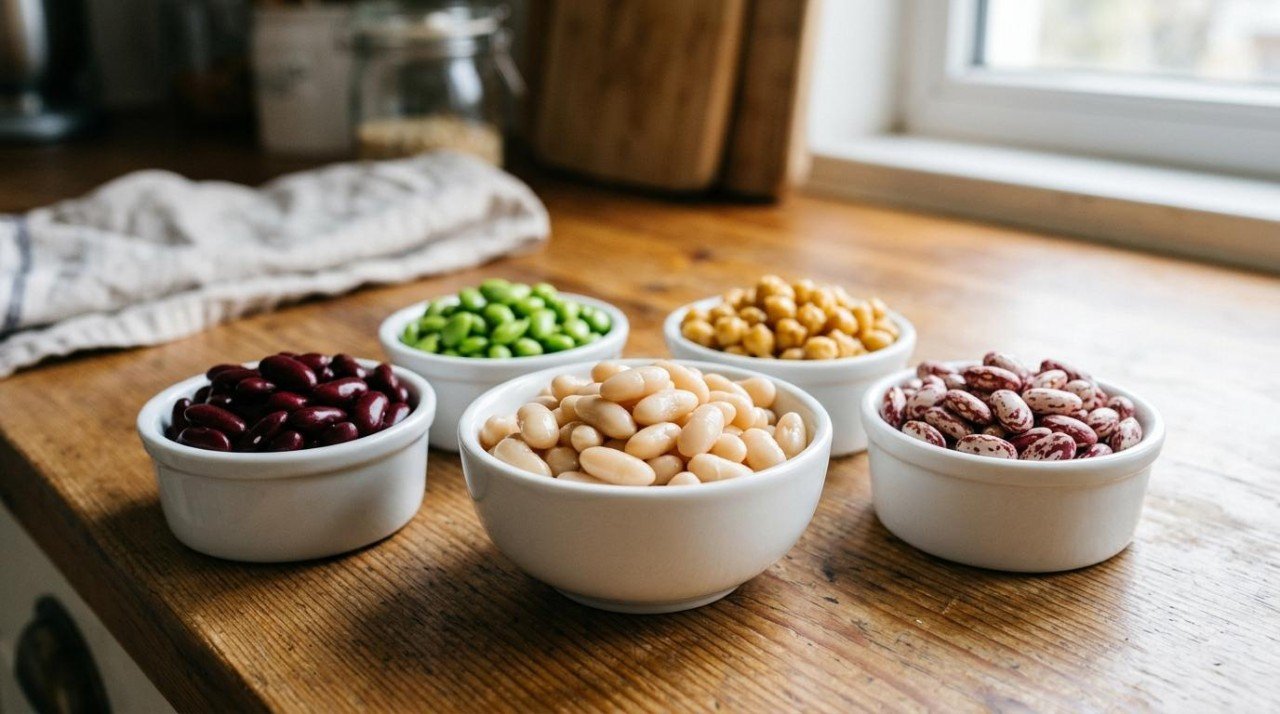
- Great northern beans — the best all-purpose stand-in for soups, stews, dips, and salads
- Borlotti (cranberry) beans — the traditional Italian pick for pasta e fagioli and minestrone
- Navy beans — for creamy, blended soups, dips, and anything you want to break down
- Butter beans — the creamiest swap for dips, mashes, and salads
- Chickpeas — firm and nutty, for salads, pasta, and sheet-pan dinners
- Red kidney beans — for hearty stews with sausage or greens, where color does not matter
- Flageolet beans — small, pale green French beans that stay whole in salads
- Black-eyed peas — for cold bean salads and brothy stews
- Brown or green lentils — when you have no cans at all, for soups and stews
- Edamame — the protein upgrade for dips, salads, and grain bowls
Canned vs. Dried: The Conversion You Need
Sometimes the problem is not the bean but the form. Here are the numbers:
- 1 can (15 ounces), drained = about 1 1/2 cups cooked beans
- 1/2 cup dried cannellini = about 1 1/4 to 1 1/2 cups cooked, so plan on a heaping 1/2 cup dried per can
- 1 pound dried beans (about 2 cups) = roughly 5 to 6 cups cooked, or 3 1/2 to 4 cans
Dried cannellini need an overnight soak (or a quick soak: boil for 2 minutes, then rest covered for an hour) and roughly 1 to 1 1/2 hours of gentle simmering, depending on how old the beans are. Our guide on how to cook dried beans from scratch covers the whole process, including the pressure cooker shortcut. If dinner is in 30 minutes, a can of almost any bean below is the faster fix.
A safety note: cannellini are white kidney beans, and like red kidney beans, the dried ones contain a natural compound that only a real boil destroys. If you cook dried white beans in a slow cooker, soak them, then boil them in fresh water for at least 30 minutes first. Canned beans are already fully cooked and safe to use straight from the can.
Substitutes for Cannellini Beans in Soups and Stews
In ribollita, minestrone, Tuscan white bean soup, and pasta e fagioli, cannellini do two jobs at once. Most of the beans stay whole and creamy through a long simmer, while a few break down and thicken the broth. Their thick skins are what make that possible, so the best swaps here are beans that can survive 30 minutes or more in a pot.
1. Great Northern Beans
- Swap: 1 can cannellini → 1 can great northern beans, drained and rinsed (1:1)
- Best for: Everything: soups, stews, dips, salads, pasta, and braised greens
- Skip it for: Nothing, really. In a salad where big, meaty beans are the star, they look a little smaller
- Health notes: A cup of cooked great northern beans has 209 calories, 14.7 g of protein, and 12.4 g of fiber, slightly more fiber than white beans like cannellini
If you remember one swap, make it this one. When America's Test Kitchen cooked cannellini, great northern, and navy beans side by side in Tuscan white bean soup, the flavor was nearly identical in all three. The difference was texture: great northerns are a bit smaller, with thinner skins and slightly less creamy flesh, but most tasters found them nearly as good, and the test kitchen named them the best stand-in for cannellini.
Because their skins are more tender, great northerns soften a little faster. In a soup that simmers for an hour or more, add them in the last 20 to 30 minutes so they stay whole. They are also easy to find: most American supermarkets stock them right next to the cannellini, often from the same brand.
2. Borlotti (Cranberry) Beans
- Swap: 1 can cannellini → 1 can borlotti or cranberry beans, drained and rinsed (1:1)
- Best for: Pasta e fagioli, minestrone, ribollita, and hearty Italian stews
- Skip it for: Pale dips and white bean salads, where their tan-pink color shows
- Health notes: A cup of cooked cranberry beans has 241 calories, 16.5 g of protein, 15.2 g of fiber, and 366 mcg of folate, about two and a half times the folate in white beans
Borlotti beans are the other great Italian soup bean. In many Italian kitchens, pasta e fagioli is made with borlotti rather than cannellini, so this swap is less a substitute than a return to tradition. They are the same bean sold in the U.S. as cranberry or Roman beans: speckled pink and cream when raw, cooking up to a soft tan-brown with a rich, creamy, slightly nutty flavor. They hold their shape well in a simmer and release enough starch to give the broth a silky body.
The color is the only trade-off. A white bean soup made with borlotti will be a warm beige instead of pale and creamy. If you cannot find them, pinto beans are a close cousin in flavor and texture and work the same way.
3. Navy Beans
- Swap: 1 can cannellini → 1 can navy beans, drained and rinsed (1:1)
- Best for: Blended or creamy soups, white bean dips, mashes, and anything you want to break down
- Skip it for: Brothy soups and salads where the beans should stay whole and distinct
- Health notes: The fiber champion of the white beans. A cup of cooked navy beans has 19.1 g of fiber and 15 g of protein for 255 calories
Navy beans are the smallest white beans, a little over half the length of a cannellini once cooked, with thin skins that slip off easily. In a brothy soup, that is a drawback: America's Test Kitchen found the loose skins gave the soup an almost chewy texture and too high a ratio of skin to bean, and advised against them as a straight cannellini swap.
But in a soup you are going to blend, or one where the beans are meant to collapse and thicken the pot, navy beans are excellent. They break down faster and more completely than cannellini, which gives you a velvety texture with less blending. They are also the classic bean for baked beans and the famous U.S. Senate bean soup. Blend them for a full minute and the skins disappear.
4. Red Kidney Beans
- Swap: 1 can cannellini → 1 can red kidney beans, drained and rinsed (1:1)
- Best for: Hearty stews with sausage, greens, or tomatoes, and long-simmered soups
- Skip it for: White bean dips, pale soups, and delicate salads
- Health notes: A cup of red kidney beans has 225 calories, 15.4 g of protein, and 13.1 g of fiber, close to cannellini across the board
Cannellini are literally white kidney beans, so red kidney beans share their size, shape, and thick skins, and they hold up just as well over a long simmer. The difference is flavor and color. Red kidney beans taste beanier and meatier, which can overpower a delicate Tuscan soup but works very well in a robust stew with Italian sausage, kale, and tomato. They will also tint the broth a reddish brown.
Use them when structure matters more than looks. A white bean and sausage stew made with red kidney beans is a different-looking dish, but it is just as hearty and satisfying.
5. Brown or Green Lentils
- Swap: 1 can cannellini → 1 1/2 cups cooked brown or green lentils (from about 2/3 cup dried, simmered 20 to 25 minutes)
- Best for: Minestrone, vegetable soups, and stews when you have no canned beans at all
- Skip it for: Dips, mashes, and salads that call for big, creamy beans
- Health notes: A cup of cooked lentils has 17.9 g of protein and 15.6 g of fiber, more of both than white beans
Lentils are the rescue when the pantry has no cans and no time for dried beans. They need no soaking and cook in about 20 minutes, so you can add dry lentils straight to a minestrone along with an extra cup of broth for every 1/2 cup of lentils, and they will be tender by the time the vegetables are. The soup will be earthier and a little thicker, and it will not have the big, creamy bites that cannellini give, but it will be hearty and filling.
Stick with brown or green lentils, which hold their shape. Red lentils dissolve into a puree. That is lovely in a smooth soup but will make a brothy minestrone muddy. Our lentil substitutes guide has more on how each kind of lentil behaves.
Substitutes for Cannellini Beans in Dips, Mashes, and Purees
White bean dip, garlicky white bean mash under a piece of fish, or cannellini blended into a creamy pasta sauce: here, the goal is a bean that purees silky smooth with a mild flavor. Navy beans and great northern beans from above both work beautifully, and navy beans are arguably even creamier. Two more are worth knowing.
6. Butter Beans
- Swap: 1 can cannellini → 1 can butter beans (large lima beans), drained and rinsed (1:1)
- Best for: Dips, mashes, creamy pasta sauces, salads, and baked bean dishes
- Skip it for: Long-simmered soups, where they fall apart
- Health notes: A cup of cooked large lima beans has 216 calories, 14.7 g of protein, 13.2 g of fiber, and 955 mg of potassium
Butter beans are large, flat, pale lima beans with a rich, buttery flavor and an even creamier, starchier texture than cannellini. That makes them the best bean of all for a dip or mash: pulse them with garlic, lemon, olive oil, and a splash of water and they turn velvety in seconds. Bob's Red Mill notes that they do not hold their shape as well as cannellini, so they are a poor choice for a soup that simmers for an hour.
They are excellent whole, too, as long as they are not cooked for long. Toss them into a salad, warm them in a skillet with olive oil, garlic, and greens, or roast them until crisp at the edges. Greek gigantes, giant white beans baked in tomato sauce, are a similar big, creamy bean and make a good swap the same way if you come across them.
7. Edamame
- Swap: 1 can cannellini → 1 1/2 cups shelled edamame, cooked according to the package and cooled (1:1 by volume)
- Best for: Bean dips, grain bowls, salads, and pasta with greens
- Skip it for: Classic Italian soups and anything that should look white
- Health notes: A cup of cooked edamame has 18.5 g of protein, 13.8 g of carbohydrate, and 8.1 g of fiber, with 188 calories and about 8 g of mostly unsaturated fat
Edamame are young green soybeans, and a bag of frozen shelled edamame keeps for months in the freezer, which makes them a handy backup when the cans run out. Blended with lemon, garlic, olive oil, and a little water, they make a bright green dip with a fresh, slightly sweet flavor, very different from a white bean dip but just as good with crackers and vegetables. In a salad or grain bowl they add a pop of color and a firm, snappy bite.
They are firmer than cannellini and never get truly creamy whole, so do not expect them to melt into a soup. Think of them as a delicious change of direction rather than a stand-in.
A note on baking: cannellini sometimes stand in for flour or butter in blondies and other bean-based treats. Great northern and navy beans work 1:1, since they are just as mild and blend just as smoothly. Chickpeas work in a pinch but taste nuttier.
Substitutes for Cannellini Beans in Salads and Pasta
A Tuscan bean salad, tuna and white bean salad, or a skillet of pasta with white beans and greens needs a bean that stays whole, tastes good warm or cold, and does not turn to mush when tossed. Great northern and butter beans from above both work well. These are the other strong options.
8. Chickpeas
- Swap: 1 can cannellini → 1 can chickpeas, drained and rinsed (1:1)
- Best for: Salads, pasta, sheet-pan dinners, roasted beans, and grain bowls
- Skip it for: Smooth soups and mashes where you want cannellini's creaminess
- Health notes: A cup of chickpeas has 269 calories, 14.5 g of protein, and 12.5 g of fiber
Chickpeas are firmer and nuttier than cannellini and never go soft and creamy, even after a long simmer. That is a weakness in a mash but a real strength in a salad, where they keep their shape no matter how hard you toss them, and in a sheet-pan dinner, where they roast up crisp at the edges. In pasta with greens, garlic, and parmesan they hold their own nicely. For a creamy dip, they work too, but expect a thicker, more hummus-like texture than a white bean dip.
Chickpeas also stand up well in Italian soups like minestrone, staying firm through a long simmer. The broth will be a bit thinner, since they release less starch. Mash a few against the side of the pot to thicken it. For more on this bean, see our chickpea substitutes guide, which runs the swap in the other direction.
9. Flageolet Beans
- Swap: 1 can cannellini → 1 can flageolet beans, drained and rinsed, or 1 1/2 cups cooked from dried (1:1)
- Best for: Bean salads, braises, and sides for lamb, chicken, or fish
- Skip it for: Dips and mashes, where their color comes out a pale grayish green
Flageolets are small, pale green beans from France, harvested before they are fully mature. They have a delicate, fresh flavor and a firm, creamy texture, and they tend to stay whole even after long cooking, which makes them a lovely salad bean. A French classic serves them alongside roast lamb, but they are just as good dressed with vinaigrette, herbs, and shallots in place of cannellini in a Tuscan bean salad.
They are smaller than cannellini and can be harder to find. Look in specialty stores, well-stocked supermarkets, and online.
10. Black-Eyed Peas
- Swap: 1 can cannellini → 1 can black-eyed peas, drained and rinsed (1:1)
- Best for: Cold bean salads, brothy stews, and soups with greens
- Skip it for: Smooth dips and mashes
Black-eyed peas are pale and creamy-tasting, but with a denser, meatier bite than cannellini, as Bob's Red Mill puts it. That makes them a good match for a dressed bean salad, where a firm bean is welcome, and for a brothy soup with greens, a dish that is a classic in the American South as well as in Italy. Their earthy flavor is a little stronger than cannellini, so a squeeze of lemon and a handful of fresh herbs keeps a salad bright.
A practical tip for any bean in a salad: rinse well, let the beans drain for a few minutes, and dress them while they are still slightly warm if you can. Warm beans soak up vinaigrette far better than cold ones, and wet beans water down the dressing.
Healthier Upgrades
Cannellini are already one of the most nourishing foods in the pantry. A cup of cooked white beans has about 17.4 g of protein, 11.3 g of fiber, 6.6 mg of iron, and 1,004 mg of potassium, plus 161 mg of calcium, which is a lot for a plant food. On potassium, iron, and calcium, they actually beat most of the substitutes on this list, so there is no need to swap them out for health. But a few substitutes do bring something extra:
- Navy beans for more fiber. 19.1 g per cup, about 70 percent more than white beans like cannellini, with the same mild flavor and an even creamier puree.
- Borlotti (cranberry) beans for folate. 366 mcg per cup, about 90 percent of the Daily Value, plus 15.2 g of fiber.
- Edamame for protein. 18.5 g per cup with only 13.8 g of carbohydrate, and a bright green color that adds visual variety to a bowl.
- A mix of beans for plant diversity. Use half cannellini and half borlotti or chickpeas in your next minestrone and you have two different plants instead of one, which adds up if you are aiming for 30 different plants a week for your gut.
Whatever bean you choose, rinse it. A study of canned beans reported in Today's Dietitian found that draining alone cut sodium by 36 percent, and draining plus rinsing cut it by 41 percent. No-salt-added cans get rid of most of the rest. If beans tend to leave you uncomfortable, our post on why beans give you gas has practical fixes that apply to every bean on this list.
Curious what a swap does to your own recipe? In Eat Well Planner, the Recipe Playground lets you change cannellini to navy beans, borlotti, or edamame and watch the nutrition score, fiber, and protein update live before you cook. And every new bean you add counts toward your Plant Points for the week.
Take the Guesswork Out of Eating Well
Eat Well Planner helps you organize your favorite recipes, plan balanced meals, and automatically generate shopping lists — all in one place. Whether you're tracking macros, managing dietary restrictions, or just trying to stop asking "what's for dinner?", we've got you covered.
Our AI-powered tools can adapt any recipe to your dietary needs, help you discover new meals you'll love, and even log your nutrition effortlessly. It's meal planning made simple.
Start Organizing Your Meals — FreeWhat Not to Use
- Baked beans or pork and beans. They are often made with navy beans, but they come in a sweet, smoky sauce that will take over a soup, dip, or salad. Use plain canned beans only.
- Butter beans in a long simmer. They are wonderful in dips and salads, but in a soup that cooks for an hour they collapse and turn the broth starchy. If they are all you have, add them in the last 10 minutes.
- Red lentils in salads or brothy soups. They dissolve completely. Save them for smooth soups and dal.
- Dried white or kidney beans straight into a slow cooker. As noted above, they need a hard boil first. Use canned, or boil soaked dried beans before they go into the slow cooker.
Which Substitute Fits Your Recipe?
For most recipes, a can of great northern beans is the answer, and nobody at the table will notice. Reach for borlotti in pasta e fagioli and minestrone, navy beans for creamy soups and dips, butter beans for the silkiest mash, and chickpeas when you want a bean that stays firm in a salad.
Still not sure which one suits the dish in front of you? Eat Well Planner's AI Recipe Chat knows the full recipe you are cooking, so you can ask "I am out of cannellini, what should I use in this?" and get an answer for that soup or salad, not a general list. And if you want to put white beans to work in a creamy soup without the cream, our healthier creamy tomato soup makeover is a good place to start.