You planned a pot of squash soup, a tray of roasted squash, or a creamy squash pasta sauce, and now the squash bin is empty. Or the one on your counter turned out to be mushy inside. Don't worry. Butternut squash is one of the easiest ingredients to replace, because plenty of other vegetables are sweet, orange, and creamy when cooked.
The best swap depends on what the squash does in your recipe. In roasted dishes (cubes, wedges, salads, grain bowls, sheet-pan dinners), you need something that holds its shape and caramelizes. In pureed dishes (soups, pasta sauces, risotto, mac and cheese, baking), you need something that blends smooth and adds body and gentle sweetness. Some substitutes work for both, but many only work for one, so each option below says what it's good for and what to skip.
Useful numbers before you start: a medium butternut squash weighs about 2 to 3 pounds. The University of Wisconsin Extension estimates that 1 pound of winter squash makes about 1 cup of cooked puree. Unless a section says otherwise, the swaps below replace butternut 1:1 by weight for roasting and soups, and 1:1 by volume for puree.
The Quick List
- Sweet potato — the best all-around swap for roasting, soups, puree, and baking
- Kabocha or buttercup squash — the closest squash match, sweeter and denser than butternut
- Frozen or pre-cut butternut — the same squash, just from a different aisle
- Canned pumpkin puree — the fastest swap for soups, sauces, and baking
- Pie pumpkin or red kuri squash — a fresh squash that roasts and purees much like butternut
- Acorn squash — good for roasted halves, wedges, and stuffing
- Delicata squash — the no-peel swap for roasted slices, salads, and grain bowls
- Carrots — sweet and orange, great roasted or blended into soup
- Cauliflower — the lighter swap for creamy soups and sauces
- White beans — the protein-and-fiber swap for creamy soups, pasta sauces, and mac and cheese
Which Substitute for Which Dish
- Roasted cubes or wedges: sweet potato, kabocha, delicata, acorn, red kuri, or carrots
- Salads, grain bowls, and sheet-pan dinners: delicata, sweet potato, or kabocha
- Stuffed squash halves: acorn squash, small kabocha, or delicata boats
- Pureed soup: sweet potato, kabocha, canned pumpkin, carrots, or a mix with cauliflower
- Chunky soups, stews, chili, and curry: sweet potato, kabocha, or pie pumpkin
- Creamy pasta sauce, risotto, and mac and cheese: canned pumpkin, sweet potato puree, or blended white beans
- Ravioli or gnocchi filling: roasted sweet potato, kabocha, or well-drained canned pumpkin
- Pies, muffins, and quick breads: canned pumpkin or mashed sweet potato
Sweet Potato
- Swap: 1:1 by weight for roasting and soups; 1:1 by volume for puree
- Best for: Roasting, soups, curries, chili, puree, pasta sauce, ravioli filling, and baking
- Skip it for: Stuffed squash halves (use a baked whole sweet potato instead, split and filled)
- Health notes: More vitamin A, calories, and carbs than butternut, with the same fiber: 90 calories, 3.3 g fiber, and 961 mcg RAE vitamin A per 100 g baked
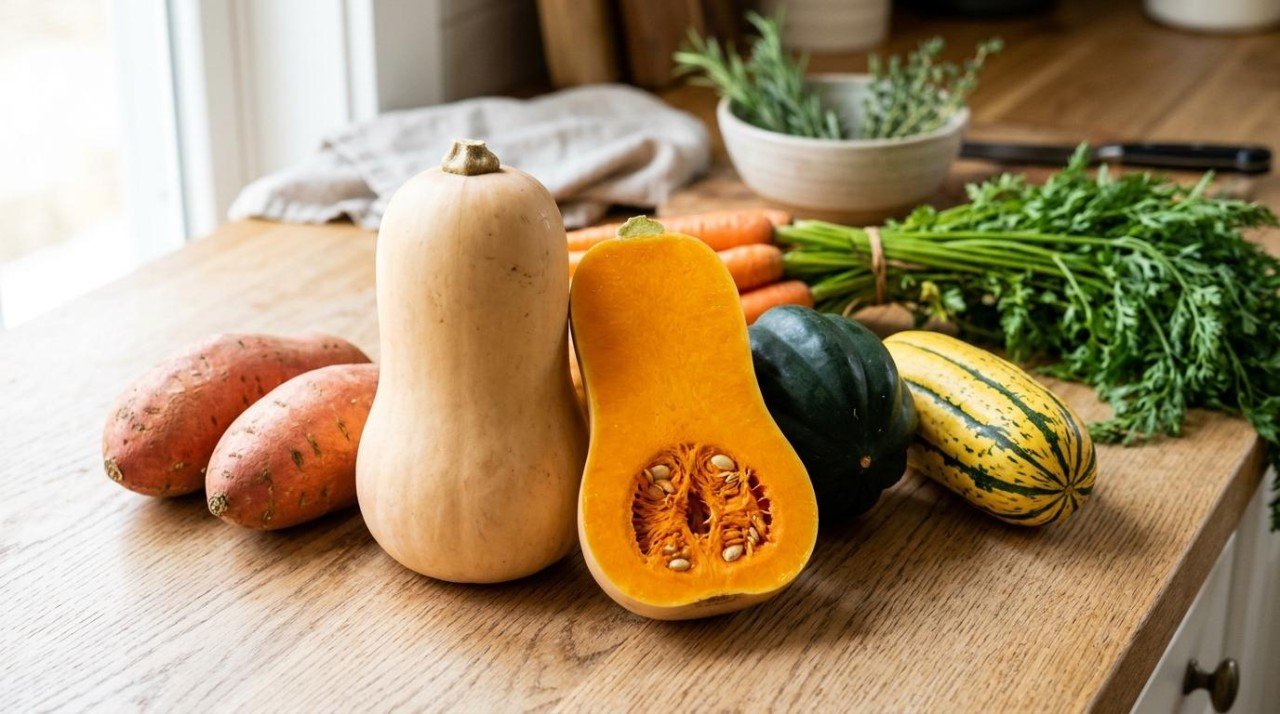
Sweet potatoes are the most useful swap because they're easy to find year-round, easy to peel, and they do almost everything butternut does. Orange-fleshed sweet potatoes (often sold as "yams" in US stores) have the same color and a similar sweet, nutty flavor. Cut them into the same size pieces your recipe calls for. One-inch cubes roast at 400 to 425°F in 25 to 35 minutes, about the same as butternut.
The main difference is starch. Sweet potatoes are starchier, sweeter, and less watery than butternut. That's a good thing when roasting, since they caramelize faster, so check them 5 minutes early. In a pureed soup, the extra starch makes the soup thicker. Add more broth, 1/4 cup at a time, until it's as thin as you like. Expect a sweeter soup too. A squeeze of lemon or lime juice, or a pinch of cayenne, balances it. For more on this vegetable, including what to use when you're out of it, see our sweet potato substitutes guide.
Kabocha or Buttercup Squash
- Swap: 1:1 by weight for roasting and soups; 1:1 by volume for puree
- Best for: Roasting, soups, curries, puree, ravioli filling, and pie
- Skip it for: Recipes that need neat, peeled cubes. The hard, bumpy skin is a pain to peel
- Health notes: Like butternut, it's a low-calorie winter squash with beta-carotene from its orange flesh
Kabocha (sometimes called Japanese pumpkin) and its cousin buttercup squash are the closest squash substitutes. They're both squat and dark green, with deep orange flesh. They taste sweeter and nuttier than butternut, often compared to chestnuts or sweet potatoes, and the flesh is drier and denser. A kabocha puree is thick and fluffy, almost like a cross between butternut and sweet potato.
The shell is very hard. Microwave the whole squash for 2 to 3 minutes to soften it a little before cutting. You don't need to peel kabocha: the skin is edible and softens completely when roasted, so wedges or cubes can go into the oven skin-on at 400 to 425°F for about 25 to 35 minutes. Buttercup's skin is tougher, so scoop the flesh out after roasting. Because both are drier than butternut, you'll usually need extra liquid in a soup or puree. Add broth a little at a time, blending as you go, until it's as thin as you like.
Frozen or Pre-Cut Butternut Squash
- Swap: 1:1 by weight (weigh after thawing for puree)
- Best for: Soups, stews, curries, risotto, and puree; pre-cut fresh cubes work for roasting too
- Skip it for: Crisp, caramelized roasted cubes from frozen squash. It roasts softer and browns less
- Health notes: Frozen vegetables are frozen soon after harvest and keep most of their nutrients; check that the bag is plain squash with no added sauce
Before you change your recipe, check the freezer aisle and the refrigerated produce case. Many stores sell frozen butternut squash cubes and fresh peeled and cubed butternut squash. Both are the same ingredient, so you don't need to change cooking times for soups and stews. Just add the frozen cubes straight to the pot.
For roasting, spread frozen cubes on a sheet pan in a single layer without thawing, toss with oil, and roast at 425°F for 25 to 35 minutes, flipping halfway. Frozen squash releases more water than fresh, so it won't brown as deeply. Leave space between the pieces so they roast instead of steam. If you need puree, thaw the cubes, cook them until very soft, then drain off any liquid before mashing or blending.
Canned Pumpkin Puree
- Swap: 1 cup butternut puree → 1 cup canned pumpkin puree (a 15-ounce can is about 1 3/4 cups)
- Best for: Pureed soups, pasta sauces, mac and cheese, risotto, pies, muffins, and quick breads
- Skip it for: Anything roasted or chunky
- Health notes: 83 calories, 7.1 g fiber, and 1,906 mcg RAE vitamin A per cup, more than twice the Daily Value
If your recipe calls for butternut squash that gets cooked and blended anyway, a can of pumpkin saves you all the peeling, chopping, and roasting. It's a closer match than you might think: most canned pumpkin in the US is made from a tan-skinned pumpkin variety in the same species as butternut, not from the round orange pumpkins you carve. The flavor is a little earthier and less sweet than roasted butternut.
For a pureed soup that calls for 2 pounds of butternut squash (about 2 cups cooked puree), use one 15-ounce can plus about 1/4 cup extra broth, and simmer for 10 to 15 minutes instead of the usual 25 to 30. Since canned pumpkin hasn't been roasted, it lacks caramelized flavor. Browning your onions well, or adding a teaspoon of maple syrup or a pinch of smoked paprika, makes up for it. In pasta sauce or mac and cheese, stir it in at the end and heat through. Always buy plain pumpkin puree, not pumpkin pie filling, which is already sweetened and spiced. If you're out of canned pumpkin too, our pumpkin puree substitutes guide has more options.
Pie Pumpkin or Red Kuri Squash
- Swap: 1:1 by weight for roasting and soups; 1:1 by volume for puree
- Best for: Soups, stews, curries, roasted wedges, and puree for pie or baking
- Skip it for: Quick weeknight recipes. Both are harder to peel and break down than butternut
- Health notes: Low in calories, with plenty of beta-carotene from the orange flesh
Small pie pumpkins (also called sugar pumpkins) are much better for cooking than the big carving kind. They have sweet, fairly smooth flesh that roasts and purees much like butternut, though they're slightly more watery and stringy. Red kuri squash, a teardrop-shaped orange squash sometimes sold as "orange Hokkaido," is drier and sweeter, closer to kabocha. Its thin skin softens when roasted, so you can leave it on.
The easiest way to cook either one is to halve it, scoop out the seeds, and roast it cut side down at 400°F for 40 to 50 minutes, until a fork slides in easily. Then scoop out the flesh for soup or puree. For roasted cubes, peel the pumpkin first. With red kuri, you can skip peeling. If pumpkin puree looks wet, drain it in a fine-mesh strainer for 15 to 30 minutes before using it in baking or ravioli.
Acorn Squash
- Swap: 1:1 by weight for roasting; 1 butternut half (stuffed) → 1 acorn half
- Best for: Roasted halves, stuffed squash, roasted wedges, and chunky soups
- Skip it for: Smooth soups and purees where color matters. The pale yellow flesh makes a beige, less sweet soup
- Health notes: More fiber than butternut but almost no vitamin A: 56 calories, 4.4 g fiber, and 21 mcg RAE per 100 g baked, plus 896 mg potassium per cup
Acorn squash is easy to find in fall and winter and very easy to stuff, since each half has a ready-made bowl where the seeds were. Brush the cut sides with oil and roast cut side down at 400°F for 30 to 40 minutes, then fill with grains, beans, sausage, or whatever your stuffed butternut recipe calls for.
Acorn is less sweet than butternut and a little more fibrous, and the deep ridges make it nearly impossible to peel raw. For roasted pieces, cut it into wedges along the ridges and roast skin-on at 425°F for 25 to 30 minutes. The skin is edible, though tougher than delicata's. For soup, roast the halves and scoop out the flesh. A drizzle of maple syrup or a pinch of cinnamon helps make up for the missing sweetness.
Delicata Squash
- Swap: 1:1 by weight
- Best for: Roasted slices, salads, grain bowls, sheet-pan dinners, and small stuffed boats
- Skip it for: Big batches of soup or puree. Each squash is small, so the scooping adds up
- Health notes: Like other winter squash, it's low in calories and has fiber
Delicata is the easiest winter squash to cook because you don't need to peel it. The skin is thin, striped, and completely edible once roasted. Halve it lengthwise, scoop out the seeds, slice it into 1/2-inch half-moons, toss with oil, and roast at 425°F for 20 to 25 minutes. That's about 10 minutes faster than butternut cubes, so add it to a sheet-pan dinner later or cut it thicker.
It has creamy, sweet flesh that tastes a little like sweet potato or corn. Roasted delicata is a great swap in a fall salad or grain bowl where you want pieces that hold their shape. The halves also make small stuffed "boats," roasted for 20 to 25 minutes before filling.
Carrots
- Swap: 1:1 by weight for roasting and soups
- Best for: Roasting, pureed soups, stews, curries, and blended pasta sauces
- Skip it for: Mash, ravioli filling, and baking that needs a thick puree. Carrots blend thinner and more fibrous
- Health notes: 31 calories, 3.0 g fiber, and 856 mcg RAE vitamin A per 100 g cooked, more vitamin A than butternut with fewer calories
Carrots are probably in your fridge already, and they match butternut's color and sweetness well. Cut them into 1/2-inch coins or sticks and roast at 425°F for 25 to 30 minutes. In a pureed soup, simmer them in the broth until very tender, about 20 to 25 minutes, then blend. They make a slightly thinner soup with a brighter, more vegetable-forward flavor.
For a soup that's closer to butternut, replace the squash with half carrots and half sweet potato, or add one peeled Yukon Gold potato per pound of carrots. The potato's starch gives the soup body. Ginger, curry powder, and coconut milk go especially well with carrots if you want to lean into the change.
Cauliflower
- Swap: Replace up to half the butternut in a soup or sauce with an equal weight of cauliflower
- Best for: Creamy soups, pasta sauces, and mac and cheese sauces
- Skip it for: Recipes where the orange color and sweetness are the point, unless mixed with carrots or pumpkin
- Health notes: Very light: about 23 calories, 2.3 g fiber, and 44 mg vitamin C per 100 g cooked
In a lot of recipes, butternut squash is there to make a soup or sauce creamy without much cream. Cauliflower does that job well. Simmered until very soft and blended, it turns silky and smooth, with a mild flavor that takes on whatever seasonings you use.
What it doesn't have is color or sweetness. Used alone, it makes a pale, savory soup that's tasty but different. The best approach is to use it for half the squash and fill the other half with carrots, sweet potato, or canned pumpkin. You'll still get an orange, slightly sweet soup that's lighter than the original. A pinch of turmeric or smoked paprika also warms up the color.
White Beans
- Swap: 1 cup butternut puree → 1 cup pureed canned white beans (a drained 15-ounce can makes about 1 1/2 cups whole beans)
- Best for: Creamy soups, pasta sauces, mac and cheese, and dips
- Skip it for: Roasting, baking, and anything that needs sweetness
- Health notes: Adds protein: 19 g protein and 12.6 g fiber per cup of canned white beans, but 891 mg sodium unless you buy low-sodium or rinse them
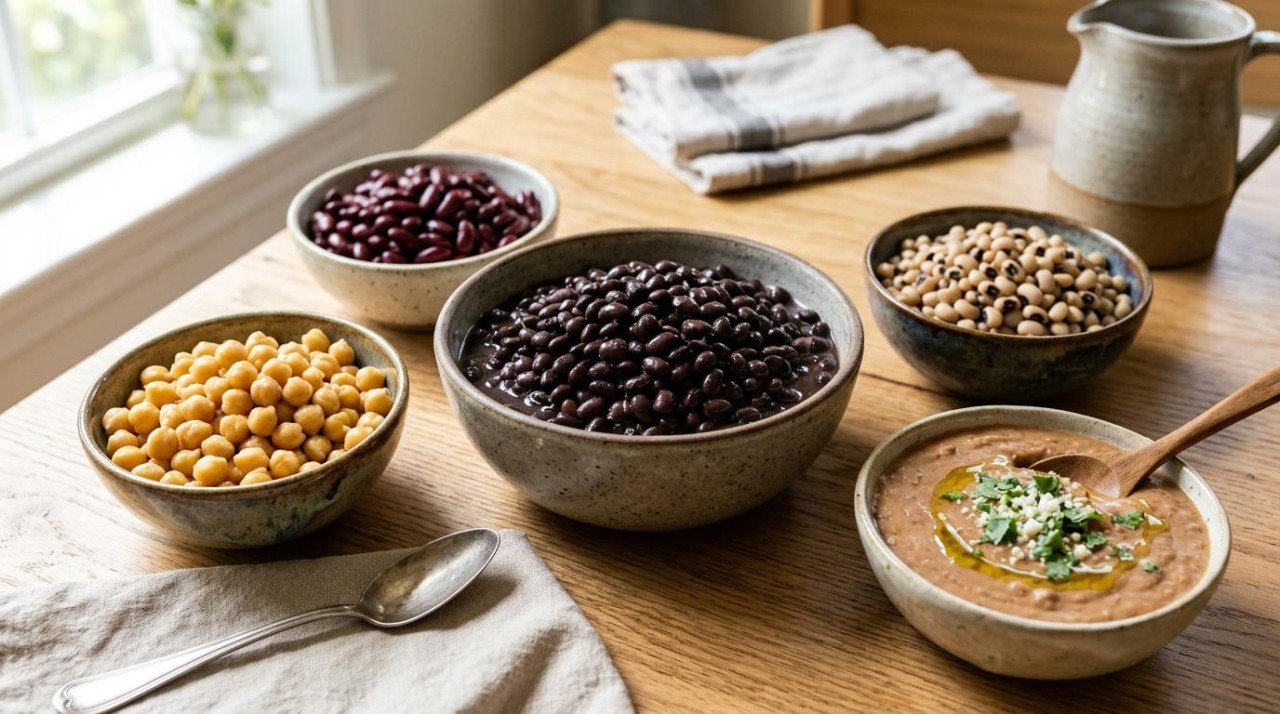
If you want a creamy sauce or soup that also makes the meal more filling, blend white beans. Cannellini, great northern, or navy beans all work. Drain and rinse the beans, then blend them with some of the soup's broth or the pasta's cooking water until smooth. In a creamy pasta sauce or mac and cheese, blended beans give a thick, velvety texture that's surprisingly close to squash puree.
Like cauliflower, beans won't give you color or sweetness, so they work best paired with a little canned pumpkin, a roasted carrot, or a sweet potato. A 50/50 mix of white beans and canned pumpkin makes a great stand-in for butternut puree in pasta sauce. If you run out of beans too, our cannellini bean substitutes guide has other options.
Cooking Time Cheat Sheet
Butternut squash cubes (1 inch) usually roast at 400 to 425°F in 25 to 35 minutes and simmer in soup in about 20 to 25 minutes. Here's how the swaps compare:
- Sweet potato cubes: About the same, but check 5 minutes early since they brown faster
- Kabocha cubes or wedges: About the same; skin-on is fine
- Frozen butternut cubes: About the same, roasted from frozen; they brown less
- Canned pumpkin: No roasting; simmer 10 to 15 minutes in soup
- Pie pumpkin or red kuri halves: 40 to 50 minutes at 400°F
- Acorn squash halves: 30 to 40 minutes at 400°F; wedges 25 to 30 minutes at 425°F
- Delicata half-moons: 20 to 25 minutes at 425°F, about 10 minutes faster
- Carrot coins: 25 to 30 minutes at 425°F; 20 to 25 minutes simmered in soup
- Cauliflower florets: 15 to 20 minutes simmered in soup
- Canned white beans: Already cooked; blend and heat through
How the Swaps Compare Nutritionally
Butternut squash is a nutrition bargain. One cup of baked cubes has 82 calories, 6.6 g fiber, 1,144 mcg RAE vitamin A, and 31 mg vitamin C. That's more than a full day's vitamin A (the Daily Value is 900 mcg), all for under 100 calories. Here's how the substitutes compare per 100 g cooked:
- Butternut squash (baked): 40 calories, 10.5 g carbs, 3.2 g fiber, 558 mcg RAE vitamin A
- Sweet potato (baked): 90 calories, 20.7 g carbs, 3.3 g fiber, 961 mcg RAE
- Canned pumpkin: 34 calories, 8.1 g carbs, 2.9 g fiber, 778 mcg RAE
- Carrots (boiled): 31 calories, 8.3 g carbs, 3.0 g fiber, 856 mcg RAE
- Acorn squash (baked): 56 calories, 14.6 g carbs, 4.4 g fiber, 21 mcg RAE
- Cauliflower (boiled): 23 calories, 4.1 g carbs, 2.3 g fiber, 44 mg vitamin C
- White beans (canned): 114 calories, 21.2 g carbs, 4.8 g fiber, 7.3 g protein
A few things stand out. Canned pumpkin and carrots actually have more vitamin A than butternut, with fewer calories, so they're great swaps if you care about beta-carotene. Sweet potato has even more vitamin A, but more than twice the calories and carbs. That's not a problem, just something to know if you're watching carbs. Acorn squash has the most fiber of the squashes but almost no vitamin A, because its flesh is pale yellow, not orange. White beans add the most protein and fiber, which makes a squash soup or pasta more filling.
Swapping vegetables is also an easy way to eat a wider variety of plants. If you always buy butternut, trying kabocha, delicata, or a carrot and white bean soup counts toward the "30 plants a week" goal that Eat Well Planner's Plant Points tracker is built around.
Which Swap Fits Your Recipe?
The right substitute depends on the rest of the dish. A Thai-style squash curry, a butternut risotto, and a mac and cheese with squash in the sauce each need something a little different, and this guide can only give general advice. In Eat Well Planner, you can ask the AI recipe chat about your saved recipe ("I'm out of butternut squash for this soup. What should I use, and how much broth?") and get an answer that takes everything else in the pot into account. Or open the recipe in the Recipe Playground, swap in sweet potato, carrots, or white beans, and see how the nutrition score changes before you shop.
Take the Guesswork Out of Eating Well
Eat Well Planner helps you organize your favorite recipes, plan balanced meals, and automatically generate shopping lists — all in one place. Whether you're tracking macros, managing dietary restrictions, or just trying to stop asking "what's for dinner?", we've got you covered.
Our AI-powered tools can adapt any recipe to your dietary needs, help you discover new meals you'll love, and even log your nutrition effortlessly. It's meal planning made simple.
Start Organizing Your Meals — FreeWhat Not to Use
- Spaghetti squash. It cooks into watery strands, so it won't puree into a smooth soup or hold its shape as roasted cubes.
- Zucchini or yellow summer squash. They're mostly water, with no sweetness or orange color. They turn mushy when roasted as long as butternut and make a thin, green soup. If you want to use them, our zucchini guide covers what they're good for.
- Carving pumpkins. The big Halloween kind is watery, stringy, and bland. Use small pie pumpkins or canned puree.
- Pumpkin pie filling. It's already sweetened and spiced, so it doesn't belong in soups or pasta sauce. Use plain pumpkin puree.
- Canned pumpkin in roasted dishes. It's a puree, so it can't replace cubes or wedges.
- Regular potatoes alone. They're fine in a chunky stew, but a potato-only "squash soup" is gluey if you blend it too long, and it has none of the sweetness or color. Mix them with carrots instead.
The Bottom Line
First, check the freezer case and the pre-cut produce section, since frozen or peeled butternut is a direct swap. If there's none, sweet potato is the best all-around substitute, and kabocha is the closest squash. Canned pumpkin is the fastest choice for soups, sauces, and baking. For roasting, delicata and acorn squash work well, and carrots are a great swap in both roasted dishes and soups. For creamy soups and sauces, cauliflower makes the dish lighter, and white beans add protein and fiber.
If you want to go further than one ingredient, Eat Well Planner can create a recipe variation with the swap already worked in, including amounts and cooking times. Or try Make It Healthier, which suggests ingredient swaps like these and checks how much each one actually improves the recipe's nutrition before it shows them to you.