You are halfway through a batch of pancakes or biscuits, the recipe says buttermilk, and there is none in the fridge. Good news: buttermilk is one of the easiest ingredients to fake, and you almost certainly have something on hand that will do the job.
The reason a swap works so well is that buttermilk is really doing two things at once. It brings tang and a little richness, and — more importantly for baking — it brings acid. That acidity is what reacts with baking soda to make things rise, and it tenderizes the crumb along the way. Get those two qualities right and most recipes will never know the difference.
Below are the substitutes that genuinely work, ordered from the most reliable pantry fix to the more specialized options, each with an exact ratio. First, the short version for anyone who just needs the answer and a preheated oven.
The Quick List
- Milk + lemon juice or vinegar — the classic 5-minute pantry fix for baking
- Milk + cream of tartar — same idea when you have no lemon or vinegar
- Plain yogurt, thinned — thick, tangy, and adds a little protein
- Kefir — a straight 1:1 pour with a gut-health bonus
- Sour cream, thinned — the richest stand-in, great in tender cakes
- Dried buttermilk powder — the no-waste pantry staple for regular bakers
- Dairy-free milk + acid — soy or oat milk soured with lemon or vinegar
Why Buttermilk's Acidity Matters (and When It Does Not)
Understanding this one thing lets you improvise with confidence. Buttermilk is acidic thanks to the lactic acid produced during fermentation. When that acid meets baking soda (sodium bicarbonate), the two react and release carbon dioxide — the bubbles that make pancakes fluffy and biscuits rise. No acid, no reaction, and a recipe leavened with baking soda will bake up flat and dense. The acid also gently weakens gluten, which is why buttermilk baked goods come out especially soft and tender.
That is why plain milk is a poor swap in these recipes, and why every good substitute below is either acidic already or made acidic on the spot. One practical note: because the reaction starts the moment the acid hits the soda, get the batter into a preheated oven soon after mixing so the bubbles do not fizzle out.
The exception is when buttermilk is not being used for lift — a marinade, a salad dressing, or a ranch dip, where you mainly want the tang and body. There, the leavening does not matter and you have even more freedom to swap. Those uses are flagged where relevant below.
Milk + Lemon Juice or Vinegar
- Swap: 1 cup milk + 1 tablespoon lemon juice or white/cider vinegar; stir and rest 5 to 10 minutes until slightly curdled
- Best for: Almost any baking — pancakes, biscuits, muffins, cakes, cornbread
- Skip it for: Nothing major; it is the all-purpose answer
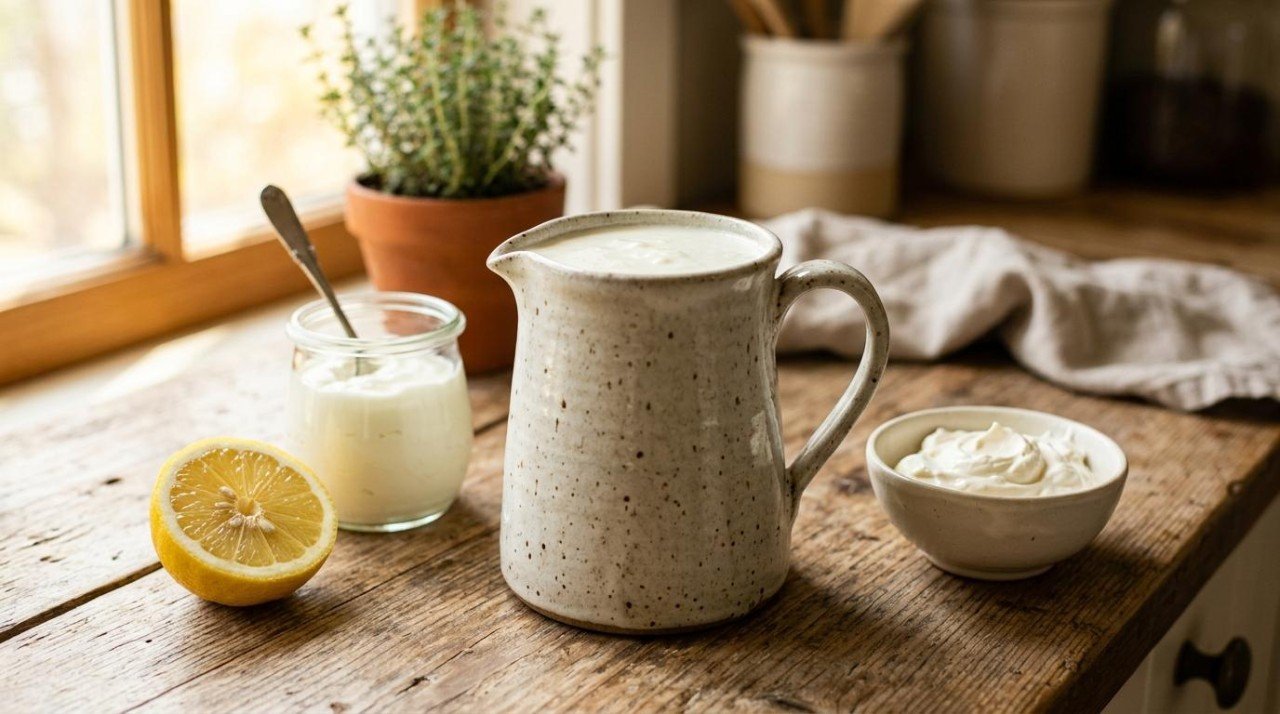
This is the one to reach for first. Add a tablespoon of lemon juice or vinegar to a measuring cup, top it up to one cup with milk, give it a stir, and let it sit for 5 to 10 minutes. The acid curdles the milk slightly and gives you the tang and the leavening power buttermilk provides. Whole milk gives the richest result, but low-fat works in a pinch. Lemon juice and vinegar are interchangeable here; use whichever is closer to hand (white and cider vinegar are the most neutral).
Scale it to whatever you need — one tablespoon of acid per cup of milk is the ratio to remember. It is not quite as thick as real buttermilk, so the crumb can be a touch less plush, but in everyday baking the difference is hard to spot.
Milk + Cream of Tartar
- Swap: 1 cup milk + 1 3/4 teaspoons cream of tartar
- Best for: Baking, when you have no lemon or vinegar but do have cream of tartar
- Skip it for: Marinades and dressings, where the flavor is off
Cream of tartar is itself an acid (it is the powdery stuff behind a lot of baking powder), so it sours milk the same way lemon or vinegar does. Use 1 3/4 teaspoons per cup of milk. Because the powder can clump when dropped straight into liquid, whisk it hard until it dissolves — or, easier still, stir the cream of tartar into the recipe's dry ingredients and add the plain milk to the wet ones, so it disperses on its own. This is purely a baking fix; it does not give you a pourable, tangy liquid for dressings.
Plain Yogurt, Thinned
- Swap: 3/4 cup plain yogurt + 1/4 cup milk (or water), whisked smooth; add more milk to reach a pourable consistency
- Best for: Baking, marinades, dressings, and creamy dips
- Health notes: Adds protein and calcium, especially with Greek yogurt
Plain yogurt is already cultured and tangy, so it behaves a lot like buttermilk once you loosen it to a pourable consistency. Thin it with a splash of milk or water until it pours like buttermilk rather than sitting in a mound. Regular plain yogurt needs only a little thinning; thick Greek yogurt is stiffer and will take more milk, but it repays you with extra protein. Use unsweetened, unflavored yogurt only — vanilla or fruit versions will throw off the recipe.
This is one of the most versatile swaps on the list: it works in baking, but it also shines in the places buttermilk is not being used for lift, like a tenderizing chicken marinade or the base of a creamy dressing.
Kefir
- Swap: 1:1 — use the same amount of plain, unsweetened kefir as the buttermilk called for
- Best for: Pancakes, biscuits, scones, marinades, and dressings
- Health notes: A fermented food with live cultures linked to gut-microbiome benefits
If you keep kefir around, it is arguably the closest match of all — a drinkable, tangy fermented milk with almost exactly buttermilk's pourable consistency. No mixing, no waiting: pour it in at a straight 1:1. Its slightly sharper tang is a plus in most bakes.
Kefir is also the one healthier upgrade here worth calling out. It is a fermented dairy drink rich in probiotic bacteria and yeasts, and research links it to improvements in the gut microbiome. One honest caveat: baking's heat kills those live cultures, so you get kefir's tang and tenderness in a muffin but not its probiotic payoff. To actually benefit from the cultures, use it where it stays raw — a buttermilk-style salad dressing, a marinade you do not cook down, or simply drunk on its own. New to the world of cultured foods? Here is where to start with fermented foods.
Sour Cream, Thinned
- Swap: About 3/4 cup sour cream + 1/4 cup milk or water, whisked to a pourable, heavy-cream consistency
- Best for: Tender cakes, quick breads, and rich pancakes
- Skip it for: Recipes where you want a lean, light crumb
Sour cream is cultured and acidic like buttermilk, just much thicker and richer. Whisk in milk or water until it loosens to the consistency of heavy cream and it pours and reacts much like the real thing, with extra fat that makes for a lovely, moist crumb. That richness is the trade-off: it is the wrong pick if you were counting on buttermilk to keep a bake light. Full-fat plain yogurt works exactly the same way if that is what you have.
Take the Guesswork Out of Eating Well
Eat Well Planner helps you organize your favorite recipes, plan balanced meals, and automatically generate shopping lists — all in one place. Whether you're tracking macros, managing dietary restrictions, or just trying to stop asking "what's for dinner?", we've got you covered.
Our AI-powered tools can adapt any recipe to your dietary needs, help you discover new meals you'll love, and even log your nutrition effortlessly. It's meal planning made simple.
Start Organizing Your Meals — FreeDried Buttermilk Powder
- Swap: Follow the package — typically about 4 tablespoons of powder whisked into the dry ingredients per 1 cup of water added to the wet
- Best for: Regular bakers who hate wasting half a carton
- Skip it for: Anywhere you need a genuinely pourable liquid buttermilk up front
Dried buttermilk powder is the answer to buttermilk's biggest annoyance: a recipe uses half a cup and the rest sours in the fridge. The powder keeps for months, so it is worth stocking if you bake often. The standard method is to whisk the powder into your dry ingredients and add plain water where the recipe wanted buttermilk. If you try to reconstitute it into liquid first it can clump, so the dry-and-wet approach is more reliable.
Dairy-Free Milk + Acid
- Swap: 1 cup unsweetened soy or oat milk + 1 tablespoon lemon juice or vinegar; rest 5 to 10 minutes
- Best for: Vegan and dairy-free baking
- Skip it for: Thin milks like rice or light almond, which curdle poorly
The soured-milk trick works without dairy, too — the acid still reacts with baking soda for lift. Soy milk is the standout because its higher protein content lets it curdle and thicken much like cow's milk; oat milk is a close second thanks to its body. Use unsweetened, unflavored versions, add a tablespoon of lemon juice or vinegar per cup, and rest it a few minutes. For a fully dairy-free recipe rewrite rather than a single swap, the AI recipe chat below can adapt the whole method for you.
What Not to Use
- Plain milk on its own. With no acid, it will not react with baking soda, and a recipe that relies on that reaction will bake up flat and dense. Always add the acid.
- Sweetened or flavored yogurt, kefir, or plant milk. The added sugar and flavorings distort both the taste and the chemistry. Reach for plain, unsweetened versions only.
- Water plus butter. A once-common suggestion, but it brings no acid and no tang, so it fails at the two jobs that actually matter.
The through-line is simple: buttermilk is tang plus acid, and any swap that delivers both will carry your recipe. Remember the one-tablespoon-of-acid-per-cup rule and you can improvise your way out of an empty carton every time.
Not sure which of these fits the exact recipe in front of you? That is precisely what Eat Well Planner's AI recipe chat is for. Pull up your recipe, tell it you are out of buttermilk, and it will suggest the substitute that suits that dish — with the ingredients and method already in view. And if you need the whole recipe made dairy-free, the Recipe Variations feature can rewrite it with the swaps already worked in, so you can skip the mental math and get back to the mixing bowl.