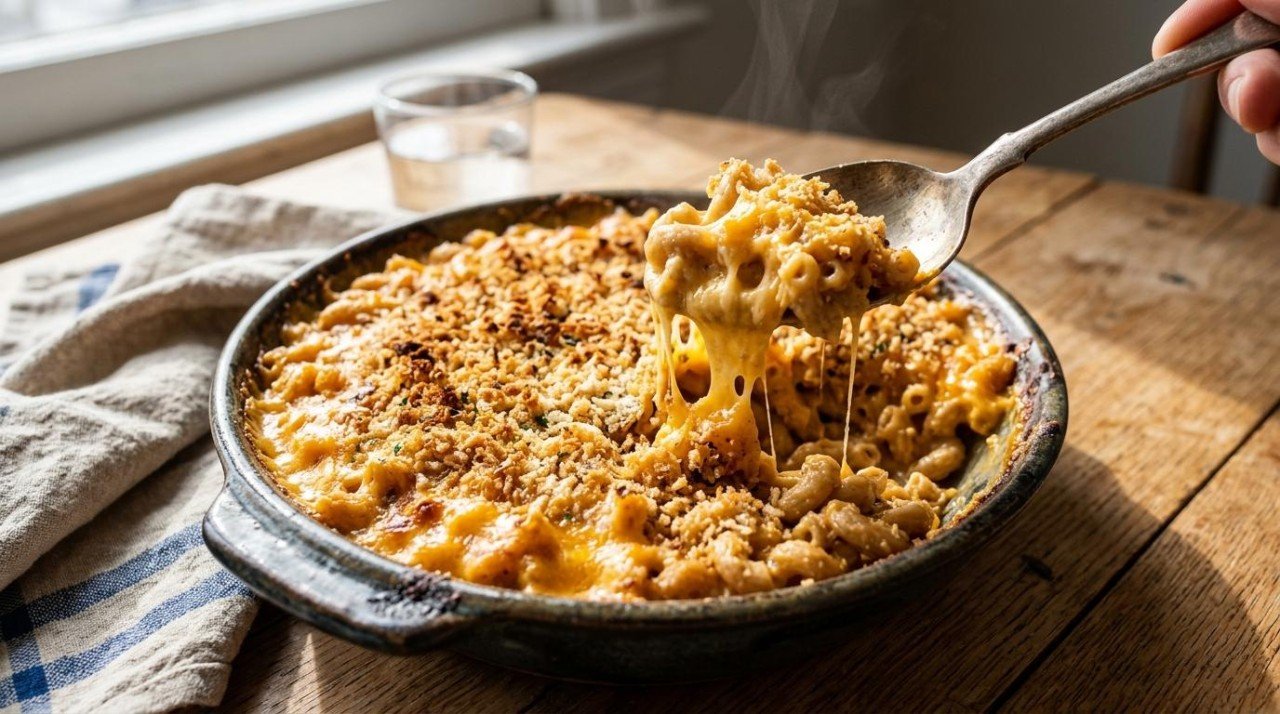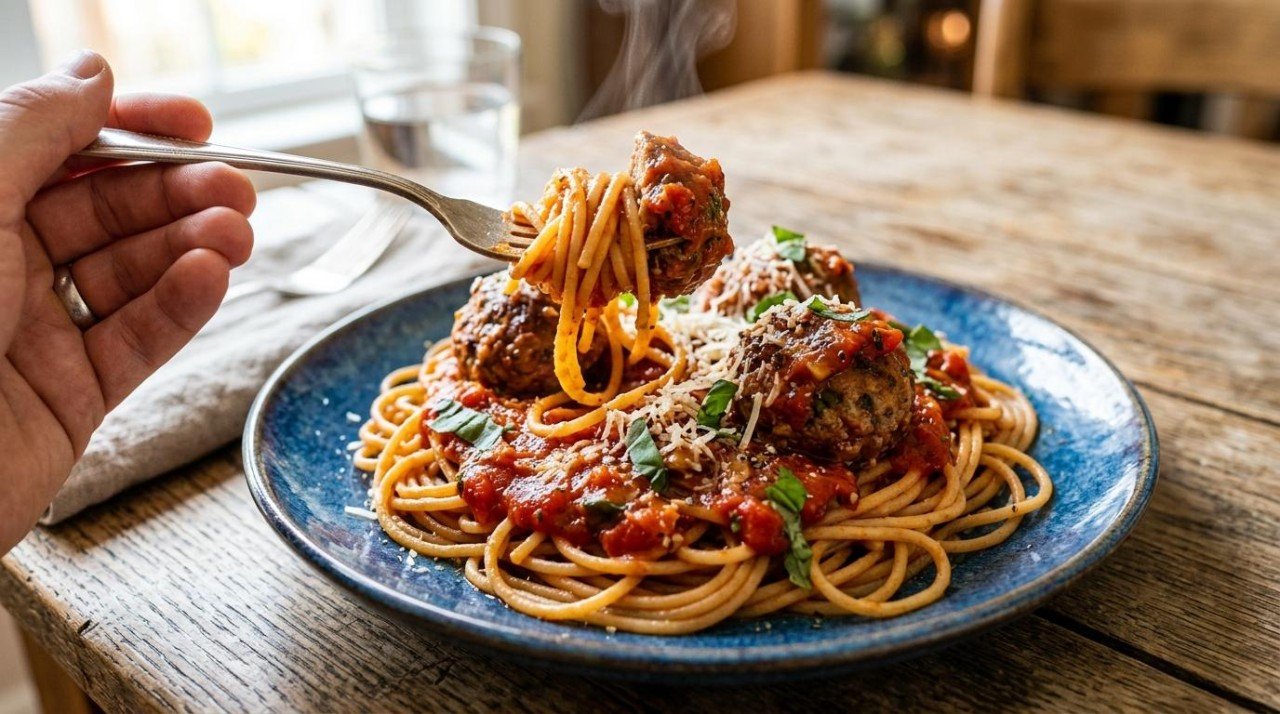
Spaghetti and meatballs is a Sunday-dinner institution. It is the smell that means someone is home, the plate kids ask for by name, the leftovers that somehow taste better the next day. Nobody is trying to reinvent it, and you should not either.
But it also has a reputation as a nutritional heavyweight, so we ran a standard version through the app's Nutrition Score to see how bad it really is. The answer surprised us: 51 out of 100. Not a disaster, and better than a lot of the internet would have you believe. The fiber is already decent and there is barely any added sugar. What actually drags it down is narrower and more fixable than the usual "it's just unhealthy" hand-waving suggests.
So this is less a rescue than a tune-up. Same tangle of noodles, same tender meatballs, same red sauce you twirl into it. We made four changes, verified each one against real nutrition data, and landed at 80 out of 100 without the dish ever stopping being spaghetti and meatballs. Here is exactly what moved the number, and what each change costs you at the table.
The original: what's in it and how it scores
The version we scored is the one most of us actually make on a weeknight: about a pound of regular white spaghetti, meatballs from a pound of 80/20 ground beef bound with white breadcrumbs, an egg, and a little grated Parmesan, all simmered in a 24-ounce jar of marinara. Four generous servings. That plate scores 51 out of 100, and here is the honest per-serving breakdown:
- 940 calories
- Saturated fat: about 12 g — right at the American Heart Association's suggested cap of roughly 13 g for a whole day, in a single serving
- Sodium: about 1,600 mg — around 69% of the 2,300 mg daily limit
- Fiber: 7.6 g (already respectable)
- Added sugar: 3.3 g (low)
- Protein: about 42 g (plenty)
The score flags two things in red, and they are the real story. The first is sodium, and most of it is not coming from your salt shaker — it is in the jar. The American Heart Association estimates that more than 70% of the sodium we eat comes from packaged and restaurant foods, and a jar of marinara is a textbook example. The second is saturated fat, which is doing exactly what you would expect from a pound of 80/20 beef.
The quieter problem is variety. The score also dings the dish for low plant diversity — it counts barely more than one "plant point," because outside the tomato in the sauce there are almost no vegetables on the plate. That is the lever most people miss, and it turns out to be the easiest one to pull.
What the score does not punish is worth saying out loud, because it is where a lot of "healthy spaghetti" articles invent problems. The fiber is already fine. The added sugar is low. This is not a sugar bomb, and it does not need to be gutted. It needs four targeted swaps.
The upgrades
We applied these one at a time and re-scored after each, so the point value next to each swap is the real, verified movement — not a guess. They are ordered by impact, so if you only make one change, make the first one.
1. Ditch the jar for a 15-minute homemade sauce
- Swap: One 24-oz jar of marinara → a quick sauce from a can of no-salt-added crushed tomatoes, onion, carrot, garlic, and basil
- Score impact: +13 points (51 to 64)
- What it changes: Cuts sodium roughly in half, drops added sugar to zero, and nearly triples the plant variety
- What it costs you: About 15 minutes and one extra pan — the flavor goes up, not down
This is the single biggest mover, and it is barely a recipe. Sweat a chopped onion and a grated carrot in olive oil, add garlic, then a 28-ounce can of no-salt-added crushed tomatoes and a handful of basil, and simmer while the meatballs cook. The carrot melts in and adds a natural sweetness that means you do not miss the sugar the jar was adding for you.
Because you are the one holding the salt now, you decide how much goes in — and starting from no-salt-added tomatoes, a single teaspoon across the whole pot lands far below where the jar started. The onion, carrot, garlic, and basil also do real work on that plant-diversity flag, which is why a "sauce" swap moves the score more than any noodle change could. If you want to see the full menu of options here, our guide to eating 30 plants a week explains why that variety matters for your gut.
2. Rebuild the meatball: lean beef plus mushrooms
- Swap: 1 lb of 80/20 beef → 12 oz of 93% lean beef plus 8 oz of finely chopped cremini mushrooms
- Score impact: +11 points (64 to 75)
- What it changes: Halves the saturated fat and cuts about 170 calories per serving, while adding another plant
- What it costs you: Almost nothing — mushrooms make the meatball juicier and more savory, not less meaty
This is the swap that quietly does the most for your heart. Saturated fat drops from about 12 g per serving to under 6 g, pulling it out of the score's "very high" zone — and since saturated fat is the main dietary driver of LDL cholesterol, that is not a cosmetic change.
The trick is the mushroom-and-meat blend. Chop the mushrooms fine, cook off their water in a hot pan first so the meatballs do not turn mushy, then mix them into the leaner beef. Mushrooms bring glutamate — the same savory, meaty depth you taste in Parmesan and aged steak — so a leaner meatball still tastes rich. They are also genuinely filling: a University of Minnesota crossover trial found mushrooms were as satiating as an equal-protein serving of meat. For the full range of ways to lighten ground beef, our ground beef substitutes guide covers everything from lentils to turkey.
3. Switch to whole wheat spaghetti
- Swap: Regular white spaghetti → 100% whole wheat spaghetti
- Score impact: +3 points (75 to 78)
- What it changes: Adds fiber, plus B vitamins, magnesium, and zinc that refining strips out
- What it costs you: A nuttier, chewier noodle — completely hidden under a hearty meat sauce
Refining grain removes more than half the B vitamins and nearly all the fiber, and whole wheat pasta puts it back. The reason this swap only moves the score three points here is that the homemade sauce already pushed fiber up — the whole grain is stacking on top of an already-decent number, not rescuing a bad one.
Whole wheat pasta is the rare upgrade with almost no downside in this dish, because a robust tomato-and-meatball sauce completely masks the earthier flavor. Cook it a minute short of the package time so it stays al dente. If whole wheat is a bridge too far for your table, our pasta substitutes guide ranks every option from the easiest swap to the biggest upgrade.
4. Bind the meatballs with oats instead of white breadcrumbs
- Swap: White breadcrumbs → an equal amount of rolled oats
- Score impact: +2 points (78 to 80)
- What it changes: Trades a refined-flour binder for a whole grain, adding a little more fiber and one more plant point
- What it costs you: Nothing you will notice inside a seasoned meatball
This is the smallest swap, and that is fine — not every change has to be dramatic. Rolled oats do the same job breadcrumbs do, soaking up moisture and keeping the meatballs tender, and once they are mixed into seasoned beef and simmered in sauce nobody can tell. It is the kind of quiet, no-cost upgrade worth knowing about; our bread crumb substitutes guide has more of them, oats included.
Take the Guesswork Out of Eating Well
Eat Well Planner helps you organize your favorite recipes, plan balanced meals, and automatically generate shopping lists — all in one place. Whether you're tracking macros, managing dietary restrictions, or just trying to stop asking "what's for dinner?", we've got you covered.
Our AI-powered tools can adapt any recipe to your dietary needs, help you discover new meals you'll love, and even log your nutrition effortlessly. It's meal planning made simple.
Start Organizing Your Meals — FreeWhat we kept (on purpose)
A makeover that guts the dish is a failed makeover, so several things stayed exactly as they were. We kept real beef — leaner, cut with mushrooms, but still beef, because turkey meatballs are a different dish. We kept the real Parmesan and the egg, because they are what make a meatball taste like a meatball and hold together. And we kept a genuine glug of olive oil, since it is a heart-healthy fat doing flavor work, not something to apologize for.
We also stopped at four swaps on purpose. At 80, the score's only remaining flags are sodium and saturated fat sitting in the merely "high" band — and both are now coming from foods worth keeping (Parmesan, a sensible amount of lean beef). Pushing further means pulling those out, and that is where you stop having spaghetti and meatballs and start having something else.
The healthier version: full recipe
This is the version that scores 80 out of 100. It makes four servings and comes together in about 40 minutes.
For the sauce:
- 2 tablespoons olive oil
- 1 small onion, finely chopped
- 1 medium carrot, grated
- 3 cloves garlic, minced
- One 28-oz can crushed tomatoes, no salt added
- 1/4 cup fresh basil, chopped
- 1/2 teaspoon salt (half of 1 teaspoon total)
For the meatballs:
- 12 oz (3/4 lb) 93% lean ground beef
- 8 oz cremini mushrooms, very finely chopped
- 1/2 cup rolled oats
- 1 large egg
- 1/4 cup grated Parmesan cheese
- 1/2 teaspoon salt (the other half), plus black pepper to taste
To finish:
- 1 lb (16 oz) whole wheat spaghetti
- Finely chop the mushrooms and cook them in a dry or lightly oiled skillet over medium-high heat for 5 to 7 minutes, until their water has cooked off and they are browned. Let them cool slightly.
- Make the sauce: warm the olive oil in a pot over medium heat and soften the onion and carrot for about 5 minutes. Add the garlic for 30 seconds, then pour in the crushed tomatoes, add half the basil and 1/2 teaspoon salt, and simmer gently while you make the meatballs.
- Mix the meatballs: combine the lean beef, cooked mushrooms, oats, egg, Parmesan, the remaining 1/2 teaspoon salt, and black pepper. Mix just until combined and roll into about 16 meatballs.
- Nestle the meatballs into the simmering sauce, cover, and cook 18 to 20 minutes, turning once, until cooked through. (Or brown them first in a skillet, then finish in the sauce.)
- Meanwhile, boil the whole wheat spaghetti in salted water one minute short of the package time, so it stays al dente. Drain, reserving a splash of pasta water.
- Toss the spaghetti with a ladle of sauce and a little pasta water to coat. Plate, top with meatballs and more sauce, and finish with the rest of the basil and a little extra Parmesan.
Here is the per-serving scorecard, original versus improved:
- Nutrition Score: 51 → 80
- Calories: 940 → 740
- Saturated fat: about 12 g → about 6 g
- Sodium: about 1,600 mg → about 780 mg
- Fiber: 7.6 g → 13.3 g
- Protein: about 42 g → about 42 g (held steady)
- Added sugar: 3.3 g → 0 g
- Plant points: 1.25 → 6.5
The improved plate is now a "good source of" fiber, potassium, magnesium, and vitamins A and C — none of which the original delivered in any meaningful amount — while the protein never budged.
Swaps we tested and skipped
Not everything earned a place. We ran chickpea spaghetti in place of the whole wheat, since bean pastas look great on a nutrition label, and it did score a touch higher — 82 instead of 80, on the strength of extra protein and fiber. We left it out anyway. Two points is not worth trading the clean semolina bite of spaghetti for chickpea pasta's softer, more fragile, faintly beany noodle. If you already love bean pasta, use it with our blessing — but it makes this a different dish, and the whole wheat keeps it recognizably spaghetti and meatballs.
We also tested pushing the salt to zero. It nudged the score up but made the sauce taste flat, and a dish nobody wants seconds of is not a healthier dish. A single well-placed teaspoon is the honest floor here.
Make it fit other diets
Two quick pivots cover the most common requests. For gluten-free, use a gluten-free spaghetti and certified gluten-free oats — the oat binder happens to already be the gluten-free move. For vegetarian, swap the meatballs for lentil-and-mushroom or store-bought plant-based meatballs; the mushroom-forward flavor base carries over naturally. Either way, you can hand the whole recipe to Eat Well Planner's AI recipe chat or Recipe Variations and get a full rewritten version with the substitutions already worked in, in one step.
Do this to any recipe you love
The point here is not this one recipe — it is the method. We did not guess at any of these numbers; every score and every swap came from the app's Make It Healthier tool, which proposes changes like these and runs each one through a calculator to verify the real nutritional gain before it shows you. Import any recipe you love — from a website, an Instagram reel, or a screenshot — score it, and watch where it stands. Then let the app suggest the swaps, or open the Recipe Playground and try your own, watching the score move in real time as you go. Keep the dish. Fix the numbers. That is the whole idea.