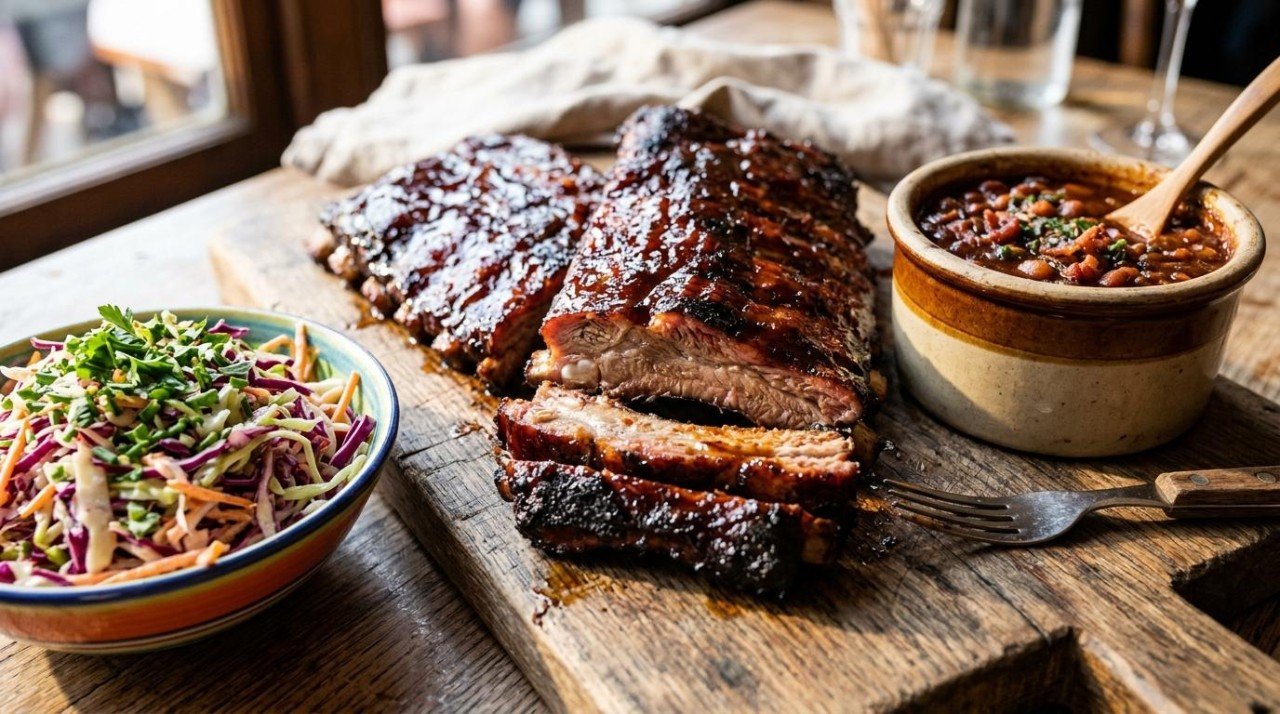
Nobody eats barbecue ribs by themselves. They come on a plate - with slaw, with beans, with a square of cornbread or a pile of fries - and they come with sticky fingers and a stack of napkins. So when we set out to make healthier BBQ ribs, we scored the ribs and the whole plate separately, because we suspected those would turn out to be two very different problems.
They were. A standard rack of spare ribs with a brown sugar rub and bottled sauce scores 28 out of 100 on the Eat Well Planner Nutrition Score. With every honest fix we could make to the ribs, the rack tops out at 38. Meanwhile the classic cookout plate - ribs, creamy coleslaw and doctored baked beans - goes from 40 to 69, and most of those points came from things that are not ribs.
That is the real finding of this makeover, and it is good news if you love ribs: the rack is not where you fix it. Here is every change, what it was worth on the rack and on the plate, and the two swaps that looked like they would matter and didn't.
The original: what's in it and how it scores
The version we scored is the standard home oven or smoker recipe, for 6 people:
- 2 racks pork spare ribs, about 6 lb (roughly 30% of that weight is bone)
- A rub of 1/2 cup brown sugar, 2 tablespoons paprika, 1 tablespoon kosher salt, plus black pepper, garlic powder, onion powder and cayenne
- 1 1/2 cups bottled barbecue sauce, most of it brushed on as a glaze and the rest on the table
One serving - a third of a rack - comes out to this:
- Nutrition Score: 28 / 100
- Calories: about 1,090
- Added sugar: about 50 g
- Saturated fat: about 24 g
- Sodium: about 1,970 mg
- Protein: about 50 g
- Fiber: about 2 g
Three cautions fire at once, and all three are "very high": added sugar at 189% of the app's daily reference, saturated fat at 102%, and sodium at 86%. The added sugar alone is more than the American Heart Association's suggested daily limit for men (about 36 g) and double the limit for women (about 24 g), and almost none of it tastes like dessert. Two thirds comes from the bottled sauce: the catalog entry we scored is about 45 g of added sugar and 1,030 mg of sodium per 100 g, so every quarter cup of glaze carries about 32 g of it. The other third is the rub's half cup of brown sugar.
Saturated fat is the problem nobody can sauce their way out of. Spare ribs are a fatty cut - USDA data puts raw spare ribs at about 23 g of fat and 7.5 g of saturated fat per 100 g of meat - and a third of a rack is about 300 g of meat once the bones are out. Some of that fat renders out over a long cook, so the real number on your plate is a bit lower than the score's raw-ingredient view. But it is still a lot, and the score treats every version in this post the same way, so the comparisons hold.
What is already good: a lot. One serving is an excellent source of protein, vitamin B6, niacin, B12, thiamine, zinc, phosphorus, riboflavin and iron. Pork is a seriously nutrient-dense meat. The rack's weak spots are what it has too much of, plus the thing it has none of - 1.25 plant points, almost all of them from the spice jar.
Part one: fixing the rack (28 to 38)
Three changes to the ribs themselves, each scored cumulatively on top of the last.
1. Make the sauce from tomato paste
- Swap: 1 1/2 cups bottled barbecue sauce to a homemade glaze of tomato paste, cider vinegar, molasses, a spoonful of brown sugar, Worcestershire, Dijon and smoked paprika
- Score impact: +5 points (28 to 33)
- What it changes: Added sugar from 50 g to about 25 g a serving, sodium down about 650 mg, plant points doubled
- What it costs you: Ten minutes at the stove. The glaze is tangier and smokier than the bottle, and still sticky enough to lacquer
Bottled sauce is mostly a tomato base with sugar and salt already stirred in. Starting from unsalted tomato paste instead lets you decide both, and you get the paste's fiber and potassium along the way. For a rib glaze we use two tablespoons of molasses (a little more than in our pulled pork makeover), because a glaze has to cling and caramelize under heat in a way a pulled pork sauce does not. If you are not making your own, our BBQ sauce substitutes guide covers what else works.
2. Take most of the sugar out of the rub
- Swap: 1/2 cup brown sugar in the rub to 2 tablespoons
- Score impact: +3 points (33 to 36)
- What it changes: Added sugar from about 25 g to under 12 g a serving - a 77% cut from the original
- What it costs you: A slightly less candied crust. The glaze, which goes on at the end, does the caramelizing now
A half cup of brown sugar in a rub made sense when the rub was the only thing caramelizing. Once you glaze the ribs at the end, the rub's sugar mostly scorches in the first hours anyway. Two tablespoons is enough to help the paprika and pepper form a crust.
3. Halve the salt
- Swap: 1 tablespoon kosher salt (about 15 g) to about 7 g
- Score impact: +2 points (36 to 38)
- What it changes: Sodium from about 1,310 mg to 800 mg a serving
- What it costs you: Very little. The Worcestershire, Dijon and vinegar in the glaze carry plenty of seasoning
The FDA puts the daily limit at less than 2,300 mg, while Americans average about 3,400 mg. The original rack served more than 85% of a day's limit in one sitting.
And then the rack stops
Thirty-eight is where the ribs stall, and the reason is printed right on the score: saturated fat is still at 102% of the daily reference. Added sugar and sodium both dropped from "very high" to "high", but the fat in a spare rib is part of the cut. You cannot sauce it away. The one lever left on the rack is changing the cut, and we tested that below. The ribs are sitting at 38, but they are not finished yet - they just need help from the rest of the plate.
Part two: fixing the plate (40 to 69)
Our original plate is a serving of those ribs with a scoop each of classic creamy deli coleslaw and potluck-style baked beans - pork and beans doctored with bacon, brown sugar, molasses and ketchup. Together they score 40, higher than the ribs alone because the cabbage and beans bring fiber, vitamin C, vitamin K and folate. They also bring 34 g more added sugar and another 1,500 mg of sodium. Per plate: about 1,730 calories, 84 g added sugar, 3,470 mg sodium and 30 g saturated fat.
Here is what the three rib fixes above were worth on that plate: +3 total (40 to 43). The new sauce was +3, and cutting the rub sugar and the salt was worth exactly zero each. With 1,500 mg of sodium and 34 g of sugar still coming from the sides, the plate is flagged so hard that the ribs' improvements barely register. Then the sides get their turn.
4. Swap the baked beans for a scratch version
- Swap: Doctored canned pork and beans to our healthier baked beans - no-salt-added navy beans in a tomato paste, molasses and smoked paprika sauce, no bacon
- Score impact: +11 points (43 to 54)
- What it changes: About 770 mg less sodium and 23 g less added sugar on the plate
- What it costs you: The bacon - and with smoked ribs on the same plate, nobody misses it
The single biggest jump in the whole makeover is a side dish. The beans were always the good part of baked beans - the problem was the pre-sweetened, pre-salted packing sauce and the cured bacon. Next to a rack of ribs, the bacon is also redundant: the pork and the smoke are already on the plate.
5. Swap the creamy slaw for a lighter, bigger one
- Swap: Classic mayo-and-sugar deli slaw to our healthier coleslaw - half mayo and half Greek yogurt, red and green cabbage, apple, scallions and toasted pumpkin seeds
- Score impact: +9 points (54 to 63)
- What it changes: Plant points from 8 to 12.25, about 60 calories off, and the slaw's added sugar drops from 6.4 g to 1.6 g
- What it costs you: Nothing that matters. It is still creamy, still sharp, and still the thing you pile on a rib bone
Coleslaw belongs next to ribs for a reason - cold, crunchy acid cuts through rich pork. The upgraded version keeps that job and adds more than four plant points to the plate. That matters for the score's gut health dimension, which rewards plant variety. The original plate scored 34 on gut health; the finished plate scores 67.
6. Change the ratio: 2 racks feed 8, not 6
- Swap: A third of a rack per person to a quarter rack, with full scoops of both sides
- Score impact: +6 points (63 to 69)
- What it changes: About 245 calories and 6 g of saturated fat off the plate
- What it costs you: About one rib bone per person. With two real sides, the plate is still huge
Shrinking a portion does nothing to a recipe's score. We tested that on our lava cake makeover, because the score measures what each bite is made of, not how many bites there are. But on a plate, portion is a ratio. A quarter rack instead of a third shifts the balance toward beans and cabbage, and the plate scores six points higher.
If smaller portions are a non-starter at your table, there is an equal alternative: keep feeding 6 and add a third side. A plain ear of corn (about 150 g of kernels) on the 6-serving plate also scored 69. Either the ribs take up less of the plate, or something else takes up more of it - the score does not care which.
Take the Guesswork Out of Eating Well
Eat Well Planner helps you organize your favorite recipes, plan balanced meals, and automatically generate shopping lists — all in one place. Whether you're tracking macros, managing dietary restrictions, or just trying to stop asking "what's for dinner?", we've got you covered.
Our AI-powered tools can adapt any recipe to your dietary needs, help you discover new meals you'll love, and even log your nutrition effortlessly. It's meal planning made simple.
Start Organizing Your Meals — FreeWhat we kept (on purpose)
Spare ribs, bones and all. The glaze keeps real molasses and a spoonful of real brown sugar, because barbecue sauce without sweetness is just spicy ketchup. The rub keeps its sugar too, just less of it. The slaw keeps its mayonnaise. And we did not touch the cooking method - low heat, a long time, a glaze at the end - because that is what makes ribs ribs. We stopped at 69 because every move left was either a different dish or, as it turned out, worth almost nothing.
The healthier version: full recipe
The ribs score 38 out of 100 on their own. Served with our healthier coleslaw and healthier baked beans, the plate scores 69. Serves 8.
For the ribs and rub
- 2 racks pork spare ribs or St. Louis-cut ribs (about 6 lb total)
- 2 tablespoons brown sugar (25 g)
- 2 tablespoons paprika
- 1 1/4 teaspoons fine salt (7 g)
- 1 tablespoon black pepper
- 1 tablespoon garlic powder
- 1 tablespoon onion powder
- 1 teaspoon cayenne pepper
For the glaze
- 1 can (6 oz) tomato paste
- 1/2 cup apple cider vinegar
- 1/2 cup water
- 2 tablespoons molasses
- 1 tablespoon brown sugar
- 1 tablespoon Worcestershire sauce
- 1 tablespoon Dijon mustard
- 1 tablespoon smoked paprika
- 1 teaspoon onion powder
- Pat the ribs dry. On the bone side, slide a butter knife under the thin membrane at one end, grip it with a paper towel, and peel it off. Mix the brown sugar, paprika, salt, pepper, garlic powder, onion powder and cayenne, and rub it all over both racks. Rest 30 minutes at room temperature, or overnight in the fridge.
- Heat the oven to 275F (or a smoker to 250F). Set the racks meat side up on a foil-lined sheet pan, cover tightly with foil, and bake 2 1/2 to 3 hours, until the meat has pulled back from the bone ends and a toothpick slides between the bones easily.
- While the ribs cook, whisk all the glaze ingredients in a small saucepan and simmer 8 to 10 minutes, stirring, until thick and glossy.
- Uncover the ribs and pour off the rendered fat. Turn the oven up to 425F. Brush the racks with a third of the glaze and bake 8 minutes, then brush again and bake 8 minutes more, until the glaze is sticky and darkened at the edges.
- Rest 10 minutes, brush with the last of the glaze, and cut between the bones. Serve a quarter rack per person with a big scoop each of coleslaw and baked beans.
Per plate (ribs, slaw and beans), original vs. improved:
- Nutrition Score: 40 to 69
- Calories: about 1,730 to 1,130
- Added sugar: 83.7 g to 14.5 g
- Sodium: 3,470 mg to 1,130 mg
- Saturated fat: 29.6 g to 20.5 g
- Fiber: 14.0 g to 14.9 g (the beans were always the fiber)
- Protein: 65 g to 53 g (smaller rib portion - still more than most people need in a meal)
- Plant points: 5.5 to 12.25
Sodium falls by two thirds and added sugar by more than 80%. Vitamin C goes from 58% to 84% of the Daily Value and folate from 29% to 73%. Saturated fat is still the plate's one "very high" flag, at 87%, and it will stay there as long as spare ribs are on it. That is the honest price of ribs.
Swaps we tested and skipped
Baby back ribs instead of spare ribs. The standard "leaner ribs" advice, and a nice example of why scores have to be tested in context. On the rack alone, baby backs scored one point lower (38 to 37). They have less fat, but saturated fat stays "very high" either way, so the swap gets no credit. On the finished plate the same swap was worth +1 (69 to 70). Buy whichever ribs you like better. The cut is not where the points are.
Country-style ribs. These are the swap that actually moves the needle: on the rack they scored 52 instead of 38, because they are cut from the leaner blade end of the loin and drop saturated fat out of "very high". On the plate, at the original six servings, they reach 76. We did not make them the recipe because they eat like a pork chop - knife and fork, no bones to pull. If what you want is saucy barbecue pork rather than ribs specifically, they are a great choice. But it is a different dish.
Dry ribs, no glaze. Memphis-style "dry" ribs are rubbed with salt and spices and eaten without sauce. We expected skipping the glaze to help, since it removes the molasses. It cost 2 points on the plate (69 to 67): the tomato paste glaze brings more fiber, potassium and plant variety than its spoonful of sugar takes away. If you love dry ribs, go ahead - they score about the same.
"Sauce on the side" at a restaurant. Halving the bottled sauce on the original plate scored +0. With bottled sauce, the glaze is only one of several problems, so going light on it does not clear any flags. It is much more effective to choose different sides (see below).
Putting things back. At the end, we put each fix back one at a time. Bottled sauce instead of the glaze dropped the finished plate from 69 to 52. The rub's original half cup of brown sugar dropped it to 53. These are the same two swaps that were worth +3 and +0 at the start of the build. A change can look worthless when the plate has bigger problems and turn out to be worth 16 or 17 points once those problems are fixed. Score the change again at the end before you give up on it.
How to order it at a barbecue joint
You can't rewrite a restaurant's recipe, but you can pick its sides. We scored a third of a rack of our original ribs with different pairings, using the original versions of each side as stand-ins for restaurant sides:
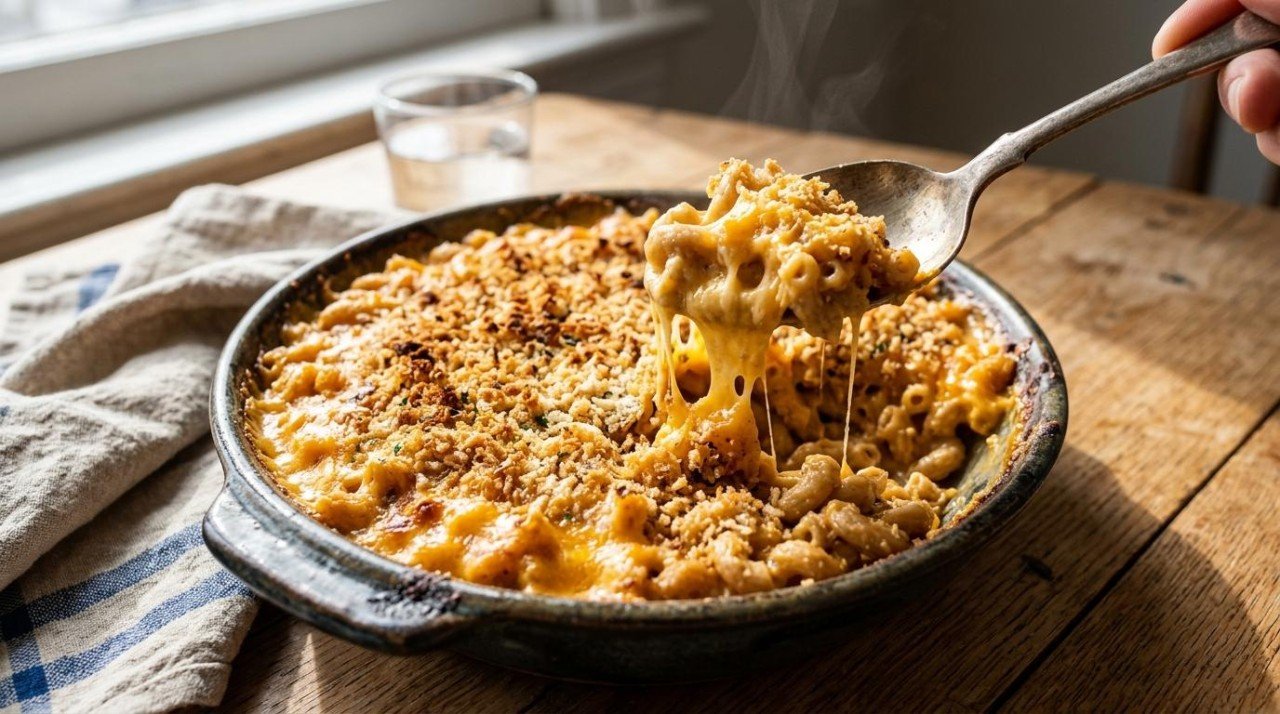
- Ribs with fries and mac and cheese: 30
- Ribs with coleslaw and mac and cheese: 35
- Ribs with coleslaw and baked beans: 40
- A smaller rib order with slaw and beans: 43
Two sides chosen well are worth ten points, more than any of the three fixes to the rack. Order the beans and the slaw, take the smaller rib portion if they offer it, and save the fries for another night. Whatever you do with the sauce, it won't change the score much.
Make it fit other diets
- Gluten-free: The ribs, rub and glaze are naturally gluten-free except for the Worcestershire, which often contains malt vinegar - check the label or use a gluten-free brand.
- Lower sodium still: Use 1 teaspoon of salt in the rub and low-sodium Worcestershire. The smoke, the paprika and the vinegar carry more flavor than you would expect.
- No pork: Bone-in chicken thighs take the same rub and glaze, in about 45 minutes at 400F.
For a full rewrite rather than a note, the app's Recipe Variations does it in one step - ask for a gluten-free or lower-sodium version of a saved recipe and it comes back with the swaps worked in and re-scored.
Do this to your own recipes
Every number in this post came from tools you can point at your own cooking. Import a recipe from a website, an Instagram reel or a YouTube video and it gets a Nutrition Score right away. Run Make It Healthier and the AI proposes concrete swaps, each checked by a calculator before you see it. Then open the Recipe Playground to try your own ideas and watch the score move with every edit. That is how we found out that the baby backs and the dry rub barely mattered.
The lesson from ribs is bigger than ribs: when a dish is built around one rich protein, the fastest way to a healthier meal is usually what goes next to it. Eat Well Planner is free to use - import the meals you love, score them, and find out where the points really are.