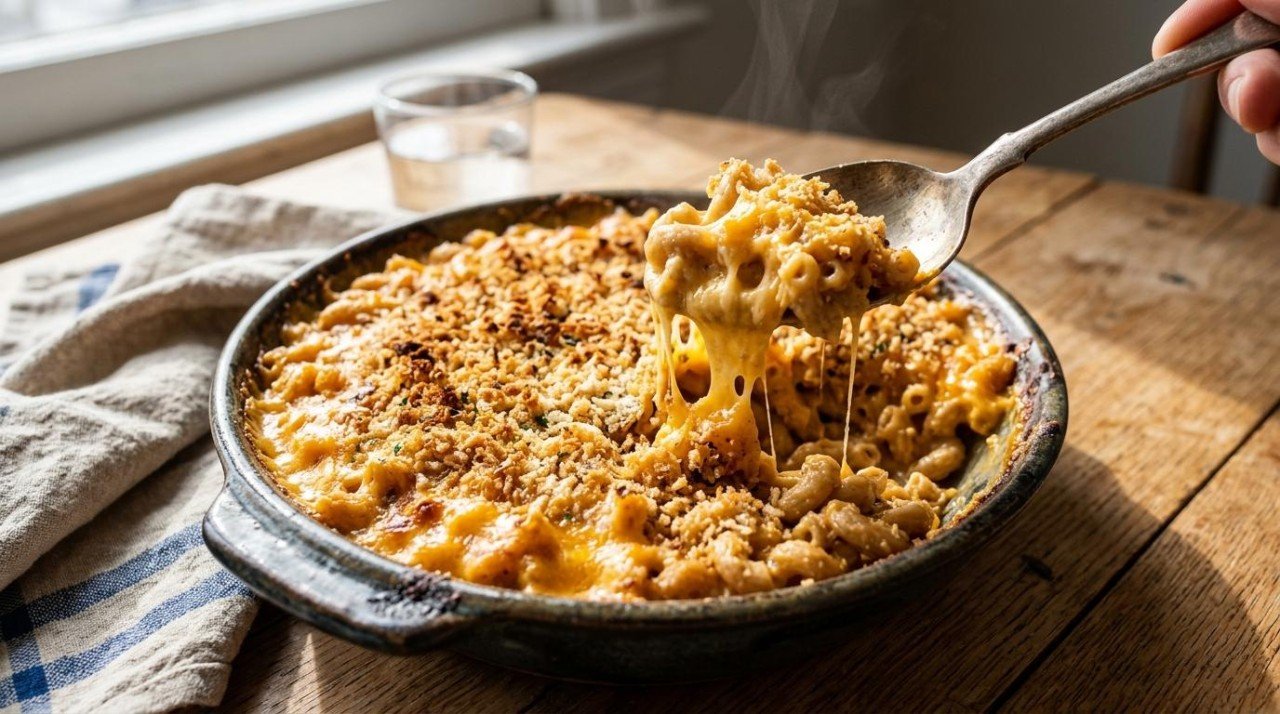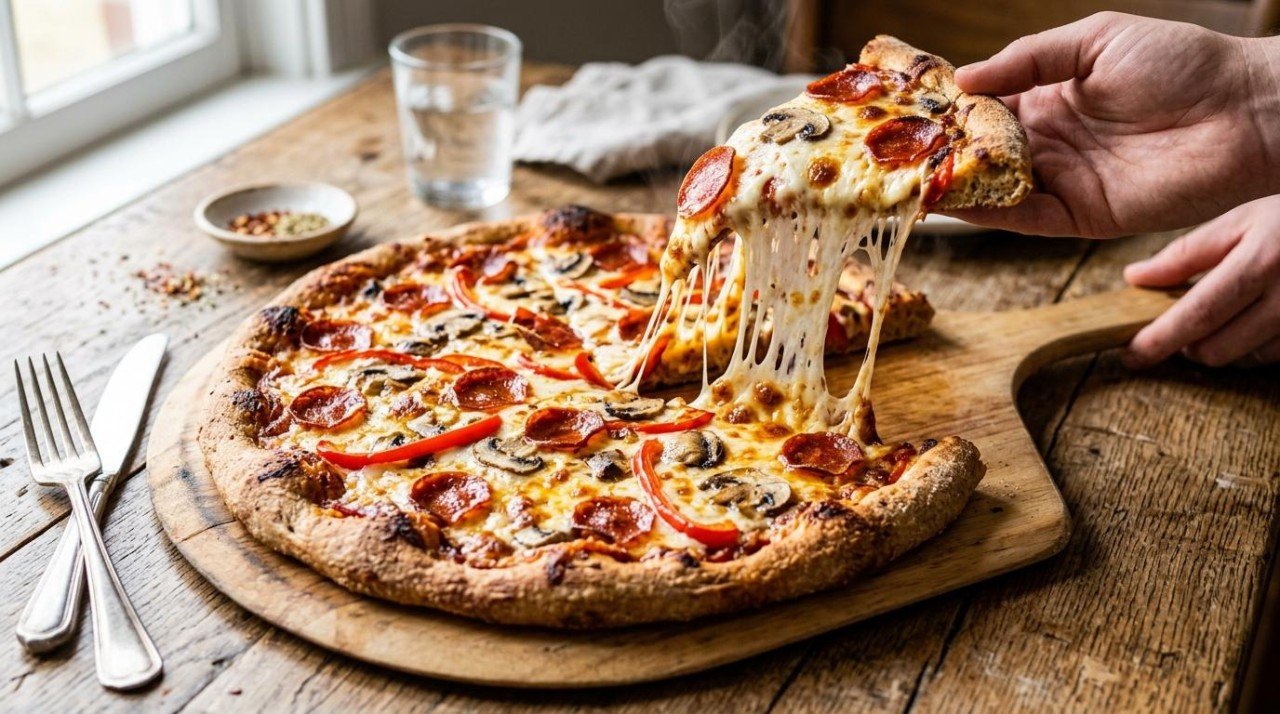
Pepperoni pizza is the most-ordered pizza in America for a reason: crisp-edged crust, a pull of melted cheese, and those little cups of spicy, rendered pepperoni fat pooling on top. It is Friday night in food form. Nobody searching for a healthier version wants to give any of that up, and you should not have to.
So we did what we do with every recipe in this series: we scored a classic homemade pepperoni pizza with Eat Well Planner's Nutrition Score, and it came back at 31 out of 100. Then we rebuilt it, one verified swap at a time, to 58 - a 27-point jump - while keeping it unmistakably pepperoni pizza. Same melt, same crisp, same pepperoni in every bite.
Here is exactly what we changed, what each swap did to the score, and what it costs you in flavor (honestly - one swap that scored higher still got rejected, because it would have ruined the cheese).
The original pepperoni pizza: what's in it and how it scores
The version we scored is a standard 12-inch homemade pie, cut into 8 slices and shared four ways: a white-flour dough, about 1/2 cup of jarred pizza sauce, a generous 8 ounces of whole-milk mozzarella, and 3 ounces of pepperoni. It is the pizza most of us actually make. It scores 31/100.
Per serving (two slices), that works out to roughly:
- 552 calories
- 12.4 g saturated fat - 53% of the daily value, flagged very high
- 1,300 mg sodium - 57% of the daily value, also flagged very high
- 2.5 g fiber
- 25.8 g protein (this part is genuinely good)
- 2 plant points
Here is the honest diagnosis. Pepperoni pizza is not junk - it is a real source of protein, calcium, iron, and B vitamins, and its added sugar is essentially zero. What drags the score down is a specific, fixable trio. First, saturated fat: a full blanket of whole-milk mozzarella plus cured pepperoni pushes it past half a day's limit in one meal, and the American Heart Association recommends capping saturated fat at about 13 grams a day because it raises LDL cholesterol. Second, sodium: between the salty cured meat, the cheese, and jarred sauce, one serving eats up more than half the day - and pizza is so reliably salty that the AHA lists it among the top sources of sodium in the American diet. Third, refined carbs and almost no fiber: white dough gives you 2.5 grams, and there is barely a vegetable in sight.
None of that means the pizza is bad. It means there are four clear levers to pull - and pulling them does not require turning it into a salad.
The upgrades
We applied four swaps in order of impact, scoring the recipe again after each one so the numbers are real and cumulative. A reader who only makes the first change still makes the highest-value one.
1. Switch the dough to white whole wheat (+13 points)
- Swap: White pizza dough → 100% white whole wheat dough
- Score impact: +13 points (31 → 44) - the single biggest move
- What it changes: Fiber jumps from 2.5 g to 9 g per serving, and it adds B vitamins, minerals, and a plant point
- What it costs you: A slightly heartier, nuttier crust - white whole wheat is milder than regular whole wheat, so most people barely register it under the sauce and cheese
This is the best swap in the whole post: one ingredient, +13 points, and it fixes the pizza's weakest number. Refined white flour is milled to remove the bran and germ, which strips out roughly half the B vitamins and virtually all the fiber. Whole wheat keeps them. The trick to keeping the crust from turning dense is to use white whole wheat flour (same whole grain, paler and milder), add a splash more water since whole grain drinks up more, and give the dough a full rise. If you want the full rundown on wheat flour swaps and how to blend in whole grain without a hockey-puck crust, our guide to all-purpose flour substitutes covers it, and how to buy bread that is actually whole grain explains what to look for if you would rather buy dough than make it.
2. Halve the pepperoni and let mushrooms and peppers take over (+8 points)
- Swap: 3 oz pepperoni → 1.5 oz pepperoni, plus sliced mushrooms and red bell pepper for the coverage
- Score impact: +8 points (44 → 52)
- What it changes: Cuts saturated fat and sodium enough to drop both out of the "very high" zone, and takes plant points from 3 to 5
- What it costs you: Almost nothing - and this is the swap people expect to hate
Here is the counterintuitive part: you barely notice half the pepperoni is gone, because the pepperoni that stays does the flavor work for the whole pie. As it bakes, it renders its spicy, paprika-red fat out over everything, so every bite still tastes like pepperoni pizza. Meanwhile the mushrooms brown and turn deeply savory (that is umami filling the gap the meat left), and the red pepper adds sweetness and a jolt of vitamin C. You end up with more topping on the pizza, not less - it is just that most of it is now vegetables. This one swap does double duty, chipping away at both the sodium and the saturated fat at once.
3. Measure the cheese, and make it part-skim (+4 points)
- Swap: 8 oz whole-milk mozzarella → 5 oz part-skim mozzarella, weighed not eyeballed
- Score impact: +4 points (52 → 56)
- What it changes: Saturated fat drops from 10.6 g to 6.5 g per serving (45% of the daily value down to 28%), and it trims about 75 calories a serving
- What it costs you: A slightly thinner cheese layer - but it still fully melts, stretches, and browns
Cheese is where most of the pizza's saturated fat lives, so this is the swap that finally tames it. Two things make it painless. First, part-skim mozzarella still has plenty of fat to melt and pull - it is a lean, high-protein cheese, not a fat-free one (more on why that distinction matters below). Second, weighing the cheese instead of grabbing a fistful is quietly the biggest lever here; a "generous handful" is easy to double without noticing. Five ounces over a 12-inch pizza is still a properly cheesy pie. If you are out of mozzarella or want a sharper, more flavorful melt so a little goes further, our mozzarella substitutes guide walks through provolone, fontina, and the fresh-versus-low-moisture rule.
4. Make a 5-minute sauce, and ease up on the dough salt (+2 points)
- Swap: Jarred pizza sauce → no-salt-added crushed tomatoes with garlic and oregano, plus a little less salt in the dough
- Score impact: +2 points (56 → 58)
- What it changes: Sodium falls from about 1,120 mg to 780 mg per serving (49% of the daily value down to 34%)
- What it costs you: Nothing - a homemade sauce actually tastes fresher and brighter than the jar
The score only moves 2 points here, but the sodium number moves a lot - down another 340 mg a serving. It scores modestly because pizza is so salt-heavy to begin with that even a 40% total cut cannot fully clear the caution (real cured meat and cheese are salty by nature). But your blood pressure does not read the score - it reads the milligrams, and this is where the biggest single sodium drop comes from. Most dietary sodium is not from your salt shaker; more than 70% of it is already baked into packaged and restaurant food, jarred pizza sauce included. Blend a can of no-salt-added crushed tomatoes with a grated garlic clove, dried oregano, and black pepper - that is the whole sauce, no cooking required - and pull the dough salt back by about a quarter. If sodium is something you are actively watching, our explainer on the DASH diet goes deeper.
Take the Guesswork Out of Eating Well
Eat Well Planner helps you organize your favorite recipes, plan balanced meals, and automatically generate shopping lists — all in one place. Whether you're tracking macros, managing dietary restrictions, or just trying to stop asking "what's for dinner?", we've got you covered.
Our AI-powered tools can adapt any recipe to your dietary needs, help you discover new meals you'll love, and even log your nutrition effortlessly. It's meal planning made simple.
Start Organizing Your Meals — FreeWhat we kept on purpose
A makeover that guts the dish is a failed makeover, so some things did not change. We kept real pepperoni - just less of it - because its rendered, spiced fat is the soul of the pizza, and no lean substitute delivers that. We kept real, melting cheese for the pull. And we stopped at 58 on purpose. Both sodium (34% of the daily value) and saturated fat (27%) are still flagged as somewhat high in the finished pizza, and we could have scored higher by going fat-free on the cheese or dropping the cured meat entirely - but at that point it stops being the pizza you came here for. Pizza is an inherently salty, cheesy food; the honest win is making it meaningfully better, not pretending it can become a health food.
The healthier pepperoni pizza: full recipe
This is the version that scores 58/100, up 27 points from the original. It is a good source of fiber, protein, vitamin C, iron, and several B vitamins, with half the saturated fat, 40% less sodium, and nearly four times the fiber of the classic. Makes one 12-inch pizza, 8 slices, serving 4.
For the dough:
- 2 cups (250 g) white whole wheat flour
- 2/3 cup plus 1 tablespoon (165 g) warm water
- 1 tablespoon olive oil
- 3/4 teaspoon salt
- 3/4 teaspoon sugar
- 1 teaspoon active dry yeast
For the sauce and toppings:
- 1/2 cup (120 g) no-salt-added crushed tomatoes
- 1 clove garlic, grated or finely minced
- 1/2 teaspoon dried oregano, plus black pepper to taste
- 1 1/2 cups (5 oz / 150 g) shredded part-skim mozzarella
- 1 1/2 oz (about 16 slices / 40 g) pepperoni
- 1 1/4 cups (100 g) mushrooms, thinly sliced
- 1 small red bell pepper (about 80 g), thinly sliced
- Stir the sugar and yeast into the warm water and let it sit until foamy, about 5 minutes. Add the flour, salt, and olive oil, and mix into a shaggy dough.
- Knead 8 to 10 minutes by hand (or 5 in a stand mixer) until smooth and elastic; whole wheat dough feels a little stickier, so resist adding much extra flour. Cover and let rise 1 to 1.5 hours, until doubled.
- Put a pizza stone or an inverted baking sheet in the oven and heat it as hot as it goes, 500 degrees F if possible, for at least 30 minutes.
- Make the sauce: stir the crushed tomatoes with the garlic, oregano, and black pepper. No cooking needed.
- Stretch the dough into a 12-inch round on a piece of parchment. Spread a thin layer of sauce, leaving a border for the crust.
- Scatter the mozzarella, then arrange the pepperoni, mushrooms, and red pepper on top.
- Slide the pizza (on its parchment) onto the hot stone and bake 10 to 12 minutes, until the crust is browned and the cheese is bubbling and spotted.
- Rest 2 to 3 minutes, then slice into 8 and serve.
Per serving, original vs. healthier:
- Nutrition Score: 31 → 58
- Calories: 552 → 409
- Saturated fat: 12.4 g → 6.4 g (53% → 27% of the daily value)
- Sodium: 1,300 mg → 780 mg (57% → 34% of the daily value)
- Fiber: 2.5 g → 9.4 g
- Protein: 25.8 g → 18.5 g
- Plant points: 2 → 5
One honest trade shows up in that list: protein dips from about 26 g to 18.5 g, the cost of less cheese and less cured meat. At 18.5 grams a serving it is still a solid amount, and if you want it back, a handful of extra mushrooms and a sprinkle of Parmesan, or a side of a simple green salad with beans, closes the gap without undoing the other gains.
Swaps we tested and skipped
Fat-free mozzarella. This one is the whole reason we score instead of guess. Swapping the part-skim cheese for fat-free mozzarella scored 64 - six points higher than our final version - because it strips out the last of the saturated fat. We rejected it anyway. Fat-free mozzarella has too little fat to melt properly; it stays rubbery, refuses to brown, and weeps water onto the crust. A pizza that will not pull is not a better pizza, no matter what the number says. The score is a guide, not a dictator.
Turkey pepperoni. Not rejected, exactly - just optional. Swapping the 1.5 oz of pepperoni for turkey pepperoni nudged the score to 61 (+3), trimming a little more saturated fat and a few calories. But it did not help the sodium at all (it actually crept up slightly), and turkey pepperoni tastes noticeably leaner and less rich - you lose some of that rendered-fat magic. If you like it, use it; if you love the real thing, keep it. This is exactly the kind of "what does this cost me?" question you can answer for yourself in the Recipe Playground before you commit.
Make it fit other diets
Two of the most-asked variations for pizza:
- Gluten-free: Swap the white whole wheat dough for a store-bought gluten-free crust or a 1:1 gluten-free flour blend; the sauce and toppings are already gluten-free.
- Dairy-free: Use a good melting plant-based mozzarella (coconut-oil or cashew based). The rest of the pizza does not change.
In Eat Well Planner you do not have to work these out by hand - the AI Recipe Chat and Recipe Variations tools will rewrite this exact pizza gluten-free or dairy-free in one step, substitutions already worked in.
Do this to any recipe you love
Every number in this post came straight from the app. That is the whole idea behind Make It Healthier: import any recipe - from a website, or straight from a TikTok or Instagram video - and Eat Well Planner scores it, then proposes concrete swaps like these, with a calculator verifying the actual nutritional gain before it shows you the suggestion. You can watch each change move the score live in the Recipe Playground, keep what you like, and skip what you do not. Same dish you love. Better numbers, proven.