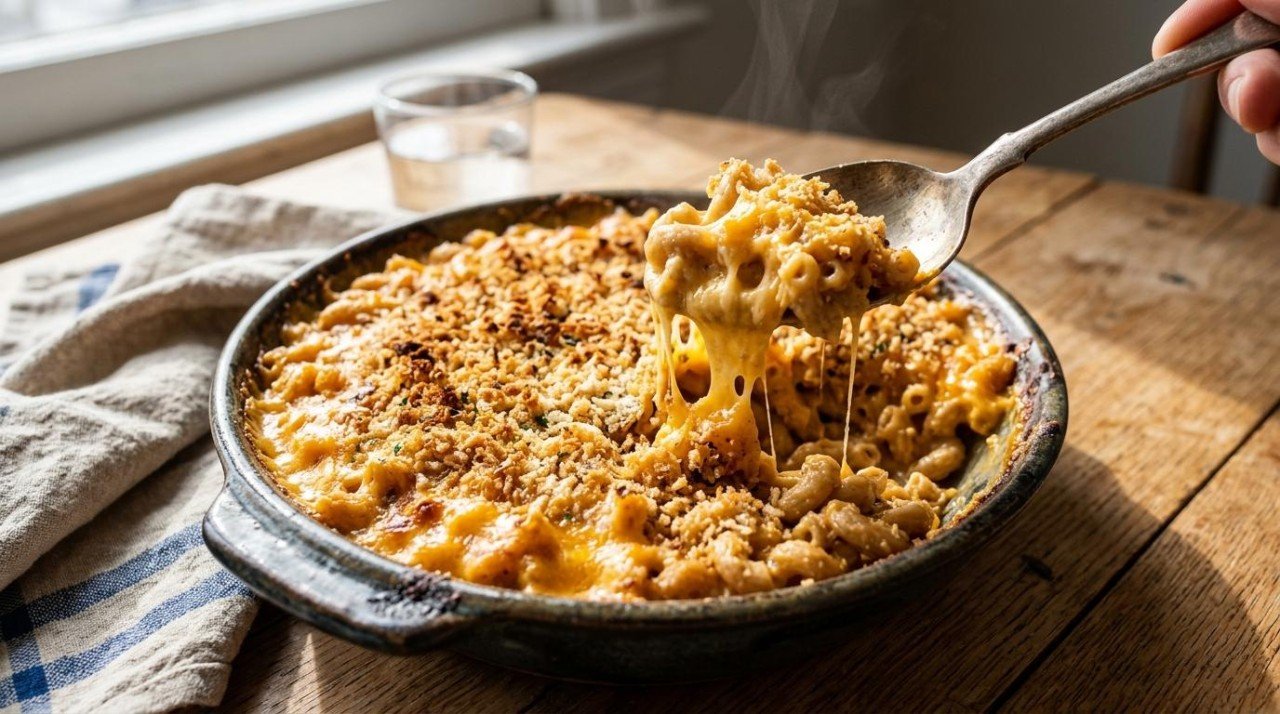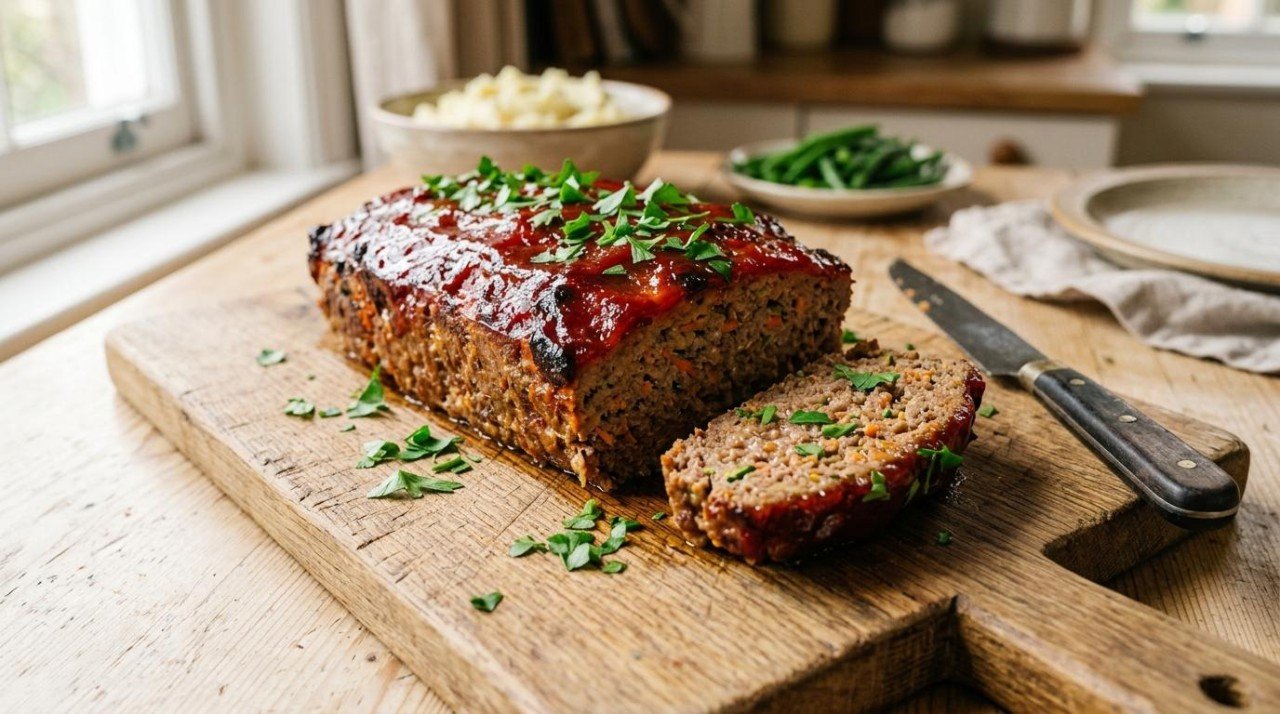
Meatloaf is Sunday-dinner food. The loaf pan, the sweet-sticky glaze on top, the slices that turn into the best sandwich of the week the next day. It has been a staple on American tables since the late 1800s, and it earned its permanent spot during the Great Depression, when a pound of ground beef stretched further mixed with bread, egg, and milk into something that fed the whole family (the dish traces all the way back to a Roman recipe of chopped meat and soaked bread). Nobody makes meatloaf to be impressed. They make it to feel at home.
So we were not out to reinvent it. We just wanted to see what the numbers said. We built a standard meatloaf - 2 pounds of 80/20 beef, white breadcrumbs, a couple of eggs, and the classic ketchup-and-brown-sugar glaze - and ran it through the Eat Well Planner Nutrition Score. It came back at 35 out of 100. Not garbage - it is genuinely loaded with protein, iron, and B12 - but three numbers are dragging it down hard, and every one of them is fixable without touching what makes meatloaf meatloaf.
So we kept going. Same loaf, same glaze, same savory comfort, one swap at a time, re-scoring after each change against live nutrition data. The finished version scores 69 - thirty-four points higher - with two-thirds less saturated fat, a third of the sodium, a fraction of the added sugar, and real vegetables hidden where nobody will find them. Here is every change and exactly what it was worth.
The original: what's in it and how it scores
The version we scored is the one most of us grew up on: 2 pounds of 80/20 ground beef, about 1 cup of dried white breadcrumbs, 2 eggs, a splash of whole milk, a diced onion, garlic, a shot of Worcestershire, and a good amount of salt - all topped with a glaze of ketchup and brown sugar baked into a sticky crust. Eight servings. Here is what one of them looks like on the numbers:
- Nutrition Score: 35 / 100
- Calories: about 432
- Saturated fat: about 10 g
- Sodium: about 1,240 mg
- Added sugar: about 11.5 g
- Fiber: about 1 g
- Protein: about 24 g
- Plant points: 1.5
The score flags three things, and together they are the whole story. The first is saturated fat. At about 10 g a serving, one slice uses up roughly three-quarters of the American Heart Association's daily target of about 13 g - and that is before any side dish. It comes almost entirely from the 80/20 beef, which also carries about a gram of trans fat per serving. Saturated fat is the lever with the most health behind it, because it is what raises LDL cholesterol.
The second is added sugar: about 11.5 g a serving, nearly all of it from the ketchup-and-brown-sugar glaze. That is close to half a day's worth against the AHA's limit of about 25 g for women and 36 g for men - a lot of sugar for a savory dinner. The third is sodium: about 1,240 mg, more than half of the 2,300 mg daily limit in a single serving, from the salt, the ketchup, and the Worcestershire stacked together. And under all of it, almost no fiber (about 1 g) and next to no vegetables.
What is already good is worth saying out loud, because it is why meatloaf belongs on the table. A serving delivers about 24 g of protein and scores excellent for vitamin B12 (152% of the Daily Value), zinc, and iron. This is a nutrient-dense dish, not junk food. We are not rescuing anything. We are keeping a good thing and taking the edges off three numbers while sneaking in the plants it never had.
The upgrades
Five swaps, ordered from the biggest win downward. A reader who makes only the first two has already done most of the work. Every score change below is cumulative - each swap stacked on the last, in this order, and re-scored against production nutrition data.
1. Lean the beef and cut it with mushrooms
- Swap: 2 pounds of 80/20 beef to 1.5 pounds of lean 90/10 beef plus 8 ounces of finely chopped cremini mushrooms
- Score impact: +8 points (35 to 43)
- What it changes: Saturated fat drops from about 10 g to about 3.6 g a serving, trans fat falls by two-thirds, calories drop by about 135, and it adds a plant point
- What it costs you: Almost nothing - mushrooms deepen the meaty, savory flavor rather than diluting it
This is the single most valuable change in the post, and it clears the saturated fat problem outright. Two things are happening: leaning the beef from 80/20 to 90/10 cuts the fat directly, and replacing a quarter of the meat with finely chopped, hard-browned mushrooms swaps high-fat beef for something that is mostly water and fiber. Mushrooms bring glutamate - natural umami - so the loaf tastes more savory, not less. A 2017 study in Appetite found mushrooms were just as satiating as meat, and Johns Hopkins researchers found that blending them in lowers calorie, saturated fat, and sodium intake while people stay just as full. It is the lowest-risk upgrade in cooking. If you want the full breakdown of lean blends, our guide to ground beef substitutes walks through the ratios - and it is the same trick behind our healthier lasagna.
2. Rebuild the glaze
- Swap: Ketchup-and-brown-sugar glaze to tomato paste, a little maple syrup, and cider vinegar
- Score impact: +9 points (43 to 52)
- What it changes: Added sugar drops from about 11.5 g to about 2.6 g a serving, and sodium starts coming down too
- What it costs you: A tangier, less candy-sweet top - most people prefer it once they taste it
The classic glaze is basically ketchup (already about a quarter sugar) with more sugar stirred in. Rebuilding it from tomato paste gives you the same glossy, deep-red, caramelized crust with a fraction of the sugar, because concentrated tomato brings all the flavor and you add just a touch of maple for the sticky char. A splash of cider vinegar wakes it up. This one swap clears the added-sugar flag on its own. If you are working from what is in the pantry, our tomato paste substitutes and brown sugar substitutes guides cover the trade-offs.
3. Swap the white breadcrumbs for oats
- Swap: 1 cup dried white breadcrumbs to 1 cup old-fashioned rolled oats
- Score impact: +3 points (52 to 55)
- What it changes: More fiber, another plant point, and a little less sodium
- What it costs you: Nothing you can taste - oats disappear into the loaf and bind it just as well
Rolled oats are the classic meatloaf binder for a reason: they soak up moisture and hold the loaf together exactly like breadcrumbs, but they bring soluble fiber instead of refined white flour and skip the sodium that packaged crumbs carry. That fiber is beta-glucan, the soluble fiber the FDA has recognized on food labels since 1997 for heart health - about 3 g a day lowers LDL cholesterol by roughly 5 to 7%. Grind them briefly if you want them invisible. Our bread crumb substitutes guide has the full list of binders that work.
4. Grate vegetables into the mix
- Swap: Add 1 grated carrot and 1 small grated zucchini to the meat mixture
- Score impact: +4 points (55 to 59)
- What it changes: More fiber, vitamin A up to 17% of the Daily Value, and plant points jump from 4.5 to 6.5
- What it costs you: Nothing - if anything they keep the loaf more tender and moist
This is the oldest trick in the book for feeding vegetables to people who would rather not eat them. Finely grated carrot and zucchini melt into the meat, add no detectable flavor, and hold moisture so the leaner loaf does not dry out. They are the reason the finished dish carries real plant diversity instead of the 1.5 plant points it started with. Squeeze the zucchini in a towel first so it does not weep water into the mix.
5. Cut the added salt
- Swap: Salt down from about 1.5 teaspoons to 0.5 teaspoon
- Score impact: +10 points (59 to 69)
- What it changes: Sodium drops from about 920 mg to about 400 mg a serving, clearing the last caution
- What it costs you: A little - but the Worcestershire, mustard, and mushrooms carry the savoriness so you barely notice
Here is the part worth understanding. We saved this swap for last on purpose: cutting the salt earlier would have moved the score almost nothing, because the ketchup and Worcestershire were still loading in sodium of their own. Only after the glaze rebuild took ketchup out of the picture did trimming the salt actually push sodium under the line - and clearing that final threshold is what unlocks the biggest single jump in the whole post. It is a good lesson in reading your own recipes: the score rewards you when a number crosses a line, and sometimes one change only pays off after another clears the way. Most Americans eat about 3,100 mg of sodium a day against a 2,300 mg limit, so this is a number worth chasing.
Take the Guesswork Out of Eating Well
Eat Well Planner helps you organize your favorite recipes, plan balanced meals, and automatically generate shopping lists — all in one place. Whether you're tracking macros, managing dietary restrictions, or just trying to stop asking "what's for dinner?", we've got you covered.
Our AI-powered tools can adapt any recipe to your dietary needs, help you discover new meals you'll love, and even log your nutrition effortlessly. It's meal planning made simple.
Start Organizing Your Meals — FreeWhat we kept (on purpose)
The finished loaf is still real beef, still bound with egg, still topped with a sweet-savory glaze baked into a crust, still sliceable, still sandwich-worthy the next day. We did not reach for a fat-free binder or a meatless crumble, because the point was never to make a different dish - it was to make this one score better.
We also found exactly where to stop. Out of curiosity we replaced half the beef with cooked lentils, and the score jumped to 75 - six points higher than our final. But at that point the protein dropped from about 26 g to about 19 g, and the loaf started eating soft and beany, more lentil loaf than meatloaf. That is a genuinely good dish if you want it (and one step away in the app), but it is not the thing people search for when they search for meatloaf. So we drew the line at keeping it unmistakably a meat loaf - and left those six points on the table on purpose.
The healthier version: full recipe
Final Nutrition Score: 69 / 100. Serves 8.
- 1.5 lb lean ground beef (90/10)
- 8 oz cremini mushrooms, very finely chopped
- 1 cup old-fashioned rolled oats
- 2 large eggs
- 1/2 cup whole milk
- 1 medium onion, finely diced
- 2 cloves garlic, minced
- 1 large carrot, grated (about 1 cup)
- 1 small zucchini, grated and squeezed dry (about 3/4 cup)
- 1 tablespoon Worcestershire sauce
- 1 tablespoon yellow mustard
- 1/2 teaspoon salt
- 1 teaspoon black pepper
For the glaze:
- 3 tablespoons tomato paste
- 1 1/2 tablespoons maple syrup
- 2 teaspoons apple cider vinegar
- Heat the oven to 375°F and line a rimmed baking sheet with parchment (a free-form loaf gives you more glazed, caramelized surface than a pan).
- Warm a little oil in a skillet over medium-high heat. Cook the onion, garlic, and mushrooms until the mushrooms release their water and it cooks off, about 8 minutes. Stir in the grated carrot and zucchini for 1 to 2 minutes, then spread the mixture on a plate to cool.
- In a large bowl, stir the oats into the milk and let them soak for 5 minutes. Add the eggs, Worcestershire, mustard, salt, and pepper and whisk together.
- Add the beef and the cooled vegetables. Mix gently with your hands until just combined - overworking it makes the loaf dense.
- Shape into a loaf about 9 by 5 inches on the lined sheet.
- Whisk the glaze ingredients together and brush half of it over the loaf.
- Bake for 45 to 55 minutes, brushing on the rest of the glaze in the last 15 minutes, until the internal temperature reaches 160°F.
- Rest for 10 minutes before slicing so it holds together.
Here is one serving, original versus improved:
- Nutrition Score: 35 to 69
- Calories: about 432 to about 255
- Saturated fat: about 10 g to about 3.4 g
- Trans fat: about 1 g to about 0.3 g
- Sodium: about 1,240 mg to about 400 mg
- Added sugar: about 11.5 g to about 2.2 g
- Fiber: about 1 g to about 2.9 g
- Protein: about 24 g to about 26 g
- Plant points: 1.5 to 6.5
Protein held steady, and every problem number came down. Fiber nearly tripled - though at about 3 g a serving it is honestly still modest, because meatloaf is a meat dish and always will be. The wins that matter are the saturated fat, the sodium, and the sugar.
Swaps we tested and skipped
All ground turkey. The usual advice for a lighter meatloaf is to swap beef for turkey, so we tested it - and the all-turkey version scored 64, slightly below our beef-and-mushroom loaf at 69. Once the lean-beef-plus-mushroom blend had already solved the saturated fat, turkey had nothing left to improve, and it gave up the deep, beefy flavor that makes meatloaf taste like meatloaf. The blend wins on both counts.
Skipping the glaze. Leaving off the topping entirely would cut a little more sugar, but the glaze is the signature of the dish - the sticky, caramelized crust is half the reason people love it. Rebuilding it from tomato paste already cut the sugar by about 80%, so there was no reason to sacrifice the best part.
Make it fit other diets
A few quick adjustments cover the most common requests:
- Gluten-free: Use certified gluten-free oats and a gluten-free Worcestershire (most contain barley malt vinegar).
- Dairy-free: Swap the whole milk for unsweetened plant milk or low-sodium broth to soak the oats - it works exactly the same.
You do not have to work these out by hand. In Eat Well Planner, the AI Recipe Chat and Recipe Variations can rewrite this exact recipe as gluten-free or dairy-free in one step, with the substitutions already worked in and the nutrition recalculated.
Do this to any recipe you love
None of these numbers are guesses. Every score and delta in this post came from the same tool you can use on your own recipes: import a recipe from any website, Instagram reel, or YouTube video, and Eat Well Planner scores it against real nutrition data. Then Make It Healthier proposes swaps like these - and a calculator verifies the actual nutritional gain before you ever see the suggestion, so nothing is hand-waved. Want to keep the full-fat beef and make up the difference elsewhere? The Recipe Playground lets you tweak one ingredient at a time and watch the score move live. Keep the dish you love. Just check the numbers first.