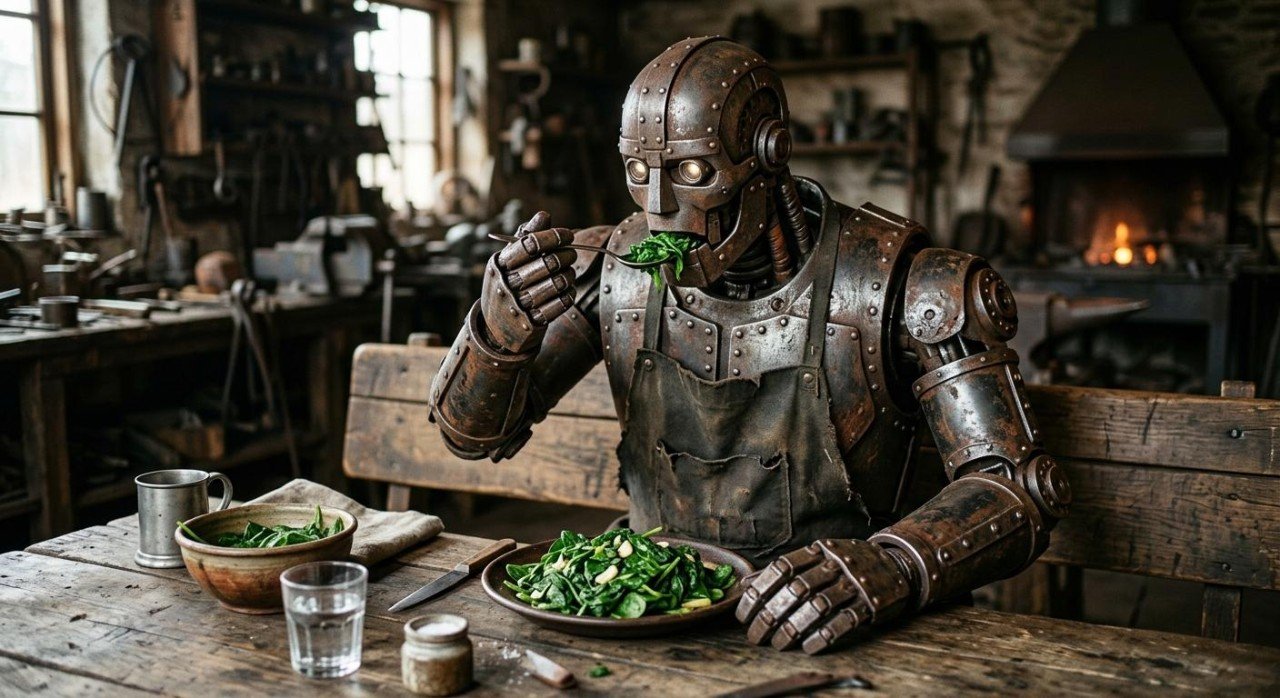
Popeye built a whole personality around it. Generations of parents have invoked it at the dinner table. Spinach, we have all been told, is an iron powerhouse. And on paper, it is: a handful of raw spinach delivers about 2.6 milligrams of iron per 100 grams, which actually edges out a comparable serving of beef sirloin.
Here is the catch nobody mentions: your body absorbs almost none of it. By one well-known estimate, only around 1.7% of the iron in spinach actually makes it into your bloodstream. That works out to roughly 0.044 mg absorbed per 100 grams — while the iron in beef, despite a similar amount on the label, delivers more than ten times as much into your body.
This is one of the most important and least understood ideas in nutrition: the amount of a nutrient in a food is not the same as the amount you absorb from it. Iron is the poster child for the gap between the two. Let's unpack why, and what you can actually do about it at your next meal.
There Are Two Kinds of Dietary Iron
Not all iron is created equal. The iron in your food comes in two distinct chemical forms, and they behave very differently in your gut.
Heme iron comes from animal foods — the richest sources are lean meat and seafood. It is bound up inside the heme proteins (like hemoglobin and myoglobin) that made those animals' blood and muscle red. Because of that packaging, your intestine grabs it efficiently and consistently.
Non-heme iron comes from plants and fortified foods — beans, lentils, nuts, leafy greens, tofu, and iron-fortified cereals. According to the National Institutes of Health Office of Dietary Supplements, non-heme iron has lower bioavailability than heme iron, and "other dietary components have less effect on the bioavailability of heme than nonheme iron." In other words, non-heme iron is both poorly absorbed and easily pushed around by whatever else is on your plate.
The numbers tell the story at the level of a whole diet. The NIH estimates that iron bioavailability is roughly 14% to 18% from mixed diets that include meat, seafood, and vitamin C, but only 5% to 12% from vegetarian diets. That is a meaningful difference — and it is exactly why the recommended intake is higher for people who skip meat (more on that below).
So Why Is Spinach So Bad at Giving Up Its Iron?
You may have heard the charming origin story for the spinach myth: that a scientist misplaced a decimal point in the 1870s, accidentally inflating spinach's iron content tenfold and launching a century of misplaced faith. It is a great tale — and, as the chemists at Compound Interest point out, almost certainly apocryphal. The real problem was never the number on the label. It is that spinach actively sabotages the absorption of the iron it does contain.
For years, the blame fell on oxalates (oxalic acid), the same compounds that give spinach its faintly chalky, teeth-coating quality. Oxalates bind minerals tightly. But more recent research suggests oxalate's biggest effect is actually on calcium absorption, not iron, and that the main iron-blockers in spinach are its polyphenols — plant compounds that latch onto iron and form insoluble complexes your gut cannot take up. Either way, the result is the same: a leaf that looks iron-rich on a nutrition label but delivers very little to you.
The good news is that spinach is still a genuinely nutritious food — it is loaded with folate, vitamin K, carotenoids, vitamin A, and fiber. The lesson isn't "stop eating spinach." It is "stop relying on spinach as your iron source, and learn how to coax more iron out of the plant foods you do eat."
The Inhibitors: What Quietly Steals Your Iron
Spinach is not unique. A handful of common dietary components blunt non-heme iron absorption across the board. If you eat mostly plants, you are almost certainly bumping into several of these every day without realizing it.
Phytates (in grains, legumes, nuts, and seeds)
Phytic acid is the storage form of phosphorus in seeds, and it is abundant in exactly the foods vegetarians lean on for iron: beans, lentils, whole grains, soy, nuts. As Harvard's Nutrition Source explains, "phytic acid binds to minerals like iron, zinc, and calcium so they are not well-absorbed in the intestine." It is a real effect — but a manageable one, because phytates are easy to break down. Harvard notes that "cooking, soaking overnight in water, sprouting (germination), fermentation, and pickling can all break down phytic acid." This is part of why traditional preparations — soaked beans, sprouted grains, sourdough bread, fermented soy — are quietly smart: they liberate the minerals.
Coffee and tea (tannins and polyphenols)
This one surprises people. The tannins and polyphenols in coffee and tea are potent iron-blockers. In a classic 1983 study in the American Journal of Clinical Nutrition, researchers found that a cup of coffee drunk with a meal reduced non-heme iron absorption by 39%, and a cup of tea cut it by a striking 64%. Timing mattered enormously: when coffee was consumed one hour before the meal, there was no significant inhibition at all — but drinking it with the meal, or even an hour after, produced the full blocking effect. The takeaway is simple and practical: enjoy your coffee and tea, just not in the same sitting as your iron-rich meal.
Calcium
Calcium is the odd one out, because it can interfere with both non-heme and heme iron in a single meal. The NIH notes the effect is real but somewhat unclear over the long term. The practical implication is modest: if you are actively trying to correct low iron, it is reasonable not to wash down your iron-rich dinner — or your iron supplement — with a tall glass of milk or a calcium pill.
The Enhancer That Changes Everything: Vitamin C
Here is where the story turns hopeful. Non-heme iron may be fussy, but it has one powerful ally: vitamin C (ascorbic acid). Vitamin C does two useful things at once. It chemically reduces iron from its poorly absorbed ferric (Fe³⁺) form to the more absorbable ferrous (Fe²⁺) form, and it grabs onto iron to keep inhibitors like phytates and polyphenols from binding it first.
The effect is well documented. A systematic review and meta-analysis in the Proceedings of the Nutrition Society concluded that "ascorbic acid enhances the absorption of nonheme iron and can increase biomarkers of iron status over time." Adding vitamin C to a meal raised the proportion of iron absorbed by nearly 6 percentage points — a large swing when you are starting from single digits. In short-term single-meal studies, the boost can be even more dramatic.
This is the single most actionable lever you have. You don't need a supplement; you need to pair foods. A squeeze of lemon, a handful of bell pepper, a side of strawberries, a splash of orange juice — any of these turns a mediocre iron meal into a much better one.
Why You Can Eat "Iron-Rich" Foods and Still Run Low
Put the pieces together and a frustrating puzzle resolves itself. You can diligently eat lentils, spinach, and fortified cereal, see plenty of iron on the label, and still end up deficient — because the iron on the label is non-heme, your gut only takes up a sliver of it, and your coffee, your whole grains, and your yogurt are all quietly taxing that sliver further.
This is not a rare edge case. In a 2024 analysis of national survey data, researchers found that iron deficiency affected 38.6% of US females aged 12 to 21 — and, crucially, about 84% of those with iron deficiency did not have anemia. That last point matters: most people assume iron problems show up as anemia on a standard blood test, but you can be running low on iron stores (low ferritin) long before your hemoglobin drops, quietly dragging down your energy, focus, and exercise tolerance in the meantime.
The reason it is so hard to manage by intuition is that absorption depends on the combination of foods in each meal, not on any single food's label. That is exactly the kind of bookkeeping that is tedious to do in your head but easy to hand off. This is where a tool like Eat Well Planner earns its keep: it tracks the actual nutrition of the meals you log and plan — not just calories, but iron and the vitamin C alongside it — so you can see your real intake instead of guessing from the front of a package. And because its AI recipe chat can suggest swaps and pairings, you can ask it to turn a flat iron meal into one that actually delivers, by adding the right vitamin-C-rich partner.
Take the Guesswork Out of Eating Well
Eat Well Planner helps you organize your favorite recipes, plan balanced meals, and automatically generate shopping lists — all in one place. Whether you're tracking macros, managing dietary restrictions, or just trying to stop asking "what's for dinner?", we've got you covered.
Our AI-powered tools can adapt any recipe to your dietary needs, help you discover new meals you'll love, and even log your nutrition effortlessly. It's meal planning made simple.
Start Organizing Your Meals — FreeA Practical Pairing Playbook
You don't have to memorize biochemistry. A few simple habits do most of the work:
- Squeeze citrus on your legumes. A wedge of lemon over lentils or a splash of lime on black beans adds vitamin C right where the iron is.
- Build vitamin C into salads and sautés. Toss bell peppers, tomatoes, or strawberries into a spinach salad; finish sautéed greens with lemon. You are not just adding flavor — you are unlocking the iron.
- Pair fortified cereal with fruit. Berries, kiwi, or orange slices alongside an iron-fortified breakfast meaningfully raise what you absorb.
- Move your coffee and tea off the table. Keep them out of your iron-rich meals; have them an hour beforehand or a couple of hours later instead.
- Separate calcium from your big iron meals. If you are working on low iron, save the milk, yogurt, or calcium supplement for a different time of day.
- Prep your grains and legumes. Soaking, sprouting, and fermenting (think sourdough, soaked beans, tempeh) cut phytates and free up more iron.
- Combine plant and animal iron when you eat both. Even a small amount of meat, poultry, or seafood in a meal helps your body absorb the non-heme iron from the plants alongside it.
Who Should Pay the Most Attention
Iron math matters for everyone, but a few groups are walking a tighter line:
Menstruating women lose iron every month, which is why the recommended intake jumps to 18 mg per day for women of reproductive age, versus 8 mg for adult men, per the NIH. Menstrual blood loss is the single biggest predictor of low iron status.
Vegetarians and vegans face a double bind: all of their iron is the poorly absorbed non-heme kind, and they tend to eat more of the phytate-rich foods that inhibit it. Because of this, the NIH recommends that vegetarians aim for 1.8 times the standard iron intake. Reassuringly, a 2021 study of 1,340 people found that, once obesity and inflammation were accounted for, plant-based eaters were not generally more iron-deficient than omnivores — except among women with menstrual blood loss, where vegetarians did show higher deficiency rates (around 51% versus 32%). In other words, a thoughtfully constructed plant-based diet can absolutely meet iron needs — but menstruating women on those diets need to be especially deliberate about pairing and tracking.
If you suspect you are low — persistent fatigue, breathlessness, brittle nails, unusual cravings for ice — the right move is a blood test (ask specifically about ferritin, not just hemoglobin) and a conversation with your doctor, not a guess. Diet strategy and medical care work together; one does not replace the other.
The Bottom Line
Spinach didn't lie to you, exactly — it just never mentioned the fine print. Iron from plants is real, but it is locked behind a wall of poor absorption and everyday inhibitors, and the only key that reliably opens it is the company you serve it in. Eat a wide variety of iron sources, pair them with vitamin C, keep coffee and tea to the sidelines of those meals, and prep your grains and beans. Do that, and the iron that used to slip past you starts actually showing up where it counts.
The hardest part isn't knowing the rules — it's keeping track of them across a real week of meals. Try organizing your meals with Eat Well Planner to plan iron-rich dishes, pair them automatically with the vitamin C that unlocks them, and see what you are truly absorbing — not just what is printed on the box.