For most of your life, thirst has been a reliable alarm. Get a little low on fluids and your mouth goes dry, your brain nudges you toward the nearest glass of water, and you drink. Problem solved. It is such a dependable system that most of us never think about hydration at all — we just trust the signal and respond to it.
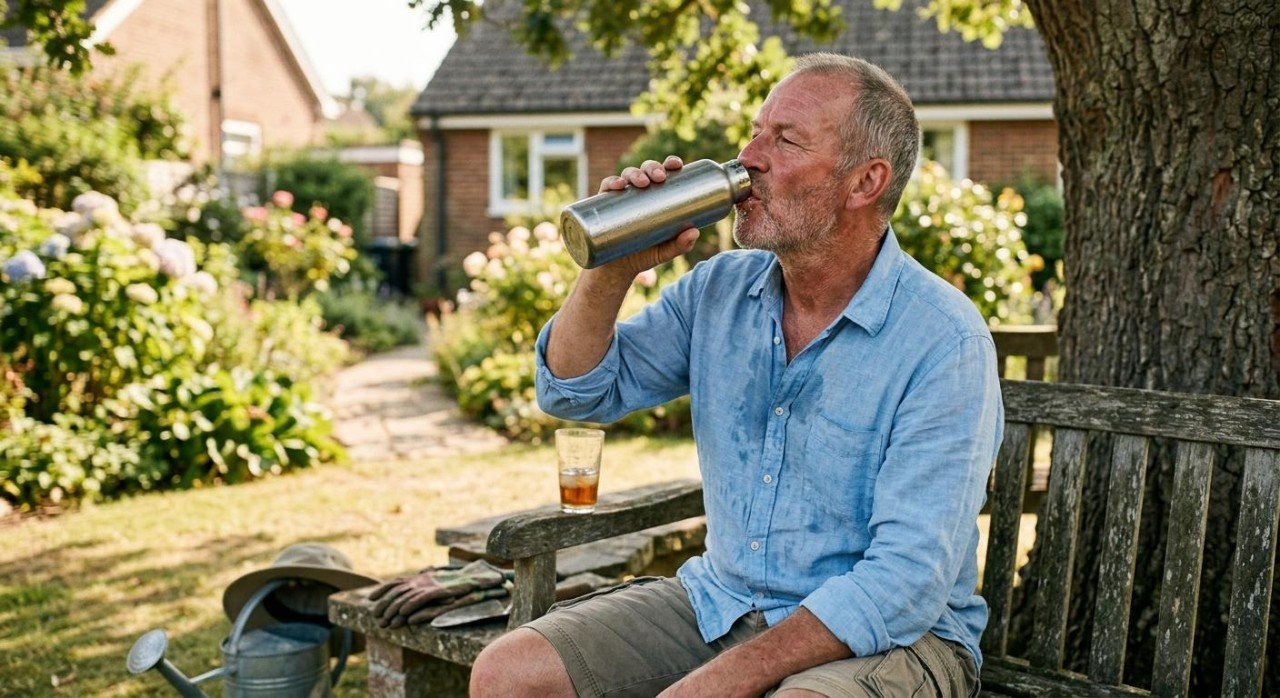
But somewhere after 60, that alarm starts to fail. Not all at once, and not in a way you would notice from the inside. The thirst signal simply gets quieter, slower, and less accurate, so an older body can drift into genuine dehydration without ever feeling thirsty enough to do something about it. It is one of the quiet, under-discussed shifts of aging — and because it removes the very warning you have relied on your whole life, it is also one of the easiest to miss until it causes real trouble.
Why the Thirst Alarm Gets Quieter With Age
The blunting of thirst is a well-documented part of normal aging, not a sign that something is wrong with a particular person. A review of the research on the influence of age on thirst and fluid intake found that while healthy older adults generally keep up with their fluid needs under ordinary conditions, the picture changes the moment the body is challenged. When older adults face fluid deprivation, a hot environment, or exercise, they show decreased thirst sensation and reduced fluid intake compared with younger people — and even after they do drink, the restoration of normal fluid balance happens more slowly.
Part of the reason is that the internal trigger point for thirst shifts. The same review notes that older adults tend to run at a higher baseline blood concentration and need a stronger osmotic signal before thirst kicks in at all. In plain terms, the body has to get more dehydrated before the alarm finally sounds. Layer on a few other age-related changes — kidneys that are less able to concentrate urine and conserve water, and a gradual decline in the body's total water reserves — and you have a system that loses fluid more readily while being slower to notice and slower to recover.
The result is exactly what you would predict. According to the clinical reference StatPearls on adult dehydration, older individuals are 20% to 30% more prone to dehydration than younger adults, and somewhere between 17% and 28% of older Americans are dehydrated at any given time. Some estimates run higher: the National Council on Aging points to UCLA research suggesting up to 40% of older adults may be chronically underhydrated. These are not people who forgot to drink on a hot day. Many of them simply never got the signal.
Why a Little Dehydration Matters More Than It Sounds
It is tempting to file dehydration under minor inconveniences — a dry mouth, a headache, something a glass of water fixes. In an older body, though, the stakes are considerably higher, because the same systems that become vulnerable with age are the ones that suffer first when fluids run low.
Thinking and attention. The brain is acutely sensitive to hydration, and the effect shows up even at mild levels. In a study from Penn State researchers, 78 adults aged 47 to 70 were tested three times over three months. The everyday, non-strenuous dehydration that a lot of people walk around with measurably impaired their ability to sustain attention on longer tasks — though it did not significantly affect working memory or other functions. Between 29% and 39% of participants were dehydrated at any given assessment. As study leader Asher Rosinger put it, if someone is regularly drinking less than their body needs, "it may take them slightly longer to complete certain long tasks with slightly more errors." In an older adult, that fuzziness can look like the early confusion families worry about — when sometimes it is partly a fluid problem.
Dizziness and falls. When fluid volume drops, blood pressure can dip, especially on standing — and that lightheaded, unsteady moment is exactly how dangerous falls begin. Falls are not a small risk in this age group. The CDC reports that about 1 in 4 older adults falls each year, and falls are the leading cause of both fatal and nonfatal injuries among adults 65 and older. Anything that adds avoidable dizziness to an already higher-risk body is worth taking seriously.
Kidneys, urinary tract, and digestion. Adequate fluid is what lets the kidneys do their job and keeps the urinary tract flushed; chronic underhydration is linked to kidney problems and urinary tract infections, which in older adults can themselves trigger confusion. And because water is what keeps stool soft and moving, low fluid intake is one of the most common drivers of constipation — a genuinely miserable and surprisingly consequential problem in later life.
StatPearls notes that dehydration accounts for roughly 1% to 3% of all hospital admissions in the United States. The throughline is that in an older body, dehydration rarely stays a standalone issue — it amplifies the very risks that aging already raises.
The Medications That Quietly Drain the Tank
There is one more piece that makes the blunted-thirst problem worse, and it is easy to overlook because it comes from the medicine cabinet. Several extremely common medications increase fluid loss as part of how they work.
StatPearls specifically flags diuretics, laxatives, and certain blood pressure medications as significant risk factors for dehydration. Diuretics — often prescribed for high blood pressure, heart failure, or swelling in the legs — do their job precisely by making the body shed more fluid through urine. Laxatives increase fluid loss through the bowel. None of this means these drugs are bad; they treat real and important conditions. But it does mean that a lot of older adults are losing extra fluid every day on top of a thirst signal that already under-reports the deficit. If you or someone you care for takes one of these medications, fluid intake deserves more deliberate attention, and it is worth asking the prescribing doctor how to balance the two.
How to Stay Hydrated When You Cannot Trust Thirst
Here is the reassuring part: once you understand that thirst is no longer a reliable guide, the solution is refreshingly low-tech. You stop waiting for the signal and start building fluid into the day on purpose.
Drink on a schedule, not on a feeling. Because the thirst alarm is unreliable, experts recommend anchoring fluids to things you already do every day rather than waiting to feel like it. The National Council on Aging suggests habits like a glass of water when you wake up, a drink with every meal, and water before and after any activity. Geriatrics specialists writing at Better Health While Aging add a useful refinement for anyone who struggles to drink much at once: offer smaller amounts more frequently across the day rather than a few big glasses, and lean on beverages the person actually enjoys, since preference drives intake.
Aim for a realistic target. Older adults should generally take in at least around 1.7 liters of fluid per 24 hours — roughly 7 cups — as a floor, according to Better Health While Aging. The National Council on Aging frames the broader goal as about 13 cups of total fluid a day for men 51 and older and about 9 cups for women, counting all beverages and water-rich foods. (One caution: with certain heart or kidney conditions, fluid needs to be managed carefully, so check with a doctor before dramatically increasing intake.)
Check the color, not the thirst. Since the internal alarm is broken, use an external gauge instead. Pale, light-yellow urine generally signals good hydration; dark yellow or amber is a cue to drink more. It is simple, it requires no equipment, and it sidesteps the unreliable thirst signal entirely. (It is worth knowing that the classic physical signs of dehydration — dry mouth, sunken eyes, skin that tents — are notoriously unreliable in older adults, which is all the more reason to be proactive rather than wait for symptoms.)
Eat your water, too. Not all hydration has to come from a glass, and for older adults who find large volumes of liquid hard to get down, food is a genuinely valuable source. According to Harvard Health, many everyday foods are 90% to 100% water — cucumbers, lettuce, celery, zucchini, peppers, strawberries, and watermelon among them — while foods like oranges, peaches, and yogurt land in the 80% to 90% range. A balanced diet rich in produce can contribute up to about two cups of fluid a day. Soups and broths are nearly all water and tend to go down easily, which makes them one of the best hydration tools for an older appetite. Harvard is clear that food alone is not enough to replace drinking — but it is a meaningful, often-overlooked supplement, especially for someone who finds plain water boring.
Add flavor without the sugar. If water feels unappealing, a slice of lemon, cucumber, orange, or a few crushed berries, or a splash of 100% fruit juice can make it far more drinkable without turning every glass into a sugary drink. The goal is to remove friction — the easier and more pleasant a drink is, the more of it actually gets consumed.
Where Planning Makes Hydration Almost Automatic
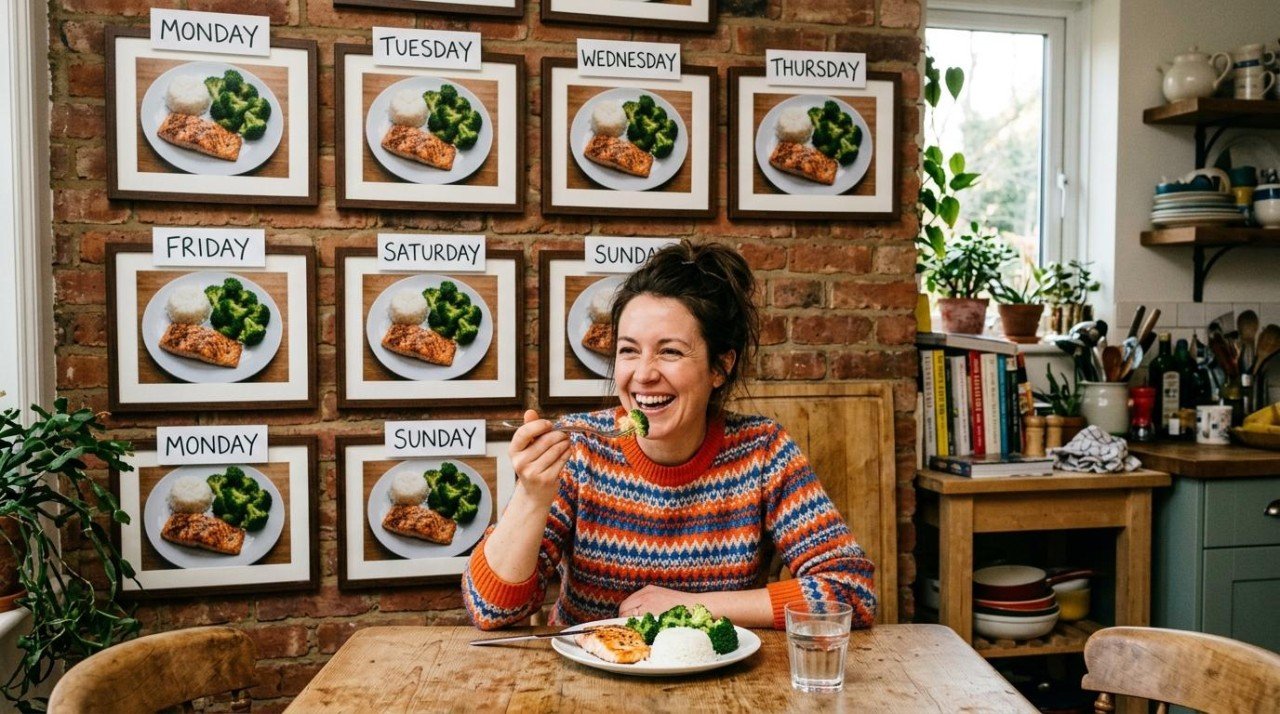
Most of these strategies share a theme: they work best when hydration is built into a routine rather than left to a thirst signal that no longer fires. And the single most powerful lever is the one people tend to skip — actually planning meals around water-rich foods instead of hoping they end up on the plate. A week with a brothy soup, a yogurt-and-fruit breakfast, a cucumber-and-tomato salad, and a watermelon snack penciled in is a week that quietly delivers a surprising amount of fluid without anyone having to chug glass after glass.
This is exactly the kind of behind-the-scenes work that is easier to hand off to a tool. Eat Well Planner lets you build a weekly meal plan from recipes you have saved, so you can deliberately stack the week with hydrating, water-rich meals — soups, stews, smoothies, fruit-forward breakfasts, and big crunchy salads — rather than leaving hydration to chance. You can import a soup recipe straight from a website, Instagram, or YouTube, and the app pulls it into a searchable recipe book and turns your plan into an organized shopping list, so the watermelon and the cucumbers and the Greek yogurt actually make it into the cart. And because the food diary lets you log what you eat and drink (even by voice) and tracks the nutrition behind it, you get an external readout of your week instead of relying on a thirst signal that has stopped telling the truth. For older adults and the family members who help look after them, that shift — from reacting to thirst to following a plan — is the whole game.
Take the Guesswork Out of Eating Well
Eat Well Planner helps you organize your favorite recipes, plan balanced meals, and automatically generate shopping lists — all in one place. Whether you're tracking macros, managing dietary restrictions, or just trying to stop asking "what's for dinner?", we've got you covered.
Our AI-powered tools can adapt any recipe to your dietary needs, help you discover new meals you'll love, and even log your nutrition effortlessly. It's meal planning made simple.
Start Organizing Your Meals — FreeA Quick Word for Caregivers
If you are helping care for an aging parent or partner, the blunted-thirst problem changes what good support looks like. Reminding someone to "drink when you are thirsty" simply will not work if the thirst never arrives. More effective is to make fluids visible and effortless: keep a filled water bottle or glass within easy reach, offer small drinks regularly throughout the day, serve a soup or a piece of fruit with meals, and glance at urine color as a low-key check. The scale of the issue in care settings is real — Better Health While Aging cites a UK study of older adults in residential care that found 46% had impending or current dehydration. Most of that is preventable with nothing more than consistent, gentle prompting.
It also helps to know the situations that raise the risk so you can be extra attentive: hot weather, a fever or stomach bug, a new diuretic or laxative, or any stretch where someone is eating and drinking less than usual. In those windows, the gap between what the body needs and what it asks for grows widest.
The Takeaway
Thirst served you well for six decades, but it is not built to keep serving you forever. After 60, the alarm gets quieter at exactly the time the consequences of ignoring it — confusion, dizziness and falls, kidney and urinary problems, constipation — get more serious. The fix is not to drink heroic amounts of water; it is to stop outsourcing the decision to a signal that no longer works.
Build fluids into your routine, drink before you feel like you need to, check the color instead of the craving, lean on soups and water-rich foods, and pay attention to the medications that drain the tank faster. None of it is complicated. It just takes a plan — and a plan is a far better hydration system than thirst ever was. If you would like a head start, Eat Well Planner can help you build a week of hydrating, water-rich meals, generate the shopping list to match, and keep track of how you are actually doing — so staying hydrated becomes something you do by default instead of something you have to remember.