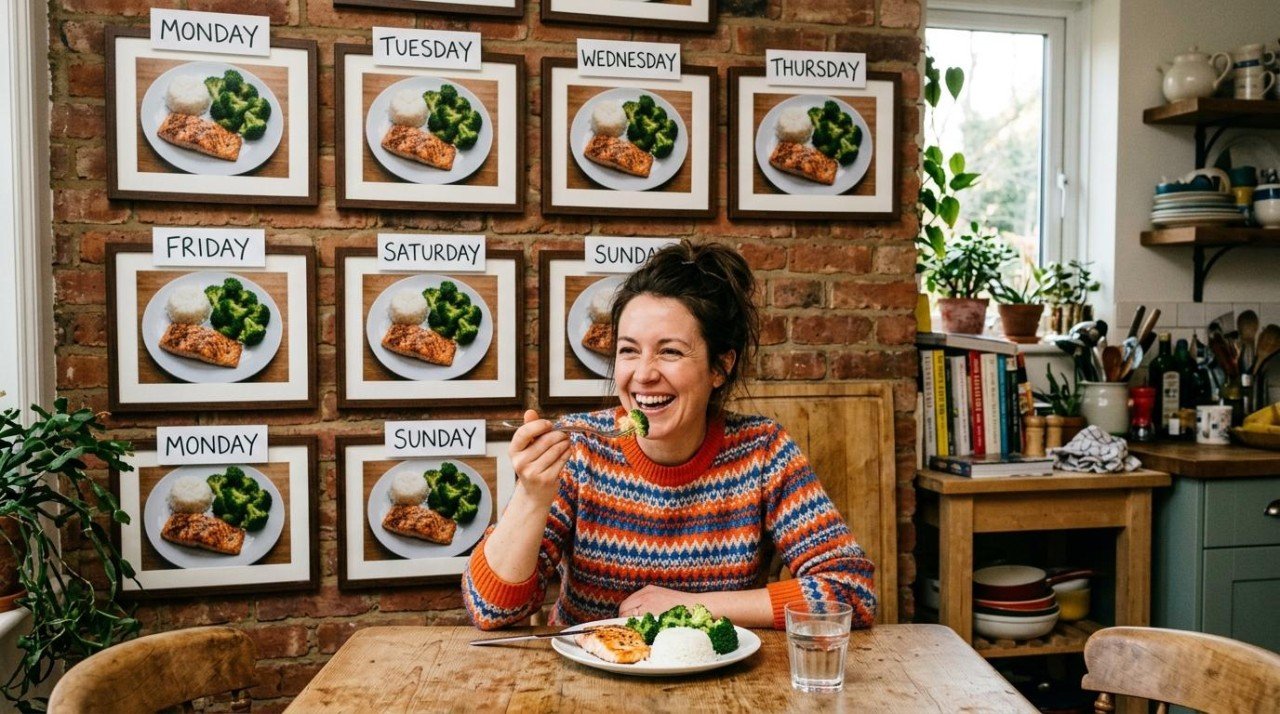
Maybe the soup that used to be perfect now needs three extra shakes of salt. Maybe coffee tastes flat, ripe strawberries seem watery, or a once-loved roast dinner just doesn't pull you to the table the way it did. If food has slowly become less interesting as you've gotten older, you're not imagining it, and you're not being fussy. Your sense of taste and smell really do change with age, and those changes quietly reshape what you reach for, how much salt and sugar you add, and sometimes whether you feel like eating at all.
The good news is that bland food is not an inevitable sentence. Once you understand what's actually fading, you can rebuild flavor from other directions, ones that don't depend on dumping in salt or drifting toward sweet, processed convenience foods. Here's what's happening, and how to eat well anyway.
Why Food Really Does Taste Different As You Age
We tend to blame the tongue, and the tongue is part of it. Taste buds do shrink and regenerate more slowly with age, and sensitivity to the basic tastes declines. In one study comparing younger adults (average age 27) with older adults (average age 71), every taste quality measured was significantly weaker in the older group, and more than half of the older participants were classified as having impaired taste. Interestingly, the research found the largest declines in sweet and sour perception, with salty taste among the most preserved.
But the tongue is only the supporting actor. Most of what we call flavor is actually smell. When you bite into a peach, the aroma travels up the back of your throat to your nose, and that's where the peachiness really registers. So when the sense of smell fades, food can taste muted and generic even if your taste buds are working fine, and smell tends to decline earlier and more dramatically than taste.
The numbers here are striking. According to a review of age-related olfactory dysfunction, objectively measured smell loss climbs from around 6% of people in their late 50s to roughly 29% of those in their 70s and over 62% of those aged 80 and up. In the same study comparing younger and older adults, 70% of the older group had a measurable impairment in their sense of smell. In other words, by the time food starts tasting like cardboard, a faded sense of smell is usually the bigger driver, even though it's the one we notice least.
The Hidden Culprits: Medications and Dry Mouth
Aging itself is only part of the story. Two extremely common, often overlooked factors can flatten flavor at any point, and they pile up as we get older.
The first is medication. A surprising number of everyday drugs distort or dull taste and smell. One review of medications and chemosensory function found that fully half of the 100 most-prescribed drugs in the United States have the potential to cause taste or smell complaints, and identified more than 350 drugs linked to taste disturbances. The list spans some of the most widely used categories: blood pressure and heart medications, statins, antibiotics, and antidepressants among them. Age makes the effect worse, too. With the antifungal terbinafine, for example, people 65 and older were about 4.4 times more likely to lose taste than people under 35. The classic giveaway is a persistent metallic or bitter taste that no amount of seasoning quite fixes.
The second culprit is dry mouth. Taste molecules have to dissolve in saliva to reach your taste receptors, so when your mouth runs dry, food genuinely tastes weaker. Saliva production can decline with age, but far more often the real cause is medication, since dry mouth is one of the most common side effects across hundreds of drugs. The more prescriptions someone takes, the more likely they are to be living with a dry mouth, which is exactly the situation many older adults find themselves in.
None of this means you should stop a prescription. But it's worth raising bland food or a metallic taste with a doctor or pharmacist, because sometimes a dose, a timing, or an alternative can be adjusted, and it's reassuring to know the problem may be the medicine cabinet rather than the food.
The Quiet Danger: Over-Salting, Over-Sweetening, and Losing Interest
Here's why this matters beyond the dinner table. When food tastes flat, people compensate in predictable ways, and most of them work against good health.
The most common move is to add more salt. If salty taste is relatively preserved while everything else fades, salt becomes the easiest lever to pull, so the shaker comes out and portions of sodium creep up, right at the stage of life when blood pressure and heart health matter most. The second move is a drift toward sweet and ultra-processed foods. Sweetness is a strong, simple signal that still lands when subtler flavors don't, and packaged snacks are engineered to be intense, so they keep tasting like something even when a home-cooked vegetable has gone quiet. Over time, the plate can shift away from fresh, varied, nutrient-dense food toward a narrower, saltier, sweeter, more processed set of choices.
And sometimes the response isn't to eat differently but to eat less. When meals stop being pleasurable, appetite can simply fade, a pattern common enough to have a name: the anorexia of aging. It's not rare, and it's not harmless. A systematic review of appetite loss in older populations found that every study examining the link reported a significantly higher risk of malnutrition in older adults with poor appetite, and 94% of the long-term studies found appetite loss associated with higher mortality. In the largest single study, of more than 1.4 million people, appetite loss raised the risk of death by roughly 30%. Losing interest in food is a genuine health signal, not just a preference.
The encouraging part is that all three of these traps share one solution: make food taste good again using flavor tools other than salt and sugar.
Take the Guesswork Out of Eating Well
Eat Well Planner helps you organize your favorite recipes, plan balanced meals, and automatically generate shopping lists — all in one place. Whether you're tracking macros, managing dietary restrictions, or just trying to stop asking "what's for dinner?", we've got you covered.
Our AI-powered tools can adapt any recipe to your dietary needs, help you discover new meals you'll love, and even log your nutrition effortlessly. It's meal planning made simple.
Start Organizing Your Meals — FreeHow to Make Food Satisfying Without Piling On Salt or Sugar
Flavor is built from far more than the five tastes. Aroma, acidity, savoriness, texture, temperature, and even color all feed into how satisfying a meal feels. When some of those channels dim, you turn up the others. Here are the most effective ones.
Lean Into Umami, the Savory Fifth Taste
Umami, the deep savory note in Parmesan, mushrooms, tomatoes, soy sauce, anchovies, miso, and slow-cooked meats, is the single most useful tool here, for two reasons.
First, it lets you cut salt without cutting satisfaction. Umami and saltiness reinforce each other on the palate, so a savory-rich dish tastes fully seasoned with less sodium. Modeling based on the UK National Diet and Nutrition Survey estimated that leaning on umami substances could cut daily salt intake by roughly 9% to 19%, without making food taste any less appealing.
Second, umami seems to do something special for appetite and dry mouth. Of all the basic tastes, umami stimulation produces the most saliva, and the effect lasts longer than for sweet, salty, or bitter. Researchers have even documented older patients who had specifically lost their umami sensitivity, complained of poor appetite and weight loss, and then regained their appetite, weight, and overall condition once that savory taste was restored. Practical ways to build umami: stir a spoonful of tomato paste or miso into sauces and soups, finish dishes with grated hard cheese, add dried or sautéed mushrooms, use a splash of soy sauce or fish sauce, and simmer real stock instead of water.
Brighten Everything With Acid
A squeeze of lemon, a splash of vinegar, a spoonful of yogurt, or a few pickled onions can make a dull dish suddenly taste vivid. Acidity adds contrast and lift, and crucially it makes food taste more seasoned, so it's another way to feel satisfied with less salt. Keep lemons, limes, and a couple of vinegars within reach and add a hit of acid at the end of cooking, when its brightness is strongest. For many people, a final squeeze of citrus does more for a tired plate than another pinch of salt ever could.
Layer Herbs and Spices, Generously
Herbs and spices add aroma and complexity, which is exactly the channel that fades with smell loss, so they help fill the gap. Be honest with yourself about quantity, though: a timid shake of dried herbs into a big pot won't register. Use them boldly, toast whole spices to wake them up, and add fresh herbs near the end.
It's worth setting a realistic expectation here. In a study of 100 community-dwelling older adults, adding culinary spices reliably increased how much people liked their meals and how intense the flavor seemed, especially for plant-based dishes, but it didn't by itself make them eat more. The takeaway isn't that spices don't matter; it's that flavor is necessary but not always sufficient. Making food taste good is the foundation, and it works best alongside the appetite and structure strategies further down.
Play With Texture and Temperature
When taste and smell are muted, the physical experience of food carries more of the load, and texture is something age doesn't dull nearly as much. A crunchy topping on a soft dish, toasted nuts or seeds over a salad or yogurt, crisp raw vegetables alongside something creamy: contrast keeps eating interesting. Temperature contrast helps too, like warm fruit with cool yogurt, or a hot meal with a cold, crisp side. These differences give the brain something to notice when subtler flavors don't land.
Make the Plate Look Worth Eating
We eat with our eyes first, and that becomes more important, not less, when other senses fade. A plate with several colors, say, deep green, bright orange, and red, signals variety and freshness and can genuinely stir appetite. As a bonus, eating a colorful range of vegetables and fruits is one of the simplest ways to cover a broad spread of nutrients. Aiming for color is both an appetite trick and a nutrition strategy at the same time.
When Appetite Itself Fades
Sometimes the challenge isn't that food tastes bland but that hunger has quietly gone missing. When that happens, a few adjustments help keep nutrition adequate even when the desire to eat is low:
- Make every bite count. If someone is eating less overall, the food they do eat should be rich in protein and nutrients. Eggs, fish, beans, dairy, nut butters, and tender meats deliver a lot in a small, easy-to-eat package.
- Go small and frequent. A large plate can feel daunting when appetite is low. Smaller meals and nourishing snacks spread through the day are often easier to manage than three big ones.
- Protect protein especially. Maintaining muscle matters enormously for staying strong and independent with age, and protein is the nutrient most often shortchanged when appetite drops.
- Make meals social. Eating alone is one of the well-documented drivers of poor appetite in older adults. Sharing a meal, even occasionally, often does more for intake than any single ingredient.
- Keep variety alive. When food is less appealing, it's tempting to fall back on the same two or three easy meals. But monotony dampens appetite further and narrows nutrition. Rotating different recipes keeps both interest and nutrient intake up.
If appetite loss is significant or weight is dropping, it's worth a conversation with a doctor, since it can point to a treatable cause. But for the everyday version, taste and structure go a long way.
Where a Little Planning Makes This Easier
Rebuilding flavor and keeping variety alive sounds like more work, and that's exactly the kind of friction that derails good intentions, whether you're cooking for yourself or for an older parent. This is where a tool that handles the thinking helps. With Eat Well Planner, you can ask the AI recipe chat to take any recipe and boost its flavor without leaning on salt, suggesting umami additions, an acid to finish with, or a spice blend to layer in, so seasoning becomes a quick question rather than a guessing game. The meal planning feature builds a varied week from recipes you actually like, which protects against the same-three-meals rut that quietly erodes both appetite and nutrition. Auto-generated shopping lists make sure the lemons, herbs, miso, and protein-rich staples are actually in the house when it's time to cook. And nutrition tracking lets you keep an eye on whether protein and overall intake are holding up, which is especially reassuring when appetite is low. You can even import a favorite recipe from a website or video and ask the AI to adapt it for a softer texture, a dry-mouth-friendly sauce, or lower sodium.
The Bottom Line
Food tasting different with age is real, common, and driven mostly by a fading sense of smell, often made worse by medications and dry mouth. Left unaddressed, it nudges people toward more salt, more sugar, more processed food, or simply less food, none of which serves health in later life. But taste isn't a single dial that only turns down. It's a whole mixing board of savoriness, acidity, aroma, texture, temperature, and color, and most of those channels stay responsive even when the basic tastes dim. Lean on umami, brighten with acid, season boldly, add crunch and contrast, and make the plate colorful, and meals can stay genuinely satisfying and nourishing for decades. Eating well later in life isn't about forcing down bland food out of duty. It's about flavoring it cleverly enough that you actually want to.
Ready to make eating well the easy choice again? Try organizing your meals with Eat Well Planner and let it handle the planning, the flavor tweaks, and the shopping list for you.