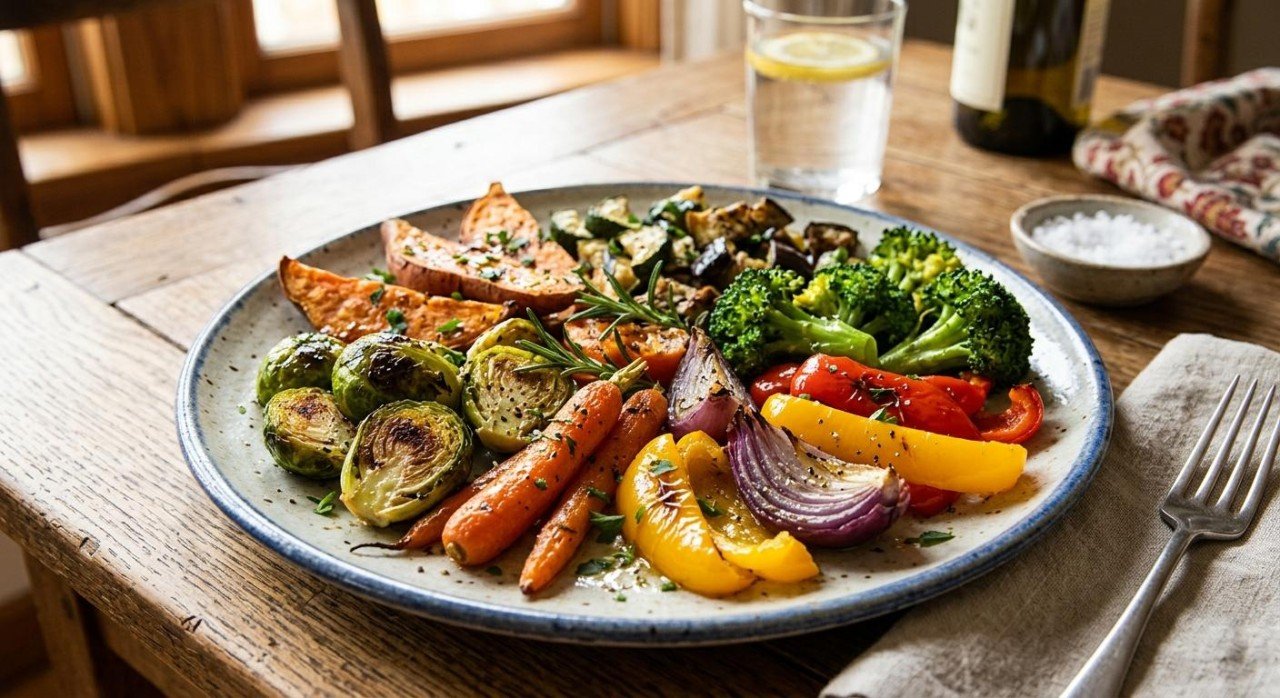
There is a comforting idea floating around kitchens everywhere: that raw vegetables are always the purest, healthiest version of themselves, and that heat is a thief that steals their goodness. It is a tidy story. It is also wrong about half the time.
The truth is more interesting. Cooking is not universally good or bad for nutrition — it is a trade-off that plays out differently for every vegetable. Heat can shatter the cell walls that lock nutrients away, making compounds your body could never reach in a raw carrot suddenly available. It can also degrade fragile vitamins that simply cannot survive a rolling boil. The same pot of water that unlocks one nutrient washes another straight down the drain.
So the real question is not "raw or cooked?" It is "which vegetable, and cooked how?" Once you understand the handful of rules behind that, you can get noticeably more nutrition out of the exact same produce you are already buying — no special ingredients, no extra cost.
Why Cooking Can Make a Vegetable Healthier
Plant cells are built like tiny fortresses. Their rigid walls are made of cellulose, a fiber humans cannot digest, and many of the most valuable nutrients are trapped inside that structure. When you eat a vegetable raw, your gut only manages to pry loose a fraction of what is actually in there. Heat does the prying for you: it softens and ruptures those walls, releasing the contents and making them far easier to absorb. For certain nutrients, this effect is dramatic.
Tomatoes: heat multiplies the lycopene
Tomatoes are the poster child for cooking done right. They are rich in lycopene, the red pigment linked in research to heart health and a lower risk of certain cancers — but in a raw tomato, much of it stays bound up and hard to absorb. Heat changes that. In a frequently cited study from Cornell University, food scientist Rui Hai Liu and colleagues heated tomatoes to 190°F and measured what happened. The beneficial trans-lycopene content rose by 54 percent after 2 minutes, and by as much as 171 percent after 15 minutes, while the overall antioxidant activity climbed too. The vitamin C dropped — by about 10 to 29 percent depending on cooking time — but the net effect was a tomato that delivered more of its signature nutrient, not less.
This is why a simmered tomato sauce, a roasted tomato, or even a can of crushed tomatoes can be a genuinely smart choice rather than a lazy one. A splash of olive oil helps even more, because lycopene is fat-soluble and rides into your bloodstream alongside dietary fat.
Carrots: more beta-carotene than the raw version
Carrots tell a similar story. Their bright orange comes from beta-carotene, which your body converts into vitamin A. As Scientific American summarized from the research, cooking carrots increases the amount of beta-carotene your body can actually absorb, because heat breaks down the tough cell walls that otherwise keep it locked away. Pair those cooked carrots with a little fat — a drizzle of oil, a knob of butter, a handful of nuts in the same meal — and absorption improves further still, since beta-carotene, like lycopene, is fat-soluble.
None of this means a raw carrot is a bad snack. It is still fiber, still hydrating, still better than a bag of chips. It just means that if vitamin A is what you are after, the cooked carrot quietly wins.
Leafy greens: cooking concentrates and unlocks
Spinach and other hardy greens occupy a middle ground worth understanding. Cooking wilts a huge pile of raw spinach down to a few forkfuls, which means you can eat far more of it in one sitting — and with it, more of the magnesium, fiber, and carotenoids it carries. Heat also helps break down some of the compounds in raw spinach that interfere with mineral absorption.
But greens come with a genuine caveat, which is the perfect bridge to the other half of this story.
Take the Guesswork Out of Eating Well
Eat Well Planner helps you organize your favorite recipes, plan balanced meals, and automatically generate shopping lists — all in one place. Whether you're tracking macros, managing dietary restrictions, or just trying to stop asking "what's for dinner?", we've got you covered.
Our AI-powered tools can adapt any recipe to your dietary needs, help you discover new meals you'll love, and even log your nutrition effortlessly. It's meal planning made simple.
Start Organizing Your Meals — FreeWhy Cooking Can Make a Vegetable Worse
For all the nutrients that heat unlocks, there are others it quietly destroys. The two biggest casualties are vitamin C and folate — both water-soluble, both heat-sensitive, and both prone to leaching out into your cooking water and getting poured down the sink.
Vitamin C and folate: fragile and water-loving
Vitamin C is one of the most delicate nutrients in the produce aisle. It oxidizes when exposed to heat, light, and air, and it dissolves readily into water. In one review of cooking methods across a range of vegetables, vitamin C retention ranged from essentially zero to 91 percent depending on the vegetable and method — with the lowest retention after boiling and the highest after microwaving. That is a staggering spread for a single nutrient. The same vulnerability applies to folate, the B vitamin so important for cell division and healthy pregnancy. Boil a pot of greens for too long and a large share of both vitamins ends up in the discarded water rather than on your plate.
This is exactly why that pile of cooked spinach comes with an asterisk. You gain easier access to some carotenoids and minerals, but you sacrifice much of its vitamin C and folate. The takeaway is not to avoid cooking greens — it is to also keep eating some of them raw, in salads and sandwiches, so you cover both bases across the week.
Broccoli: the enzyme heat can kill
Broccoli is the most fascinating case of all, because cooking it the wrong way does not just degrade a vitamin — it switches off a chemical reaction entirely. Broccoli and its cruciferous cousins contain compounds called glucosinolates, which only convert into sulforaphane — a much-studied compound with promising anti-cancer activity — when an enzyme called myrosinase is present to trigger the reaction. And myrosinase is exquisitely fragile.
Research led by Elizabeth Jeffery at the University of Illinois pinned down what cooking does to it. Steaming broccoli for up to five minutes was the best way to preserve its myrosinase, while boiling or microwaving for even a minute destroyed most of the enzyme. No myrosinase, no sulforaphane — you are left with a vegetable that still has fiber and some vitamins, but has lost much of what makes broccoli special in the first place.
There is a clever workaround the same research points to: if you do cook broccoli hard, eating a little raw mustard, radish, arugula, or another raw cruciferous vegetable alongside it adds back the myrosinase from an outside source, and sulforaphane can still form. A pinch of mustard powder stirred into a broccoli dish is a real, evidence-backed trick.
Garlic: crush it, then wait
Garlic follows the same enzyme logic. Its prized compound, allicin, does not exist in an intact clove. It only forms when you damage the garlic — crushing, chopping, or mincing brings an enzyme called alliinase into contact with a precursor compound, and allicin is the result. But heat inactivates alliinase, so if you drop whole or just-chopped garlic straight into a hot pan, you can shut the reaction down before it really gets going.
The fix, identified by researchers publishing in the American Chemical Society's Journal of Agricultural and Food Chemistry, is simple: crush or chop your garlic and let it sit for about 10 minutes before it hits the heat. That short rest gives the enzyme time to generate allicin and its beneficial breakdown products, so they survive the cooking that follows. It costs you nothing but a little patience.
It Is Not Just the Heat — It Is the Method
Notice a pattern in the casualties above: boiling keeps showing up as the worst offender. That is no coincidence. When a vegetable is fully submerged in hot water, two things happen at once — heat degrades the fragile vitamins, and water leaches them out of the food and into the pot. You then tip that nutrient-rich water down the drain. It is a double loss.
Cooking methods that limit water contact protect those water-soluble nutrients far better:
- Steaming keeps the vegetable above the water rather than in it, so leaching is minimal. It is consistently one of the best methods for holding on to vitamin C and folate, and gentle enough to preserve broccoli's myrosinase.
- Roasting uses dry heat with no water at all. It does concentrate flavor and works beautifully for carrots, tomatoes, and other vegetables where you want heat to do its unlocking — just keep an eye on time and temperature so you are not scorching everything.
- Microwaving has an undeserved bad reputation. Because it cooks fast and uses very little water, it often preserves more vitamin C than boiling does — exactly what the retention research above found.
- Sauteing and stir-frying are quick, use a little oil that helps fat-soluble nutrients absorb, and avoid the leaching problem of boiling. A fast, hot stir-fry is a genuinely nutritious way to cook.
- Boiling is the one to use sparingly for water-soluble nutrients. If you do boil, use as little water as possible, keep it brief, and — the pro move — save the cooking liquid to use in a soup, sauce, or gravy so the leached vitamins still make it into your meal.
A Quick Reference for Common Vegetables
Here is the cheat sheet. Think of vegetables in three rough groups depending on what heat does to their star nutrients.
Better cooked (heat unlocks more)
- Tomatoes — cooking multiplies absorbable lycopene; add a little oil.
- Carrots — cooking boosts beta-carotene absorption, especially with fat.
- Spinach and hardy greens — cooking lets you eat more and unlocks some minerals and carotenoids (but you lose vitamin C and folate, so eat some raw too).
- Sweet potatoes, squash, and other orange vegetables — like carrots, their carotenoids are more available after cooking.
- Asparagus and bell peppers — gentle cooking can improve the availability of certain carotenoids and antioxidants.
Better with care (cook gently or partly raw)
- Broccoli, cauliflower, kale, and cabbage — steam lightly (around five minutes) or eat some raw to protect myrosinase and sulforaphane; avoid hard boiling.
- Garlic — crush and rest 10 minutes before cooking to preserve allicin.
Often best raw (or barely cooked)
- Bell peppers, broccoli, and other vitamin C heavyweights — when vitamin C is the goal, raw or lightly steamed keeps the most.
- Leafy salad greens and herbs — fragile folate and vitamin C survive best uncooked.
- Onions — some of their beneficial sulfur compounds are most potent raw.
The Real Takeaway: Eat a Mix
If there is one lesson buried in all this chemistry, it is that no single approach wins. Eat only raw vegetables and you miss out on the lycopene, beta-carotene, and minerals that heat unlocks. Eat only cooked vegetables and you slowly erode your vitamin C and folate. The people getting the most out of their produce are not following a rigid rule — they are eating a variety of vegetables prepared a variety of ways, across the week.
A roasted tomato pasta one night, a raw spinach salad the next, lightly steamed broccoli with dinner, a quick stir-fry with garlic you crushed before you started chopping the rest of the meal — that natural variety covers all the bases without any single meal having to be perfect. The goal is not to optimize every bite. It is to build a rhythm where, over the course of a week, you are capturing the full range of what vegetables offer.
That kind of varied, intentional eating is exactly what a little planning makes effortless. This is where Eat Well Planner fits in: it lets you import and organize recipes from anywhere, build a balanced week that naturally mixes raw and cooked vegetables across different cooking methods, and see the nutrition behind each meal so you know what you are actually getting. Its AI recipe chat can suggest a gentler cooking method for a nutrient-sensitive vegetable, swap a boil for a steam, or adapt a dish to keep more of what matters. And when your weekly plan turns into an automatic shopping list, fresh produce becomes the path of least resistance — which is the whole point. The best cooking method in the world only helps if the vegetables actually make it into your cart and onto your plate.
Cooking is not the enemy of nutrition, and neither is eating raw. They are two different tools. Once you know which vegetable responds to which, you stop guessing — and start getting more out of the same groceries you were buying anyway.