If a doctor has ever wrapped a cuff around your arm, watched the number climb, and said the words "a little high," you're far from alone. High blood pressure is one of the most common health concerns in the country, and it tends to creep up quietly with age. The good news is that one of the most powerful tools for bringing those numbers down isn't a pill at all. It's a way of eating, and it has a name: DASH.
DASH stands for Dietary Approaches to Stop Hypertension, and unlike most diets that ride a wave of hype and then disappear, this one was built and tested by researchers specifically to lower blood pressure. Decades later, it remains one of the most evidence-backed eating patterns we have. Here's what it actually involves, why it works, and how to make it part of real life without feeling like you're on a restrictive medical plan.
What Is the DASH Diet?
At its core, DASH is not exotic or complicated. It's an eating pattern rich in vegetables, fruits, whole grains, lean protein, and low-fat dairy, with less sodium, saturated fat, and added sugar than the typical American plate. If that sounds a lot like the general advice for "eating well," that's the point. DASH simply takes those principles and gives them structure, with specific food groups and serving targets that consistently deliver the nutrients known to support healthy blood pressure.
It was developed by the National Heart, Lung, and Blood Institute, a part of the National Institutes of Health, which is why you'll often see it recommended by doctors and dietitians rather than wellness influencers. It was designed as a treatment, then proven to work in carefully controlled trials. That research pedigree is what sets DASH apart.
The Research Behind It
The original DASH study, published in the New England Journal of Medicine in 1997, was a rigorous test. Researchers enrolled 459 adults and, after a run-in period on a typical control diet, randomly assigned them to one of three eating patterns for eight weeks: the control diet, a diet rich in fruits and vegetables, or a "combination" diet that added low-fat dairy and cut back on saturated fat. That combination diet is what we now call DASH.
The results were striking, especially because nothing else changed. Participants weren't told to lose weight, exercise more, or cut salt. They simply ate the assigned foods. According to the trial's published findings, the DASH diet lowered systolic blood pressure (the top number) by 5.5 mmHg and diastolic blood pressure (the bottom number) by 3.0 mmHg across all participants. Among those who already had high blood pressure, the effect was larger: an 11.4 mmHg drop in systolic and 5.5 mmHg in diastolic pressure. As Harvard's Nutrition Source notes, that reduction is comparable to what some people get from blood pressure medication for stage 1 hypertension, achieved through food alone and within a matter of weeks.
A few years later, a follow-up study called DASH-Sodium asked a second question: what happens when you also dial down the salt? Researchers tested three sodium levels on top of the diet. When people combined the DASH eating pattern with the lowest sodium level, the payoff grew substantially. An analysis of the DASH-Sodium trial found that the low-sodium DASH diet lowered systolic blood pressure compared with a high-sodium typical diet by anywhere from about 5 mmHg in people with normal pressure to more than 20 mmHg in those whose pressure started highest. In other words, the higher your blood pressure, the more this eating pattern has to offer.
What's Actually on Your Plate
DASH is refreshingly concrete. Instead of vague rules, it gives you food-group targets. For a 2,000-calorie day, the NHLBI's DASH plan recommends roughly:
- Grains: 6 to 8 servings a day, with an emphasis on whole grains
- Vegetables: 4 to 5 servings a day
- Fruits: 4 to 5 servings a day
- Fat-free or low-fat dairy: 2 to 3 servings a day
- Lean meats, poultry, and fish: 6 one-ounce servings or fewer a day
- Nuts, seeds, and legumes: 4 to 5 servings a week
- Fats and oils: 2 to 3 servings a day
- Sweets and added sugars: 5 servings or fewer a week
Notice what this list is really doing. It crowds your plate with produce, beans, and whole grains, nudges protein toward fish and poultry, and treats sweets as an occasional thing rather than a daily habit. You're not banning anything outright. You're shifting the balance toward the foods that nourish you and leaving less room for the ones that don't.
Why It Works: It's Not Just About Salt
Most people assume blood pressure is purely a salt story, but DASH succeeds because it works on several fronts at once. The eating pattern is naturally rich in three minerals that help blood vessels relax and counterbalance sodium's effects: potassium, magnesium, and calcium. Fruits and vegetables supply potassium and magnesium, low-fat dairy adds calcium, and nuts, seeds, and legumes contribute magnesium and fiber on top.
Potassium in particular plays a tug-of-war with sodium in the body. When you eat more potassium-rich foods, your kidneys are better able to release excess sodium, which helps ease the pressure inside your blood vessels. That's why DASH emphasizes loading up on produce rather than focusing only on what to avoid. The fiber in all those plants and whole grains is a bonus, supporting heart health, steadier blood sugar, and a healthier gut along the way.
The benefits seem to extend beyond blood pressure, too. Harvard's review points to research linking the DASH pattern to roughly a 10% lower risk of cardiovascular disease in controlled trials, with even larger reductions observed among women and Black adults, plus lower uric acid levels, which may reduce the risk of gout. This is what happens when an eating pattern improves several things at once instead of chasing a single number.
The Sodium Question
Sodium still matters, and most of us are getting far too much of it. The Centers for Disease Control and Prevention reports that Americans take in more than 3,300 mg of sodium per day on average, well above the federal recommendation of staying under 2,300 mg. Excess sodium raises blood pressure and, with it, the risk of heart disease and stroke, the two conditions that kill more Americans each year than any other cause.
DASH comes in two sodium levels: a standard version capped at 2,300 mg a day, and a lower-sodium version at 1,500 mg for people who need a bigger reduction. The American Heart Association recommends no more than 2,300 mg daily and considers 1,500 mg the ideal target for most adults, noting that even cutting back by 1,000 mg a day can move the needle on blood pressure.
Here's the part that surprises people: the saltshaker isn't the main culprit. The large majority of the sodium most of us eat is already baked into processed, packaged, and restaurant foods, from bread and deli meat to canned soup and frozen dinners, long before it reaches our kitchens. That's actually encouraging news, because it means the single most effective way to cut sodium is to cook more meals from fresh ingredients, which is exactly what DASH steers you toward.
A Sample Day on DASH
To make this less abstract, here's what a comfortable, unfussy DASH day might look like:
- Breakfast: Oatmeal topped with sliced banana and a handful of walnuts, with a glass of low-fat milk or a cup of plain yogurt on the side.
- Lunch: A big salad of leafy greens, cherry tomatoes, cucumber, chickpeas, and grilled chicken, dressed with olive oil and lemon, plus a whole-grain roll.
- Snack: An apple and a small handful of unsalted almonds, or carrot sticks with hummus.
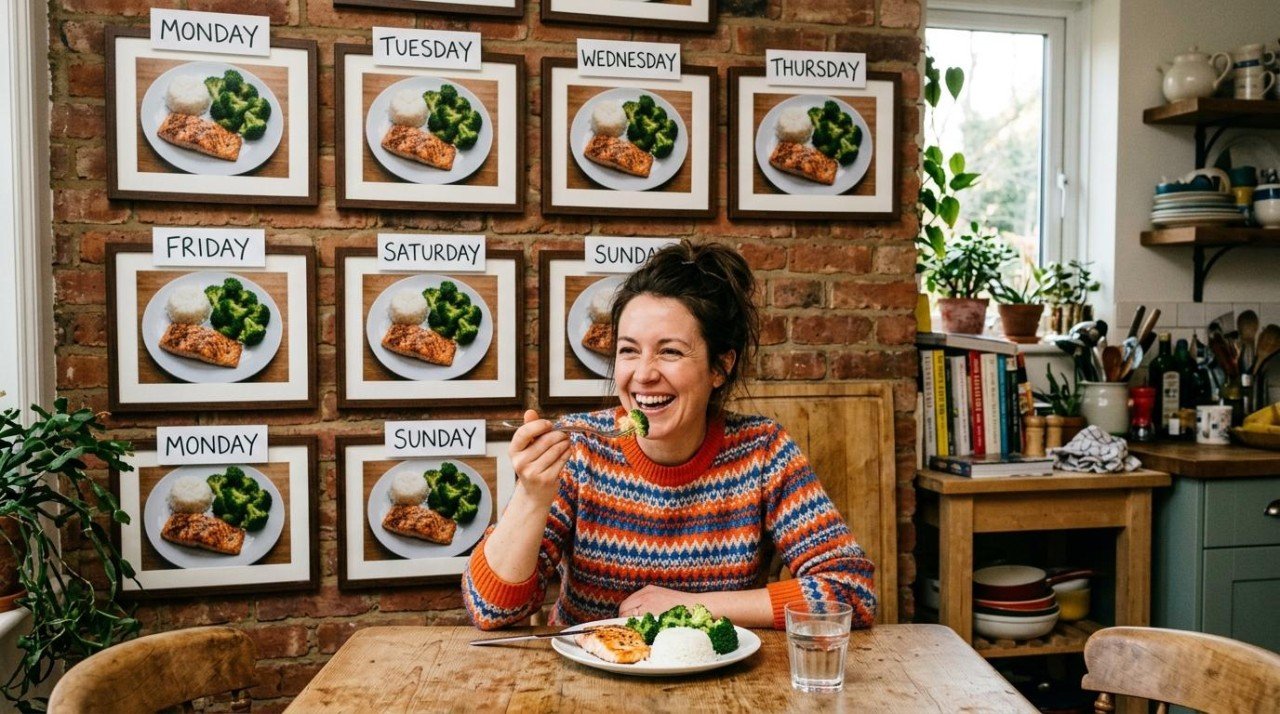
- Dinner: Baked salmon, a generous pile of roasted broccoli and sweet potato, and a side of brown rice or quinoa.
- Dessert: A bowl of berries, maybe with a spoonful of yogurt.
No special products, no powders, nothing you can't find at any grocery store. It's just real food, weighted toward plants, with seasoning from herbs, garlic, citrus, and spices rather than a heavy hand with the salt. The challenge for most people isn't understanding what to eat. It's pulling together a week of meals like this consistently, when life is busy and the path of least resistance is takeout.
Take the Guesswork Out of Eating Well
Eat Well Planner helps you organize your favorite recipes, plan balanced meals, and automatically generate shopping lists — all in one place. Whether you're tracking macros, managing dietary restrictions, or just trying to stop asking "what's for dinner?", we've got you covered.
Our AI-powered tools can adapt any recipe to your dietary needs, help you discover new meals you'll love, and even log your nutrition effortlessly. It's meal planning made simple.
Start Organizing Your Meals — FreeEasy Swaps to Get Started
You don't have to overhaul everything overnight. DASH is forgiving, and small changes add up. A few low-effort swaps that move you in the right direction:
- Trade refined grains for whole ones: brown rice instead of white, whole-grain bread instead of white bread, oats instead of sugary cereal.
- Make half your plate vegetables and fruit at most meals. It's the simplest way to hit the potassium and fiber targets.
- Reach for unsalted nuts, seeds, and beans as snacks and protein instead of processed options.
- Season with herbs, spices, garlic, vinegar, and citrus instead of salt, and taste before you reach for the shaker.
- Choose fresh or frozen vegetables over canned, or rinse canned beans and vegetables to wash away some of the added sodium.
- Read the Nutrition Facts label and compare sodium between brands. The difference between two similar products can be enormous.
- Swap one or two red-meat dinners a week for fish, poultry, or a bean-based meal.
Add one or two of these at a time, let them become habits, and the overall pattern shifts on its own.
DASH vs. the Mediterranean Diet
If you've read anything about heart-healthy eating, you've probably also heard about the Mediterranean diet, and you may be wondering how the two compare. The honest answer is that they overlap a great deal. Both are built on vegetables, fruits, whole grains, legumes, and lean protein, both lean away from red and processed meat, and both are associated with lower blood pressure and better heart health over the long term.
The differences, as the Mayo Clinic outlines, come down to focus. DASH was engineered specifically for blood pressure, so it puts a firm cap on sodium and makes low-fat dairy a core component for its calcium. The Mediterranean pattern is a more flexible, cultural way of eating that celebrates healthy fats, especially olive oil and the omega-3s in fish, and doesn't restrict sodium as strictly. DASH gives you clearer structure with defined daily servings, which many people find easier to follow when they have a specific target like lowering blood pressure. The Mediterranean approach is a little looser and is often praised for long-term sustainability and brain health.
You don't have to choose a team. Plenty of people land somewhere in the middle, drawing on DASH's sodium discipline and serving structure while embracing the Mediterranean love of olive oil and fish. Both point in the same direction: more plants, less processed food, and meals made from real ingredients.
Making DASH Stick in Real Life
The science behind DASH is settled. The real obstacle is logistics. Eating this way means having the right ingredients on hand, deciding what to cook several nights a week, and steering clear of the high-sodium convenience foods that fill the gap when you haven't planned ahead. That planning burden, not willpower, is where most good intentions fall apart.
This is exactly the kind of friction Eat Well Planner is built to remove. You can save and import DASH-friendly recipes from anywhere, then let the app build a balanced week of meals around your goals, so you're not staring into the fridge wondering what counts as a DASH dinner. The nutrition tracking adds up the numbers that matter here, including sodium, so you can actually see whether you're landing under your target instead of guessing. And because every meal plan generates an organized shopping list automatically, the potassium-rich produce, whole grains, and lean proteins are already on your list before you reach the store, which makes the fresh option the easy one and quietly crowds out the salty packaged stuff.
If you cook for a household with different needs, you can set up separate profiles, so one person can follow a lower-sodium DASH plan while everyone else eats along comfortably. The point is to make the healthy choice the default, so following an evidence-based eating pattern feels less like a project and more like the way your week already runs.
The Bottom Line
DASH isn't a fad, a cleanse, or a list of forbidden foods. It's a practical, well-studied way of eating that fills your plate with vegetables, fruit, whole grains, lean protein, and low-fat dairy while easing off sodium and added sugar. The research shows it can lower blood pressure meaningfully, sometimes as much as medication, and it does so with ordinary food you already know how to enjoy. Start with a few swaps, lean on a plan to handle the logistics, and let the better choice become the easy one.
Ready to put it into practice? Try building a DASH-aligned week with Eat Well Planner and let the planning, shopping, and tracking take care of themselves.