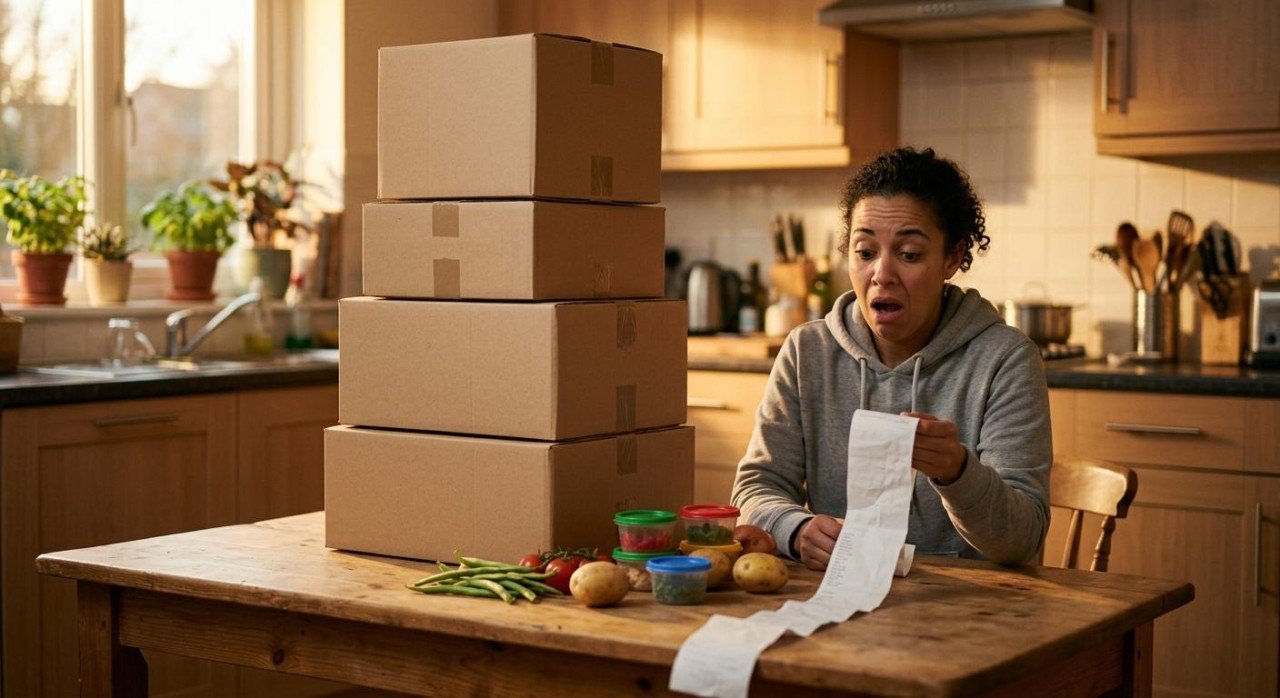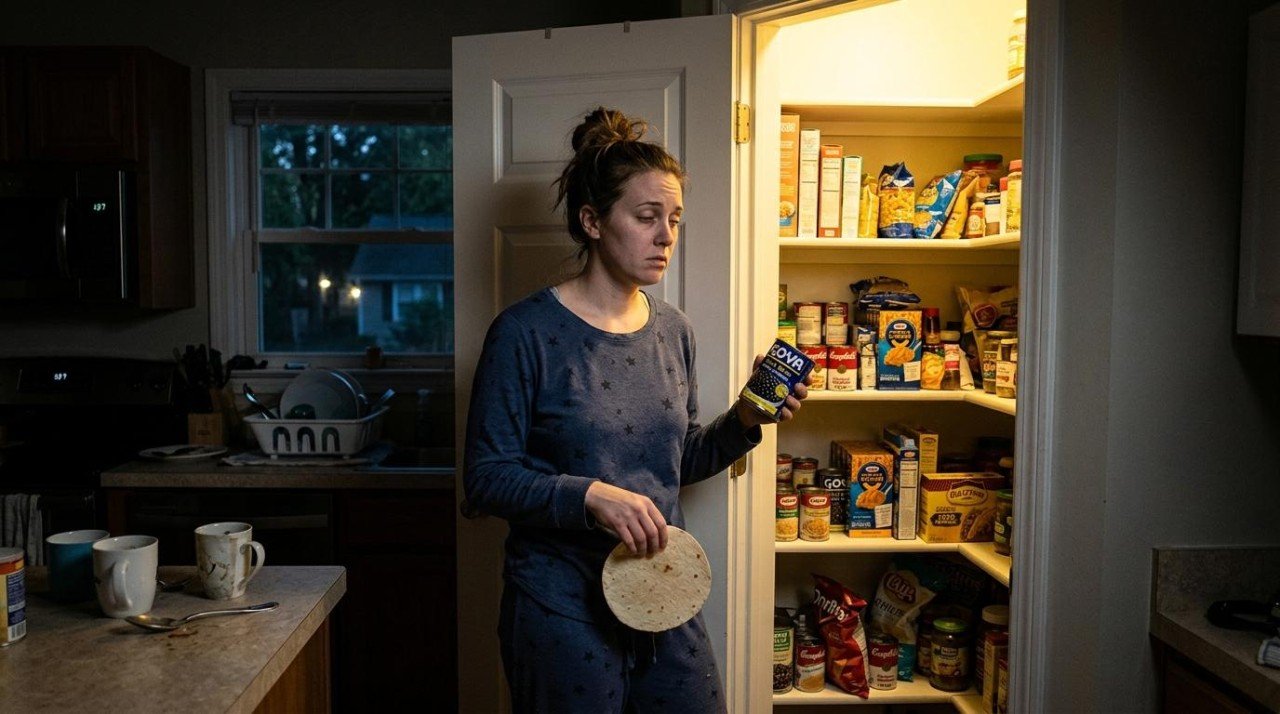
It's 6:15 on a Tuesday. The plan for the week said something involving fresh salmon and a side you were going to feel good about, but the day happened — a late meeting, a kid's practice that ran long, a fridge that's emptier than you remembered. You are standing in front of it with the door open, and the little voice that runs your evenings says the thing it always says: we have nothing, let's just order pizza.
Here is the reframe that changes those nights: you almost certainly do not have nothing. What you have is a cabinet of pasta, rice, canned beans, and canned tomatoes; a carton of eggs; a freezer with a bag or two of vegetables in it; and a couple of jars and bottles that add flavor. What you're missing isn't food. It's a framework — a simple way to turn "random stuff on the shelf" into a real dinner without a recipe, a store run, or more than fifteen minutes of effort.
That framework is a matrix. Learn it once and you'll stop treating the blown-up plan as a failure and start treating it as just another kind of dinner.
Why "Order Pizza" Wins by Default
The pizza reflex isn't laziness. It's the predictable result of making decisions all day. Nutrition researchers describe this as decision fatigue: every choice you make spends a little mental energy, and as the day drains the tank, you default to whatever is easiest and most familiar. As one nutritionist explains, a tired brain is "more likely to grab a takeaway instead of the ingredients to make a meal." The hardest moment for good decisions lands squarely at dinnertime, when your reserves are lowest.
And plenty of people simply give in to it. In a 2024 YouGov survey, 34% of Americans said they get takeout weekly or more, and 17% have food delivered at least that often. The encouraging flip side of the same survey: 76% of Americans still cook at least a few times a week. Cooking is the norm — it's specifically the unplanned night that tips people toward the delivery app.
The fix that actually works, according to the same research, isn't willpower. It's removing decisions before you're tired: stock the right foods so the easy option is also a decent one, and lean on a plan instead of improvising at the worst possible time. The matrix does both. It shrinks "what on earth do I make?" down to four small, almost automatic choices.
The Matrix: Four Columns, One Dinner
Every fast, satisfying pantry dinner is really the same equation. You pick one item from each of four columns, and the combination is your meal:
Base + Protein + Vegetable + Flavor System = dinner in 15 minutes
That's it. You're not choosing a recipe from scratch — you're filling in four blanks from things you already own. Here's what lives in each column.
Column 1: The Base
The base is your fast-cooking carbohydrate, the thing that makes the meal filling. Good pantry bases cook in the time it takes to do everything else:
- Pasta — any shape, 8 to 11 minutes
- Rice — instant or a microwave pouch if you want the full 15-minute version; leftover cooked rice is even better
- Tortillas — the base that needs no cooking at all
- Eggs — a base and a protein in one, ready in five minutes
- Canned beans — filling enough to anchor a bowl on their own
- Frozen cooked grains — heat-and-eat rice, quinoa, or farro from the freezer
Column 2: The Protein
This is where the pantry quietly outperforms its reputation. Shelf-stable and frozen proteins aren't a sad compromise — several are nutritional heavyweights.
- Canned beans and chickpeas — about 7 grams of fiber and a solid dose of plant protein per half-cup, according to a University of Florida IFAS review, plus folate, iron, potassium, and magnesium. Drain and rinse them and you also wash away a good chunk of the sodium.
- Eggs — complete protein, five-minute cook time, endlessly flexible.
- Canned fish — tuna, salmon, sardines, and mackerel. Canned fatty fish is a genuinely excellent source of omega-3s: a study in the journal Nutrients found that one to two cans a week of fatty coldwater fish delivers an amount of EPA and DHA in line with heart-health recommendations — and the oil in the can actually helps your body absorb it.
- Frozen shrimp — thaws under cool running water in a few minutes and cooks in two or three.
- Rotisserie or leftover chicken — already cooked; you're just warming it through.
Column 3: The Vegetable
The most important thing to know here is that reaching for the freezer or the can is not settling. According to Michigan State University Extension, fresh, frozen, and canned vegetables are all "smart choices" that "provide similar nutrients and quality." Frozen vegetables are typically processed at their peak, so a bag of frozen spinach or peas can hold its own against fresh produce that's spent a week traveling and sitting in a bin. Your options:
- Frozen anything — peas, spinach, broccoli, corn, stir-fry mixes, edamame
- Canned tomatoes — the backbone of half the meals below
- The crisper survivors — that half onion, the softening bell pepper, a handful of spinach, the carrot that's still fine. Pantry night is where they get used before they turn.
For canned vegetables, MSU Extension suggests choosing reduced-sodium or no-salt-added versions when you can.
Column 4: The Flavor System
This is the column that turns "beige carbs and a protein" into something you actually want to eat, and it's the one people underestimate most. A flavor system is just two or three pantry items that reliably taste good together. Keep five on hand and you can make the same base and protein taste like five different dinners:
- Soy-ginger — soy sauce, garlic, ground or fresh ginger, a little sesame oil (savory, East-Asian-leaning)
- Tomato-garlic — canned tomatoes, garlic, olive oil, dried oregano or chili flakes (the Italian workhorse)
- Curry — a spoon of curry paste or curry powder plus a splash of coconut milk
- Lemon-herb — lemon (or the bottled juice), olive oil, garlic, dried or fresh herbs (bright and fresh)
- Salsa or chili — a jar of salsa, or chili powder and cumin, for anything Tex-Mex
10 Combinations to Prove It Works
Once you see the columns, the meals name themselves. Here are a dozen real dinners, each just one pick from each column — many of them dishes people have been improvising from pantries for generations:
- Pantry puttanesca — pasta + canned tomatoes + olives, capers, and garlic (tomato-garlic, dialed up). This is a genuine Neapolitan tradition, not a shortcut: RecipeTin Eats calls it a dish you can "knock out" in about 20 minutes if you keep canned tomatoes, olives, capers, and anchovies in the cupboard. Proof that "made entirely from cans" and "delicious" are not opposites.
- Black bean quesadillas — tortillas + canned black beans + cheese and salsa. Mash the beans, fold, crisp in a dry pan.
- Egg fried rice — (leftover) rice + eggs + frozen peas and carrots + soy-ginger. The five-minute classic that rescues tired rice.
- White bean and tomato skillet — canned white beans + canned tomatoes + garlic and olive oil, spooned over toast or tossed with pasta.
- Tuna lemon pasta — pasta + canned tuna or salmon + frozen peas + lemon-herb. Reserve a splash of pasta water to bring it together.
- Chickpea curry — rice + canned chickpeas + frozen spinach + curry paste and a little coconut milk.
- Garlic shrimp bowl — rice + frozen shrimp + frozen stir-fry vegetables + soy-ginger.
- Loaded taco skillet — tortillas or chips + canned beans + the last of the crisper + salsa and chili spices.
- Leftover-chicken stir-fry — rice + rotisserie chicken + frozen broccoli + soy-ginger.
- Bean and greens soup — canned beans + canned tomatoes + frozen greens + garlic, simmered in a little broth or water.
- Everything frittata — eggs (as base and protein) + whatever crisper survivors and cheese you have + lemon-herb or a shake of chili.
- Curry peanut noodles — pasta + frozen shrimp or a fried egg + frozen stir-fry mix + curry (or a spoonful of peanut butter loosened with soy and lime).
None of these needs a recipe once you've made it once. They're not twelve things to memorize — they're twelve examples of the same four-column move.
The Stock-Once Shopping List
The matrix only works if the ingredients are actually there on the night you need them, which is the entire trick. The goal is a small, standing set of staples you keep topped up so a pantry dinner is always possible. Buy these once, replace them as you use them, and you've bought yourself a permanent alternative to the delivery app:
- Bases: a couple boxes of pasta, a bag of rice or a few microwave pouches, a pack of tortillas (they freeze well), and always eggs.
- Proteins: several cans of beans and chickpeas, cans of tuna and/or salmon, a bag of frozen shrimp, and a bag of frozen edamame.
- Vegetables: two or three bags of frozen vegetables you actually like, plus a steady supply of canned tomatoes (whole, diced, and crushed).
- Flavor systems: soy sauce, olive oil, sesame oil, a jar of curry paste, a jar of salsa, garlic, and a small shelf of dried spices (oregano, cumin, chili powder, ginger). Lemons or bottled lemon juice.
That's the whole system. A base column, a protein column, a vegetable column, and a flavor column, kept stocked. The difference between "we have nothing, order pizza" and a real dinner on the table in fifteen minutes isn't more effort or better cooking skills — it's a stocked shelf plus a mental framework you can run on autopilot when you're too fried to think.
Take the Guesswork Out of Eating Well
Eat Well Planner helps you organize your favorite recipes, plan balanced meals, and automatically generate shopping lists — all in one place. Whether you're tracking macros, managing dietary restrictions, or just trying to stop asking "what's for dinner?", we've got you covered.
Our AI-powered tools can adapt any recipe to your dietary needs, help you discover new meals you'll love, and even log your nutrition effortlessly. It's meal planning made simple.
Start Organizing Your Meals — FreeMake the Fallback Part of the Plan
The last piece is to stop treating the pantry dinner as an off-menu emergency and start treating it as a real, repeatable part of how you eat. That's exactly the kind of thing Eat Well Planner is built to make automatic.
Keep your stock-once staples on a standing shopping list so the beans, canned tomatoes, frozen vegetables, and flavor-system jars get topped up on every grocery run without you thinking about it — the pantry stays ready by default. When you land on a matrix combination your household loves, save it as a recipe so it becomes a real option in your rotation instead of a one-off you have to reinvent each time. Once it's saved, it can drop straight into your weekly meal plan and its ingredients flow onto the shopping list automatically, which means the 15-minute fallback becomes something you planned for on purpose.
You can also lean on the app's nutrition score and "good source of" highlights to see, at a glance, how genuinely solid these pantry meals are — that chickpea curry or tuna pasta will likely score better than the takeout it replaced. And because the matrix leans so heavily on beans, frozen vegetables, and canned tomatoes, it's an easy way to rack up Plant Points, the app's tracker for hitting 30 different plants a week for gut health. A pantry that's stocked for variety is a pantry that quietly feeds your microbiome, too.
The plan will fall through — that's not a personal failing, it's just how weeks with real life in them go. The goal was never a perfect week. It's making sure that when the plan breaks, dinner doesn't. With four columns and a stocked shelf, the night everything goes sideways still ends with a real meal instead of a receipt.
Try building your pantry matrix with Eat Well Planner — keep your staples on a standing list, save your go-to combinations, and turn the 15-minute fallback into part of the plan.