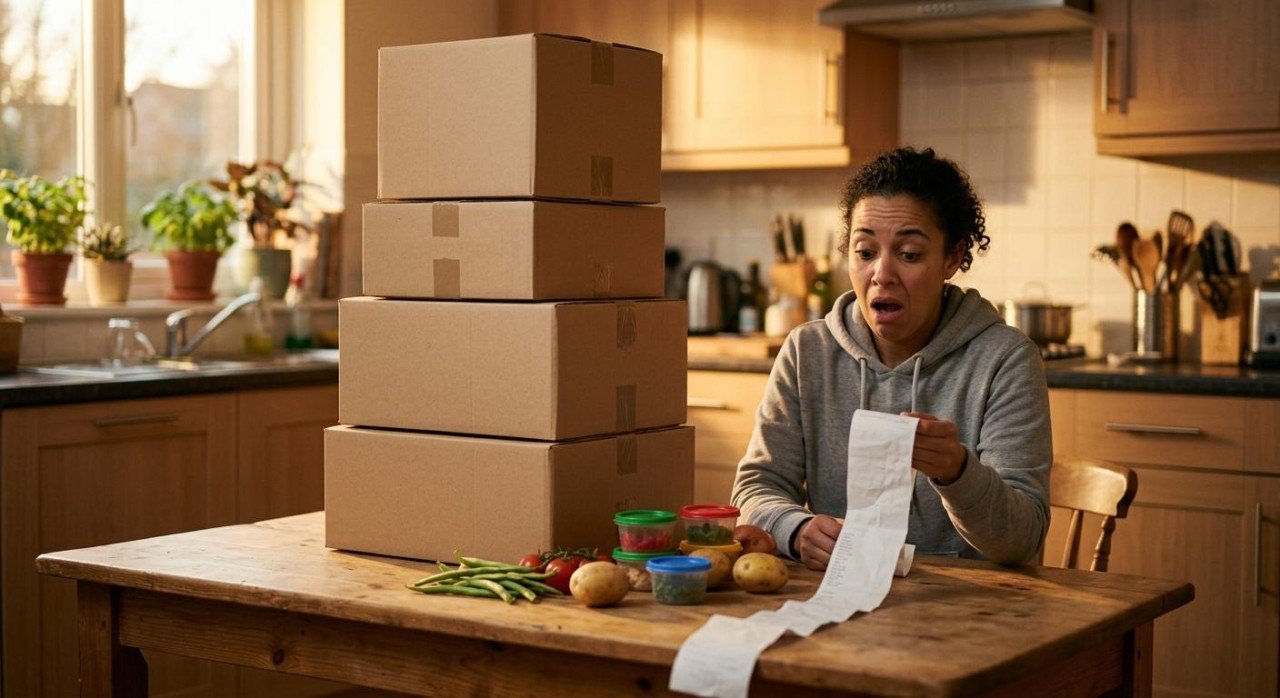
The diagnosis arrives at a doctor's office, but it lands in the kitchen. One person hears the words type 2 diabetes, and the other person — the one who does most of the cooking — suddenly needs a nutrition education nobody offered them. There is a folder of handouts, a follow-up appointment in three months, and a Tuesday night that still needs dinner on the table.
The fear that shows up first is usually the same one: am I going to be cooking two separate meals for the rest of my life?
You are not. The single most useful thing to know at the start is that the food that helps your partner is, with very few exceptions, food that is good for you too. There is no special diabetic menu that everyone else has to be spared from. What changes is the shape of the plate, the quality of the carbohydrates, and — honestly the hardest part — how the two of you talk about it.
First, What Actually Moves Blood Sugar
Most people arrive at this with a folk understanding that sugar is the enemy and everything else is fine. That is the wrong mental model, and it will lead you to buy the wrong groceries.
Blood glucose responds to total carbohydrate, not just to the sweet stuff. Bread, rice, pasta, potatoes, cereal, tortillas, crackers, fruit, milk, and beans are all carbohydrate foods. On a Nutrition Facts label, the FDA defines Total Carbohydrate as everything at once — total sugars, dietary fiber, and sugar alcohols. The American Diabetes Association is blunt about which line to read: "If you're counting carbohydrates or making decisions based on them, check the total grams listed."
This is why a plate of plain white rice can raise blood sugar more than a small square of dark chocolate, and why the sugar-free cookies at the front of the store are often a poor deal. It is also why the ADA specifically warns off the "net carbs" number that shows up on packaging: those terms "haven't been defined by the FDA and the American Diabetes Association doesn't recommend their use." We dug into that particular marketing trick in our breakdown of net carbs on the label.
Quantity is only half of it. Quality matters too — a carbohydrate that arrives wrapped in fiber, protein, and fat behaves very differently from one that arrives alone. That is the whole reason the plate method works.
There Is No Single "Diabetes Diet" — Which Is Good News
If you have been searching for the correct eating plan, you can stop looking. The ADA's own position is that "There isn't one eating plan that prevents or manages diabetes that anyone can use" and that "Your own eating plan will be based on your own needs and preferences." It lists several patterns with evidence behind them — Mediterranean-style, vegetarian or vegan, low-fat, lower-carbohydrate, and DASH among them.
When the ADA released its Standards of Care in Diabetes for 2026, the nutrition guidance again pointed to "eating patterns with evidence for preventing type 2 diabetes, including Mediterranean-style and low-carbohydrate eating patterns" rather than one prescribed menu.
For the cook, this is enormously freeing. It means you are not being asked to abandon the way your household eats. You are being asked to shift proportions and upgrade ingredients inside the food you already make.
The Plate Method Is the Whole System
If you learn one framework, learn this one. The ADA's Diabetes Plate is deliberately simple: "Start with a nine-inch plate and fill half with non-starchy veggies, one-quarter with lean proteins, and one-quarter with quality carbs like starchy vegetables, fruits, whole grains, or low-fat dairy."
That is it. No counting, no weighing, no separate recipes. And notice what it is not: it is not a low-carbohydrate plate or a no-carbohydrate plate. There is a quarter of the plate reserved for rice, potatoes, bread, or pasta, because those foods are not forbidden — they are portioned.
The reason this matters for a two-person kitchen is that the plate method is not a diabetes intervention wearing a disguise. It is what a well-built dinner looks like for anyone. Half vegetables, a palm of protein, a modest serving of a decent starch — that is the same plate you would recommend to a healthy 30-year-old, an athlete, or a teenager.
In practice, most households do not need to change what is for dinner nearly as much as they need to change the ratios. The chicken and rice you already make becomes the same chicken and rice with a third as much rice and a large pan of roasted broccoli that was not there before. Nobody is eating a sad separate meal. One person is eating more vegetables than they used to.
Swaps That Do Not Announce Themselves
Here is the practical craft of this. The changes that survive are the ones that do not feel like a punishment or a lecture.
Bulk out familiar dishes with vegetables
This is the most reliable trick in the book, and it has real research behind it. In a crossover study of 41 adults, researchers covertly folded pureed vegetables into everyday entrees — carrot bread at breakfast, macaroni and cheese at lunch, chicken-rice casserole at dinner. When the entrees were reduced to 75% of their original energy density this way, daily energy intake fell by 357 kcal and daily vegetable intake rose from about 270 g to 487 g. The important part: hunger and fullness ratings did not change, and people rated the dishes just as palatable.
Nobody noticed. That is the point. Grated zucchini and carrot in the bolognese, pureed cauliflower in the mac and cheese sauce, riced cauliflower cut half-and-half into the rice, extra mushrooms and peppers minced into the taco filling, white beans blended into a creamy soup. The dish stays recognizable, the carbohydrate per serving drops, and the fiber goes up.
Upgrade the starch instead of deleting it
Legume-based pastas are the easiest win here. A 2023 meta-analysis of ten randomized trials found that chickpeas significantly lowered postprandial blood glucose compared with wheat, potatoes, and pasta. And in a randomized crossover trial in Metabolites, chickpea pasta measured a glycemic index of 39 — dropping to 33 when it was cooked, cooled, and reheated, because cooling roughly doubled its resistant starch content. Which is a genuinely useful fact for a household that eats leftovers.
The same logic applies across the starch quarter of the plate: intact grains over flour-based ones, barley and farro and steel-cut oats over instant versions, whole fruit over juice, beans and lentils standing in for part of the rice. If you want the underlying mechanics, glycemic index versus glycemic load is worth twenty minutes of your time.
Two levers that do not touch the menu at all
Some of the most useful adjustments have nothing to do with what you cook.
Order of eating. Putting the vegetables and protein first and the carbohydrate last has been studied as a behavioral strategy. In a randomized pilot published in Nutrients, adults with prediabetes who were counseled to eat their vegetables and protein before their carbohydrates significantly increased their vegetable intake by about a cup a day and their protein by 2.5 oz a day, with 94% reporting high adherence and 72% saying it was easy to follow. The metabolic effect in that small pilot was modest — the HbA1c difference only trended toward significance — so treat this as a free, low-effort habit rather than a cure. We covered the evidence in more depth in the order you eat your food in.
A short walk after dinner. In a randomized crossover trial published in Scientific Reports, a 10-minute walk immediately after a glucose load lowered peak glucose (164 vs. 182 mg/dL) and the two-hour glucose area under the curve compared with resting, with no significant advantage to waiting 30 minutes first. It was a small study in 12 healthy young adults, so do not oversell it — but a 10-minute walk after dinner costs nothing, and it is something the two of you can do together, which matters more than you might think.
Take the Guesswork Out of Eating Well
Eat Well Planner helps you organize your favorite recipes, plan balanced meals, and automatically generate shopping lists — all in one place. Whether you're tracking macros, managing dietary restrictions, or just trying to stop asking "what's for dinner?", we've got you covered.
Our AI-powered tools can adapt any recipe to your dietary needs, help you discover new meals you'll love, and even log your nutrition effortlessly. It's meal planning made simple.
Start Organizing Your Meals — FreeThe Part Nobody Warns You About: Policing vs. Partnering
This is where most households actually struggle, and it deserves more attention than the recipes.
When one person cooks and the other has the diagnosis, the cook inherits an enormous amount of quiet power over the other person's health — and an enormous temptation to use it. The comment about the second helping. The eyebrow at the cookie. The running tally.
The research here is unusually clear. A mixed-methods study of 204 couples in which one partner had been diagnosed with type 2 diabetes within the previous five years identified five distinct patterns: support provision, collaboration, controlling behavior, independent coping, and disengagement. When people with diabetes reported collaboration — treating diabetes as a shared problem the couple works on together — it predicted both lower A1C and better relationship quality. Partner support on its own did not predict either. Controlling behavior did not independently predict better A1C. Disengagement was associated with worse self-care and worse relationship quality across the board.
In other words: doing things with your partner beat doing things for them, and both beat doing things to them.
A companion study of 148 spouses of people with type 2 diabetes found something quietly revealing about where controlling behavior comes from. Love, concern, and interdependence — endorsed by roughly nine in ten spouses — predicted supportive involvement but was not significantly associated with pressure or persuasion. The motives that predicted controlling behavior were the more self-oriented ones: obligation, self-benefit, and perceiving one's partner as needy or incapable. That last one is worth sitting with. Nagging tends to grow out of a belief that your partner cannot handle this, and it communicates exactly that belief.
The ADA has a whole page for people on the receiving end of it, aimed at those dealing with the "food police" — the people who cannot help but ask, "Should you be eating that?" Their assessment of unsolicited criticism is worth taping inside a cabinet door: it "doesn't help anybody and it can sometimes make the person's eating worse, not better."
What this looks like on a normal weeknight
- Your partner owns the diagnosis. The A1C, the medication, the appointments, and the decisions are theirs. You are not the case manager.
- You own the environment. What is in the fridge, what shape dinner takes, what is easy to grab at 9 p.m. — that is genuinely your domain, and it is where you have real leverage. Changing the default is not policing.
- Serve it, then let it go. Build the plate the way the plate method suggests and then stop narrating. If your partner has a second helping, that is information about their day, not a referendum on your cooking.
- Ask instead of assume. "Do you want me to keep chips out of the house, or do you want them around?" is a collaboration question. Quietly removing them and saying nothing is a control move dressed as kindness.
- Eat the same food. The strongest signal that this is a shared project rather than a restriction imposed on one person is that both of you are eating it. Two dinners, one of them visibly worse, turns every meal into a reminder of illness.
The Shopping Trip
Most of the work happens in the store, not at the stove. A few habits that pay off:
- Serving size first, always. The ADA's label guidance starts here for a reason: "the nutrition information is based on that amount." A cereal box listing carbohydrate per three-quarter cup is not describing the bowl anyone actually pours.
- Read Total Carbohydrate, then fiber. Total carbs tell you the load; fiber tells you something about the quality of what is delivering it. The ADA notes that healthy adults need roughly 25 to 38 grams of fiber a day, and most Americans are nowhere close.
- Ignore front-of-package claims. "Sugar-free," "keto-friendly," and "net carbs" are marketing. The Nutrition Facts panel is regulated; the front of the box is not.
- Watch the sauces and dressings. Barbecue sauce, teriyaki, ketchup, jarred pasta sauce, and salad dressings are where added sugar and sodium hide in a savory kitchen. Comparing two brands takes ten seconds and can change a dish more than the protein choice does.
- Buy the vegetables you will actually use. Half a plate is a lot of vegetables. Frozen counts. Pre-cut counts. Bagged salad counts. The nutritional difference between fresh and frozen is trivial next to the difference between eaten and forgotten.
Date Night and Restaurants
Eating out is where couples most often decide the whole thing is impossible, and it does not have to be.
- Look at the menu before you go. Under FDA rules, restaurants that are part of a chain with 20 or more locations must post calories on menus, and must make written nutrition information available on request — which explicitly includes total carbohydrates. If your partner is carb counting, that information exists; you just have to ask for it.
- Do not "save up" for the meal. University of Georgia Extension's dining guidance specifically warns against skipping earlier meals to bank room for a restaurant dinner, which tends to cause overeating or blood glucose imbalances.
- Deal with portion size at the start, not the end. Ask for a to-go box when the food arrives, or split an entree. Restaurant portions are built for a different plate than the one you have been making at home.
- Substitutions are normal. Swapping fries for a side salad or steamed vegetables, asking for sauces on the side, and choosing grilled over fried are ordinary requests that servers field a hundred times a night.
- Order for the plate, not the diagnosis. A grilled protein, a vegetable side, and a share of whatever starch comes with it is the plate method in a restaurant's clothing. Nobody at the table has to know anything is happening.
Why the Rest of the Household Benefits
It is worth remembering how ordinary this diagnosis is. According to the CDC, 40.1 million people in the United States have diagnosed or undiagnosed diabetes, and an estimated 115.2 million U.S. adults have prediabetes. Statistically speaking, in a lot of households where one person has been diagnosed, the other person is somewhere on the same road and has not been tested recently.
The changes work in that direction too. The landmark Diabetes Prevention Program found that participants with prediabetes who made lifestyle changes — a 7% weight loss target and 150 minutes of activity a week — lowered their chances of developing type 2 diabetes by 58 percent, and by 71 percent among those aged 60 and over. That beat metformin, which came in at 31 percent. For more on that, we wrote about why prediabetes is a warning and not a sentence.
So when you rebuild dinner around half a plate of vegetables and a better class of carbohydrate, you are not making a sacrifice on someone else's behalf. You are both eating better. The diagnosis was just the thing that finally made it happen.
Letting a Tool Carry the Mental Load
The hardest part of all this is not any individual meal. It is holding the whole system in your head, every week, forever — remembering which recipes work, how many carbs are in a serving of the thing you make on Thursdays, and buying so that the vegetables are actually in the house on the night you need them.
That is the part Eat Well Planner is built to take off your plate. You set up a profile once with the dietary needs that matter, and meal plans respect them from then on — and because you can keep more than one profile, a household where one person is managing blood sugar and another is just trying to eat more vegetables gets plans that suit both. Every saved recipe carries a full nutrition breakdown, so the carbohydrate per serving is right there instead of living in a notebook.
The Nutrition Score gives you an at-a-glance read on a dish, and Make It Healthier proposes specific ingredient swaps with a calculator verifying the actual nutritional gain before it suggests them — so you get "swap half the rice for riced cauliflower, and here is exactly what that does," not generic advice to eat less sugar. If you want to test a change before committing to it, the Recipe Playground lets you tweak ingredients and watch the numbers move in real time. From there, the weekly plan generates its own shopping list, which is the mundane thing that makes half a plate of vegetables actually happen rather than remaining a good intention. And if Sunday batch cooking is how your household survives the week, the meal prep system turns it into a guided checklist.
None of that manages anyone's diabetes — your partner and their care team do that. What it does is take the planning tax off the person who cooks, so the food part of this becomes something the two of you eat together rather than something one of you administers.
Cook one dinner. Make it a good one. Put it on the table, and talk about literally anything else.