You are scrolling before bed when it appears: a thirty-second clip of someone folding a ridiculous, golden, cheese-pull dinner together in a single pan. It looks easy. It looks like exactly the kind of thing you would actually make. You double-tap, hit the little bookmark icon, and feel a small glow of accomplishment. Future You is going to cook that.
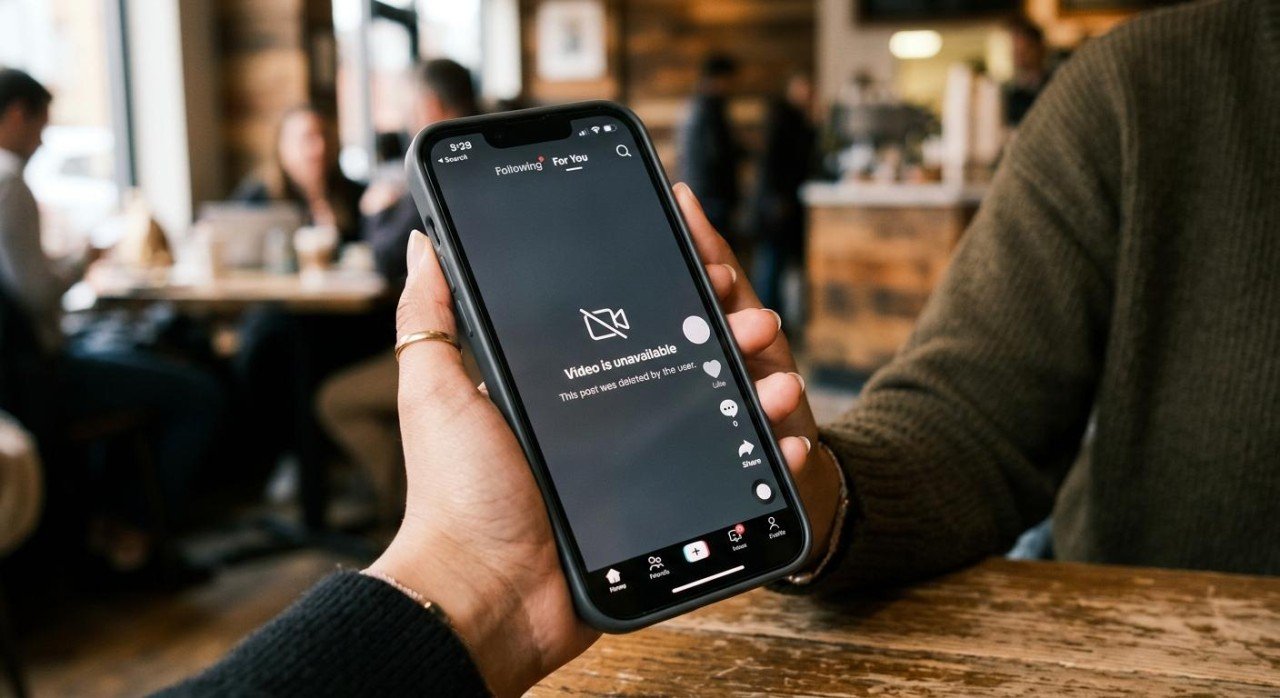
Three weeks later, Future You goes looking for it. And it is gone. The bookmark is still there, but it leads to a gray box and a message: this video is unavailable. The account went private, or the creator deleted it, or the audio got pulled and the whole post vanished with it. You never wrote down a single ingredient. You could not even tell someone the name of the dish. It is just... gone.
If this has happened to you, you are in enormous company — and the problem is more structural than it feels. Saving a video is not the same as saving a recipe, and the gap between those two things is where countless good meals quietly disappear.
We Cook From Our Feeds Now
This is not a niche habit. Social media has become one of the main places people find food. In a survey of more than 2,000 U.S. adults conducted by The Harris Poll for Instacart, 83% of Americans said they view food and recipe content on platforms like TikTok, Instagram, and YouTube, and 61% watch it at least once a week. Among the people who view that content, 89% said it influences what they actually cook at home.
It reaches that far because the platforms themselves are everywhere. According to Pew Research Center data collected in 2025, 84% of U.S. adults use YouTube, 50% use Instagram, and 32% use TikTok. For younger cooks the kitchen pull is even stronger: a 2025 Morning Consult survey of Gen Z adults found that nearly half — 45% — were influenced by social media the last time they tried a new recipe (rising to 50% among Gen Z women).
And these are not just videos people watch and forget. When a recipe lands, it sticks. An earlier Instacart and Harris Poll survey found that 44% of Americans had tried making a food trend they saw on social media, and of those who did, a remarkable 90% added at least one of those dishes to their regular cooking rotation. Baked feta pasta, marry-me chicken, the green goddess salad, smash burgers, that one overnight oats formula — viral clips genuinely become weeknight dinners. The feed is a real recipe box. The trouble is that it is a recipe box someone else can empty without warning.
Why That Saved Video Disappears
A bookmark on TikTok or Instagram feels like ownership. It is not. It is a pointer to a file that lives on someone else's account, on a platform you do not control, governed by rules that can change overnight. There are at least five common ways your saved clip evaporates:
- The creator deletes it. This is the most common one. People clean up their profiles, rebrand, or pull a video that underperformed. The moment they hit delete, your saved link dies with it.
- The account goes private. If you saved a video from someone you do not follow — which is most of the For You page — and they flip their account to private, everything they have ever posted becomes invisible to you instantly.
- The platform takes it down. Videos get removed for community-guideline issues, and very often for music. A cooking clip set to a trending song can vanish the moment that audio gets pulled for a copyright claim, taking the recipe with it.
- The account gets suspended or banned. When a whole account disappears, so does every recipe you ever saved from it, all at once.
- It gets buried. Even when the video technically still exists, your "saved" folder has hundreds of items and no real search. Good luck finding the lentil soup among 400 unlabeled bookmarks at 6 p.m.
It is not just individual videos, either — entire platforms are less permanent than they feel. In January 2025, TikTok went dark in the United States for the roughly 170 million Americans who used it, replaced for about a day by a message reading, "Sorry, TikTok isn't available right now," while the app was simultaneously pulled from the Apple and Google app stores. Service came back, but the episode was a reminder that everything you "saved" inside an app exists at the pleasure of that app. The platform's future has stayed in flux since: under a 2025 agreement, TikTok's U.S. operation moved to a new American-controlled joint venture, with its recommendation algorithm slated to be retrained — the kind of change that can quietly reshuffle or break what you assumed was safely tucked away.
The takeaway is simple: if a recipe matters to you, it needs to exist somewhere that does not depend on a creator's mood, an audio license, or a geopolitical negotiation.
Even When the Video Survives, It Is a Bad Recipe
Here is the part that stings even when your bookmark still works: a video is a genuinely awful format to cook from.
Think about what a usable recipe actually needs. Exact quantities. A real ingredient list you can read at a glance and shop from. Steps you can follow at your own pace. The ability to scale it from two servings to six. Most viral cooking clips have none of that. The creator dumps in "some" garlic and "a good amount" of stock, the measurements flash on screen for a third of a second, and the written caption — if there even is one — is three emoji and a "recipe in my bio" link that points to a page that no longer exists.
So you end up cooking the way everyone secretly does from these videos: phone propped against the backsplash, greasy thumb scrubbing the progress bar back and forth, pausing on the frame where they added the cumin to squint at how much it was, losing your place, starting the loop over. You cannot search a video for "that chickpea thing." You cannot tell it to double the recipe. You cannot turn it into a shopping list. You certainly cannot see whether it fits your week or your nutrition goals. The information you need is trapped inside a moving picture, and moving pictures are not built to be referenced — they are built to be watched once and scrolled past.
This is the real reason all those saved recipes never become dinner. It is not only that they disappear. It is that, even at their best, they are locked in a format that makes actually cooking them just annoying enough that you reach for the usual chicken thing instead.
The fix for both problems is the same: the moment a video grabs you, get it out of the feed and into a permanent, written, searchable recipe of your own.
Take the Guesswork Out of Eating Well
Eat Well Planner helps you organize your favorite recipes, plan balanced meals, and automatically generate shopping lists — all in one place. Whether you're tracking macros, managing dietary restrictions, or just trying to stop asking "what's for dinner?", we've got you covered.
Our AI-powered tools can adapt any recipe to your dietary needs, help you discover new meals you'll love, and even log your nutrition effortlessly. It's meal planning made simple.
Start Organizing Your Meals — FreeWhat "Capturing" a Recipe Actually Means
Capturing a recipe properly means converting that fleeting clip into a structured document you own, with four things the original almost never gives you:
- A clean ingredient list with real quantities — every item, with amounts, in text you can read and edit.
- Written, numbered steps — so you cook at your pace instead of chasing a video scrubber.
- Searchable, organized storage — so "that miso salmon" is one search away, not buried in an unlabeled folder.
- Portability — the ability to scale servings, build a shopping list, and check how it fits your goals.
You can do this by hand. Plenty of dedicated cooks pause the video and type everything into a notes app, estimating quantities as they go. It works, and if you only love three recipes it is perfectly fine. But it is slow, you tend to do it for maybe one video out of fifty, and your guess at "some" garlic is still a guess. Screen-recording the clip solves the disappearing problem but solves nothing else — you have just saved the same un-searchable video to a phone that is now out of storage.
This is exactly the gap Eat Well Planner was built to close. You paste in the link to an Instagram reel, a YouTube cooking video, or any recipe website, and the app's AI watches and reads the content for you, then extracts a proper recipe: a structured ingredient list with quantities, written step-by-step instructions, and automatically calculated nutrition information. The fleeting clip becomes a permanent recipe in your own personal recipe book — one that lives in your account, not on a stranger's profile, and is still there long after the original video is deleted, set to private, or banned in your country.
Because it is now real text rather than a video, everything that was impossible before becomes easy. You can search your whole collection by ingredient or name. You can scale a recipe from four servings to two. You can add it straight to an auto-generated shopping list so the ingredients land on this week's groceries. You can even open the built-in recipe chat to ask for a gluten-free swap, a dairy-free version, or what to use instead of an ingredient you do not have. The thirty-second clip that would have vanished becomes something you can actually cook, repeatedly, for years.
A Simple Habit That Saves Every Good Recipe
The mechanics matter less than the timing. The single best move is to capture in the moment of inspiration, not "later" — because later is exactly when the video gets deleted and your memory of it fades. Try this:
- Capture on sight. The second a video makes you think "I would actually eat that," don't just bookmark it inside the app. Send the link to your recipe importer so a permanent copy is made immediately, while the video still exists.
- Let the structure do the work. Once it is a real recipe with an ingredient list and steps, you no longer have to remember anything. It is searchable and waiting.
- Pull from your own box first. When you plan the week, shop your saved recipes before you go hunting for new ones. You almost certainly already have more good meals captured than you have weeknights to cook them.
- Build the week around them. Drop a few captured recipes into a meal plan, generate the shopping list, and the viral dinner you saved at midnight becomes an actual Tuesday — ingredients bought, quantities right, no scrubbing required.
The point of all this is not to consume less food content. Food videos are fun, and clearly they work — they are getting people excited to cook, which is genuinely good. The point is to stop letting the good ones slip through your fingers. A recipe that inspired you is worth more than a broken bookmark and a vague memory of melted cheese.
So the next time a clip stops your scroll, do the one thing that turns a disappearing video into dinner: get it out of the feed and into a recipe box that is actually yours. Try capturing your next viral find with Eat Well Planner — import it from Instagram, YouTube, or anywhere, and keep it for good.