Here is a frustrating kitchen mystery: you follow the recipe, you buy the right ingredients, you don't burn anything — and yet the finished dish tastes strangely flat. Not bad, exactly. Just muted. Like it needs something you can't name.
Nine times out of ten, the missing something happened in the first five minutes, before most of the ingredients even hit the pan. It's a step recipes tend to rush past in a single line — "sauté the onion until soft" — as though it were a formality. It isn't. That quiet opening move is where nearly every cuisine on earth builds its flavor from the ground up, and learning to do it well is the single biggest upgrade a beginner cook can make.
The technique is called cooking aromatics, and once you understand it, you stop needing recipes quite so much.
What "Aromatics" Actually Means
Aromatics are the vegetables and seasonings you cook gently in fat at the start of a dish to lay down a base of flavor. The usual cast: onions, garlic, ginger, celery, carrots, and peppers, plus supporting players like scallions, leeks, and shallots. On their own, most of them are sharp, pungent, or bland. Cooked slowly in oil or butter, they transform into something deep, sweet, and savory that flavors everything you add afterward.
The reason this works is chemistry, not magic. Onions, for example, are roughly 4 percent sugar by mass — mostly glucose, fructose, and sucrose — plus about 1 percent protein. When you heat them slowly, that sugar and protein start to break down and rearrange into hundreds of new flavor compounds through two related reactions: caramelization (sugars breaking down under heat) and the Maillard reaction (sugars reacting with proteins). Together they produce the roasted, sweet, faintly meaty aroma that makes a pot of cooking onions smell so good.
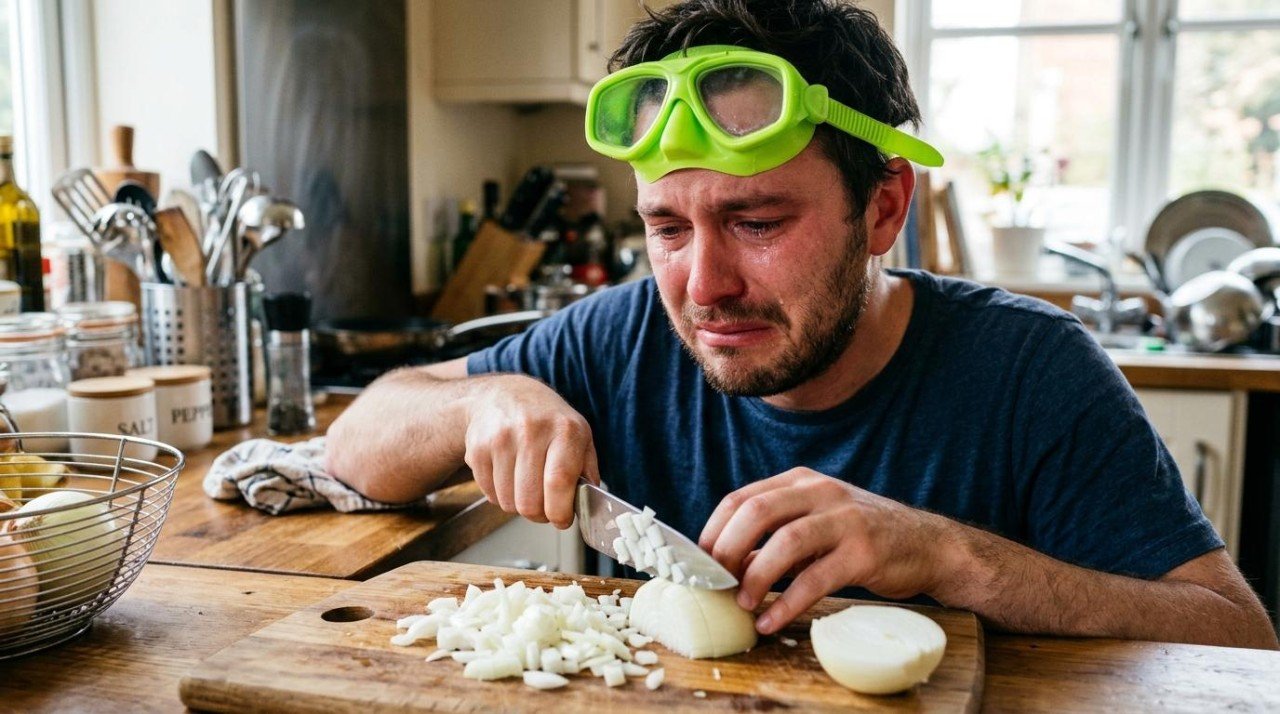
At the same time, the raw pungency mellows. That eye-watering bite in a raw onion comes from sulfur compounds — the most famous being syn-propanethial-S-oxide, the molecule responsible for making you cry while you chop. Heat breaks these harsh sulfur compounds down into gentler ones, which is exactly why a cooked onion tastes sweet and round where a raw one tastes aggressive. The same softening happens to garlic's punch. You're not just heating the vegetables; you're chemically rebuilding their flavor.
The Real Secret Is Patience, Not Heat
Here's where most beginners go wrong: they crank the heat to save time. High heat scorches the outsides before the insides have a chance to soften and sweeten, and you end up with bitter, half-raw bits instead of a mellow base.
The professional move is a technique called sweating. As chefs describe it, sweating means cooking food slowly over low to medium-low heat with a little fat, stirring often, until the vegetables release their moisture and turn soft and translucent — without browning. You're listening for a gentle sizzle, not a loud crackle. If the pan is popping aggressively, turn it down. Five to ten minutes later, the onions look glossy and soft, the kitchen smells incredible, and you've built the foundation.
Salt helps here, and it's worth adding a pinch early. Salt pulls moisture out of the onion cells and up to the surface, where it can evaporate, which speeds softening and helps prevent scorching. It's a small thing that makes the whole process more forgiving.
Sweating is different from caramelizing, and it's worth knowing which you want. Sweating keeps the vegetables pale and is the base for most soups, stews, sauces, and braises — anything where you want clean, sweet depth without a strong roasted note. Caramelizing takes the same onions further, over 30 to 55 minutes, until they turn deep golden-brown and jammy (the real color change kicks in as the surface approaches about 300°F / 149°C). That's what you want for French onion soup, burgers, or anything craving that sweet, roasted intensity. Both start the same way — low and slow — and neither can be rushed.
If you take one thing from this article, make it this: when the recipe says "until soft," give it the full time and keep the heat gentle. The difference between two flat minutes and eight patient ones is the difference between a dish that tastes fine and one that tastes like someone who knows what they're doing made it.
When to Add the Garlic (This One Trips Everyone Up)
Garlic is the most common casualty of a rushed aromatic base. Throw it in with the onions at the start and it almost always burns, turning sharp and acrid and dragging bitterness through the whole dish.
The reason is physical. According to America's Test Kitchen, garlic burns faster than onion for three reasons: it's cut into much smaller pieces, it contains far less water, and it holds more sugar — so it browns and then scorches almost as soon as it gets hot. Onions, with more water and less sugar, can happily cook for many minutes; minced garlic can go from fragrant to burnt in under a minute.
The fix is simple: add garlic later. Let the onions (and any carrots, celery, or peppers) soften almost completely first, then stir in the garlic and cook it for just 30 to 60 seconds — until you can smell it — before adding your liquid or next ingredient. That short burst is enough to bloom garlic's flavor without scorching it. The same logic applies to ginger and other tender, high-sugar aromatics: they go in near the end of the aromatic stage, not the beginning.
One bonus tip worth knowing: letting chopped or crushed garlic rest for about 10 minutes before it hits the pan lets it develop more of its signature flavor compounds, giving you a more complex garlic note in the finished dish.
The Same Idea, Around the World
What makes this technique so worth learning is that it isn't one cuisine's trick — it's a near-universal starting point. Once you recognize the pattern, you start to see it everywhere. Culinary schools like Escoffier lay out the family tree:
- French mirepoix — onion, carrot, and celery, classically in a 2:1:1 ratio, sweated slowly in butter without browning. It's the backbone of stocks, braises, and countless sauces.
- Italian soffritto — the same three vegetables, finely minced and cooked in olive oil, often allowed to go a little deeper in color. It's the start of ragù, minestrone, and slow-braised meats.
- Spanish and Latin American sofrito — usually built on onion, garlic, and tomato (and often peppers), cooked longer in olive oil until it thickens and concentrates into a jammy paste. It flavors paella, beans, rice dishes, and stews.
- The Cajun and Creole "holy trinity" — onion, celery, and green bell pepper. It descends directly from French mirepoix, with bell pepper swapped in for carrot as a practical adaptation to what grew well in Louisiana. It's the foundation of gumbo, jambalaya, and étouffée.
- The Chinese ginger-garlic-scallion base — the trio that starts an enormous share of stir-fries and braises, typically hit with hot oil to release its fragrance fast.
Different vegetables, different fats, different cuisines — but the underlying move is identical: gently cook aromatic vegetables in fat before everything else, and build the dish on top of that. Learn the principle once and you've unlocked the opening chapter of dozens of food traditions.
Take the Guesswork Out of Eating Well
Eat Well Planner helps you organize your favorite recipes, plan balanced meals, and automatically generate shopping lists — all in one place. Whether you're tracking macros, managing dietary restrictions, or just trying to stop asking "what's for dinner?", we've got you covered.
Our AI-powered tools can adapt any recipe to your dietary needs, help you discover new meals you'll love, and even log your nutrition effortlessly. It's meal planning made simple.
Start Organizing Your Meals — FreeBloom Your Spices in the Fat, Too
There's a companion trick that belongs in the same five minutes, and it's one of the fastest ways to make spiced dishes taste dramatically better: bloom your ground spices in the fat instead of dumping them into liquid later.
Add spices like cumin, coriander, paprika, curry powder, or chili to the warm, oniony fat for a short time before you add liquid, and their flavor blossoms. The reason is that many of a spice's most important aroma compounds are oil-soluble, not water-soluble. Fat acts as a solvent that pulls those molecules out and then carries them evenly through the whole dish — something water simply can't do as well. Warm the spices in fat and you get a rounder, deeper, more fragrant result than if you'd stirred the same spices into a simmering pot.
The catch is that ground spices are delicate. Give them only 20 to 40 seconds over moderate heat, stir constantly, and add your next ingredient promptly — a splash of tomato, broth, or coconut milk — before they scorch and turn bitter. Like garlic, they reward attention and punish neglect. But that half-minute of blooming is the difference between spices that taste dusty and spices that taste alive.
How This Frees You From Recipes
Here's the payoff, and it's a big one for anyone who feels chained to written instructions. Once the aromatic base becomes second nature, you can cook without a recipe.
The template is almost absurdly flexible. Sweat some onion in fat. Add a supporting aromatic or two — carrot and celery, or pepper, or ginger. Stir in garlic near the end. Bloom a spice or two if the dish calls for it. Now add whatever you've got: a can of tomatoes and beans for a stew, broth and vegetables for a soup, protein and a splash of soy for a stir-fry. Because the flavor foundation is already solid, the dish tastes intentional even when you're improvising with leftovers. This is, quietly, how a lot of good home cooks actually cook: not by following recipes to the letter, but by nailing the base and building from there.
That shift — from anxiously following steps to confidently understanding why the steps exist — is what turns cooking from a chore into something you can do on autopilot with whatever's in the fridge.
Where Eat Well Planner Fits In
Technique like this is learned by doing, but it's a lot easier when you have good recipes to practice on and a way to ask questions in the moment. That's exactly where Eat Well Planner helps. You can save recipes from anywhere — a website, an Instagram reel, a YouTube cooking video — into one organized recipe book, and the app pulls out the ingredients and nutrition automatically, so you always have real, whole-food dishes to cook from instead of defaulting to something processed.
The part that's genuinely useful for building cooking confidence is the AI recipe chat. Stuck on a recipe that just says "sauté aromatics"? Ask it what that means, how low the heat should be, or when to add the garlic. Missing celery for a mirepoix? Ask what to swap in. Want to turn a written recipe into something you can riff on? It'll walk you through the technique instead of leaving you to guess. It's like having a patient cook next to you who never makes you feel silly for asking.
And because the app also builds weekly meal plans and auto-generated shopping lists from recipes you actually want to cook, you spend less energy on the "what should I make?" question and more on getting the fundamentals right — like giving those onions the full eight minutes they deserve. When the plan is set and the ingredients are in the fridge, cooking a real meal from scratch becomes the easy option rather than the ambitious one.
Master the first five minutes, and everything after it gets better. That's the whole secret — no fancy equipment, no rare ingredients, just an onion, a little fat, and a bit of patience.
Try organizing your recipes and meals with Eat Well Planner — and put your new aromatic skills to work this week.