There is a particular kind of dread that shows up around the holidays, and it has nothing to do with travel or in-laws. It is the low hum of anxiety about the food. The cookie tins at work, the second helping of stuffing, the wine that turns into three glasses, the dessert you did not plan on. And underneath it, a running tally: how much you have eaten, how bad it was, how you will make up for it. By the time the plates are cleared, the guilt has already started drafting its January apology.
Here is the thing worth saying before anything else: the guilt is doing you far more harm than the pie. A few festive days of eating richly is not a health problem. The spiral of restriction, dread, overeating, and self-punishment that gets wrapped around those days is where the real damage lives — for both your body and your peace of mind. This post is about stepping off that ride. Not with willpower or rules, but by understanding what actually happens over the holidays and letting go of the parts that were never true.
The weight gain you are dreading is mostly a myth
You have heard the number: the average person gains five to seven pounds over the holidays. It gets repeated every December like gospel. It is also almost entirely made up.
When researchers actually put people on scales and tracked them, the real figure was a fraction of that. In a study published in the New England Journal of Medicine, scientists weighed 195 adults before, during, and after the holiday season. The average gain from late November to early January was about 0.37 kilograms — roughly 0.8 of a pound. Fewer than one in ten people gained five pounds or more. And tellingly, participants believed they had gained far more than they actually had; they guessed around 1.5 kilograms when the scale said barely a third of that. The dread was bigger than the damage.
A later study drove the point home on a global scale. Researchers tracked nearly 3,000 people using smart scales across the United States, Germany, and Japan and found that, everywhere, weight ticked up around the big local holiday — about half a percent higher ten days after Christmas than ten days before. Small. Predictable. Human. People in every country tended to shed roughly half of that gain fairly quickly.
None of this means the number is zero, and the honest footnote is that the half that lingers can quietly add up over many years. But that slow drift is a story about how you eat across all twelve months, not about one plate of turkey. The holiday meal itself is not the thing rewriting your health. So if you have been treating late December like a metabolic emergency, you can put that down. The catastrophe you are bracing for is not coming.
You cannot "bank" calories by skipping meals
One of the most common holiday strategies is also one of the most counterproductive: skipping breakfast and lunch to "save room" for the big dinner. It feels responsible. It is anything but.
Arriving at a feast after a day of near-fasting sets you up to overeat, not to eat sensibly. As psychologist Kathryn Tomasino explained to Scientific American, "If you are fasting all day and then you go to have a big meal, you may feel like your eyes are bigger than your stomach." Running on empty pushes you toward the richest, sweetest foods on the table and toward eating them fast — which is exactly the recipe for blowing past comfortable fullness before your body can catch up. The same piece notes that a sudden, carbohydrate-heavy meal after hours of nothing can send blood sugar swinging, a particular concern for anyone managing diabetes, and that overeating on an empty stomach can trigger reflux and general digestive misery.
Skipping meals does not even reliably save calories in a way that helps you. Research tracking what happens when people drop a meal found that while total daily intake dips, the overall quality of the day's diet falls too — skipping meals meant fewer of the fruits, whole grains, vegetables, and protein that keep you steady and satisfied. You end up hungrier, more frazzled, and reaching for whatever is closest when you finally sit down.
The better move is boring and effective: eat normal, balanced meals on the day of a big event. A real breakfast with some protein, a lunch with vegetables and fiber, plenty of water. You will arrive at dinner as a person making relaxed choices rather than a ravenous one making desperate ones.
There is nothing to "burn off" or "detox"
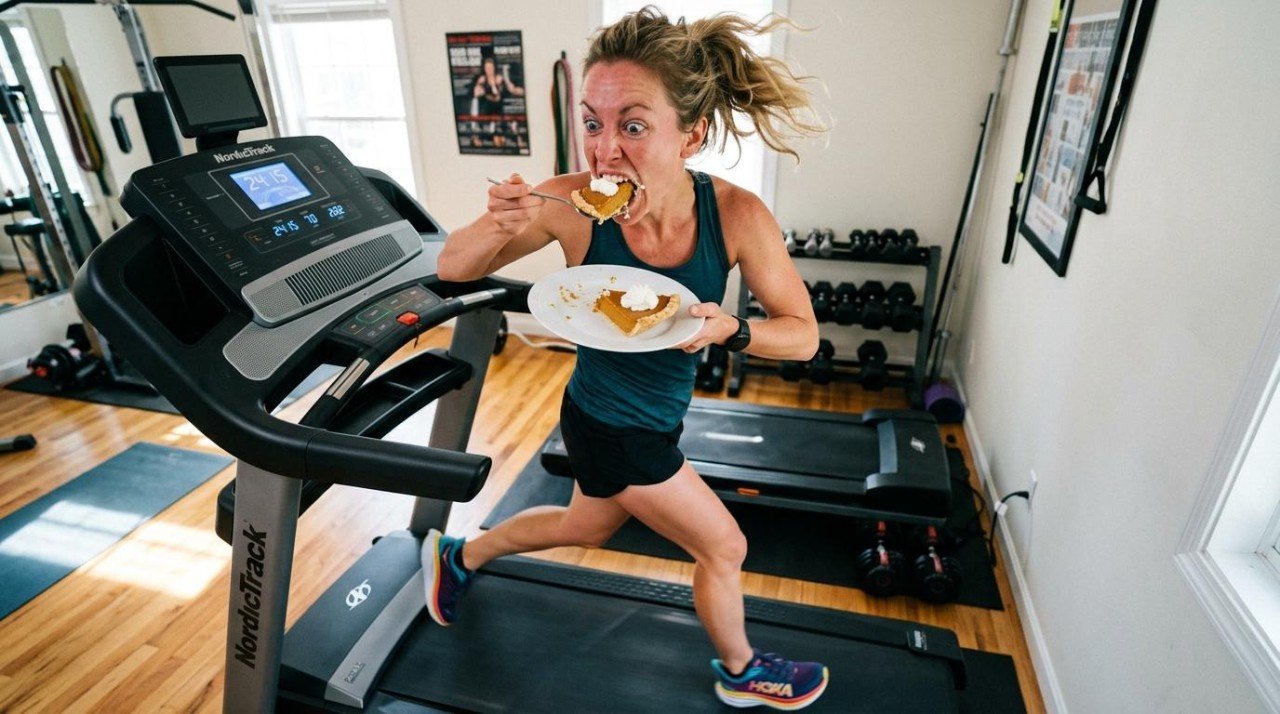
The flip side of "saving up" is "making up" — the promise to earn the meal with a punishing workout, or to wash it away afterward with a juice cleanse or a "detox" week. This is diet culture at its most seductive, and it rests on a biological fiction.
Your body is not a ledger of sins to be balanced, and it does not need a special product to clean itself. It already has a sophisticated detoxification system running around the clock: your liver, kidneys, skin, and digestive tract. As a review summarized by Medical News Today put it, "most detox programs have no clinical evidence supporting their effectiveness or safety," and detox diets are "unnecessary and unlikely to benefit health in any significant way." Whatever short-term "lightness" people feel from a cleanse is mostly just eating fewer calories for a few days — not toxins leaving the building.
The problem with the earn-it-and-burn-it mindset is not only that it is false. It is that it keeps the guilt engine running. When you frame a holiday meal as a debt, you guarantee the shame that follows, and shame is what fuels the all-or-nothing spiral: "I have already blown it, so I may as well keep going, then start fresh Monday with a vengeance." Food does not need to be earned before or punished after. It is just food.
Take the Guesswork Out of Eating Well
Eat Well Planner helps you organize your favorite recipes, plan balanced meals, and automatically generate shopping lists — all in one place. Whether you're tracking macros, managing dietary restrictions, or just trying to stop asking "what's for dinner?", we've got you covered.
Our AI-powered tools can adapt any recipe to your dietary needs, help you discover new meals you'll love, and even log your nutrition effortlessly. It's meal planning made simple.
Start Organizing Your Meals — FreeKeep a little normal structure amid the treats
Letting go of guilt does not mean abandoning all structure — it means the structure works for you instead of against you. The holidays are not one continuous meal; they are a handful of special occasions scattered among ordinary days. What you do on those ordinary days matters more than what happens at any single dinner.
A few gentle anchors go a long way:
- Keep protein and vegetables in the picture. You do not have to choose between grandma's mashed potatoes and eating well. Fill part of the plate with the turkey, the roasted vegetables, the salad — then enjoy the rich stuff alongside it. Protein and fiber slow everything down and blunt the blood-sugar swings, so you feel satisfied rather than wired and crashing.
- Stay hydrated. Thirst is easy to mistake for hunger, and holiday spreads are salty. A glass of water between courses and between drinks helps you read your body more accurately.
- Let the in-between days be normal. The stretch between Thanksgiving and New Year's is weeks long, but only a few of those days are actual celebrations. If the regular Tuesday in the middle looks like your usual balanced meals, the two or three genuinely indulgent days barely move the needle.
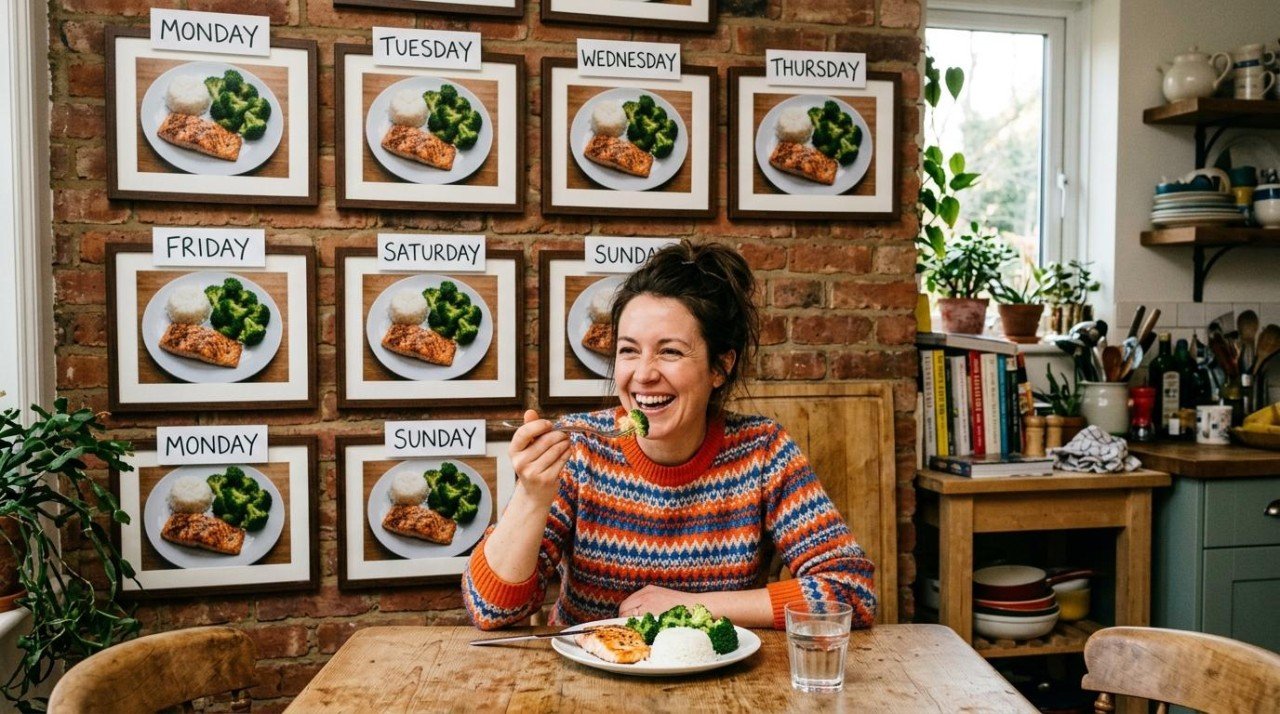
This is where a little light planning quietly removes most of the pressure. When your everyday meals are already decided and the ingredients are already in the fridge, you are not white-knuckling through the season — you are just living your normal life with a few great meals layered on top. Eat Well Planner is built for exactly this kind of low-effort structure: you can keep your go-to recipes in one place, let it build a balanced week of everyday meals around your busy days, and generate the shopping list automatically so the ordinary dinners take care of themselves. With the boring days handled, the festive ones stop feeling like a threat and go back to being what they are supposed to be — fun.
A calmer approach to alcohol
Alcohol deserves its own mention because it works on two fronts at once. The drinks themselves add up quickly, and — more importantly for the guilt spiral — a few drinks lower your inhibitions and dull your hunger cues, which makes it easier to keep grazing without noticing.
You do not need to swear it off to stay in control. The same simple tactics that have always worked still work: alternate each alcoholic drink with a glass of water, hold your glass so you are not automatically refilled, and pick the couple of drinks you genuinely enjoy rather than accepting every top-up. Pacing yourself keeps you present enough to actually taste your food and notice when you are full — which is the whole game.
Enjoy the favorites, then let fullness be your guide
Here is the part that diet culture gets exactly backwards: the people with the healthiest long-term relationship with food are not the strictest eaters. They are the ones who can enjoy a favorite dish without moralizing about it and then stop when they have had enough.
That skill has a name — intuitive eating, or eating in response to your body's hunger and fullness signals rather than external rules — and the research on it is genuinely encouraging. An eight-year study of nearly 1,500 people found that stronger intuitive eating predicted better psychological health and markedly less disordered eating down the road, with the strongest protection against binge eating. In other words, letting go of rigid food rules and trusting your body is not the reckless option. It is the one associated with more stability, not less.
In practice this looks like giving yourself full permission to have the pie — the real slice, not a guilty sliver you will resent — and then eating it slowly enough to actually enjoy it. Put the fork down between bites. Notice when the food stops tasting as exciting as the first few bites did; that fading of pleasure is your body's quiet signal that you are approaching enough. There is no prize for cleaning the plate, and no penalty for leaving some. Favorites eaten with attention and without guilt are deeply satisfying, and satisfaction is what actually turns off the urge to keep eating.
The part nobody puts on the menu: the feelings
Holiday eating is rarely just about food. It sits on top of stress, family tension, exhaustion, loneliness, and for many people, grief — the empty chair at the table, the recipe that belonged to someone who is gone. Food is woven through all of it, which is why holiday eating carries a weight that a random Wednesday lunch never does.
Reaching for comfort food when you are stressed is not a character flaw, and it is not simple weakness. Prolonged stress raises cortisol, and, as Medical News Today notes, elevated cortisol "increases appetite" and specifically drives "food cravings for sugary or fatty foods." The same source is blunt that emotional eating "is not simply a matter of a person lacking self-discipline." Your biology is participating, and understanding that is the first step to responding with something other than self-criticism.
The goal is not to never eat for comfort — sometimes a warm, familiar food is a perfectly reasonable thing to lean on during a hard evening. The goal is to have more than one tool. When the pull is clearly emotional rather than physical, a short walk, a phone call to someone who gets it, ten minutes alone in a quiet room, or simply naming the feeling can take the edge off in a way that another plateful cannot. Being gentle with yourself here is not indulgent. It is the thing that actually interrupts the cycle, because shame and stress are precisely what drive the overeating you are trying to soften.
A few big days do not undo a healthy pattern
If you take one idea from all of this, make it this one: your health is built by what you do most of the time, not by what you do on your most exceptional days. This is the same truth the weight studies quietly told us — the holiday bump is small, and it is the year-round pattern, not the feast, that shapes the long arc.
That means there is nothing to atone for when the decorations come down. No detox, no punishing January regimen, no crash diet to "reset." Those overcorrections are not a fresh start; they are the back half of the same binge-and-restrict spiral, just wearing a New Year's costume. The healthiest thing you can do after a stretch of celebration is almost anti-climactic: go back to normal. Return to your regular meals, your regular movement, your regular sleep, without drama and without penance. Your body does not need rescuing from a few good dinners. It just needs you to keep gently doing the ordinary things that were working before.
When your everyday eating is easy to fall back into — recipes you like, meals already planned, a fridge stocked for the regular week — that return happens on its own. There is no willpower cliff to climb back up in January, because you never threw out the routine in the first place. You just paused it for a few joyful days and picked it back up.
The bottom line
The holidays were never meant to be survived. They are meant to be enjoyed — the food, the people, the traditions, the specific comfort of a dish you only eat once a year. The food-guilt spiral steals all of that and replaces it with math and shame, for a handful of calories that the research says barely register in the long run.
So eat the meal. Have the favorites. Keep your ordinary days reasonably balanced, stay hydrated, tune into your fullness, be kind to yourself around the harder feelings, and then simply return to your normal rhythm afterward — no punishment required. A healthy relationship with food is not one without cookies and stuffing. It is one where a joyful, indulgent day is just that: a good day, fully enjoyed, and then gently left behind.