Somewhere in your kitchen there is a large, heavy appliance you were genuinely excited about. Maybe it was a wedding gift, maybe it was a Black Friday impulse, maybe it was the year everyone on the internet was making yogurt in an Instant Pot. You used it three or four times, one of those times produced a gray, watery pot of something nobody asked for seconds of, and now it lives on the top shelf next to the bread machine.
That is a shame, because these are two of the very few kitchen tools that solve the actual problem most of us have. The problem is almost never that we do not know how to cook. It is that the moment cooking needs to happen — 6:15 p.m., everyone hungry, brain empty — is the exact moment we have the least left to give. A slow cooker and a pressure cooker are both, at heart, machines for moving the effort to a different time of day. The slow cooker takes ten minutes from your morning and hands you dinner. The pressure cooker takes a dish that needs two hours and finishes it in thirty-five minutes.
None of that helps if the food is bland. So this is a guide to what each appliance is genuinely good at, what it is bad at, why dump-and-go recipes so often come out watery, and the handful of adjustments that fix it.
Cooking at home is worth protecting
It is worth being clear about why this matters, because the payoff is not just convenience. In a nationally representative analysis of 9,569 US adults using NHANES data, people who cooked dinner six or seven nights a week ate meaningfully differently from people who cooked once a week or less. They ate less sugar (119 g versus 135 g a day) and less fat (81 g versus 86 g), and the gap in convenience food was wide: 1.6 fast-food meals a week versus 3.4, and 2.8 meals not prepared at home versus 6.7. The authors found this held whether or not people were trying to lose weight.
And Americans have not given up on cooking. A 2025 analysis of two decades of American Time Use Survey data found the share of adults who cook on a given day actually rose between 2003 and 2023 — from 36% to 52% among men, and from 69% to 72% among women. But time is the constraint that never moves: among people who do cook, women spend about 71 minutes a day on it and men about 50. That is the number the appliance in your cupboard is designed to attack — not by cutting total cooking time to zero, but by shifting most of it away from the worst possible hour.
They are not the same tool (and the difference is temperature)
The single most useful thing to understand is that a slow cooker and a pressure cooker sit at opposite ends of the same dial. Both are sealed, moist-heat environments. What separates them is how hot the inside gets.
A slow cooker, according to the USDA's Food Safety and Inspection Service, "cooks foods slowly at a low temperature — generally between 170 °F and 280 °F." That gentle heat is the whole point: it is what lets less expensive, tougher cuts of meat become tender while shrinking less. It also uses less electricity than running an oven for the same job, and it does not heat up your kitchen in August.
A pressure cooker does the opposite. Sealing the pot raises the pressure inside, which raises the boiling point of water above 212 °F, and the food cooks faster because it is simply hotter. Instant Pot's own specifications put its high pressure setting at 10.2 to 11.6 psi, with a working temperature of roughly 239 °F to 244 °F; stovetop models and the Instant Pot Max run at 15 psi, which gets you to about 250 °F.
So: 170 °F for eight hours, or 240 °F for twenty minutes. Everything else follows from that.
What the slow cooker is genuinely great at
- Tough, collagen-rich cuts. Chuck roast, pork shoulder, lamb shanks, beef shin, chicken thighs. Long, gentle, wet heat converts connective tissue to gelatin, which is what makes shredded meat taste rich instead of dry.
- Chili, stews, curries, and brothy soups. Anything where "it all melds together" is the goal rather than a problem.
- Big-batch cooking. Six to eight quarts of something you will eat twice more this week.
- Being genuinely unattended. This is its unique advantage. A pressure cooker still needs you present at the start and the finish. A slow cooker will happily run all day while you are at work.
What the pressure cooker is genuinely great at
- Dried beans and lentils. This is the killer app. A pot of dried beans stops being a weekend project and becomes a weeknight side dish.
- Whole grains. Brown rice, farro, barley, wheat berries, steel-cut oats — the grains that are better for you and that nobody cooks because they take forever.
- Tough cuts, fast. The same braises the slow cooker does, compressed into the window between getting home and eating.
- Stock. A rich, gelatinous chicken or beef stock in a couple of hours instead of most of a day.
- Rescuing a forgotten dinner. Frozen chicken thighs to shredded chicken in well under an hour is a real capability.
What neither is good at
Be honest about this and you will be much happier. Neither appliance can crisp, brown, or reduce. Both are sealed boxes full of steam. That rules out anything with a texture you actually care about: crisp skin, seared crust, roasted edges, fried anything. Delicate fish overcooks. Quick-cooking green vegetables turn olive-drab and sad. Pasta goes to mush. Dairy sauces split. And a sauce cannot thicken by evaporation in a pot that is not letting steam out.
Why your dump-and-go dinner came out watery and bland
Almost every disappointing slow cooker meal traces back to the same three or four causes. All of them are fixable, and none of them take much effort.
1. Nothing was browned
The deep, savory flavor of a good stew comes from the Maillard reaction — the browning chemistry that makes a seared crust taste like anything at all. According to Modernist Cuisine, that reaction "typically proceeds rapidly from around 140 to 165 °C (280 to 330 °F)," and the catch is that "as long as the food is very wet, its temperature won't climb above the boiling point of water." A slow cooker never gets there. Your meat is not being roasted; it is being poached.
The fix costs ten minutes: get a skillet screaming hot, sear the meat hard on two sides, and deglaze the pan with a splash of the cooking liquid so the browned bits go into the pot too. If you own a multicooker, its sauté function does this in the same vessel with no extra washing up. It is the highest-return ten minutes in this entire post. (Interestingly, a pressure cooker is hot enough to get partway there on its own — Modernist Cuisine notes that "in the sealed environment of a pressure cooker, the Maillard reaction can, and does, occur" — which is part of why pressure-cooked braises often taste more developed than slow-cooked ones. Searing first still helps.)
2. There was far too much liquid
This is the big one, and it catches everyone adapting a normal recipe. On a stovetop, liquid boils away and the sauce concentrates. Under a heavy lid, it does not — the moisture condenses and rains back down. Meat and vegetables then release their own water on top of that, so you end up with more liquid at the end than you started with.
Montana State University Extension's slow cooker fact sheet is blunt about it: "Reduce the liquid when converting a non-slow-cooker recipe. Use about half the liquid called for in the original recipe. Liquids will not 'boil away' as in conventional cooking. You can always add more liquid later if needed. The only exception to this rule is for soups."
Pressure cookers are the opposite trap. They need a minimum amount of thin liquid to generate steam and come up to pressure at all — Instant Pot specifies 1 cup for their 3-quart, 1½ cups for the 6-quart, and 2 cups for the 8-quart. Less than that and you get a burn warning instead of dinner. More than the recipe needs and you get soup you did not order.
3. It was never seasoned at the end
Long, wet cooking flattens flavor. Volatile aromatics cook off, fresh herbs turn to hay, and everything drifts toward the same muted savory note. Salting at the start is still right, but the meal is made in the last five minutes: a squeeze of lemon or a splash of vinegar, a handful of fresh parsley or cilantro, sliced scallions, a spoonful of yogurt, toasted nuts, chili crisp, grated citrus zest. Acid and freshness are what a braise cannot make for itself.
4. The sauce was never reduced
If it is still thin at the end, take the lid off and let it work. On a multicooker, hit sauté and simmer it down for five or ten minutes; on a slow cooker, turn it to high with the lid off, or lift the meat out and reduce the liquid in a saucepan. A cornstarch slurry works too, but reducing tastes better because you are concentrating flavor rather than diluting it with starch.
5. Everything went in at once
Some ingredients simply cannot survive eight hours. Montana State Extension recommends adding milk, cheese, and cream about an hour before serving, and adding pasta at the end "or it may become mushy." Dense vegetables go the other way: carrots and potatoes should go in first, at the bottom, because they take longer than meat to cook — advice the USDA fact sheet echoes. Frozen peas, spinach, fresh herbs, and anything green belong in the last few minutes.
6. It was too full, or too empty, or kept getting opened
Fill a slow cooker at least half full and no more than two-thirds full — too little and it scorches, too much and it may never get properly hot. For pressure cooking, do not fill past the two-thirds max line, and stop at the half line for foods that foam and expand, like rice, grains, and dried beans.
And leave the lid alone. UF/IFAS Extension notes that removing the lid can drop the internal temperature by 10 to 15 degrees, and Montana State reckons it can take 20 minutes to recover that heat. Every peek adds real time.
Two dump-and-go frameworks worth memorizing
Once the fixes above are habit, you do not need recipes so much as templates. These two cover an enormous amount of ground.
The slow cooker braise formula
- 2 to 3 lb of a tough protein — chuck roast, pork shoulder, bone-in chicken thighs, lamb shanks. Salt it and sear it if you possibly can.
- A base of aromatics and dense vegetables — an onion, a few cloves of garlic, and two or three cups of carrots, potatoes, celery, or winter squash, laid on the bottom.
- A flavor concentrate — a can of crushed tomatoes, a few spoonfuls of tomato paste, curry paste, miso, mustard, soy sauce, chipotles in adobo, or a couple of anchovies. This is the difference between "meat in liquid" and "a dish."
- About 1 to 1½ cups of liquid, no more — stock, wine, beer, coconut milk. Remember it will make more.
- Eight hours on low, then finish: reduce the sauce, add something green, add acid, add fresh herbs.
The pressure cooker bowl formula
- Sauté the aromatics right in the pot — onion, garlic, ginger, spices — for three or four minutes.
- Add a legume or whole grain — dried chickpeas, black beans, lentils, farro, brown rice.
- Add liquid to cover, plus the flavor concentrate of your choice.
- Cook under pressure, then let it release naturally for beans and grains (a fast release makes bean skins blow apart).
- Build the bowl — the cooked base plus something fresh and crunchy, something creamy, and something acidic.
The beans thing is a bigger deal than it sounds
If you use a pressure cooker for exactly one purpose, make it beans. Americans barely eat them: an analysis of twenty years of NHANES data found that only 17.2% of participants consumed any pulses on a given day, and in the 2017–2018 cycle just 19.9% of the population reached 1.5 cups of cooked pulses a week, with only 10.9% reaching 2.5 cups. The 2025–2030 Dietary Guidelines advisory committee recommended raising the target from 1.5 to 2.5 cups a week and moving beans, peas, and lentils ahead of meat and eggs in the protein group. The gap between those two sets of numbers is enormous, and the main reason is that dried beans take too long and canned ones feel like a compromise.
There is a nutritional bonus, too. When researchers compared processing methods on peas, chickpeas, and lentils in a 2008 study in Food Chemistry, ordinary soaking and boiling significantly lowered antioxidant capacity (ORAC), while pressure boiling and pressure steaming significantly increased it. Something similar shows up in vegetables: in a 2007 Journal of Food Science study on broccoli, boiling caused a 34% loss of vitamin C and steaming 22%, while pressure cooking and microwaving retained more than 90%. Sulforaphane, broccoli's most-studied compound, was undetectable after boiling or steaming but survived pressure cooking. That was a short, sharp cook rather than an all-day braise — but it is a good argument for using the pressure cooker on vegetables and legumes rather than a big pot of water you then pour down the drain.
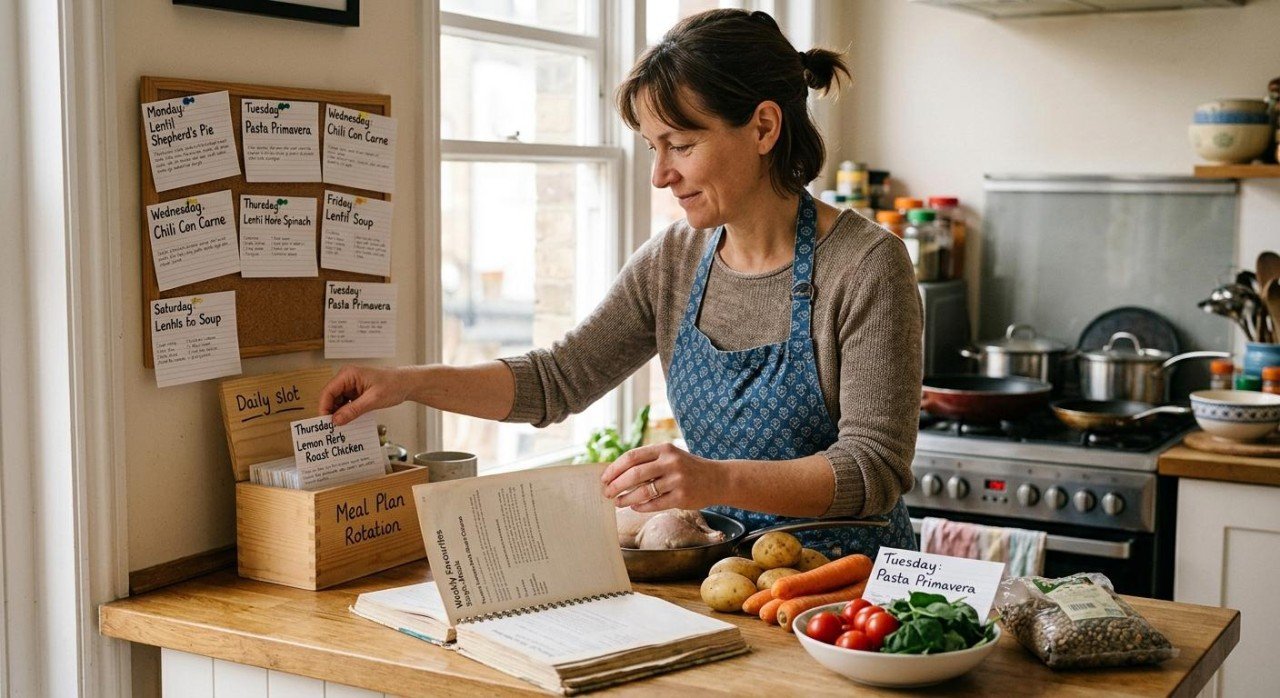
The catch is remembering to use the thing on the right day. That is a planning problem, not a cooking problem — and it is exactly the kind of friction Eat Well Planner is built to remove. You can import set-and-forget recipes from any website, Instagram reel, or YouTube video into one organized recipe book, then drop the eight-hour braises onto the mornings you are home and the twenty-minute pressure cooker bowls onto the evenings that are already chaos. The shopping list builds itself from the plan, so the pork shoulder and the bag of dried chickpeas are actually in the house on the day you meant to cook them. And because every recipe gets a Nutrition Score with plain-language "good source of" highlights, you can see at a glance that the bean stew is pulling its weight — while Plant Points quietly tracks how many different plants you have eaten this week toward the 30-plant target from gut microbiome research.
Take the Guesswork Out of Eating Well
Eat Well Planner helps you organize your favorite recipes, plan balanced meals, and automatically generate shopping lists — all in one place. Whether you're tracking macros, managing dietary restrictions, or just trying to stop asking "what's for dinner?", we've got you covered.
Our AI-powered tools can adapt any recipe to your dietary needs, help you discover new meals you'll love, and even log your nutrition effortlessly. It's meal planning made simple.
Start Organizing Your Meals — FreeTwo safety rules that are genuinely worth knowing
Most slow cooker safety advice is common sense, but two items are specific enough that people get caught out.
Always thaw meat first. The USDA is unambiguous: "Always thaw meat or poultry before putting it into a slow cooker." A slow cooker can take several hours to reach a bacteria-killing temperature, and frozen meat drags that out further. Keep everything refrigerated until the moment you start, and never let a loaded crock sit on the counter for more than two hours before you switch it on. If the power goes out while you are away, throw the food out even if it looks done. Leftovers go into shallow containers in the fridge within two hours, and should be reheated on the stove or in the microwave to 165 °F — not brought back to life in the slow cooker itself, which heats too slowly for that job.
Do not cook dried kidney beans in a slow cooker. This one surprises people. Raw kidney beans contain a lectin called phytohaemagglutinin, and University of Illinois Extension explains the problem plainly: the toxin is destroyed at 212 °F after at least 10 minutes, but "beans prepared in a slow cooker often only reach an internal temperature of 167 °F." Eating as few as four undercooked kidney beans can cause nausea, abdominal pain, vomiting, or diarrhea. The fix is easy — soak the beans at least 5 hours, drain, and boil them briskly in fresh water for 30 minutes before they go anywhere near the slow cooker. Canned kidney beans are already cooked and perfectly safe to add straight in. And a pressure cooker, running at 239 °F or above, clears the 212 °F threshold comfortably.
How to convert a recipe you already like
You do not need a special cookbook. Take a stew, chili, or braise you already make and translate it.
For the slow cooker, Montana State Extension gives a straightforward conversion chart based on the original stovetop or oven time:
- 15–30 minutes → 4–6 hours on low, or 1½–2 hours on high
- 35–45 minutes → 6–10 hours on low, or 3–4 hours on high
- 50 minutes to 3 hours → 8–16 hours on low, or 4–6 hours on high
As a rule of thumb, one hour on high is roughly two hours on low, and most raw meat-and-vegetable combinations need at least 8 hours on low or 4 on high. Halve the liquid, sear the meat, put the dense vegetables underneath, and hold back the dairy and anything green until the end.
For the pressure cooker, expect roughly a third of the conventional cooking time — but budget for the pot to take 10 to 15 minutes to come up to pressure, plus release time at the end. Add the minimum liquid for your model, sauté the aromatics first, and reduce the sauce with the lid off once it is done.
Stop treating it as a gadget
The reframe that makes all of this stick is to stop thinking of these appliances as fun toys you should be using more, and start thinking of them as scheduling tools. Look at your week. Find the two evenings you already know will be bad — the late meeting, the after-school thing, the shift that ends at seven. Those are slow cooker mornings or pressure cooker nights. You are not adding cooking to a busy day; you are subtracting a takeout decision from it.
Do that consistently and the appliance stops being a source of low-grade guilt on a high shelf and becomes the reason there is a real dinner on the two days you were most likely to skip one.
If you want the planning half handled too, try building your week with Eat Well Planner — import the set-and-forget recipes you actually like, put them on the days that need rescuing, and let the shopping list take care of itself.