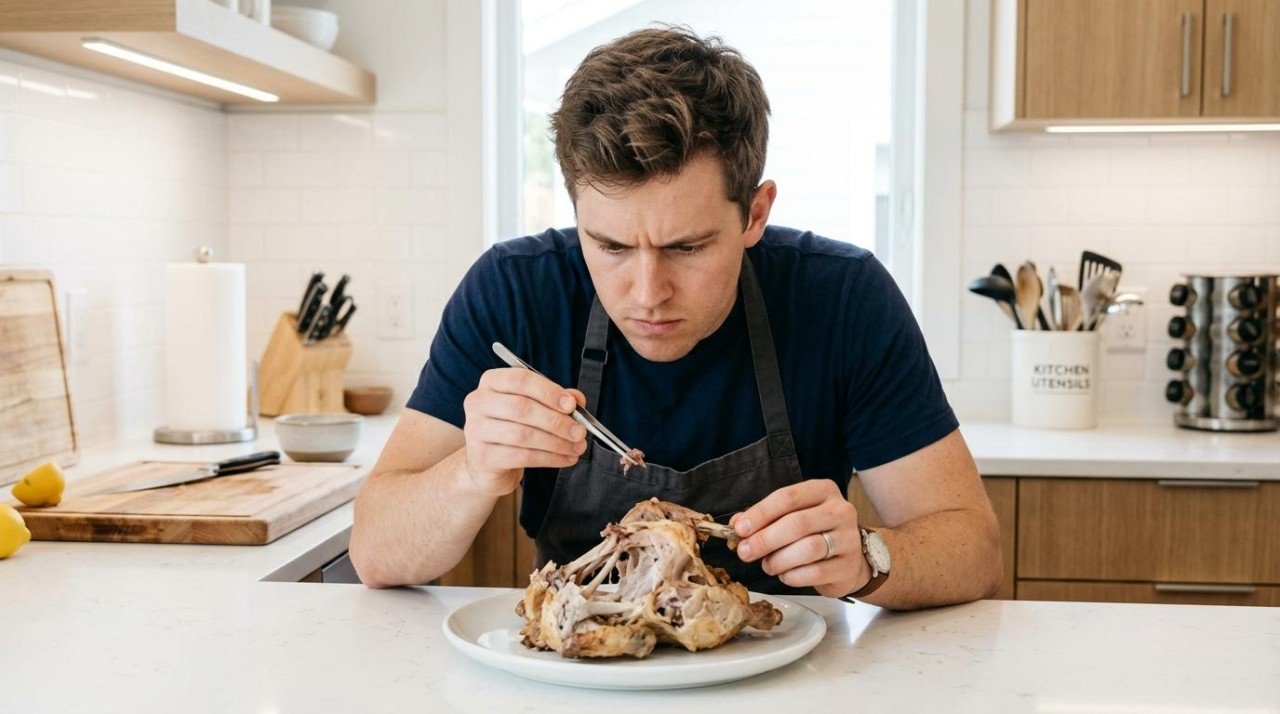
It's 6 p.m. and the kitchen has become a negotiation. One person doesn't eat meat. Another is trying to cut back on carbs. There's a kid who won't touch anything green, and maybe a family member whose doctor just handed them a list of foods to avoid. So you do what a lot of people quietly do: you cook two dinners, or you fall back on the one bland meal nobody objects to, or you give up and everyone fends for themselves with cereal and toast.
If that sounds familiar, you are far from alone — and the good news is that feeding a household with different diets almost never actually requires cooking two separate meals. With a few changes to how you think about a plate, one cooking session can comfortably satisfy two, three, or even four sets of needs. Here's how to stop being a short-order cook without forcing everyone to eat the same thing.
You're Not an Outlier — Mixed-Diet Homes Are Everywhere
It can feel like your household is uniquely complicated, but dietary differences under one roof are the norm now, not the exception. Consider how the numbers stack up across a typical extended family or friend group:
- About 4% of Americans identify as vegetarian and 1% as vegan, according to Gallup's 2023 Consumption Habits poll — and that doesn't count the much larger group eating meat-free part of the time.
- Roughly 33 million Americans have at least one food allergy — nearly 11% of adults and about 8% of children, per Food Allergy Research & Education (FARE). That's about one child in every classroom of thirteen.
- Gallup found that one in five Americans actively tries to include gluten-free foods in their diet, whether for celiac disease, gluten sensitivity, or personal preference.
Layer on the people managing blood sugar, blood pressure, kidney health, or a weight goal, and it becomes clear: the household where everyone happily eats an identical plate is the rare one. Cooking for difference isn't a niche problem to solve once — it's the everyday reality of the modern dinner table.
The Mindset Shift: Stop Cooking Two Dinners
The single most useful change you can make is to stop picturing dinner as a finished, plated dish and start picturing it as a set of components. A plate of chicken teriyaki with rice and broccoli isn't really one thing — it's protein, a grain, a vegetable, and a sauce that happened to be combined. When you keep those parts separate until the last moment, one cooking session quietly becomes a build-your-own dinner that each person finishes to their own needs.
That reframe unlocks four strategies that do almost all the heavy lifting.
1. Base-Plus-Protein: Build the Shared Parts, Fork the Protein at the End
Most dietary conflicts in a household come down to the protein. The vegetarian doesn't want the chicken; the low-carb eater doesn't want the rice; but everyone is generally happy with roasted vegetables and a good sauce. So build the shared base — the grain, the vegetables, the dressing or sauce — as a single big batch, and only split the meal at the protein.
Roast a tray of vegetables and cook a pot of grains for the whole table. Then, in a separate pan, cook chicken or fish for the omnivores while you crisp a can of chickpeas or a block of tofu for the vegetarians. Ninety percent of the meal was cooked once; only the last, quickest element was made in two versions. This is dramatically less work than two full dinners, because the time-consuming parts — chopping, roasting, simmering — were done a single time.
2. Lean on Naturally Diet-Agnostic Meals
Some meals are practically built for mixed households because their components naturally stay separate and everyone assembles their own. These are your best friends on a busy week:
- Taco or burrito bowl night — Put out tortillas or a bowl of rice, beans, seasoned meat and/or sauteed peppers and mushrooms, cheese, avocado, salsa, and greens. The meat-eater builds a loaded taco; the vegetarian builds a bean-and-veggie one; the low-carb eater skips the tortilla and piles it into a salad.
- Grain or Buddha bowls — A base of grains or greens, a few roasted vegetables, a protein bar of options, and a couple of sauces. Everyone assembles to taste.
- Stir-fries and curries served deconstructed — Keep the protein separate from the sauce and vegetables so a portion can stay meat-free, and serve over rice or cauliflower rice depending on the eater.
- Pasta or grain bar — Cook the pasta (or a gluten-free version alongside), then offer two sauces and let people add their own protein.
The common thread is assembly at the table. When the kitchen delivers parts instead of finished plates, accommodating four diets stops being four recipes and becomes one spread.
3. Cook the Restricted Version as the Default, Then Add — Don't Subtract
Here's a trick that saves an enormous amount of effort: whenever a restriction can be met by leaving something out, make the restricted version the default for the whole pot, and let people add the extras on their own plate.
It is far easier to cook a big pot of vegetarian chili and let meat-eaters stir browned sausage into their bowl than to make a meat chili and try to fish the meat out for the vegetarian. Make the marinara without meat and offer meatballs on the side. Build the soup on a vegetable broth base so it works for everyone, then let people top with chicken, a swirl of yogurt, or chili crisp. Adding is easy; subtracting a cooked-in ingredient is often impossible. Defaulting to the most-restricted version also quietly protects anyone with an allergy, because the shared pot never contained the allergen in the first place.
4. Batch So Nobody Becomes a Short-Order Cook
The resentment in mixed-diet households usually doesn't come from the differences themselves — it comes from one person cooking three variations to order every single night. Batching is the antidote. When you roast vegetables or cook grains, make enough for two or three meals. Keep a container of a cooked protein and a cooked plant protein in the fridge at the same time, so any bowl or wrap can go either way in seconds.
Think of it as stocking a small personal salad bar: a grain, a couple of roasted vegetables, one animal protein, one plant protein, a sauce or two. From those building blocks, Monday's fork-the-protein sheet pan becomes Tuesday's grain bowl and Thursday's taco night with almost no additional cooking — and no one is standing at the stove making meals on demand.
The Part Nobody Talks About: Different Plates Aren't Disrespect
There's an emotional layer to all of this that's easy to miss. When a partner goes vegetarian or a family member adopts a medical diet, it can feel, to the person who cooks, like a rejection of the food and effort they've always put on the table. It isn't. A dietary choice is about someone's own body, values, or health — not a verdict on your cooking.
It also helps to remember what actually matters about a family meal, and the research here is reassuring: the benefit comes from eating together, not from eating the same thing. A systematic review of shared meals at home found that more frequent family meals are consistently associated with better diet quality — greater intake of fruits, vegetables, and other nutrient-rich foods, and less fried food and soda. And a 2024 FMI Foundation study found that more than half of people say family meals foster connection and quality time, a third say they help them feel calm, and four in ten find them genuinely relaxing. Notice what's absent from all of that: any requirement that the plates match. The togetherness does the work. Two different bowls at the same table deliver the connection just as well as two identical ones.
So let go of the idea that a "real" family dinner means one dish for everyone. The goal isn't uniformity — it's showing up at the table together, whatever is on each plate.
Take the Guesswork Out of Eating Well
Eat Well Planner helps you organize your favorite recipes, plan balanced meals, and automatically generate shopping lists — all in one place. Whether you're tracking macros, managing dietary restrictions, or just trying to stop asking "what's for dinner?", we've got you covered.
Our AI-powered tools can adapt any recipe to your dietary needs, help you discover new meals you'll love, and even log your nutrition effortlessly. It's meal planning made simple.
Start Organizing Your Meals — FreeA Week of Dinners That Feed Two Diets From One Cooking Session
To make this concrete, here's a week built for a household with, say, one vegetarian and one omnivore (the same logic scales to gluten-free, low-carb, or a medical diet). Every night, the bulk of the cooking happens once, and the meal forks at a single point.
- Monday — Sheet-pan base, forked protein: Roast a big tray of vegetables and cook a pot of rice or quinoa for everyone. Pan-cook salmon for one eater, crispy tofu or chickpeas for the other. Cook extra of everything.
- Tuesday — Taco/burrito bowl bar: Warm tortillas and set out beans, cheese, salsa, avocado, and greens. Brown seasoned turkey for the omnivore; the vegetarian goes double beans and roasted peppers. Uses Monday's leftover rice.
- Wednesday — Big pot of vegetarian chili: One pot for the whole table, built on beans and vegetables. Meat-eaters stir browned sausage into their bowl. Add-don't-subtract in action.
- Thursday — Grain bowls from the fridge: Assemble bowls from the week's batched grains, roasted vegetables, and both proteins, finished with a good sauce. Almost no cooking required.
- Friday — Pasta bar: Cook pasta (with a gluten-free box alongside if needed) and a big pot of marinara. Meatballs on the side for those who want them; the sauce itself stays meat-free.
- Saturday — Deconstructed stir-fry or curry: Keep the sauce, vegetables, and protein separate. Simmer tofu in one, chicken in another, over rice or cauliflower rice to taste.
- Sunday — Build-your-own flatbread or grain bowl: Use up the odds and ends from the week. Everyone tops their own. This doubles as a light prep session for the week ahead.
Notice that almost every night reuses something batched earlier in the week, and no meal ever demanded two full, separate cooking efforts. That's the whole game: cook the shared parts once, split at the last possible moment.
Where Eat Well Planner Makes This Easier
Coordinating all of this in your head — who eats what, which recipes fork cleanly, and what to buy for it — is exactly the kind of planning that makes people give up and cook two dinners anyway. That's the friction Eat Well Planner is built to remove.
- Multiple Profiles let you set up each person's dietary needs — vegetarian, gluten-free, low-carb, an allergy, a medical diet — and get meal plans that actually work for the whole table instead of the lowest common denominator.
- Recipe Variations and AI Recipe Chat take any single dish and adapt it for a second diet in seconds — a vegetarian version of the family favorite, a gluten-free swap, a lower-carb spin — so one recipe quietly covers two eaters.
- The Meal Prep system turns the batch-cooking strategy into guided weekly prep sessions with reusable components, so stocking your fridge with a grain, two proteins, and a couple of sauces becomes a checklist instead of a guessing game.
- Auto-generated shopping lists pull every ingredient for the week's plan into one organized list, so shopping for two diets doesn't mean two trips or a forgotten tofu.
The point isn't more rules or more effort. It's that a household with different diets can share the same kitchen, the same shopping trip, and the same table — with one cooking session doing the work of many. Different plates, same meal, together.
Try planning meals for your whole household with Eat Well Planner — set up a profile for each person and let the planning sort itself out.