Walk down any grocery aisle and the packaging practically whispers reassurance at you: natural, clean, detox, superfood, plant-based. These words feel like a stamp of approval, a shortcut that tells your brain "this one is the good choice" so you can drop it in the cart and move on. That is exactly what they are designed to do. The catch is that most of them are marketing language, not nutrition information, and several of them mean almost nothing in any official, enforceable sense.
This is not a reason to feel duped or to throw up your hands. It is a reason to learn one simple habit: ignore the front of the package and read the back. The front is an advertisement. The back, the ingredients list and the Nutrition Facts panel, is where the actual food is described. Let's walk through what these buzzwords legally do and don't mean, why our brains fall for them anyway, and how to shop in a way that the marketing can't game.
Why a Single Reassuring Word Changes How Food Tastes (and How Much You Eat)
Researchers call it the "health halo": when one positive-sounding cue on a package makes us assume the whole product is healthier, lower in calories, or more nutritious than it really is. The effect is well documented and a little unsettling, because it operates below conscious awareness.
One of the most cited demonstrations came from a study by Pierre Chandon and Brian Wansink, reported by Cornell University. When people ate at a restaurant they perceived as healthy, like Subway, they underestimated the calories in their meal by roughly 35 percent compared with an identical-calorie meal from a place like McDonald's. Worse, the "healthy" framing gave them permission to add extras, and they chose side items, drinks, and desserts containing up to 131 percent more calories. A health halo over the main dish quietly inflated everything around it.
The same thing happens on a package, not just a storefront. In a study of 274 people published in the journal Appetite, simply putting the word "protein" in a product's name made people rate a snack bar as healthier overall, not just higher in protein. They inferred that it must also be richer in other good things like fiber and iron, none of which were promised. Even a traffic-light warning label flagging the sugar and calories failed to undo the glow cast by the name.
Organic labeling does it too. A 2024 study found that an "organic" label led people to significantly underestimate the calories in high-calorie foods. The twist: people who said they read nutrition labels frequently were more susceptible to the organic halo, not less. Knowing the words are on the package is not the same as letting the numbers override your gut impression.
And we pay real money for these impressions. According to Ingredion's 2023 ATLAS survey of 14,000 consumers across 30 countries, 78 percent said they would pay more for products with natural claims, and nearly half of those would pay 20 to 30 percent extra. The same report noted that the "clean" ingredients themselves often add only 2 or 3 cents per dollar to the product. The premium isn't buying you better nutrition. It's buying you a feeling.
"Natural": A Word the FDA Never Actually Defined
Of all the wholesome-sounding words on a label, "natural" might be the most legally hollow. The U.S. Food and Drug Administration has a longstanding informal policy that "natural" means nothing artificial or synthetic, including added color, has been included that wouldn't normally be expected in that food. But, as the agency itself states, the FDA has not engaged in rulemaking to establish a formal definition for the term.
Read that again: there is no binding federal regulation defining "natural" on most packaged foods. The FDA's policy was never meant to address how the food was grown (pesticides), or how it was processed (high-heat methods, refining), and it explicitly says nothing about whether the product is nutritious. A box of cookies, a sugary cereal, or a bag of chips can wear the word "natural" while being heavily processed and loaded with added sugar. The word tells you nothing about the thing that matters: what's actually in it and how it affects your body.
(One narrow exception: for meat, poultry, and eggs, the USDA does define "natural" to mean no artificial ingredients or added color and only minimal processing. But even there, "minimally processed" is not a health guarantee, and bacon can still be labeled natural.)
"Clean": Marketing With No Rulebook at All
"Clean label" and "clean eating" sound like they describe a standard. They don't. There is no legal definition of "clean" from the FDA, the European Food Safety Authority, or any other major regulator, as legal scholars writing in The Regulatory Review have pointed out. It is an informal industry term that roughly means "short ingredient list with names you recognize."
That sounds nice, and a short ingredient list often is a good sign. But "clean" on its own is meaningless because any manufacturer can use it without meeting any criteria. It can also be actively misleading: a product with a longer ingredient list that includes added fiber, vitamins, or plant extracts might be more nutritious than a "cleaner"-looking competitor made of refined flour and sugar. "Clean" describes how the label reads, not how the food nourishes you.
"Detox" and "Cleanse": Promising to Do a Job Your Organs Already Do
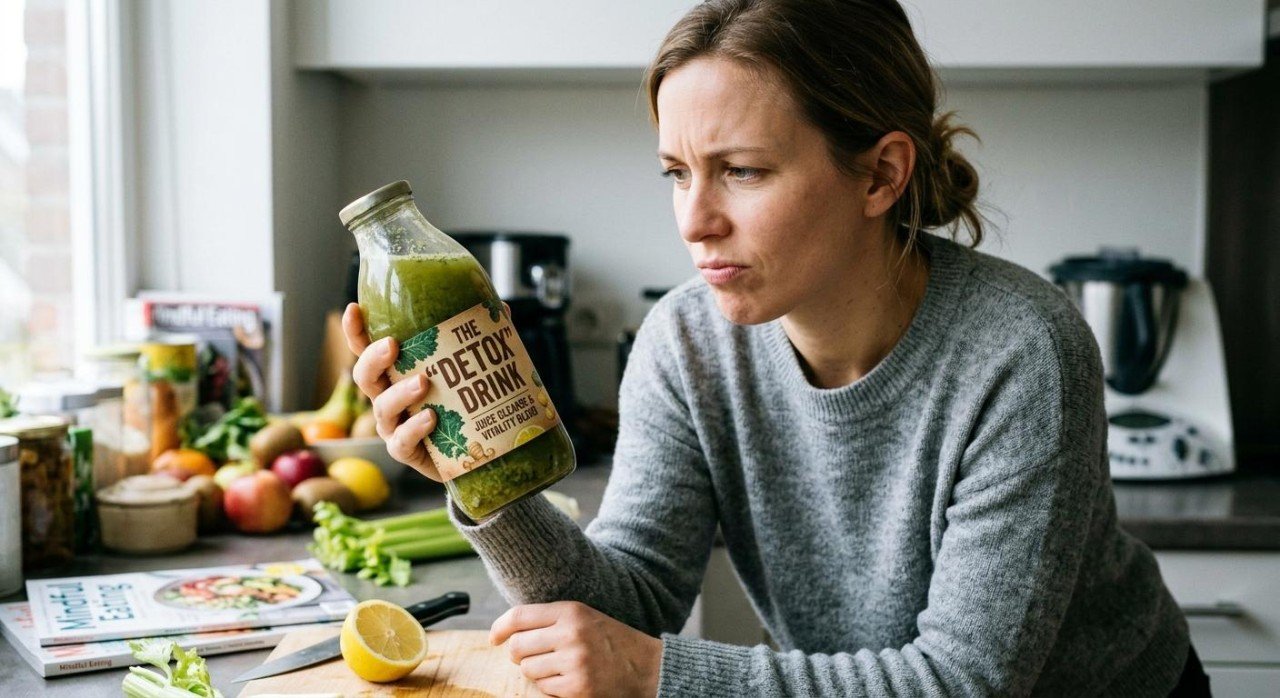
Few wellness words are as profitable, or as scientifically empty, as "detox." Detox teas, juice cleanses, and "cleansing" supplements promise to flush toxins from your system. The fundamental problem: you already have a sophisticated detoxification system. It's called your liver and kidneys, and for healthy people it works around the clock without a single dollar of help from a celebrity tea brand.
The National Center for Complementary and Integrative Health, part of the NIH, is blunt about the evidence. A 2015 review it cites "concluded that there was no compelling research to support the use of 'detox' diets for weight management or eliminating toxins from the body." Any quick weight loss people see comes from drastically cutting calories, and it tends to reverse once normal eating resumes.
It can go beyond useless to genuinely risky. The same NIH resource notes that the FDA and Federal Trade Commission "have taken action against several companies selling detox/cleansing products" because the products contained hidden ingredients that posed a health risk, were sold with false claims that they could treat serious diseases, or, in the case of colon-cleansing devices, were marketed for unapproved uses. You can pay a premium for a "detox" and end up with something between an expensive laxative and an actual hazard.
"Superfood": A Term So Empty That Europe Restricted It
"Superfood" has no official or scientific definition. No nutrient threshold makes a food "super." It is purely a marketing term, and a powerful one, capable of turning an ordinary berry into a premium-priced miracle.
The European Union took this seriously enough to act. Since July 2007, EU rules have banned marketing a product as a "superfood" on packaging unless it carries a specific authorized health claim that explains, with credible scientific evidence, exactly why the food is good for you. In the United States there is no such restriction, so the word floats free on labels and across social media.
None of this means blueberries, salmon, or kale aren't good for you. They are genuinely nutritious. The point is that the word "superfood" adds no information. A real food's value comes from its nutrients and how it fits into your overall pattern of eating, not from a label that any brand can slap on anything.
"Plant-Based": Technically True, Nutritionally Silent
"Plant-based" is having a moment, and it gets stamped on everything from veggie burgers to cookies and candy. Here's the thing: "plant-based" describes where the ingredients come from, not whether they're good for you. Table sugar is plant-based. Refined coconut oil is plant-based. Plenty of ultra-processed snacks are technically plant-based and still mostly sugar, refined starch, and oil. Vegan does not automatically mean nutritious.
This is the same trap as all the others: a true-but-irrelevant fact on the front of the box stands in for the nutrition information you actually need. A whole roasted sweet potato and a plant-based candy bar both qualify for the phrase. Only one of them earns a regular place on your plate.
What Is Actually Regulated: "Healthy" and the Numbers on the Back
It's worth knowing that a few claims are backed by enforceable rules. "Healthy" is one of them. In December 2024 the FDA finalized an updated definition, and as legal analysts at Cooley summarized, a product can now only be labeled "healthy" if it contains a meaningful amount of food from a recommended group (fruit, vegetables, grains, dairy, or protein foods) and stays under specific limits for added sugars, saturated fat, and sodium. Manufacturers have until February 2028 to comply.
The update is telling. Foods like nuts, seeds, salmon, certain oils, and water can now qualify, while products that used to sneak under the old 1994 rules, like fortified white bread, heavily sweetened cereal, and high-sugar fruit snacks, no longer will. In other words, even the regulators concluded that the old shortcuts were letting the wrong foods wear a health badge.
The deeper lesson is that the only consistently honest part of the package is the part no marketer chose: the ingredients list and the Nutrition Facts panel, both required and standardized by law. They are where you should spend your attention.
How to Read a Package Like the Marketing Isn't There
You don't need a nutrition degree. You need a few quick habits that route around the health halo:
- Flip it over first. Treat the front of the package as an ad and go straight to the ingredients list. Make this automatic and the buzzwords lose their grip.
- Read the ingredients in order. They're listed by weight, most first. If sugar (or one of its many aliases, like cane juice, dextrose, or syrup) is near the top, "natural" on the front doesn't change that.
- Shorter and more recognizable usually wins, but check why. A long list isn't automatically bad if the additions are things like fiber or vitamins. Judge the actual ingredients, not the length.
- Look at added sugars and sodium on the panel. These two numbers separate most genuinely nourishing packaged foods from the pretenders, regardless of the words on the front.
- Distrust any word that promises a feeling. "Detox," "cleanse," "superfood," and "guilt-free" describe a vibe, not a nutrient. Your liver has the detox covered.
- Remember the best foods often have no label at all. Produce, plain meats and fish, eggs, beans, nuts, and whole grains rarely need a marketing word, because the food itself is the selling point.
The single most reliable move is to lean on foods that don't need a front-of-package claim in the first place. When most of your week is built around recognizable, whole ingredients you cooked yourself, the entire buzzword arms race stops mattering. You're not parsing "natural" versus "clean" on a box; you're just eating food.
Take the Guesswork Out of Eating Well
Eat Well Planner helps you organize your favorite recipes, plan balanced meals, and automatically generate shopping lists — all in one place. Whether you're tracking macros, managing dietary restrictions, or just trying to stop asking "what's for dinner?", we've got you covered.
Our AI-powered tools can adapt any recipe to your dietary needs, help you discover new meals you'll love, and even log your nutrition effortlessly. It's meal planning made simple.
Start Organizing Your Meals — FreeMake the Real Food the Easy Choice
The reason buzzwords work is that they show up at the exact moment we're tired, rushed, and trying to decide what to eat. A reassuring word is a shortcut, and shortcuts win when we haven't got a plan. The best defense against marketing isn't willpower in the aisle; it's having already decided what you're cooking before you get there.
That's the whole idea behind Eat Well Planner. It keeps the focus on the actual food instead of the claims on the box. You can save and organize real recipes built from whole ingredients, let the app generate a weekly meal plan around them, and turn that plan into an organized shopping list, so you walk into the store with a purpose rather than browsing for whatever package looks the most wholesome. Because the list is built from recipes, you're filling your cart with ingredients, not chasing health halos.
The nutrition tracking and food diary go a step further: instead of trusting a "natural" or "high-protein" claim, you can see the real nutritional breakdown of what you're actually eating and watch the trends over time. That's the difference between being marketed to and being informed. And when you do want to adapt a recipe, the AI recipe chat can suggest swaps and variations, no buzzword required.
The front of the package will never stop trying to win you over. But once you've made fresh, recognizable food the path of least resistance, you simply won't need it to. Try planning a week of real meals with Eat Well Planner and let the ingredients, not the marketing, do the talking.