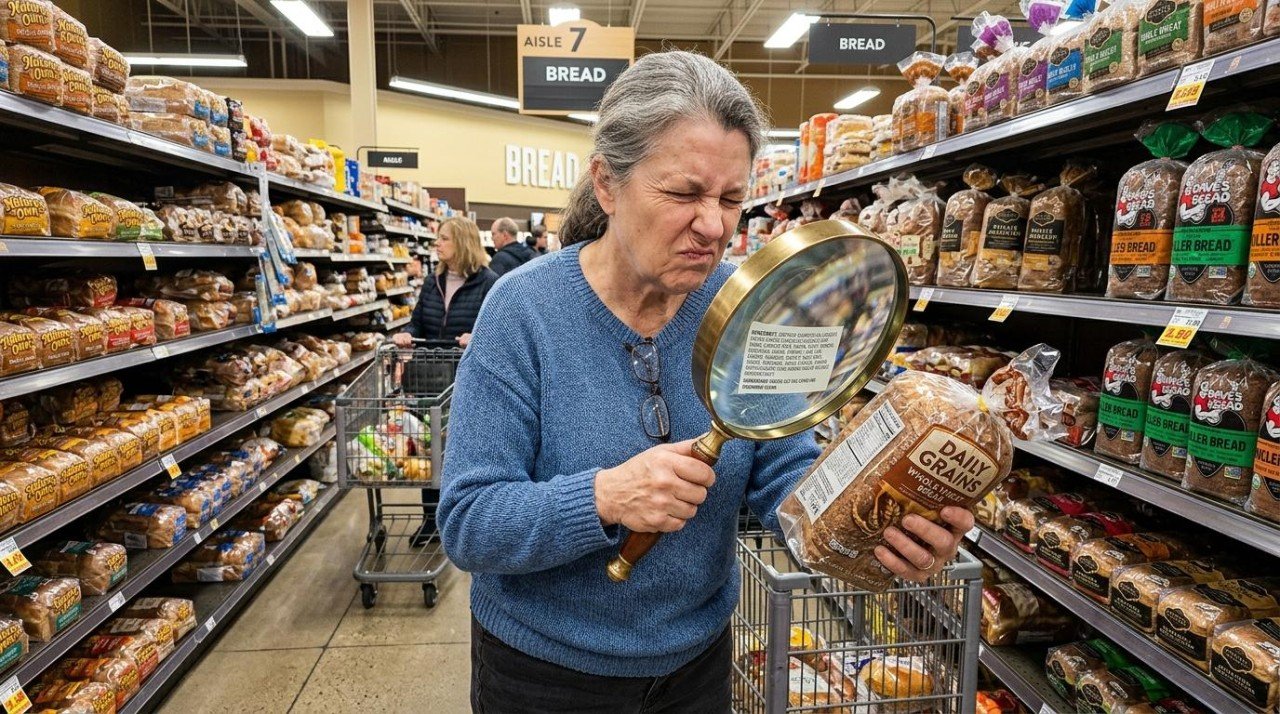
You open the fridge, spot the yogurt, notice the date on the lid was two days ago, and toss it without a second thought. It felt responsible. But odds are that yogurt was completely fine — and you just threw money in the trash for no reason.
This happens constantly, and at enormous scale. Confusion over date labels alone leads Americans to throw out roughly three billion pounds of food a year, worth about $7 billion, according to the nonprofit ReFED. In a 2025 nationally representative survey it ran with The Harris Poll, 88% of people said they discard food at or near the package date at least occasionally, and 43% said they always or usually do — up from 37% in 2016.
Here is the thing almost nobody realizes: with one important exception, those dates are not about safety at all. They are a manufacturer's best guess about peak quality. Learning to read them — and to trust your own senses instead — is one of the easiest ways to waste less food and save real money.
What those dates actually mean
The first source of confusion is that there is no single system. Manufacturers stamp foods with a grab-bag of phrases, and they mean different things. Here is the translation:
- "Best if Used By" / "Best By" / "Best Before" — A quality date. It tells you when the food will taste its freshest, not when it becomes unsafe. After this date the flavor or texture may slowly slip, but the food is typically still perfectly good. As University of Georgia food safety specialist Carla Schwan explains, products past this date "may taste less fresh but remain safe to consume."
- "Sell By" — This one is not even for you. It tells the store how long to display the product for inventory rotation. Milk, for example, is usually good for days to a week beyond its sell-by date if it has stayed cold.
- "Use By" — The last date the manufacturer recommends for peak quality. On most shelf-stable and everyday foods it is still a quality date, not a safety cliff. The big exception is highly perishable, ready-to-eat items — more on that below.
- "Freeze By" — Simply the best date to freeze something to lock in its quality. It is not telling you the food is going bad.
The single most important fact to internalize: the USDA is explicit that, apart from infant formula, these dates are not indicators of safety and are not even required by federal law. A manufacturer picks the phrase and the date voluntarily. That yogurt lid is closer to a suggestion than a deadline.
Why the labels are so confusing
If you have ever felt unsure standing in front of the fridge, the problem is not you — the system is genuinely a mess. Because there is no federal standard, the same idea gets expressed a dozen different ways, and people fill in the blanks with fear.
The ReFED survey put numbers to this gap. While 87% of consumers believed they knew what the various labels meant, only 53% actually answered correctly when quizzed. And 44% mistakenly think the federal government regulates these phrases (it does not, again with the infant-formula exception). When in doubt, most people default to tossing — which is exactly how billions of pounds of good food ends up in landfills.
This is finally starting to change. In September 2024, California passed AB 660, the first state law to standardize date labels — and as of July 1, 2026, it is in effect. The law bans consumer-facing "Sell By" dates and requires just two phrases: "Best if Used By" for quality and "Use By" for genuine safety. It is a model for the kind of clarity food shoppers everywhere deserve. Until that standardization spreads nationwide, though, the burden is on us to read the labels correctly.
The one date that really is about safety
None of this means dates are meaningless or that you should eat anything at any age. There is a real category where "Use By" is a genuine safety marker worth heeding: highly perishable, ready-to-eat foods that can grow dangerous bacteria even in the refrigerator.
The main concern here is Listeria monocytogenes, a bug that — unlike most bacteria — keeps multiplying at cold refrigerator temperatures. The CDC flags a specific set of foods as higher-risk:
- Deli meats, cold cuts, and hot dogs
- Refrigerated pâtés and meat spreads
- Soft cheeses like queso fresco, brie, and feta, especially if unpasteurized
- Refrigerated smoked fish
- Premade deli salads (coleslaw, potato, chicken, or tuna salad)
- Cut melon left out too long or kept more than a week
- Raw or lightly cooked sprouts
For these items, honor the use-by date and do not stretch it. The stakes are highest for people who are pregnant, newborns, adults over 65, and anyone with a weakened immune system — the CDC advises these groups to avoid deli meats and soft cheeses unless heated to 165°F, or steaming hot. The other genuine safety date is on infant formula, the only food the U.S. legally requires to carry one; the nutrients degrade over time, so do not use it past its date.
The point is not "dates never matter." It is that a "best by" date on a box of crackers and a "use by" date on a package of sliced turkey are two completely different animals — and knowing which is which is what saves you both money and, occasionally, a real health scare.
How to actually judge whether food is still good
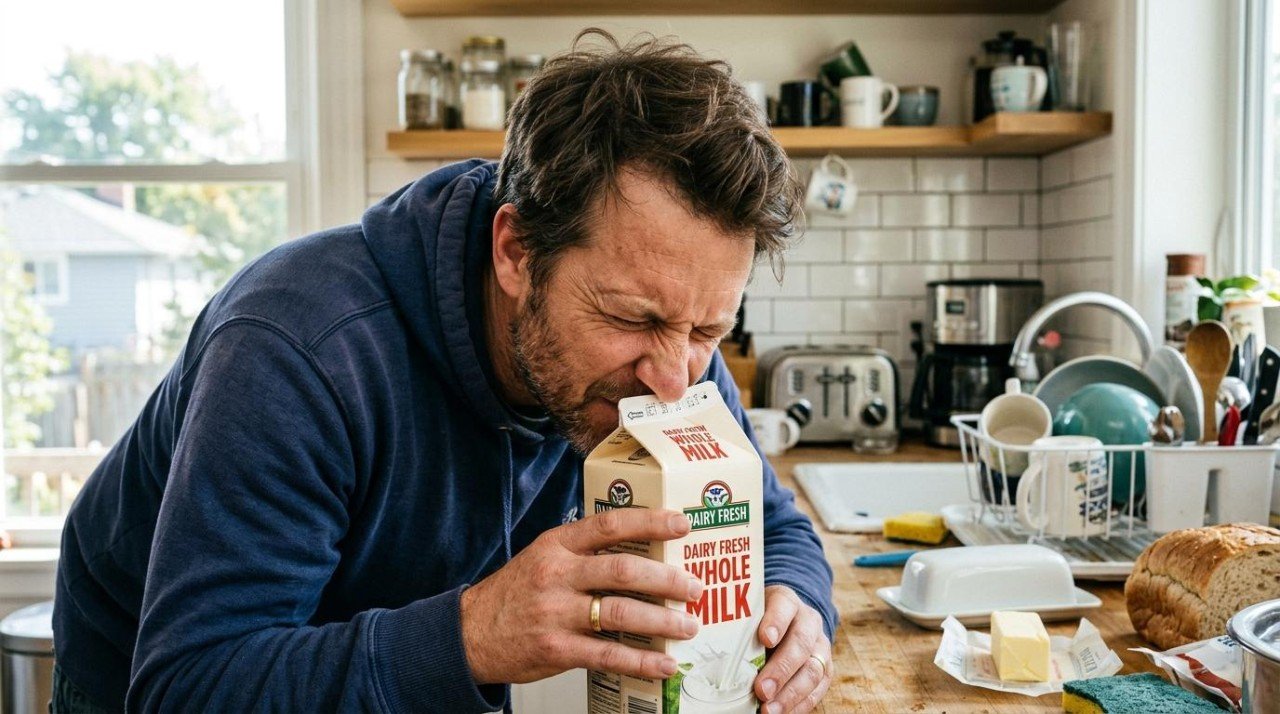
For everything outside that high-risk category, your senses are a better guide than a printed date. Schwan's rule of thumb is refreshingly simple: "If it looks fine, smells fine and tastes fine, it's probably fine."
That works because the bacteria that spoil food — making it slimy, sour, moldy, or off-smelling — are usually different from the ones that make you sick. Spoilage is nature's warning system: it is obvious, and it kicks in long before most everyday foods become genuinely hazardous. If a carton of milk smells sharp and sour, you do not need a date to tell you to pour it out.
There is one honest caveat. A few pathogens, like Salmonella, can be present without changing how food looks or smells — which is why eggs and raw meat should still be cooked to safe temperatures regardless of freshness. Sensory checks are for deciding whether quality has slipped, not for rescuing food that was mishandled or left in the danger zone. But for the ordinary "is this two-day-past-date yogurt okay?" question, a look and a sniff will serve you far better than blind obedience to a label.
Foods that keep far longer than people think
Once you stop treating dates as deadlines, you will notice how many staples have a much longer real-world life:
- Eggs. The USDA says eggs are good for three to five weeks after you buy them, typically well past the carton date. Not sure about an older egg? Crack it onto a clean plate and check for an off smell or odd appearance. (The classic float test tells you how fresh an egg is, not whether it is safe — a floating egg is old, but crack it to judge for sure.)
- Milk. Pasteurized milk usually lasts three to seven days past its sell-by date when kept at or below 40°F. Give it a smell.
- Hard cheese. Blocks of hard cheese keep for months in the fridge. If a spot of mold appears, standard food-safety guidance is to cut off at least an inch around and below it and eat the rest. (Soft cheeses are the exception — toss them entirely if they mold.)
- Pantry staples. Dried pasta lasts up to two years, flour up to two years refrigerated, and an unopened, undented, un-rusted can of food is safe essentially indefinitely — its quality slowly fades, but it will not become unsafe. Discard any can that is bulging, leaking, or badly dented at the seam.
- Condiments. Most refrigerated condiments — mustard, ketchup, hot sauce, jam — coast for months past their dates thanks to salt, sugar, acid, or vinegar acting as preservatives.
The catch, of course, is remembering to actually use these things before their real (much later) expiration arrives. That is less a food-science problem than a planning one — and it is where a little organization pays off.
Take the Guesswork Out of Eating Well
Eat Well Planner helps you organize your favorite recipes, plan balanced meals, and automatically generate shopping lists — all in one place. Whether you're tracking macros, managing dietary restrictions, or just trying to stop asking "what's for dinner?", we've got you covered.
Our AI-powered tools can adapt any recipe to your dietary needs, help you discover new meals you'll love, and even log your nutrition effortlessly. It's meal planning made simple.
Start Organizing Your Meals — FreeStorage and freezing: how to stretch the calendar
How you store food matters more than any date stamped on it. A few habits do most of the work:
- Keep your fridge at or below 40°F and your freezer at 0°F. Cold slows the spoilage clock dramatically; a fridge running warm is the real reason food goes off "early."
- Use the freezer as a pause button. Freezing essentially stops spoilage in its tracks. Food kept frozen at 0°F stays safe to eat indefinitely — quality declines over months, but safety does not. Bread, cheese, cooked leftovers, milk, and even whole beaten eggs all freeze well.
- Freeze before it turns, not after. That bag of spinach or those bananas going spotty are perfect freezer candidates — into smoothies, soups, or baking later.
- Store dry goods airtight. Flour, grains, and pasta last far longer in sealed containers that keep out moisture and pests.
- Practice "first in, first out." Put newer groceries behind older ones so the things closest to their date get used first.
Do these consistently and you effectively add days or weeks to almost everything you buy — no label reinterpretation required.
The best defense against waste is a plan
Here is the honest truth about why good food gets tossed: most of the time it is not really about the date at all. It is that we bought more than we could use, forgot what was in the back of the fridge, or had no plan for the half-bunch of cilantro and the leftover half-can of beans. The date just becomes the excuse to clear it all out.
That is exactly the problem a little organization solves — and where Eat Well Planner can quietly do the heavy lifting:
- Plan meals around what needs eating first. Build your week from recipes that use up the perishables you already have, so the spinach and the yogurt get eaten near their peak instead of forgotten.
- Shop from an organized list. When your meal plan generates a precise shopping list, you buy what you will actually cook — which means fewer impulse items wilting in the crisper and less money in the trash.
- Use up the odds and ends. Stuck with a random handful of ingredients that need using? The built-in recipe chat can suggest what to make or how to substitute, turning "about to go bad" into dinner.
- Keep your recipes in one place. Import the meals you love from any website, Instagram reel, or YouTube video, so planning around what is in your kitchen takes minutes, not willpower.
When a nutritious meal is already planned and the ingredients are already accounted for, cooking the fresh food you bought becomes the path of least resistance — and the whole cycle of over-buying and tossing quietly fades.
The bottom line
Most of the food you throw away the moment a date passes is still perfectly good. "Best by," "best before," and "sell by" are about quality, not safety. Only "use by" on highly perishable, ready-to-eat items — and the date on infant formula — are genuine safety lines to respect. For everything else, trust your eyes and nose, store food well, lean on the freezer, and plan your meals so good food gets eaten instead of forgotten.
Do that, and you will waste less, save hundreds of dollars a year, and feel a lot less guilt every time you open the fridge.