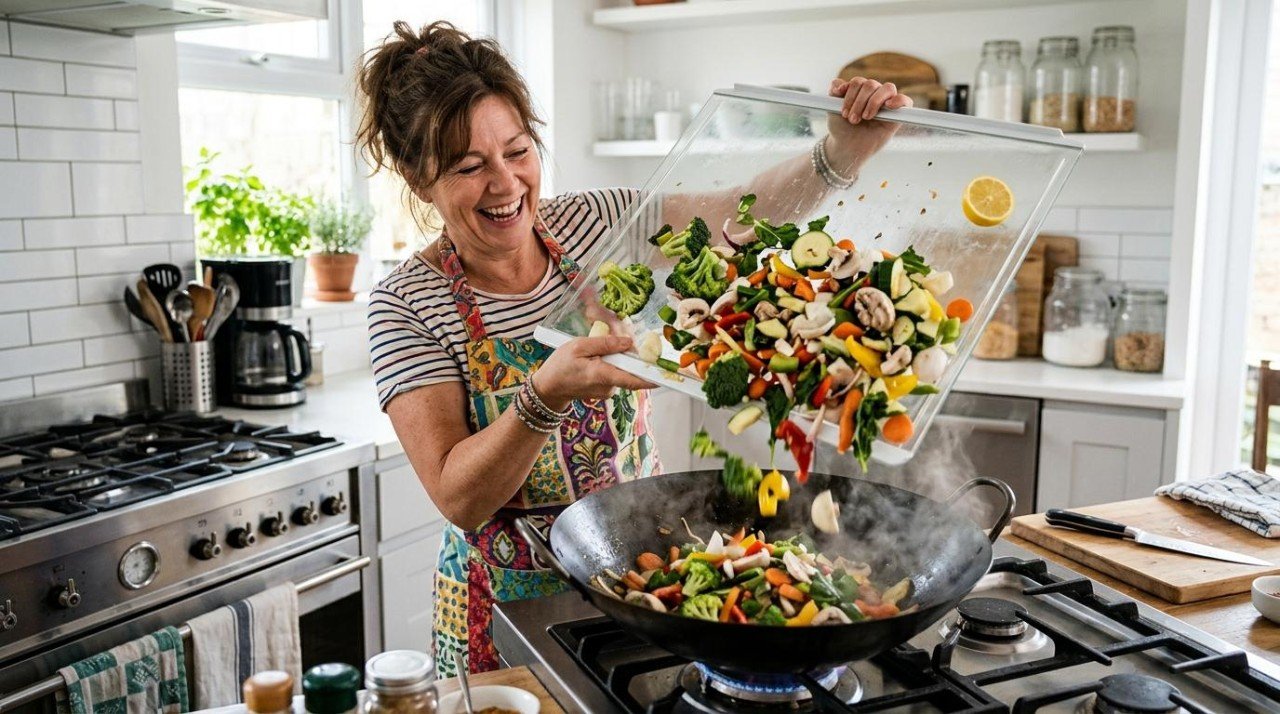
Here's a number that should bother you a little: only about 10% of U.S. adults eat enough vegetables, according to the CDC's analysis of 2019 survey data. The target isn't even that high — the Dietary Guidelines ask for roughly 2 to 3 cups a day — and nine out of ten of us still fall short. It's not because people don't know vegetables are good for them. It's because eating a real volume of vegetables usually means washing, chopping, and cooking several different things, and by the end of a long day that's exactly the kind of effort that doesn't happen.
This is where blended vegetable soup quietly becomes one of the most useful skills in a home cook's repertoire. Once you understand the basic formula, you can turn a pile of vegetables — including the slightly sad ones lurking in your crisper drawer — into a warm, satisfying bowl in about 20 minutes, no recipe required. It's forgiving, it's cheap, and it's arguably the single easiest way to eat a large amount of produce in one sitting. Let's break down how it works and why it's worth making a habit.
Why a Blended Soup Is Such an Efficient Way to Eat Vegetables
Think about how much raw broccoli or spinach you'd have to chew through to hit half a pound. Now picture that same volume simmered down and blended into a bowl of soup. Cooking collapses vegetables — a mountain of greens or a whole head of cauliflower shrinks dramatically once heat drives the water out of the cells — so a bowl of blended soup can hold far more actual vegetable than the same bowl could as a salad. You're concentrating volume you'd struggle to eat raw into something you can finish comfortably.
Soup also happens to be genuinely filling for very few calories, and that's not just intuition. In a classic study from Barbara Rolls' lab at Penn State, people who ate a bowl of soup before lunch reduced their total calorie intake at the meal by 20% compared to eating no soup — and it didn't matter whether the soup was chunky, pureed, or somewhere in between. Vegetable soups are what researchers call low in energy density: lots of weight and water for not many calories, which is a reliable recipe for feeling full and satisfied.
There's a subtle reason the soup format works so well, too. Water that's built into a food — the way it is in a broth-based soup — fills you up more than the same amount of water drunk from a glass alongside your meal, because it slows down how quickly your stomach empties instead of passing straight through. A blended vegetable soup is essentially edible volume: fiber, water, and nutrients in a form your body registers as a real meal.
And that fiber matters, because most of us are running a serious deficit. The recommended intake is about 25 grams a day for women and 38 grams for men, but the average American manages only around 17 grams, and roughly 94% of us fall short. A soup built on a couple of pounds of vegetables and a can of beans is one of the most painless ways to close that gap — you're eating the whole vegetable, skins and all, blended right into the bowl.
The No-Recipe Formula
The reason you don't need a recipe is that nearly every blended vegetable soup follows the same five-step arc. Learn the pattern once and you can improvise indefinitely with whatever's in the fridge.
- Sweat the aromatics. Warm a splash of olive oil in a pot and cook a diced onion (or leek, or a few shallots) with a couple of cloves of garlic until soft and fragrant, about 5 minutes. This is the flavor foundation — don't skip it. A stick of celery or a chopped carrot here adds depth if you have them.
- Add your main vegetable. Pick one or two that will define the soup: broccoli, cauliflower, zucchini, carrots, butternut squash, tomatoes, peas, spinach, mushrooms, roasted red peppers — almost anything works. Roughly chop enough to fill the pot generously. This is where the "pound of vegetables" comes from, so be liberal.
- Pour in stock and simmer. Add enough vegetable or chicken stock (or even water plus a bouillon cube) to just cover the vegetables. Bring to a simmer and cook until everything is fork-tender — usually 10 to 20 minutes, depending on how hard the vegetables are.
- Blend until smooth. Puree the soup until it's as smooth or as rustic as you like (more on doing this safely below). If it's too thick, add more stock; too thin, simmer it down a few more minutes.
- Balance with acid, fat, and salt. This is the step that separates a bland pot of blended vegetables from a soup you actually crave. Salt to taste, then add a squeeze of lemon or a splash of vinegar to brighten it, and stir in a little fat — a swirl of olive oil, a knob of butter, a spoonful of yogurt or coconut milk — to round it out and make it satisfying. Taste, adjust, repeat.
That final balancing act is the whole game. Vegetables on their own can taste flat; acid wakes them up, salt makes the flavors pop, and fat gives the soup body and a satisfying mouthfeel. If a soup ever tastes like it's missing something, it's almost always one of those three.
The one part that trips people up is knowing what actually goes together — can you blend zucchini with the half-bag of spinach and that lonely sweet potato, or will it taste strange? This is exactly the kind of question Eat Well Planner's recipe chat is good at: tell it what vegetables you have on hand and it'll suggest how to combine them, what to add for body, and how to season the result, so you're not guessing. And because the app builds your weekly plan from your own saved recipes, you can deliberately slot a "clean-out-the-fridge" soup in toward the end of the week, right when the produce you bought on Sunday is starting to look tired.
Take the Guesswork Out of Eating Well
Eat Well Planner helps you organize your favorite recipes, plan balanced meals, and automatically generate shopping lists — all in one place. Whether you're tracking macros, managing dietary restrictions, or just trying to stop asking "what's for dinner?", we've got you covered.
Our AI-powered tools can adapt any recipe to your dietary needs, help you discover new meals you'll love, and even log your nutrition effortlessly. It's meal planning made simple.
Start Organizing Your Meals — FreeDoesn't Cooking Destroy the Nutrients?
This is the most common worry about cooked-and-blended vegetables, and the honest answer is: it's complicated, and mostly in soup's favor. Cooking does reduce some nutrients — particularly water-soluble ones like vitamin C, which is heat-sensitive and leaches out into the cooking liquid. A study on cooking methods and vitamin retention found that boiling was the most destructive method for vitamin C precisely because so much of it dissolves into the water.
But here's the thing about soup: you eat the water. Whatever vitamin C and other water-soluble nutrients leach out during simmering don't get poured down the drain the way they would if you boiled and strained your vegetables — they stay right in the bowl. Blending everything together means nothing is lost.
Cooking also actively increases the availability of certain nutrients. Heat breaks down the tough cell walls of plants, releasing compounds your body otherwise can't easily reach. Tomatoes are the poster child: cooked tomatoes can contain up to triple the lycopene of raw ones, according to research summarized by National Geographic. Lycopene and beta-carotene are fat-soluble carotenoids, which means your body absorbs them far better when there's a little fat in the mix — one more reason that finishing swirl of olive oil or coconut milk isn't just for flavor. As Stanford dietitian Kate Donelan puts it in that piece, the nutrients are behind "a lock, and the fat is the key." A blended vegetable soup with a drizzle of good oil on top is close to ideal for actually absorbing what's in your vegetables.
Variations to Keep It Interesting
Once the base formula is second nature, a handful of tweaks will take you from a thin puree to something that eats like a full meal.
- Roast the vegetables first. Instead of simmering raw vegetables, toss them with olive oil and roast at around 425°F until caramelized at the edges, then add them to the pot with stock and blend. Roasting drives off water and browns the sugars, giving you a much deeper, sweeter, more complex flavor. It's the single biggest upgrade you can make, and worth the extra time for squash, cauliflower, carrots, and tomatoes especially.
- Add beans or lentils for protein and body. A plain vegetable puree is light on protein, which is what keeps a meal satisfying. Stir in a can of white beans or chickpeas, or a handful of red lentils (add them with the stock so they cook down), before blending. They melt into the soup, thicken it into something creamy without any cream, and turn a starter into a genuine main course.
- Swirl in yogurt or coconut milk. A spoonful of plain Greek yogurt stirred in at the end adds tang, creaminess, and a little protein; coconut milk gives you a richer, dairy-free finish that pairs beautifully with curried or spiced soups. Both are that "fat" lever doing double duty as a garnish.
- Layer in warm spices and herbs. Bloom a teaspoon of cumin, curry powder, or smoked paprika in the oil with the aromatics, or blend in a handful of fresh basil, cilantro, or parsley at the end. Small additions, big personality changes — the same base vegetables can taste Italian, Indian, or Thai depending on where you steer them.
The Perfect Home for Wilting Produce
One of the best things about blender soup is that it doesn't care whether your vegetables are pristine. Slightly soft zucchini, bendy carrots, the outer leaves of a cabbage, herb stems, a half-bag of spinach going limp — all of it disappears into a smooth, delicious soup. Nobody can tell the difference once it's blended, and you've rescued food that was heading for the trash.
That's not a small thing. Americans waste an enormous amount of produce specifically because it spoils fast: households throw out roughly 37% of the fresh vegetables and 39% of the fruit they buy, making produce one of the largest chunks of home food waste by weight. A standing "soup day" toward the end of the week — where anything that's on its last legs goes into the pot — is one of the most effective and least fussy ways to cut that waste, save money, and eat more vegetables all at once. It's a rare habit where the frugal move and the healthy move are the exact same move.
How to Blend Hot Liquids Safely
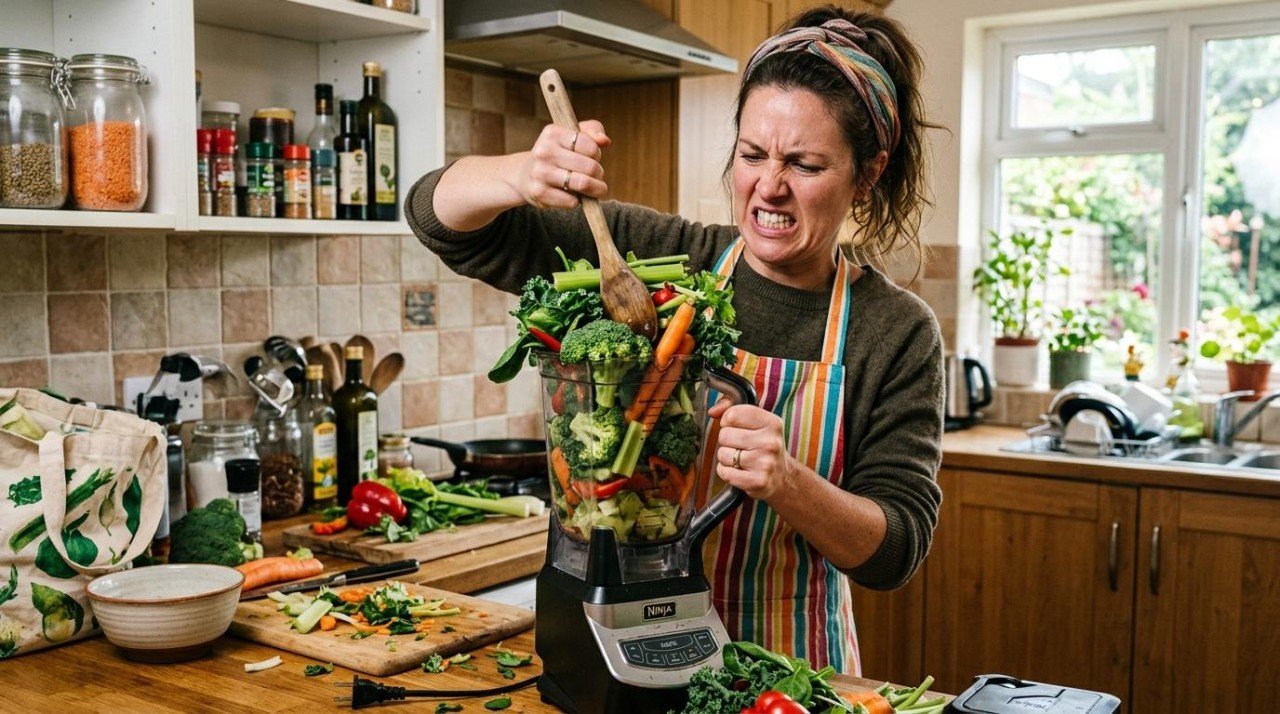
This part deserves a genuine warning, because it's the one place a relaxing soup session can go wrong. When you blend hot liquid in a sealed blender jar, the heat turns to steam, pressure builds fast, and there's nowhere for it to go — which can blow the lid off and send scalding soup across your kitchen. It's a common and nasty cause of burns. A few habits prevent it entirely:
- Let it cool a bit first. Give the soup a few minutes off the heat before blending. It doesn't need to be lukewarm, just not violently boiling.
- Never fill the jar more than halfway. Blend in batches if you have to. The extra headroom gives the steam somewhere to expand.
- Vent the lid. Remove the small center cap from the blender lid so steam can escape, and cover the hole with a folded kitchen towel — held down with your hand — to catch any splatter.
- Start slow. Begin on the lowest speed and increase gradually, rather than hitting full power on a jar of hot liquid.
The easiest way to sidestep the whole issue is an immersion (stick) blender, which you plunge directly into the pot. There's no sealed container and no pressure to build, so you can blend the soup right where it cooked. If you make blended soups even occasionally, it's a cheap tool that earns its place in the drawer.
Make a Big Batch and Freeze It
Blended vegetable soups freeze beautifully, which turns a 20-minute cooking session into several future meals. Make a large pot, let it cool, and portion it into individual containers or freezer bags laid flat so they stack and thaw quickly. A freezer stocked with single servings of vegetable soup is a quiet form of insurance: on the nights you'd otherwise reach for takeout or something processed, a homemade, vegetable-packed meal is 90 seconds away in the microwave.
One tip: if your soup contains dairy — say you blended in yogurt or cream — it can separate a little when frozen and reheated. For freezing, it's often better to leave the soup dairy-free and stir in the yogurt or coconut milk fresh after reheating each portion. Bean- and vegetable-based soups without dairy freeze without any trouble at all.
This is also where a little planning pays off. In Eat Well Planner you can save your go-to soup formulas to your own recipe book — import them from a website, an Instagram reel, or a YouTube video and the app pulls out the ingredients and nutrition automatically — then drop them into a weekly plan and let it generate the shopping list. You'll see each soup's fiber and nutrient breakdown laid out plainly, so it's easy to confirm you're actually hitting those targets rather than just hoping. And because the plan tells you exactly what to buy, you're far less likely to end up with a crisper drawer full of vegetables with no plan attached — the very situation that leads to waste in the first place.
The Bottom Line
Blended vegetable soup is one of those rare kitchen skills that pays off in every direction at once. It's the fastest way to eat a serious volume of vegetables, it's endlessly forgiving of whatever's in your fridge, it rescues produce that would otherwise be wasted, it freezes for future you, and — done with a little acid, fat, and salt — it genuinely tastes good. You don't need a recipe, and you don't need to be a cook. You need a pot, a blender, and the simple formula: aromatics, vegetables, stock, blend, balance. Master that, and eating well stops being the hard option and starts being the easy one.
Ready to make it a habit? Try organizing your meals with Eat Well Planner — save your favorite soups, plan a week around the produce you actually have, and let the app handle the shopping list.